About This Image
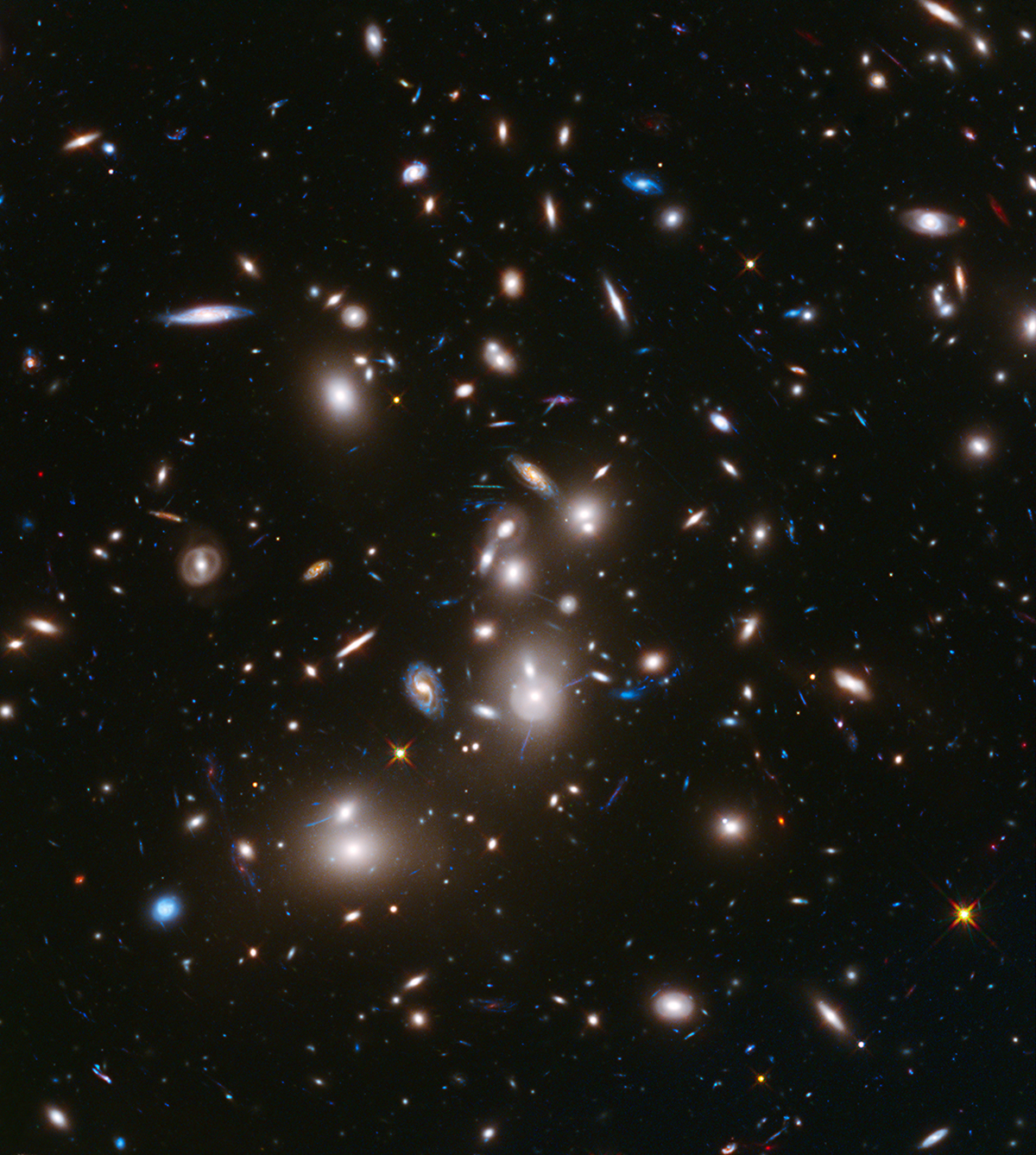
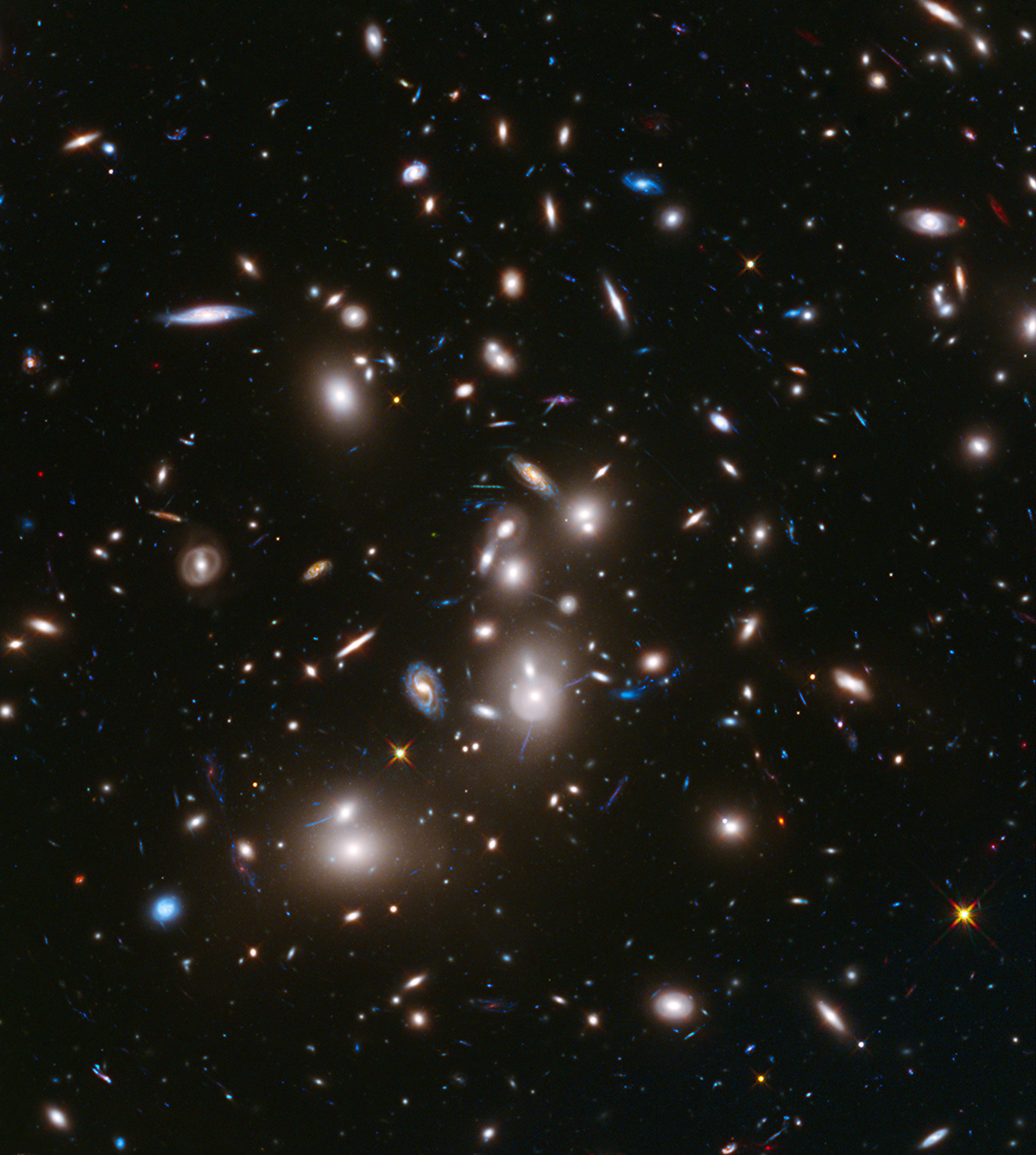
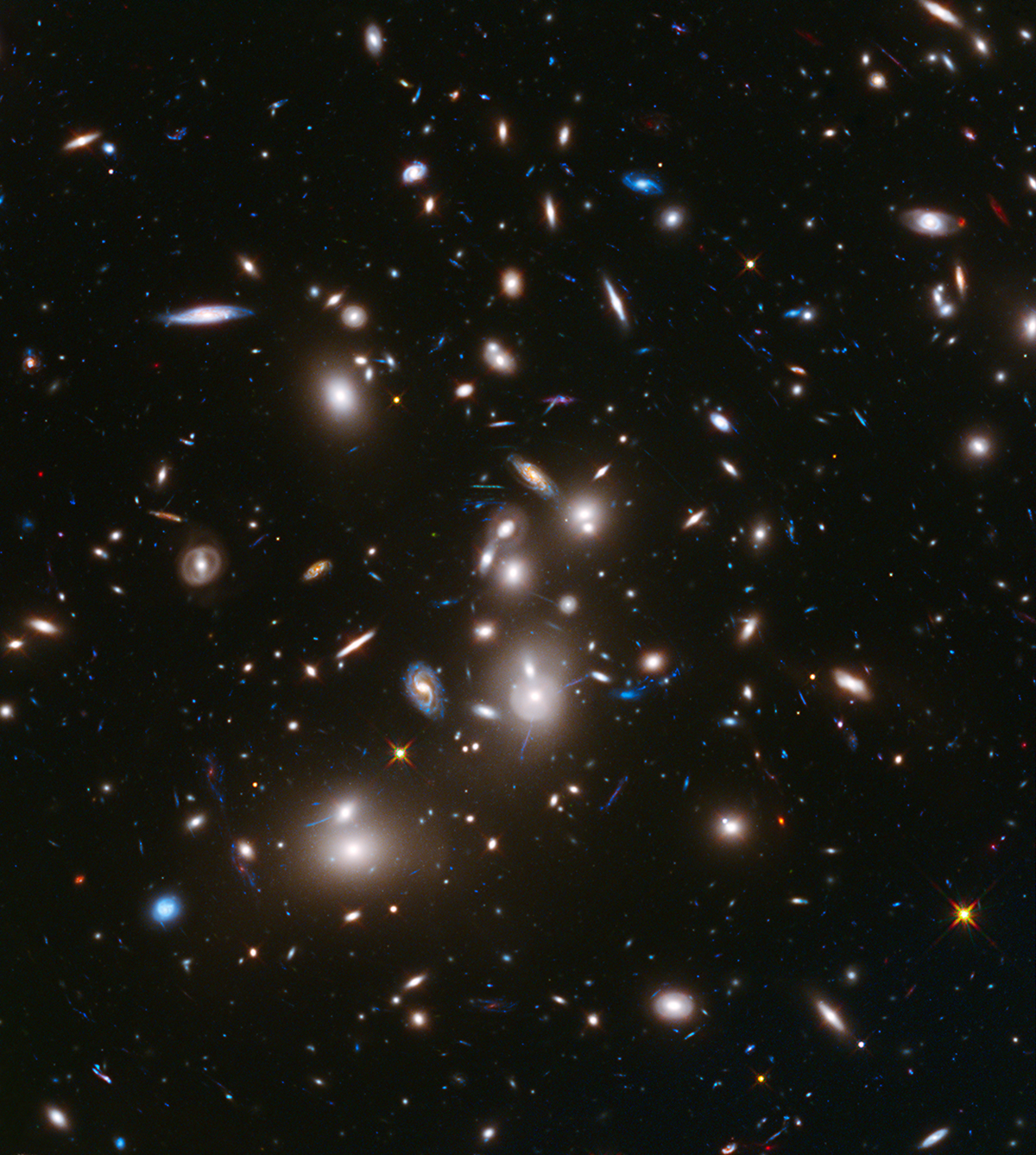
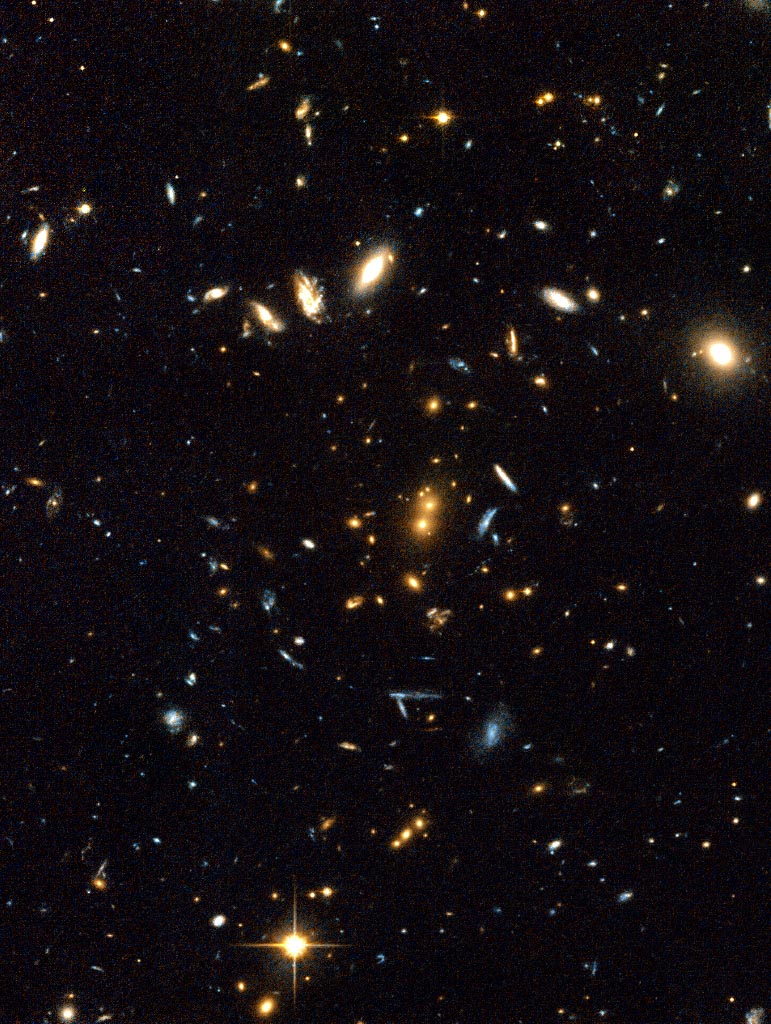
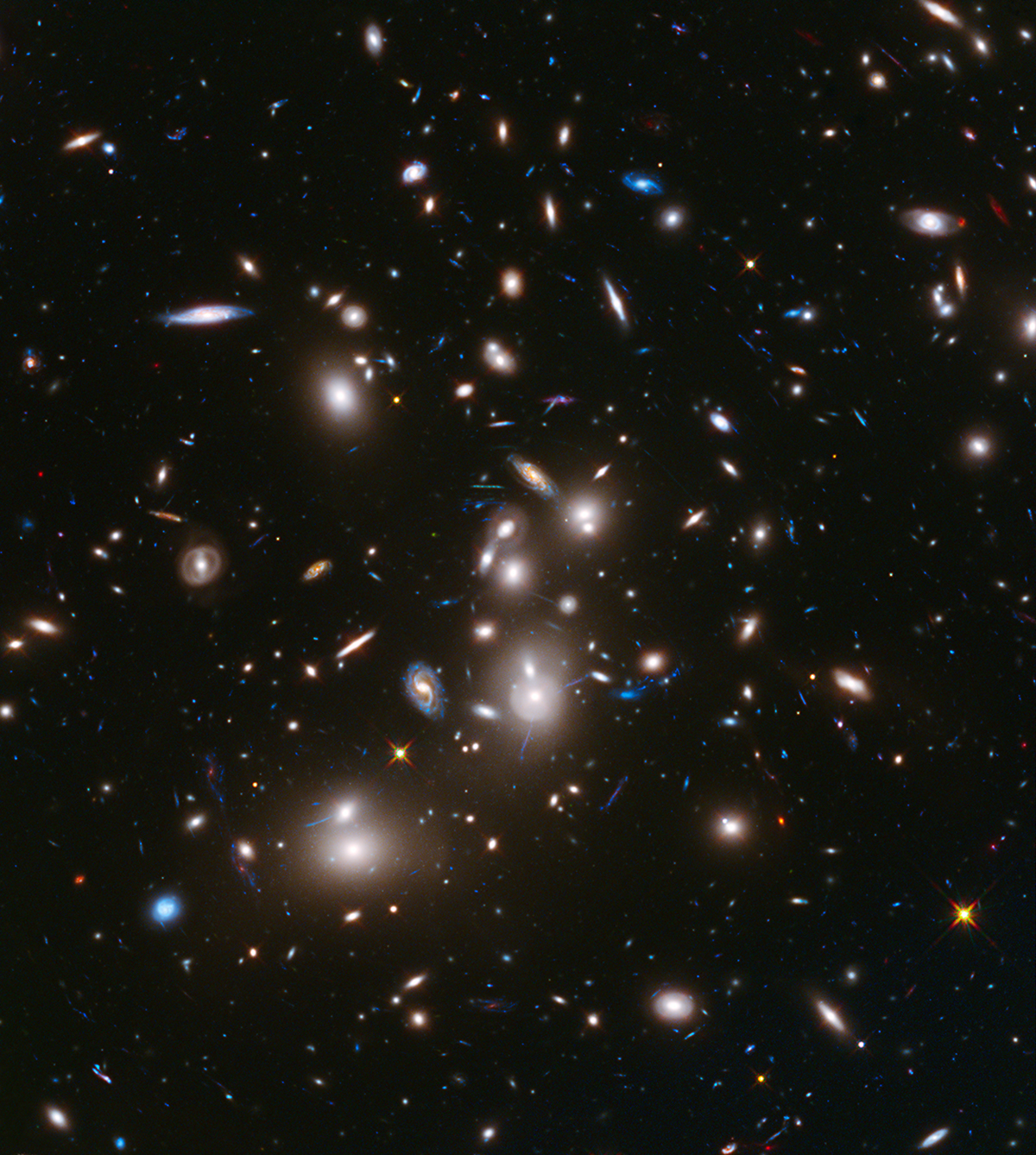
This second Hubble view of Abell 2744 — Pandora's Cluster — showcases the extraordinary gravitational lensing produced by this massive galaxy cluster located 3.5 billion light-years away in Sculptor. The cluster's enormous mass warps the fabric of spacetime, bending and magnifying the light of far more distant galaxies into elongated arcs and multiple images scattered across the field of view. This deep exposure reveals dozens of lensed background galaxies, some appearing as thin, luminous streaks stretched by gravitational distortion. By analyzing these distorted images, astronomers construct detailed mass maps of the cluster, revealing the distribution of invisible dark matter that accounts for the vast majority of the cluster's gravitational influence and shapes the cosmic lens.
Scientific Significance
This deep observation of Abell 2744 was a cornerstone of the Hubble Frontier Fields program, representing Hubble's deepest look into the universe through the magnifying power of gravitational lensing. The multi-epoch observations enabled detection of faint transient sources, including individual supernovae in lensed background galaxies at cosmological distances. The strong lensing constraints, combined with weak lensing analysis of thousands of mildly distorted background galaxies, produced one of the most detailed mass reconstructions of any galaxy cluster. This mass map revealed substructure within the dark matter distribution that encodes information about the merger history and the fundamental properties of dark matter itself. The Frontier Fields data from Abell 2744 has been used in over 500 published studies.
Observation Details
The Frontier Fields observations of Abell 2744 utilized both the Advanced Camera for Surveys (ACS) and Wide Field Camera 3 (WFC3) across seven broadband filters spanning from the optical through the near-infrared. The total integration time exceeded 150 hours, accumulated across multiple visits spread over several months to enable transient detection and cosmic ray rejection. WFC3's infrared channel was critical for detecting the most distant lensed galaxies, whose light has been redshifted far beyond optical wavelengths. Simultaneously, a parallel field was observed to the same depth, providing a control sample of unlensed galaxies for statistical comparisons.
Location in the Universe
Constellation
Sculptor
Distance from Earth
3.5 billion light-years
Fun Facts
- 1
Gravitational lensing by Abell 2744 has magnified some background galaxies by more than twenty times their unlensed brightness, allowing Hubble to detect galaxies that would otherwise be far too faint for any current telescope to observe.
- 2
The mass map of Abell 2744 reveals at least four distinct dark matter clumps that do not perfectly coincide with the visible galaxies or hot gas, providing evidence that dark matter behaves differently from normal matter during cluster collisions.
- 3
Some of the lensed galaxies visible through Abell 2744 existed when the universe was less than 500 million years old, making them among the earliest stellar systems ever detected by any observatory.
Image credit: NASA, ESA, Hubble Space Telescope