About This Image
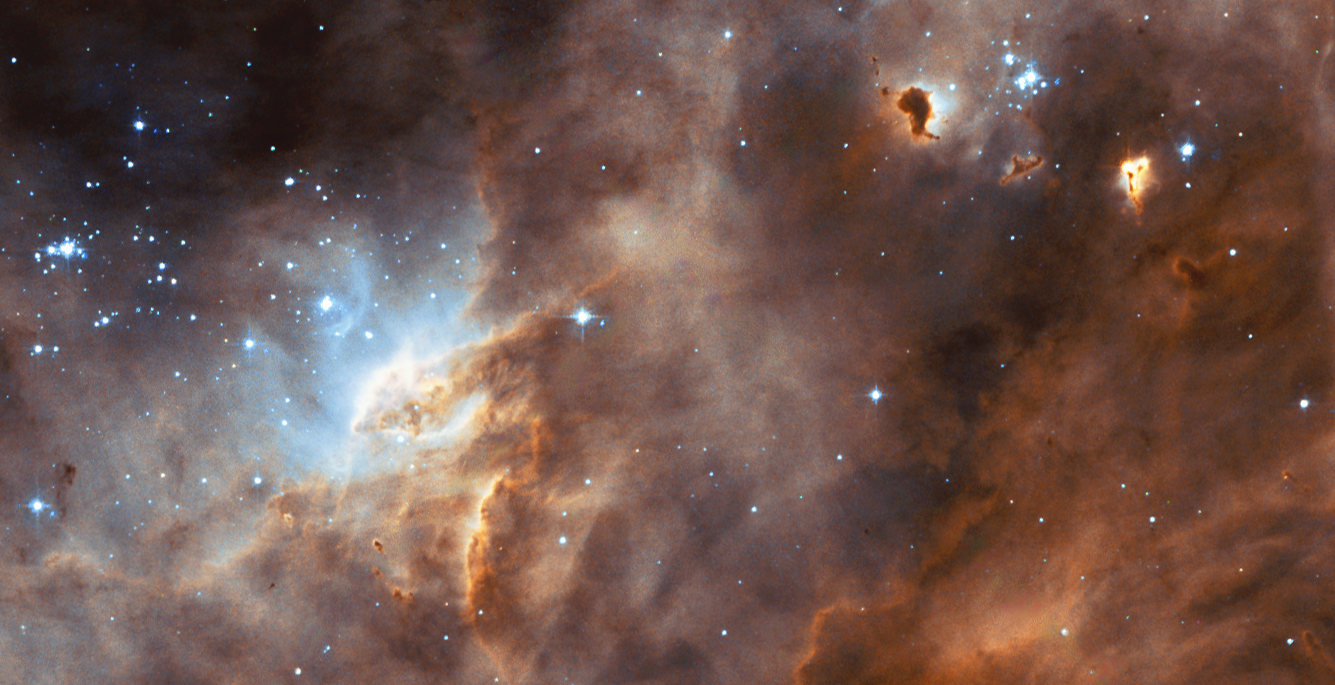
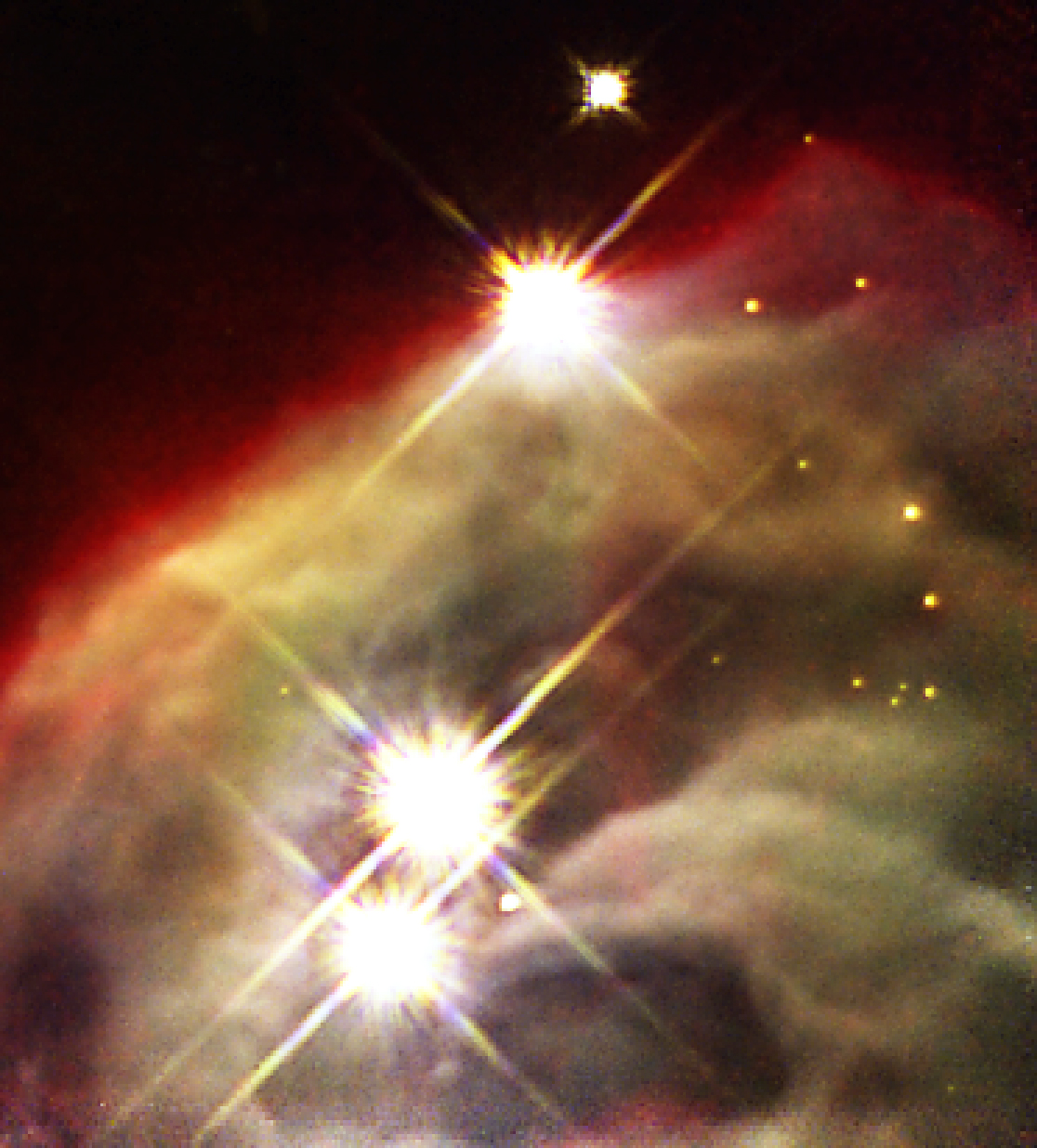
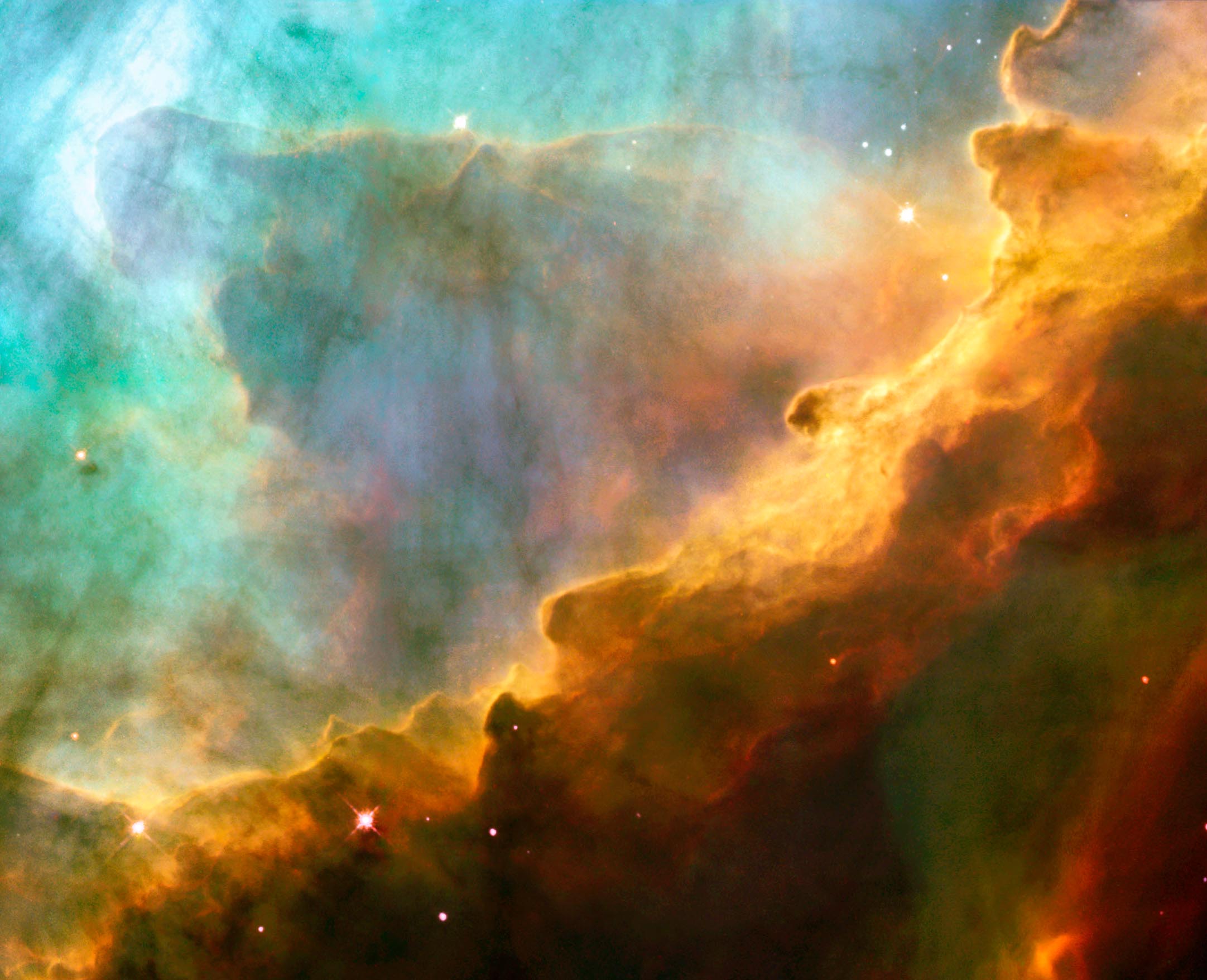
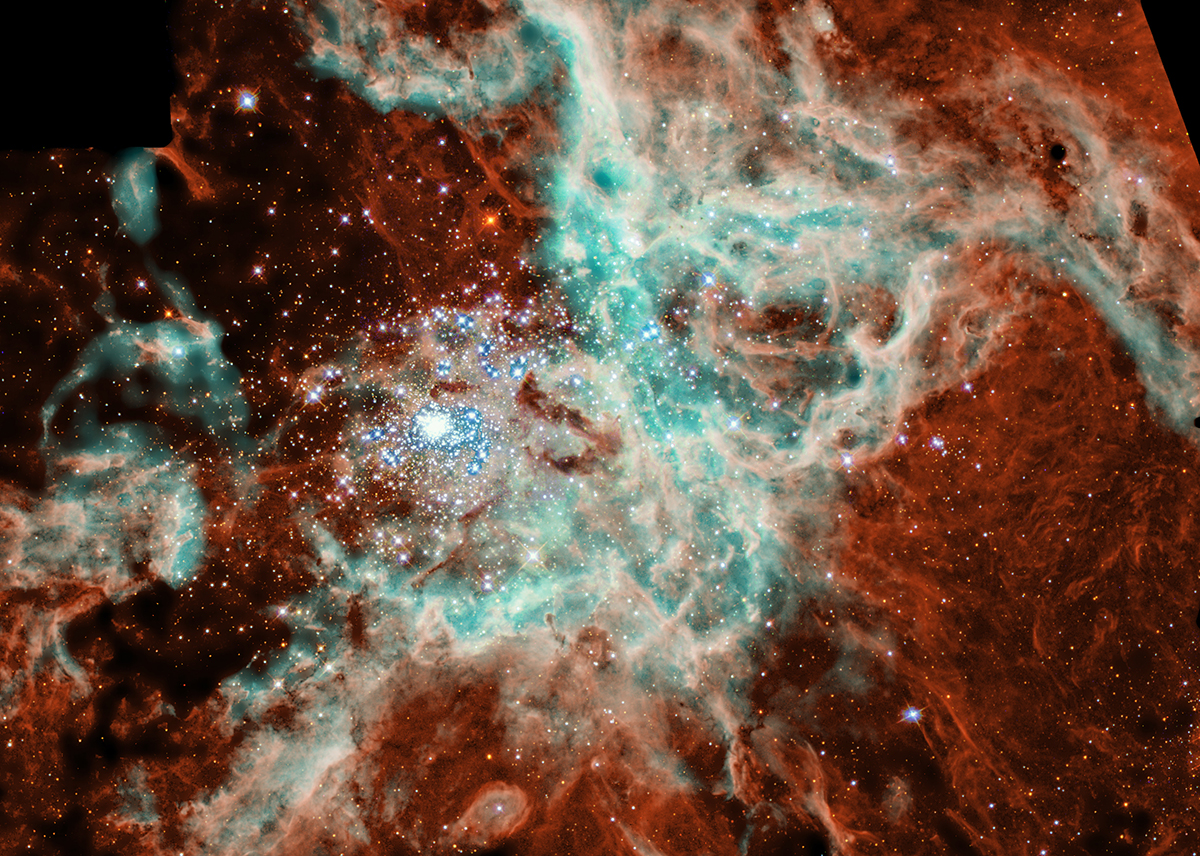
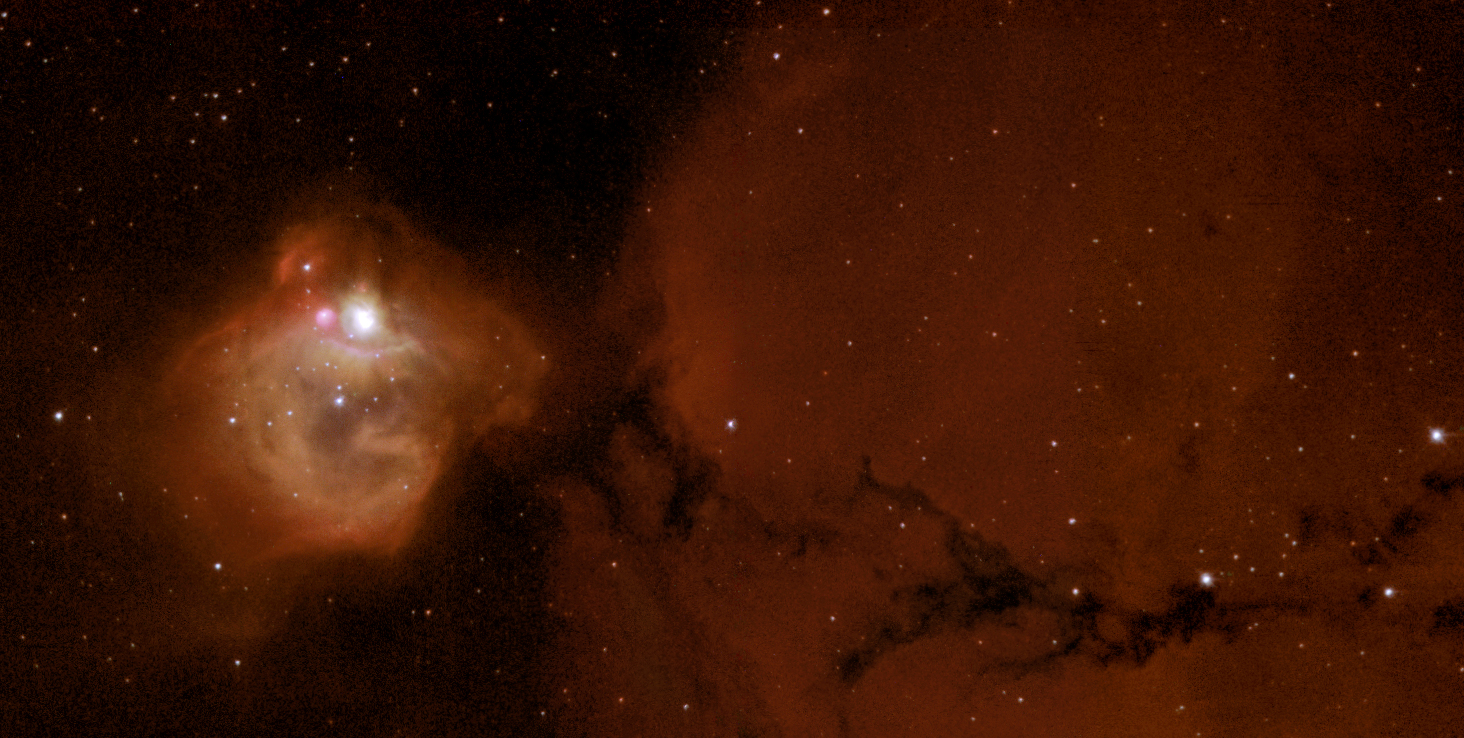
Extremely intense radiation from newly born, ultra-bright stars has blown a glowing, spherical bubble in the nebula NGC 1748, located in the Large Magellanic Cloud approximately 160,000 light-years from Earth. The average-looking star at the very center of the bubble is about 30 times more massive and almost 200,000 times brighter than our Sun. This young massive star drives powerful stellar winds and floods its surroundings with ultraviolet radiation, creating an expanding cavity of hot, ionized gas within the denser molecular cloud. NGC 1748 is part of a larger star-forming complex in the Large Magellanic Cloud, where conditions of lower metallicity compared to the Milky Way influence the efficiency and character of star formation in ways that help astronomers understand stellar birth across diverse galactic environments.
Scientific Significance
NGC 1748 provides a clear example of how the most massive stars reshape their surrounding environment through radiative and mechanical feedback. The spherical bubble visible in this image is a wind-blown cavity, created when the central star's powerful stellar wind sweeps up surrounding interstellar material into a thin, dense shell. Understanding these feedback processes is essential because they regulate the efficiency of star formation within molecular clouds — by dispersing or compressing gas, massive stars determine how many subsequent stars can form in their vicinity. NGC 1748's location in the Large Magellanic Cloud, with its lower metallicity, makes it particularly valuable for testing whether feedback processes operate differently in metal-poor environments, conditions that were more common in the earlier universe when galaxies had not yet been enriched by generations of stellar nucleosynthesis.
Observation Details
Hubble captured NGC 1748 using the Wide Field and Planetary Camera 2 (WFPC2) in a combination of narrowband and broadband filters. The narrowband hydrogen-alpha filter isolated the emission from ionized hydrogen gas, clearly delineating the bubble structure and the ionization front at its expanding boundary. Broadband filters in visual and red wavelengths captured the stellar population and the dust structures within and around the nebula. The observations resolved individual stars within and around the bubble down to roughly solar luminosities at the distance of the Large Magellanic Cloud.
Location in the Universe
Constellation
Dorado
Distance from Earth
160,000 light-years
Fun Facts
- 1
The central star powering NGC 1748's bubble is so luminous that if it replaced our Sun, it would appear almost as bright as the full Moon when viewed from Pluto — over 200,000 times brighter than our own modest star.
- 2
The bubble blown by the central star in NGC 1748 is expanding at several tens of kilometers per second, sweeping up the surrounding gas into a dense shell where new stars may eventually form from the compressed material.
- 3
The Large Magellanic Cloud, home to NGC 1748, is slowly being torn apart and consumed by the Milky Way's gravity, with streams of gas already being pulled from the satellite galaxy into our own galaxy's halo.
Image credit: NASA, ESA, Hubble Space Telescope