About This Image
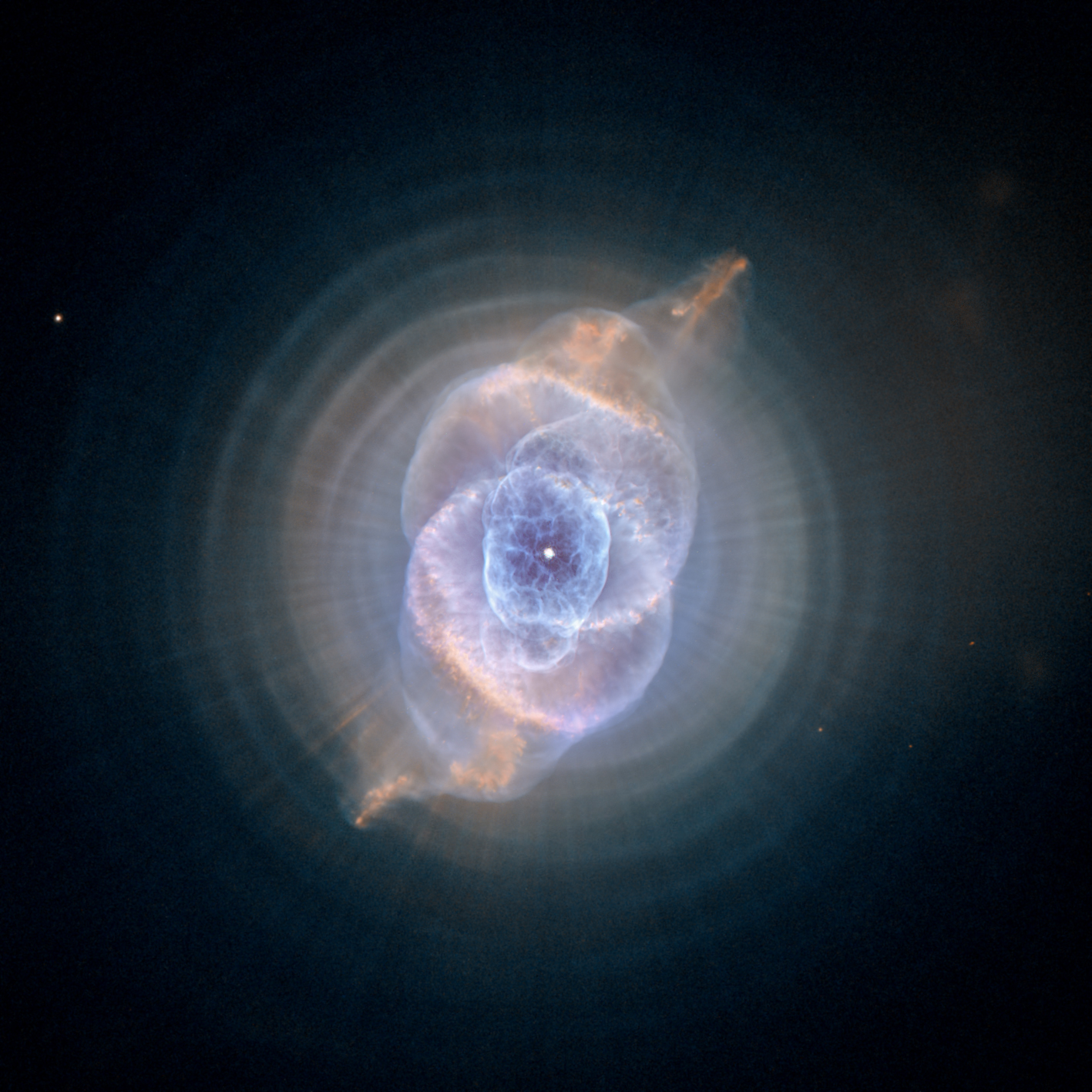
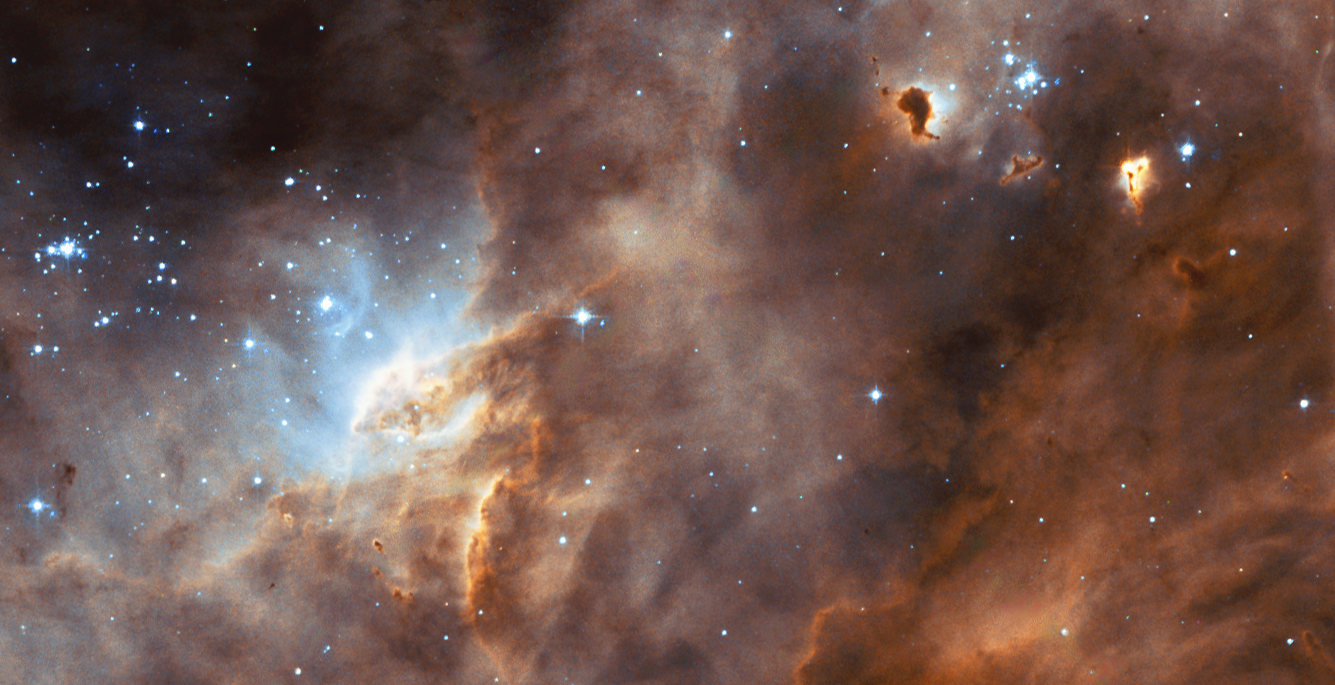
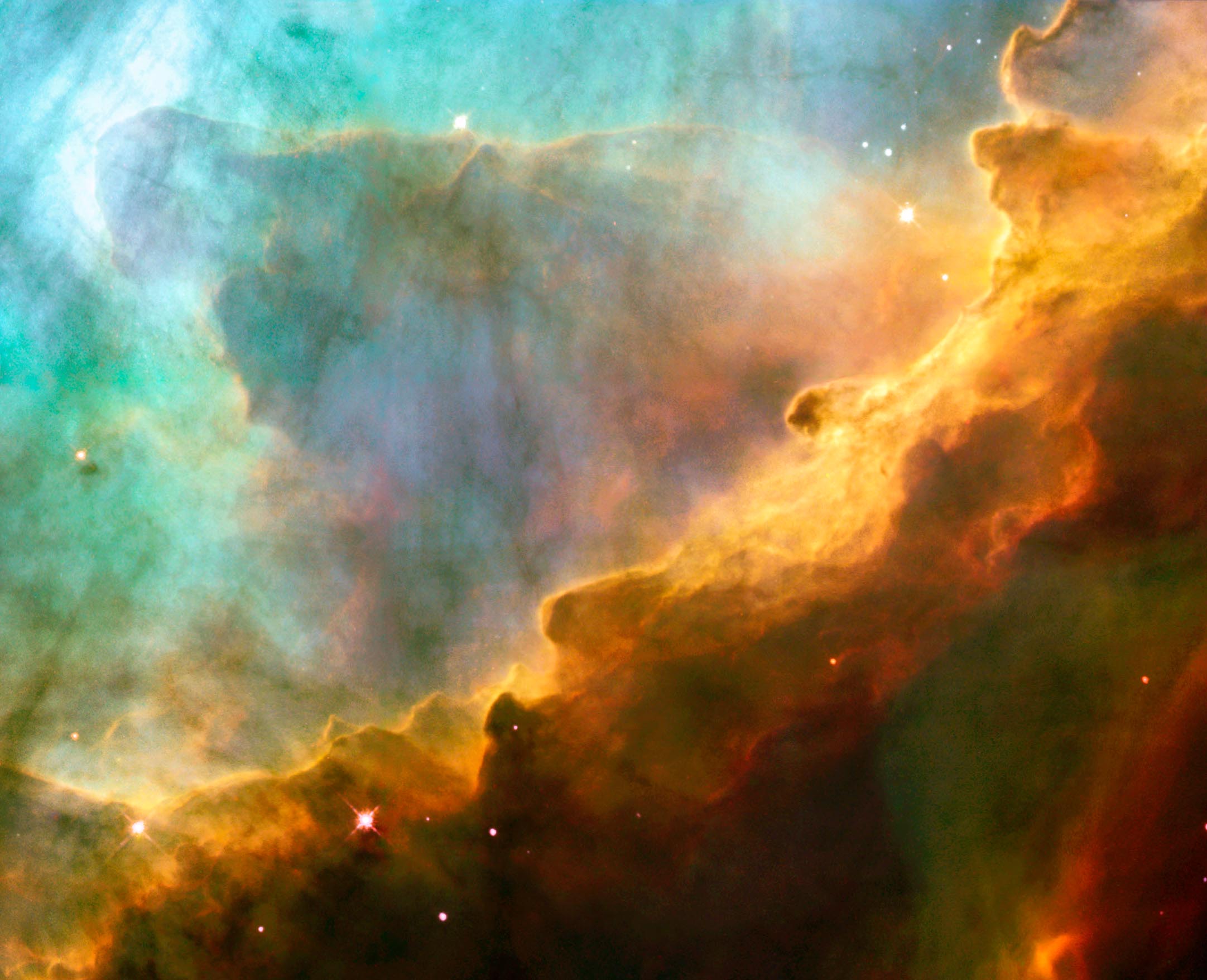
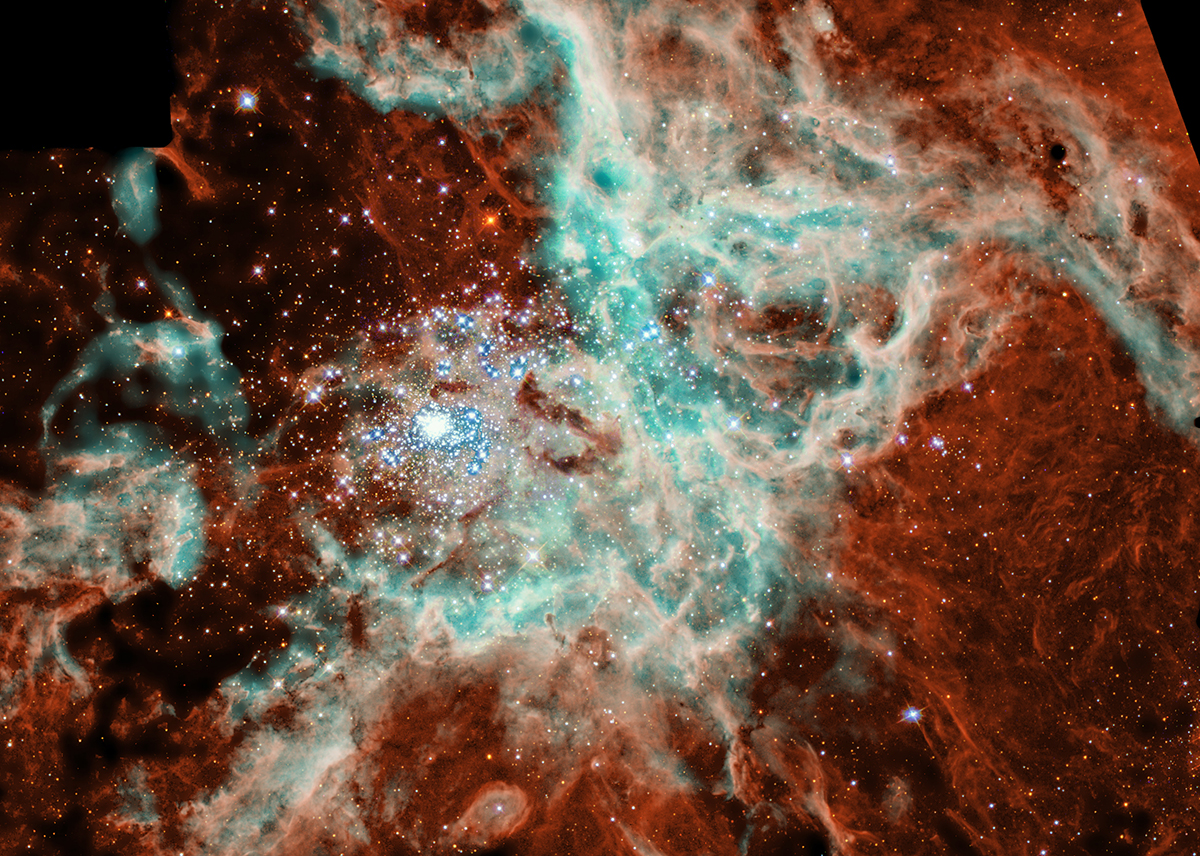
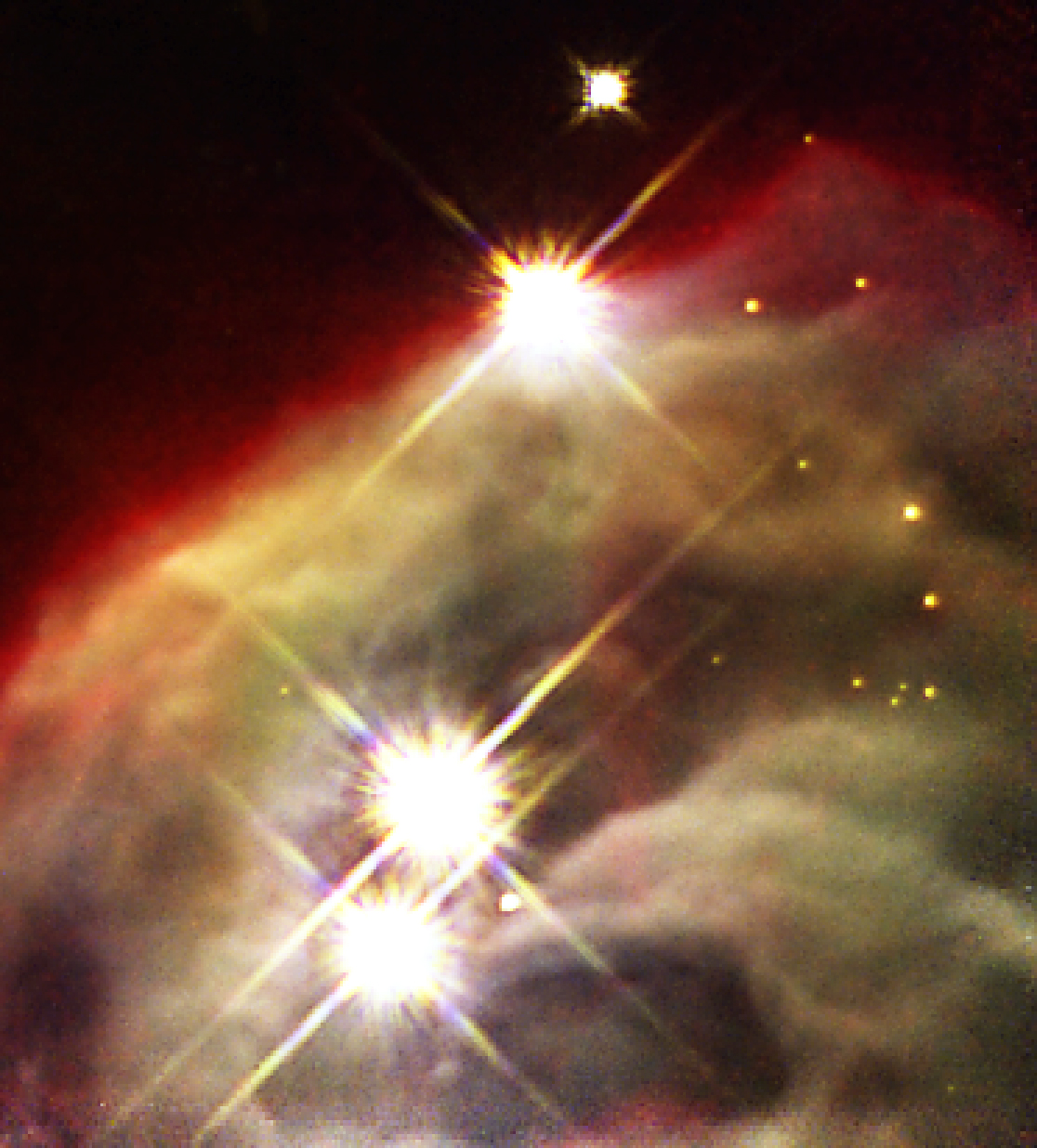
This image shows the tip of the Cone Nebula, a towering pillar of cold molecular gas and dust in the star-forming region NGC 2264 in the constellation Monoceros. This conical pillar stretches over seven light-years in length and is just a small portion of a much larger star-formation complex. The pillar's shape is sculpted by the intense ultraviolet radiation and powerful stellar winds from hot, massive stars located just beyond the top of the image. These energetic forces are slowly eroding the surface of the nebula, causing it to recede at a rate of about half a light-year every million years. The reddish veil surrounding the pillar is glowing hydrogen gas heated by nearby stars, while the dark interior remains cold enough for new stars to form within its dense molecular core.
Scientific Significance
The Cone Nebula is one of the most striking examples of a photodissociation region — the boundary where ultraviolet radiation from massive stars meets and erodes a dense molecular cloud. Studying these interfaces is crucial for understanding how star formation is both triggered and terminated by the radiation from nearby massive stars, a process known as radiative feedback. The pillar's survival against the relentless radiation from the NGC 2264 cluster depends on its density and mass; denser regions resist erosion longer, leading to the characteristic conical shape. Infrared observations have revealed embedded protostars within the pillar, suggesting that the compression of gas at the pillar's surface may actually be triggering a new generation of star formation even as the overall structure is being destroyed. The Cone Nebula thus embodies the dual nature of radiative feedback — simultaneously destructive and creative.
Observation Details
This image was captured using Hubble's Advanced Camera for Surveys (ACS) with a combination of narrowband filters that isolate light from hydrogen-alpha and ionized sulfur emission. These filters reveal the structure of the ionized gas surface layer that marks the boundary between the hot, irradiated exterior and the cold, shielded interior of the pillar. The ACS provided a field of view large enough to capture the entire tip of the cone in a single exposure while maintaining the angular resolution needed to resolve fine-scale features on the pillar's surface, including small protrusions and embedded jets from young stellar objects.
Location in the Universe
Constellation
Monoceros
Distance from Earth
2,500 light-years
Fun Facts
- 1
The Cone Nebula's pillar is about seven light-years long — roughly 1.6 times the distance from the Sun to its nearest stellar neighbor, Alpha Centauri — yet it represents only a tiny fraction of the vast NGC 2264 star-forming complex.
- 2
The Cone Nebula was first observed by astronomer William Herschel in 1785, but it took Hubble's sharp eye to reveal the incredibly detailed structure of its surface, including tiny wisps and jets from embedded protostars.
- 3
Within the dense core of the Cone Nebula, temperatures drop to just 10 degrees above absolute zero, creating conditions cold enough for hydrogen molecules to condense and eventually collapse under gravity to form new stars.
Image credit: NASA, ESA, Hubble Space Telescope