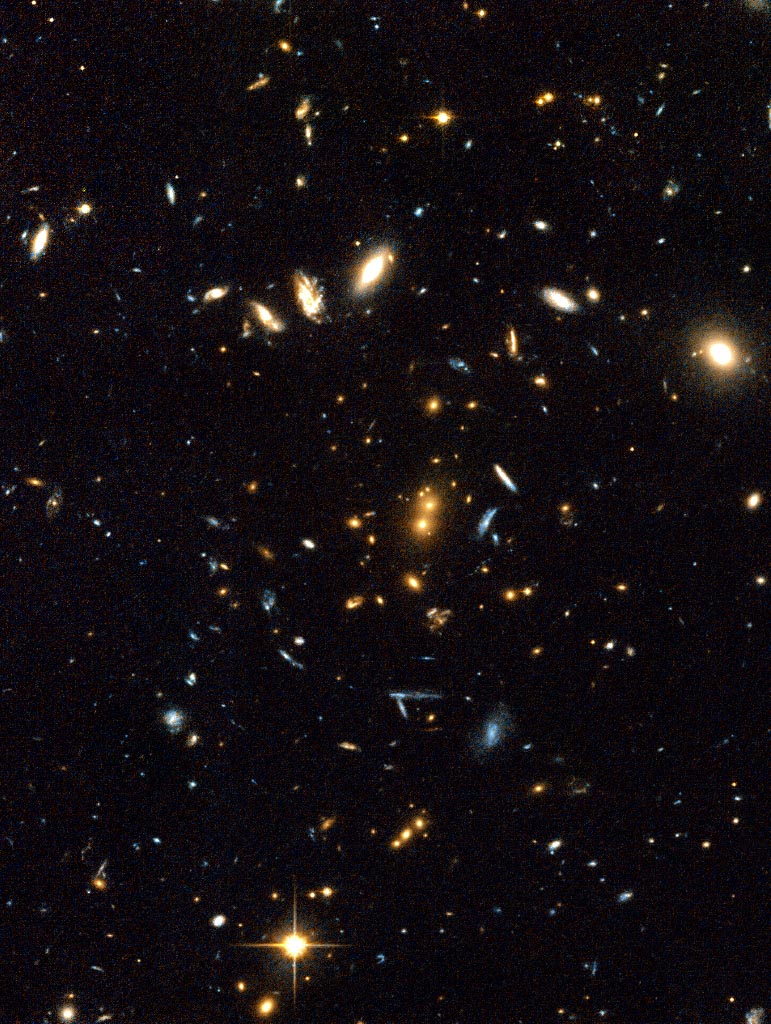
About This Image
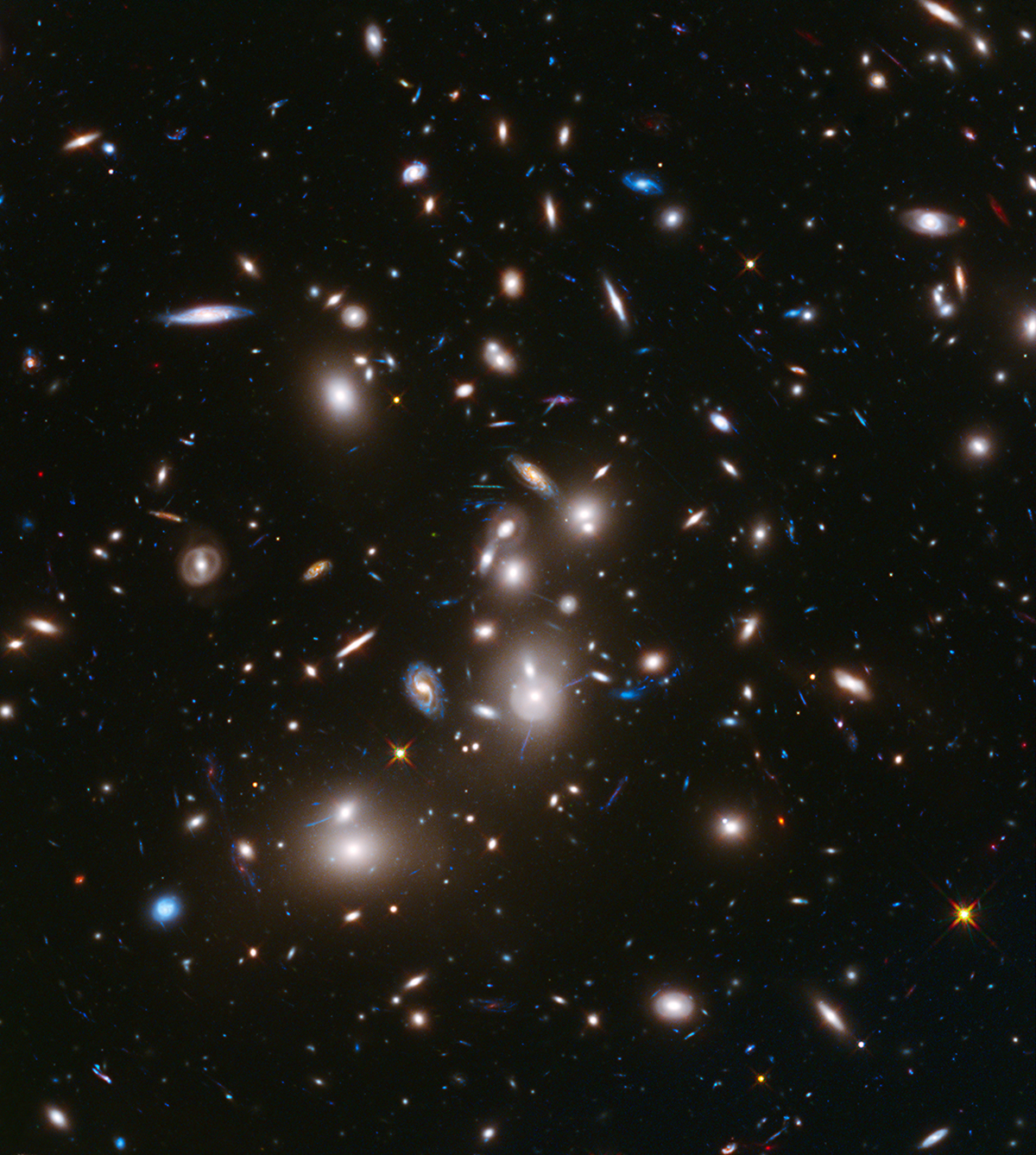
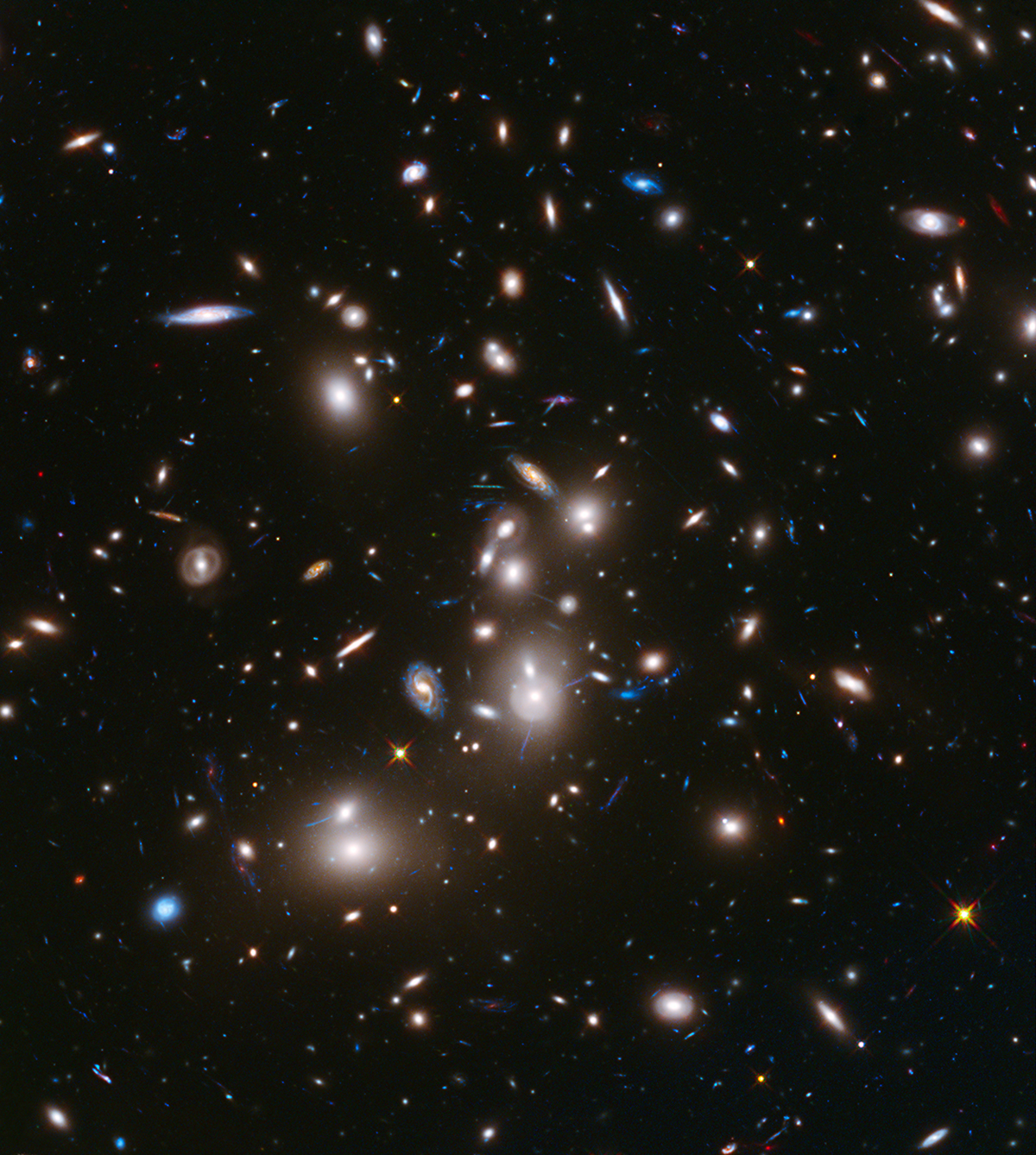
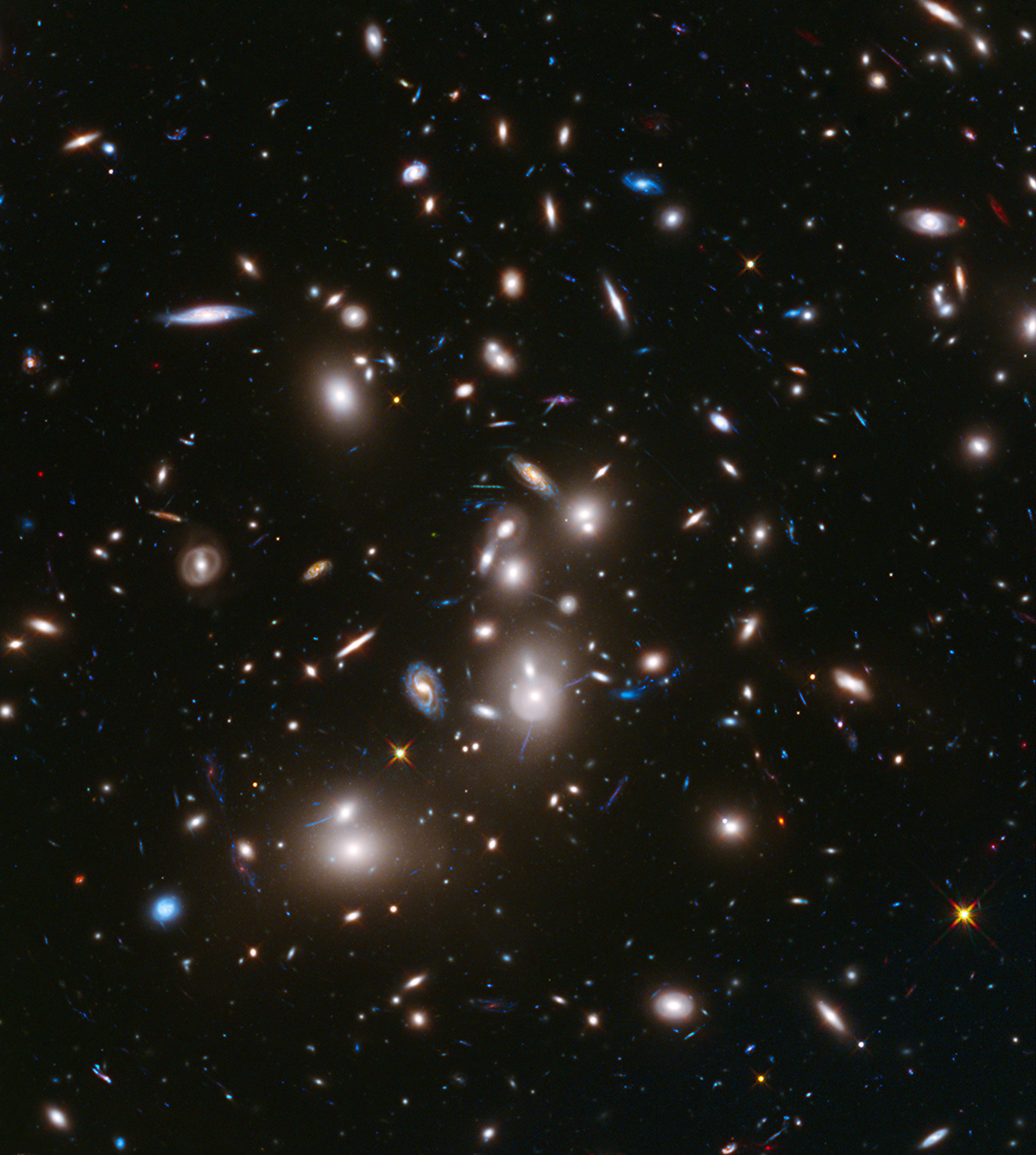
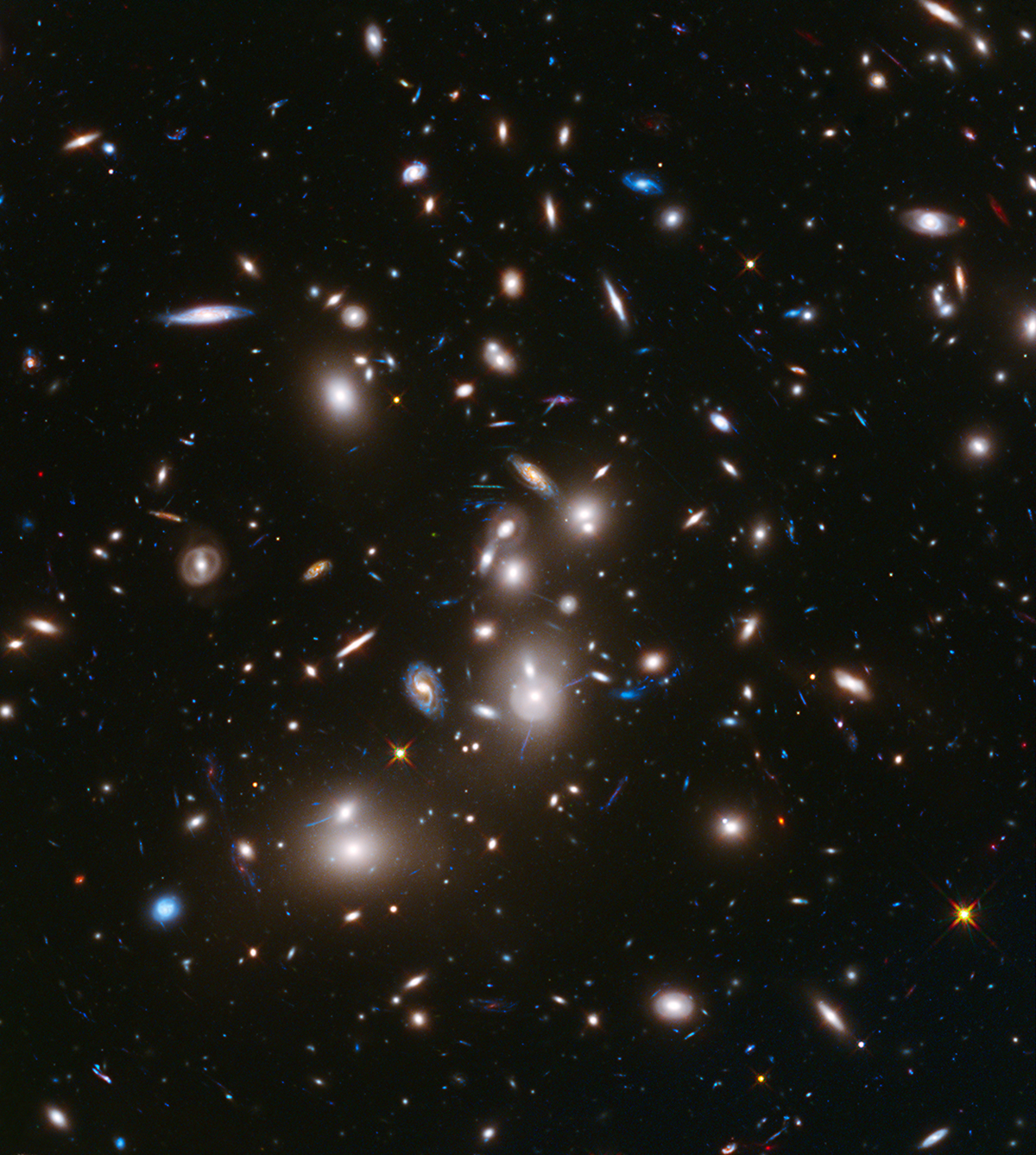
RDCS 1252.9-2927 is one of the most distant and massive galaxy clusters known in the early universe, located approximately 8.5 billion light-years from Earth in the constellation Centaurus. Observed as it appeared when the universe was only about five billion years old, this cluster was already a well-developed structure containing hundreds of galaxies, many of which had already evolved into red, quiescent ellipticals. The discovery of such a mature cluster at this cosmic epoch challenged existing models of structure formation, which predicted that massive clusters should take longer to assemble. Hubble's deep imaging revealed the galaxy population in extraordinary detail, showing that many cluster members had ceased forming stars far earlier than expected.
Scientific Significance
RDCS 1252.9-2927 has been pivotal in testing cosmological models of hierarchical structure formation. In the standard Lambda-CDM framework, galaxy clusters grow through the accretion and merging of smaller groups over billions of years. Finding a fully assembled, massive cluster at a redshift of 1.24 — corresponding to a lookback time of 8.5 billion years — placed strong constraints on the rate at which the largest cosmic structures can form. The presence of evolved, passively evolving elliptical galaxies within the cluster implied that these galaxies formed their stars even earlier, likely at redshifts of 3 or higher. This discovery helped establish the concept of downsizing, where the most massive galaxies form their stars earliest and most rapidly, contrary to naive expectations from hierarchical models.
Observation Details
Hubble observed RDCS 1252.9-2927 using the Advanced Camera for Surveys (ACS) in deep optical imaging and the Near Infrared Camera and Multi-Object Spectrometer (NICMOS) in the infrared. At a redshift of 1.24, much of the galaxies' optical light is shifted into the near-infrared, making NICMOS observations critical for studying the stellar populations of cluster members. The ACS data captured the rest-frame ultraviolet emission, sensitive to any ongoing star formation. By comparing the optical and infrared brightness of individual cluster galaxies, astronomers derived photometric redshifts and stellar mass estimates.
Location in the Universe
Constellation
Centaurus
Distance from Earth
8.5 billion light-years
Fun Facts
- 1
RDCS 1252.9-2927 was first detected as an extended X-ray source by the ROSAT satellite, and its extreme distance was confirmed through follow-up spectroscopy, making it one of the most distant X-ray-selected clusters at the time.
- 2
Many galaxies in this cluster appear red and devoid of young stars, meaning they stopped forming stars when the universe was only about three to four billion years old — an astonishingly early quenching epoch.
- 3
The cluster's total mass is estimated at around 200 trillion solar masses, comparable to nearby massive clusters like Coma, yet it existed when the universe was less than half its current age.
Image credit: NASA, ESA, Hubble Space Telescope