About This Image
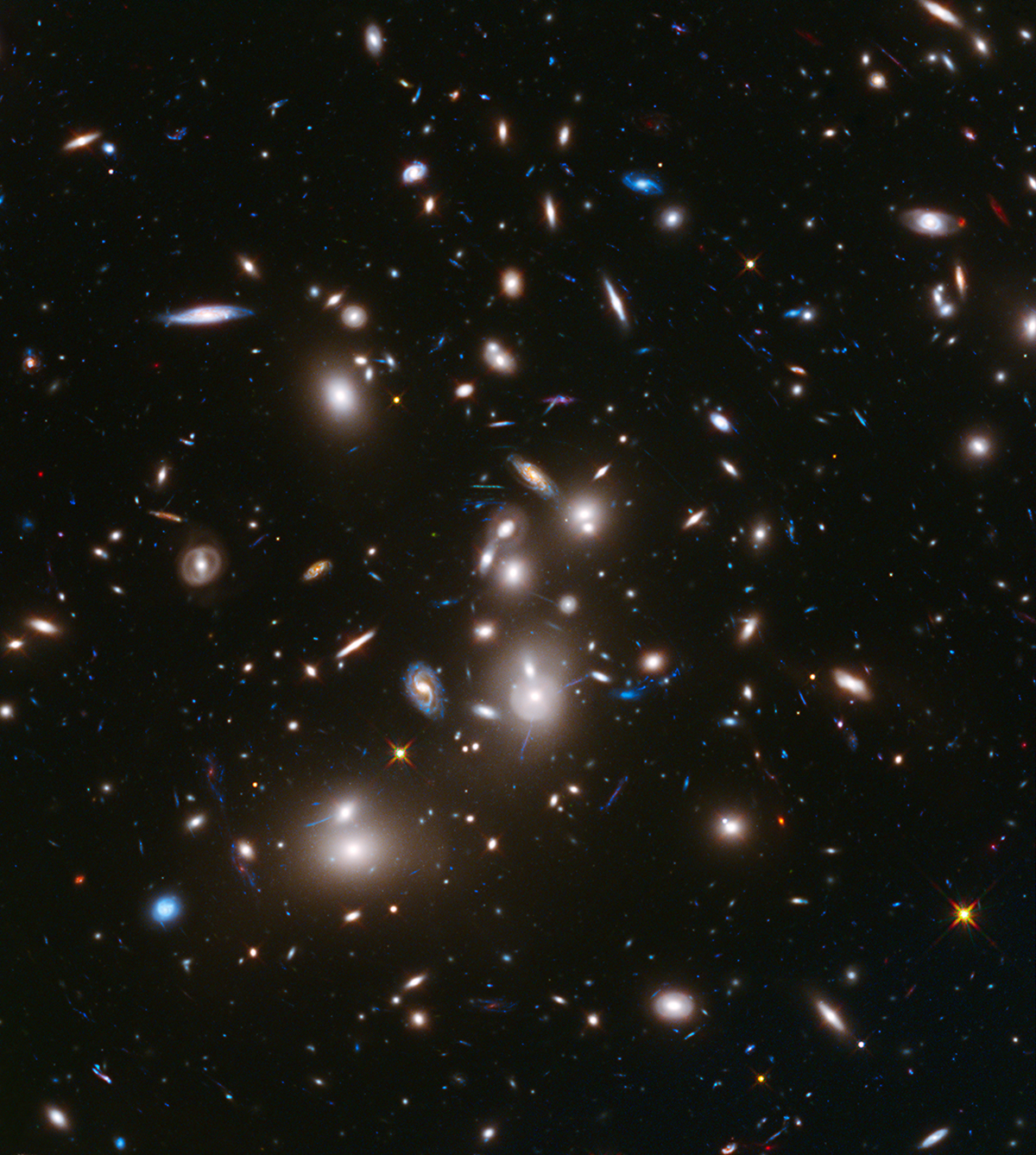
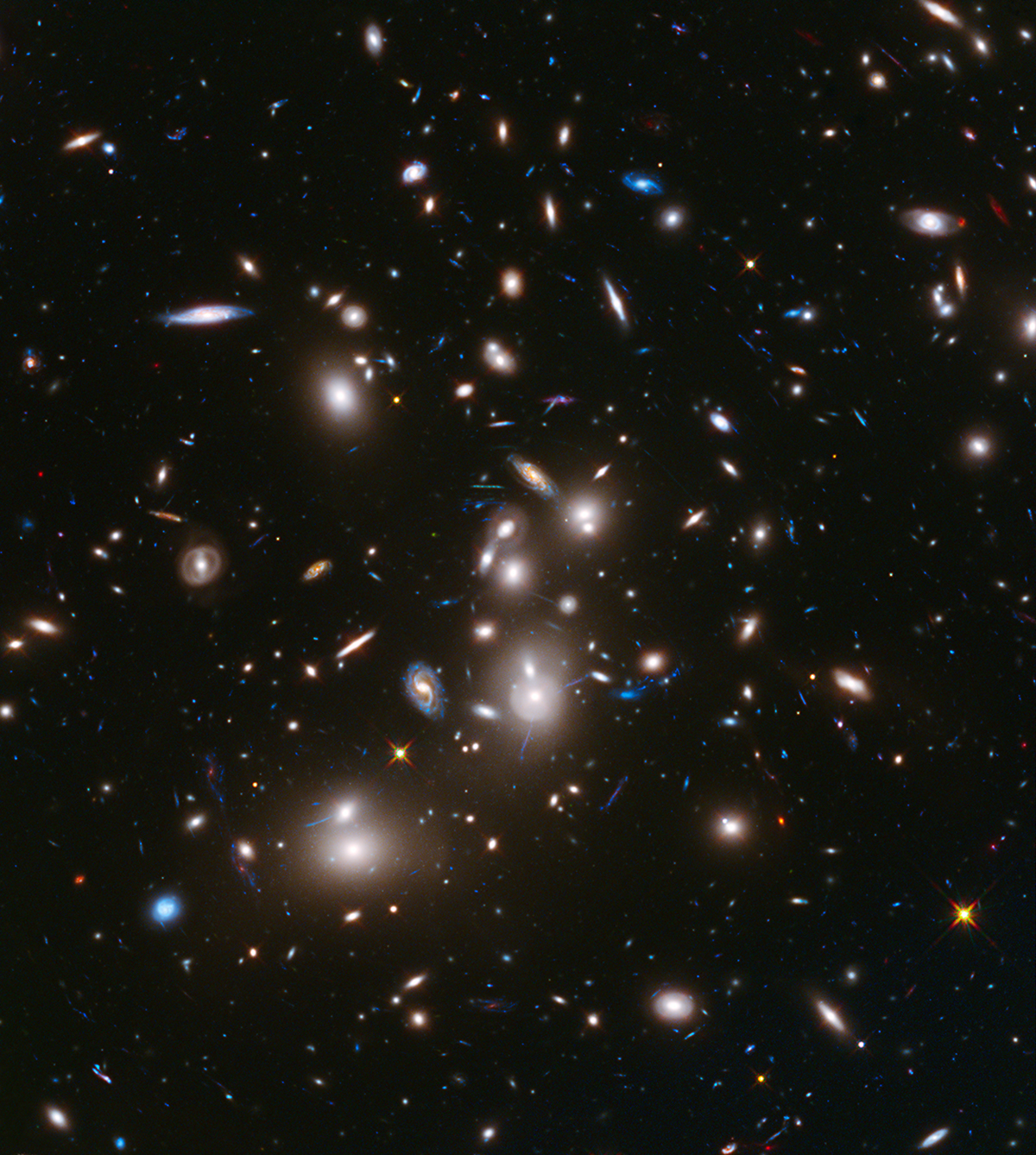
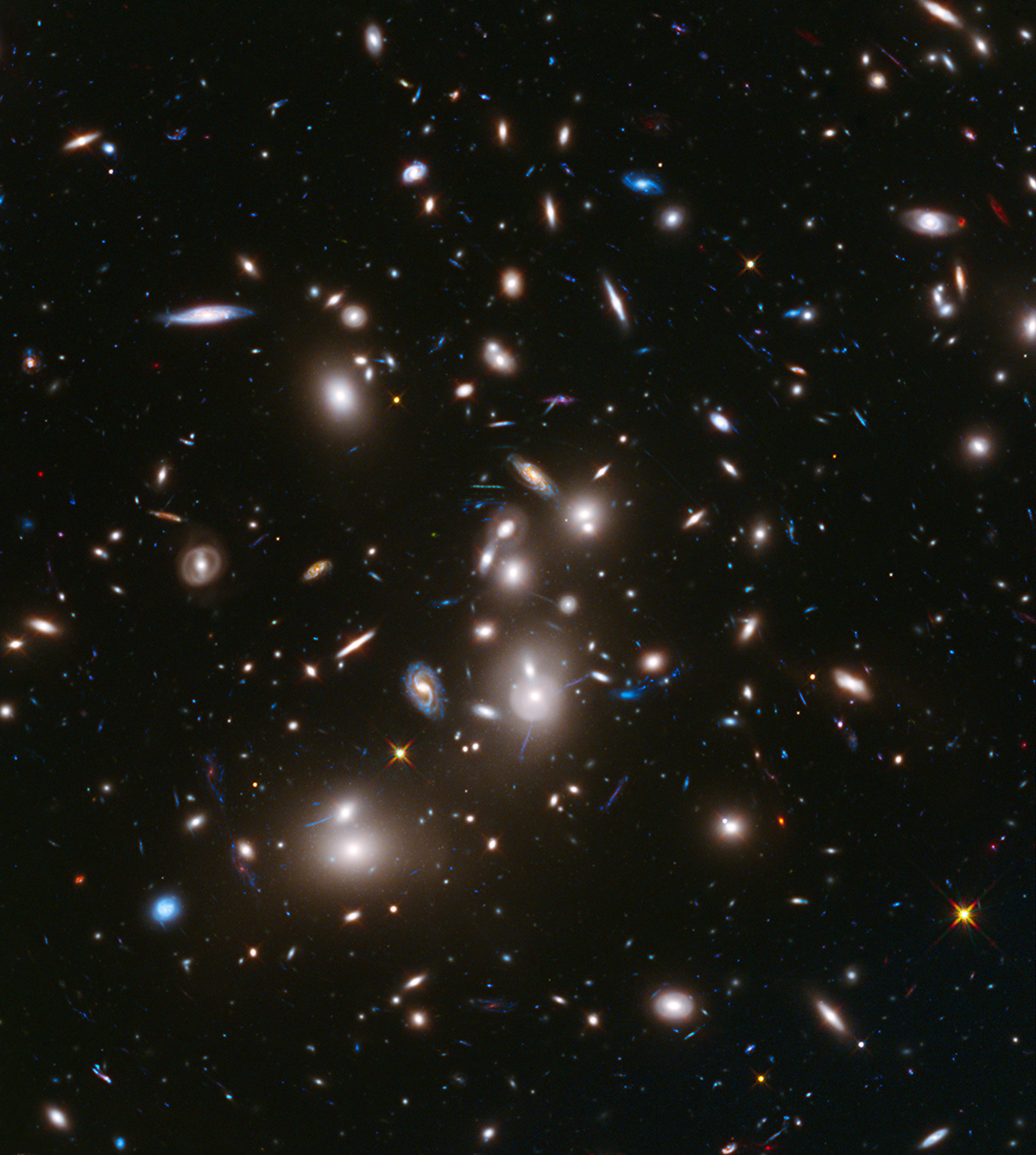
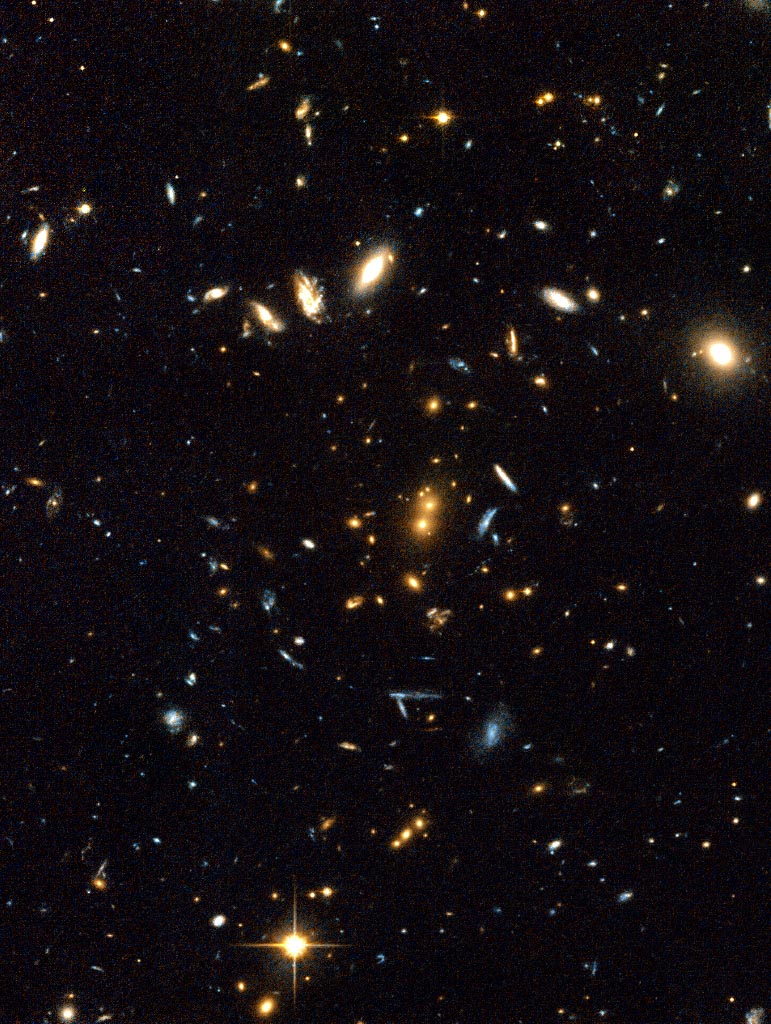
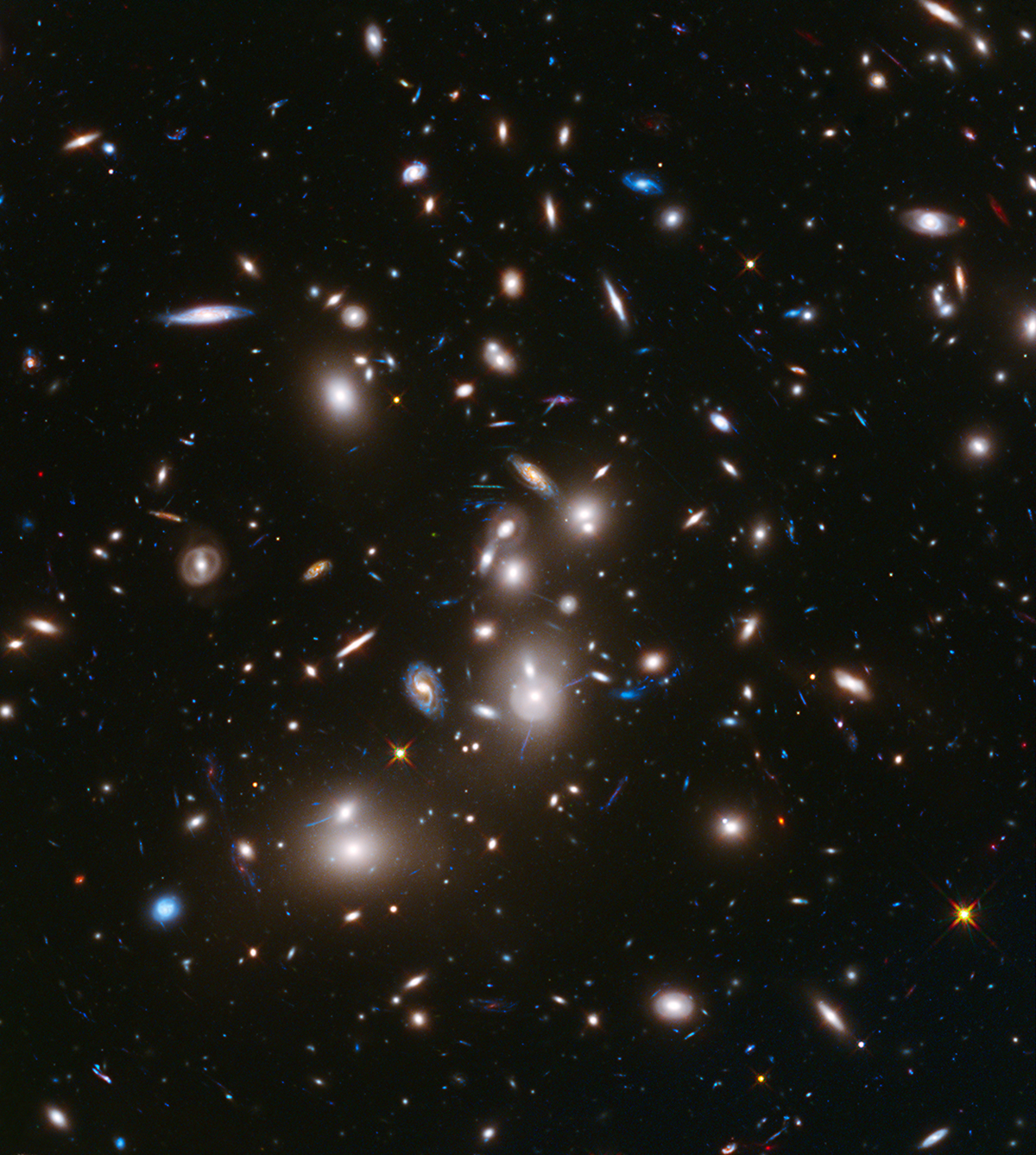
This additional Hubble view of Abell 2744, Pandora's Cluster, reveals different aspects of this colossal cosmic collision. The image showcases the cluster's role as a natural gravitational telescope, with dozens of distorted arcs and streaks visible across the frame — each one a distant background galaxy whose light has been warped and amplified by the cluster's immense gravitational field. Some of these lensed galaxies appear as multiple images of the same source, stretched into thin luminous arcs. The diversity of gravitational lensing features in Abell 2744 makes it one of the most powerful known cosmic lenses, enabling astronomers to peer deeper into the universe than Hubble alone could achieve.
Scientific Significance
The gravitational lensing properties of Abell 2744 make it an indispensable tool for probing the distant universe. By carefully mapping the positions and distortions of lensed background galaxies, astronomers can reconstruct a detailed model of the cluster's total mass distribution — including its dark matter component. These lensing models have revealed substructure within the dark matter distribution that provides constraints on the self-interaction properties of dark matter particles. The cluster's lensing magnification has enabled the detection of intrinsically faint dwarf galaxies at high redshifts, objects that are thought to be the building blocks of larger galaxies like the Milky Way. Studies of these lensed populations have informed our understanding of the ultraviolet luminosity function of early galaxies and their contribution to cosmic reionization.
Observation Details
This particular view of Abell 2744 was captured using Hubble's Wide Field Camera 3 in near-infrared wavelengths, complementing the optical observations from the Advanced Camera for Surveys. The near-infrared imaging was critical for detecting the most distant lensed galaxies, whose ultraviolet and optical light has been redshifted into infrared wavelengths by the expansion of the universe. The combination of ACS and WFC3 data across seven photometric filters enabled astronomers to estimate photometric redshifts for thousands of lensed sources, building a three-dimensional map of the galaxies behind the cluster spanning over 12 billion years of cosmic history.
Location in the Universe
Constellation
Sculptor
Distance from Earth
3.5 billion light-years
Fun Facts
- 1
Some background galaxies behind Abell 2744 appear as multiple copies in different locations around the cluster, because their light takes different paths through the warped spacetime created by the cluster's enormous mass.
- 2
The hot gas between galaxies in Abell 2744 reaches temperatures of over 100 million degrees Celsius — far hotter than the core of our Sun — heated by the tremendous energy released during the cluster merger.
- 3
Astronomers have used Abell 2744 to discover some of the most distant galaxies ever seen, including candidates from just 400 million years after the Big Bang, when the universe was only three percent of its current age.
Image credit: NASA, ESA, Hubble Space Telescope