About This Image
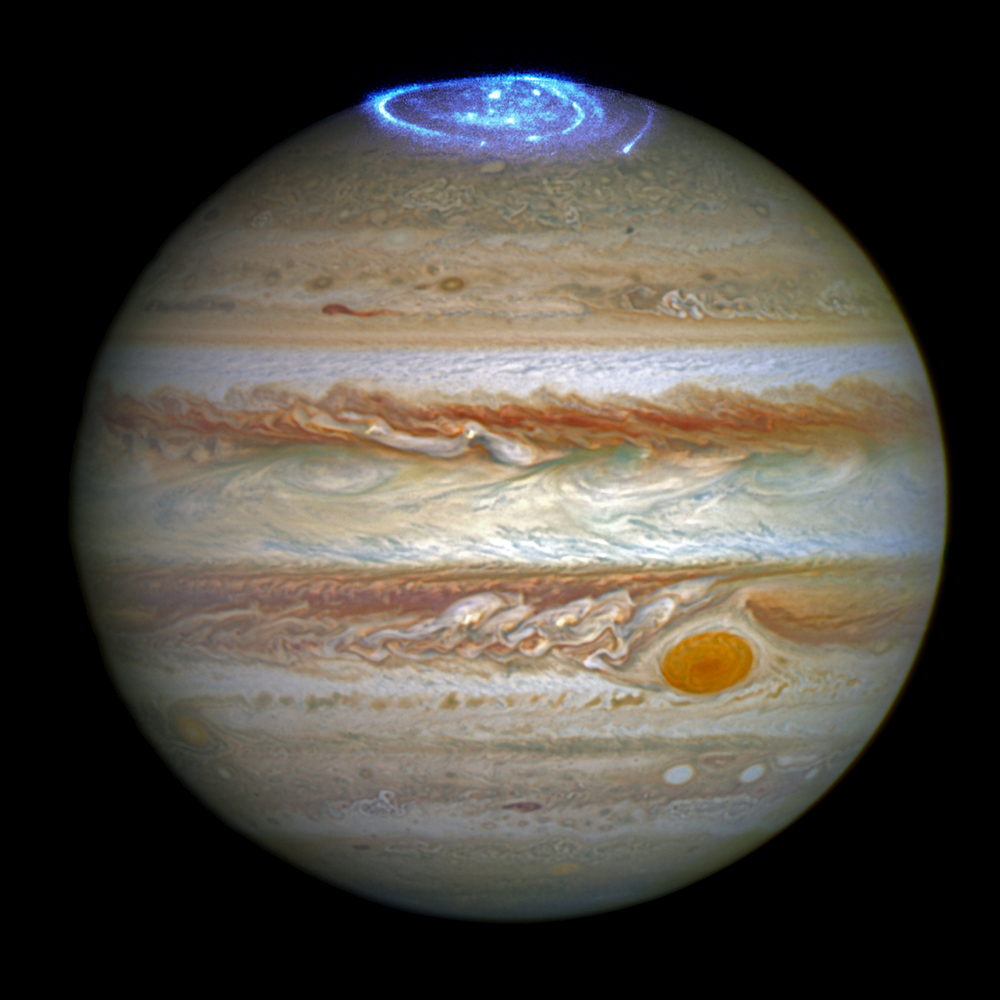
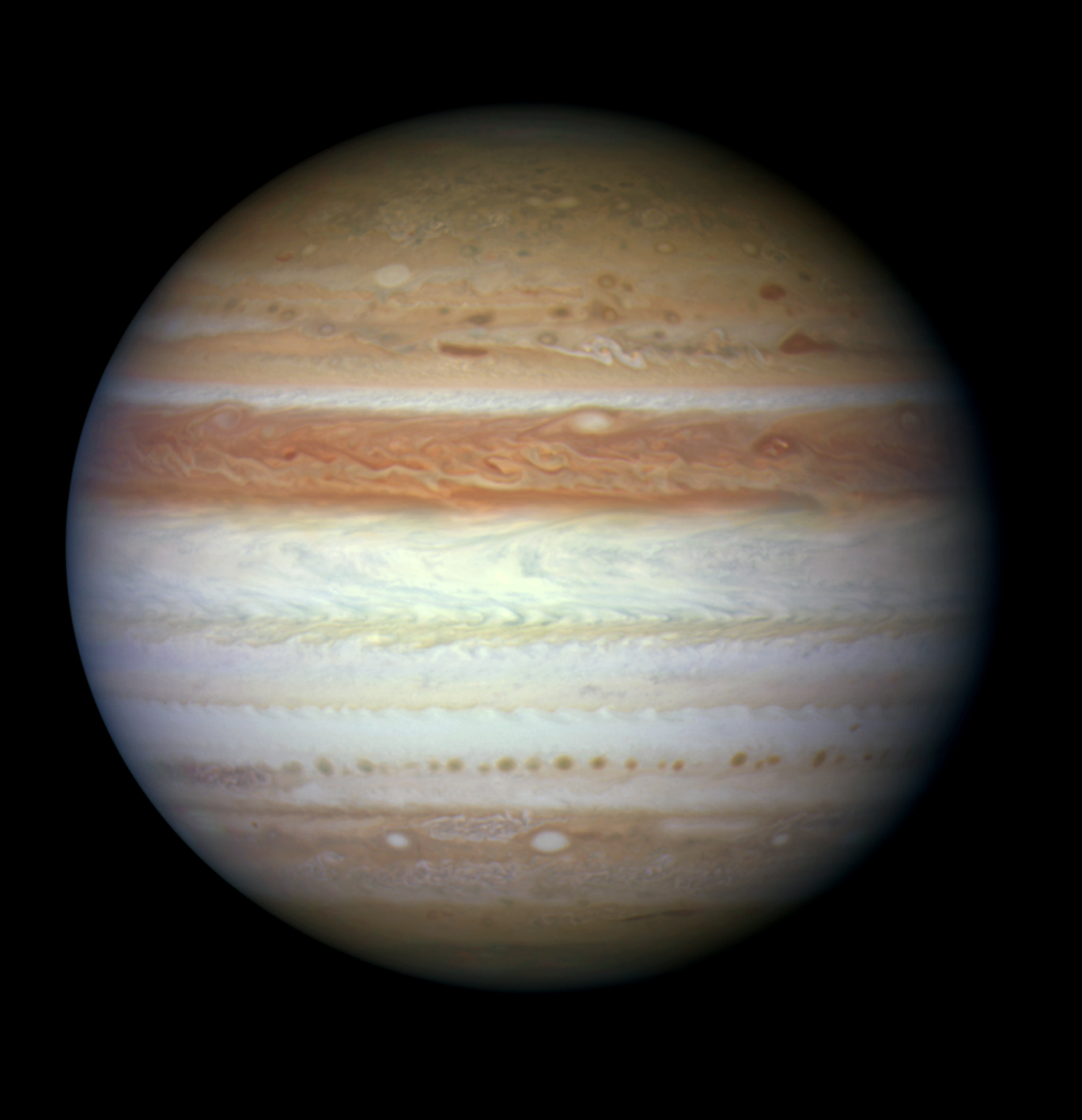
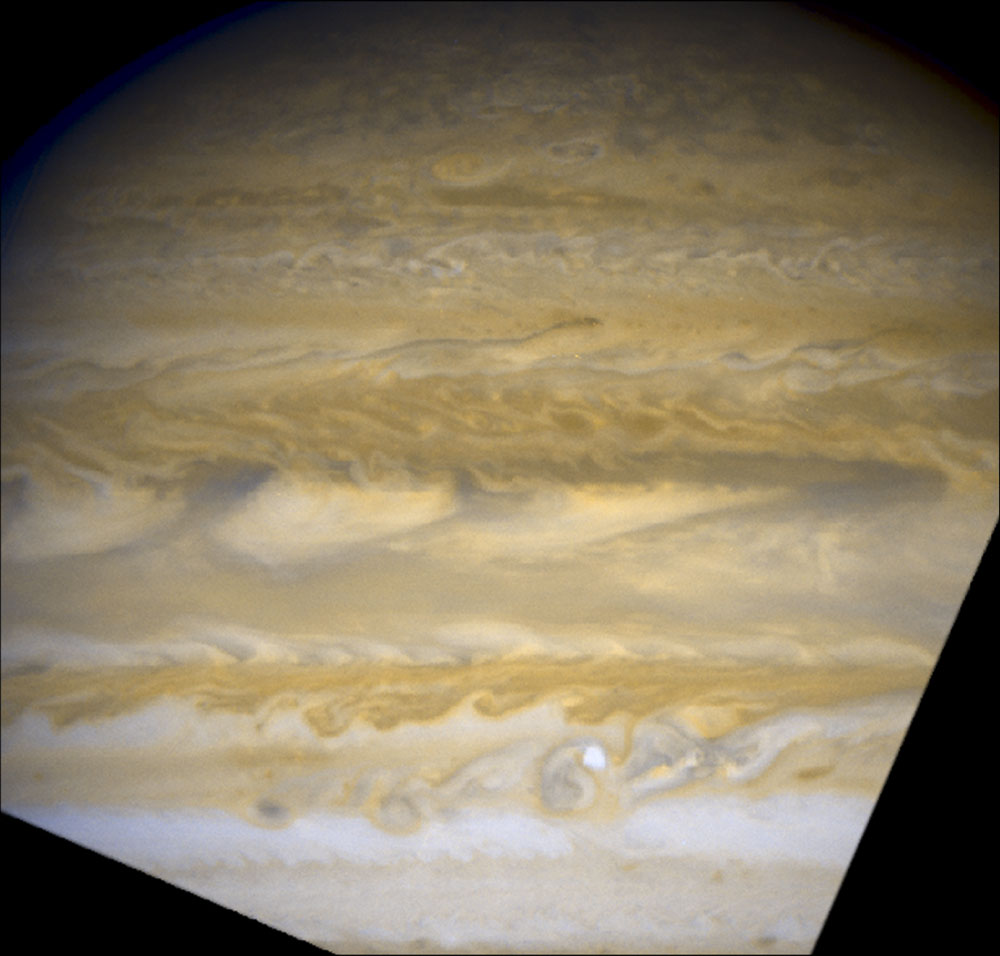
Jupiter's turbulent clouds are always changing as they encounter atmospheric disturbances while sweeping around the planet at hundreds of miles per hour. This image captures the dynamic complexity of the giant planet's weather systems, including a dark, serpent-shaped structure that is actually a small tear in the upper cloud deck, exposing the deeper, warmer atmospheric layers beneath. Jupiter's atmosphere is organized into alternating bands of eastward and westward jet streams that create the planet's characteristic striped appearance. Within these bands, massive storm systems develop, interact, merge, and dissipate over timescales ranging from days to centuries. Hubble's regular monitoring of Jupiter has been essential for tracking these atmospheric changes, revealing that the planet's cloud patterns are far more variable and complex than ground-based telescopes had previously suggested.
Scientific Significance
Hubble's long-term monitoring of Jupiter's atmosphere has produced one of the most complete records of weather evolution on any planet besides Earth. The 2007 observations captured Jupiter during a period of significant atmospheric change, including alterations in the color and structure of its equatorial bands and the emergence of new storm systems. Jupiter's atmosphere serves as a natural laboratory for studying fluid dynamics on a grand scale, where the absence of a solid surface allows weather patterns to develop and persist under conditions radically different from those on terrestrial planets. The interaction between Jupiter's deep internal heat source — which radiates roughly 1.7 times more energy than the planet receives from the Sun — and solar heating from above creates a complex two-layer convective system that drives the planet's atmospheric circulation. Understanding Jupiter's atmospheric dynamics also provides comparative context for studying the atmospheres of extrasolar giant planets detected around other stars.
Observation Details
This image was captured using Hubble's Wide Field Planetary Camera 2 (WFPC2) in multiple broadband filters spanning the blue, green, and red portions of the visible spectrum. The filters were chosen to probe different altitudes in Jupiter's atmosphere, with shorter wavelengths sampling higher-altitude hazes and longer wavelengths penetrating deeper into the cloud deck. A methane absorption band filter was also used to map the vertical structure of cloud features, since methane absorbs strongly at specific wavelengths and creates contrast between high clouds that reflect sunlight above the methane layer and lower features seen through more absorbing gas.
Location in the Universe
Constellation
N/A (Solar System)
Distance from Earth
365 million to 601 million miles (varies)
Fun Facts
- 1
Wind speeds in Jupiter's jet streams can exceed 400 miles per hour, creating shear zones where adjacent bands moving in opposite directions spawn enormous rotating storm systems visible from hundreds of millions of miles away.
- 2
The dark serpentine feature visible in this image is a break in Jupiter's ammonia ice cloud layer, allowing infrared radiation from the warmer atmosphere below to escape — these clearings appear dark in visible light but glow brightly in infrared images.
- 3
Jupiter's Great Red Spot, the most famous storm in the solar system, has been shrinking for over a century and is now less than half the size it was when first measured in the late 1800s — Hubble has tracked this contraction in unprecedented detail.
Image credit: NASA, ESA, Hubble Space Telescope