About This Image
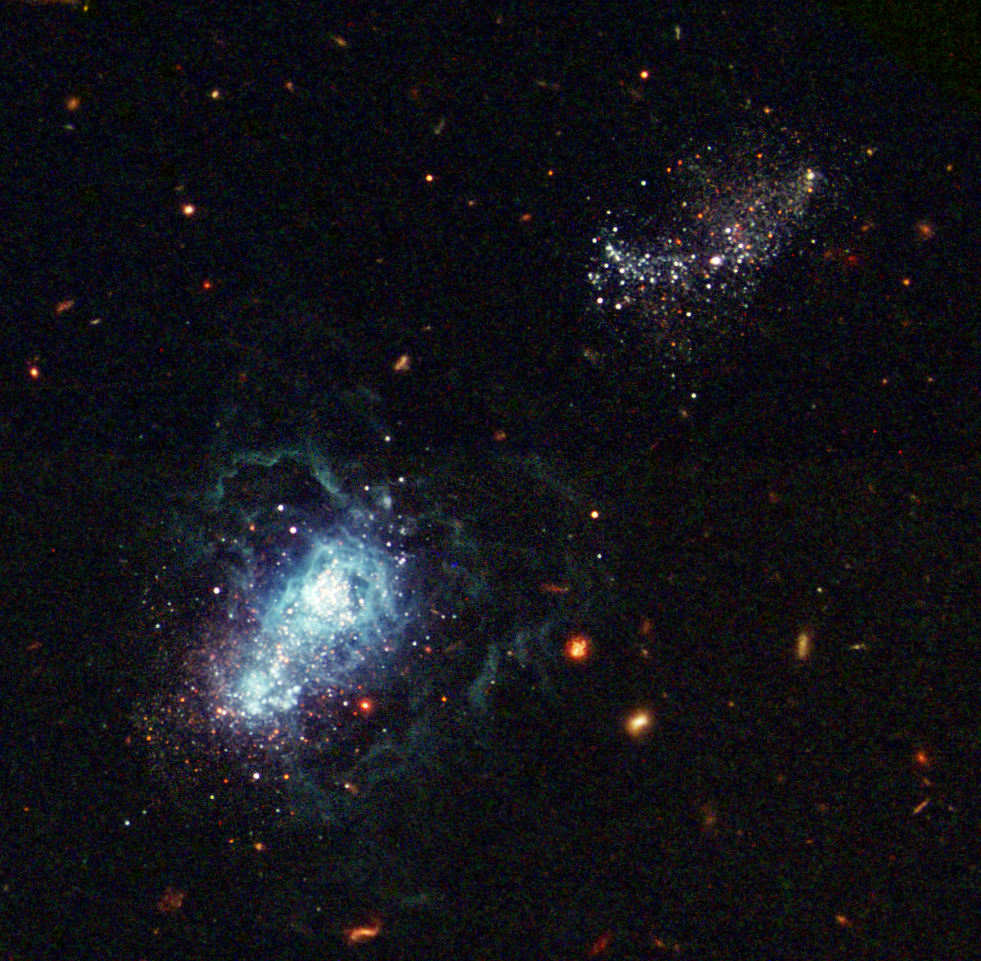
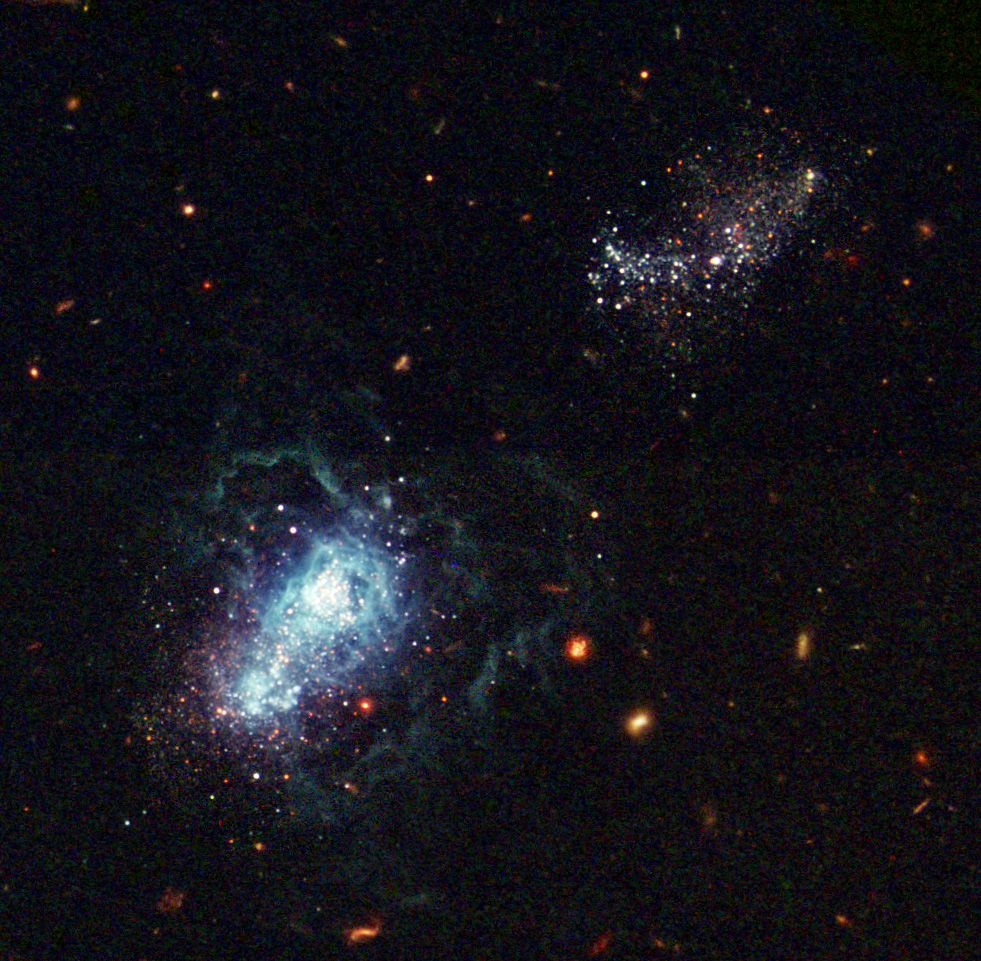
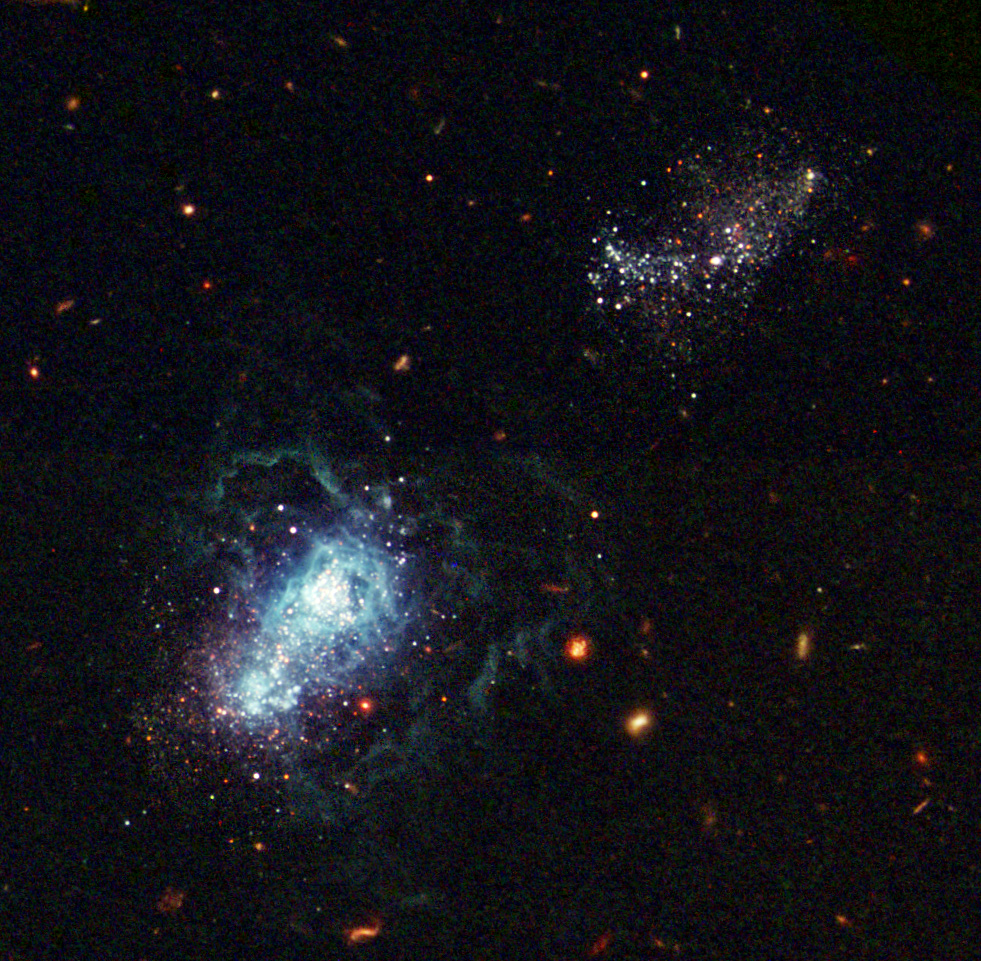
This image of I Zwicky 18 draws attention to the galaxy's extraordinary chemical composition and its implications for understanding star formation under primitive conditions. I Zwicky 18 is one of the most metal-poor galaxies known in the nearby universe, with oxygen and carbon abundances roughly 50 times lower than solar values. This extreme chemical poverty means that the gas from which its stars form closely resembles the nearly pristine hydrogen and helium that filled the universe shortly after the Big Bang. Stars forming in such metal-poor environments behave differently from those in chemically enriched galaxies: they produce less dust, emit more ultraviolet radiation, and follow different evolutionary pathways. Hubble's detailed observations of I Zwicky 18's star-forming regions have allowed astronomers to study these processes directly, providing a nearby window into the physics of star formation during the earliest epochs of cosmic history.
Scientific Significance
I Zwicky 18's extremely low metallicity makes it one of the most important nearby laboratories for studying star formation under conditions analogous to the early universe. In the standard framework of chemical evolution, galaxies progressively enrich their gas with heavy elements as successive generations of stars live, synthesize metals through nuclear fusion, and return enriched material to the interstellar medium through stellar winds and supernova explosions. I Zwicky 18's remarkably low enrichment level indicates that it has either converted very little of its gas into stars over cosmic time or that much of its enriched gas has been expelled by supernova-driven galactic winds. Hubble observations of individual star-forming clusters within the galaxy have revealed that massive star evolution proceeds differently at low metallicity, with reduced stellar wind mass-loss rates leading to more massive stellar remnants. These findings have direct implications for understanding the sources of gravitational wave events detected by LIGO and Virgo, since metal-poor environments are predicted to produce more massive black hole mergers.
Observation Details
Hubble's Advanced Camera for Surveys (ACS) observed I Zwicky 18 through a suite of filters including broadband visible wavelengths and narrowband filters isolating specific emission lines such as hydrogen-alpha and oxygen [O III]. The narrowband imaging was particularly valuable for mapping the distribution of ionized gas and measuring the chemical abundances of the star-forming regions through emission-line flux ratios. The combination of deep broadband imaging and emission-line mapping allowed astronomers to simultaneously characterize the galaxy's stellar populations and the properties of its ionized interstellar medium, providing a comprehensive picture of star formation in this exceptionally metal-poor environment.
Location in the Universe
Constellation
Ursa Major
Distance from Earth
59 million light-years
Fun Facts
- 1
I Zwicky 18 has an oxygen abundance of only about 2% of the solar value, making it one of the most chemically pristine galaxies in the local universe and a near-perfect analog of galaxies that existed billions of years ago.
- 2
Because of its extremely low dust content, I Zwicky 18 is nearly transparent to ultraviolet light — unlike dusty galaxies where UV radiation is absorbed and re-emitted as infrared, in I Zwicky 18 the UV photons escape freely into intergalactic space.
- 3
The galaxy's name comes from astronomer Fritz Zwicky, who cataloged it as the 18th entry in his first list of compact galaxies — Zwicky was also famous for coining the term 'dark matter' and proposing gravitational lensing decades before either concept was confirmed.
Image credit: NASA, ESA, Hubble Space Telescope