About This Image
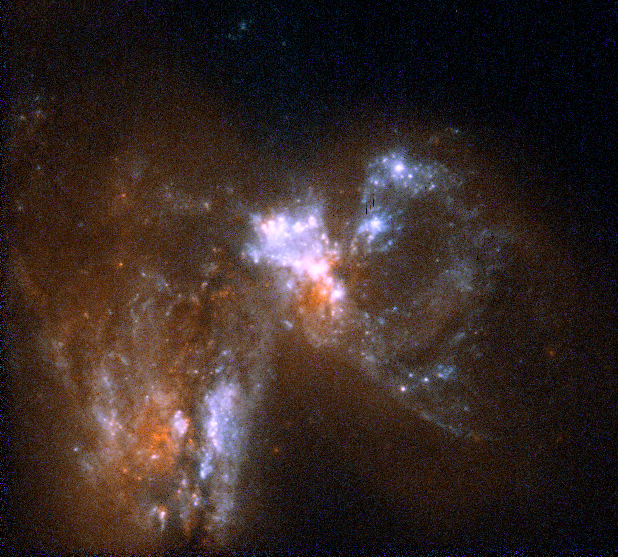
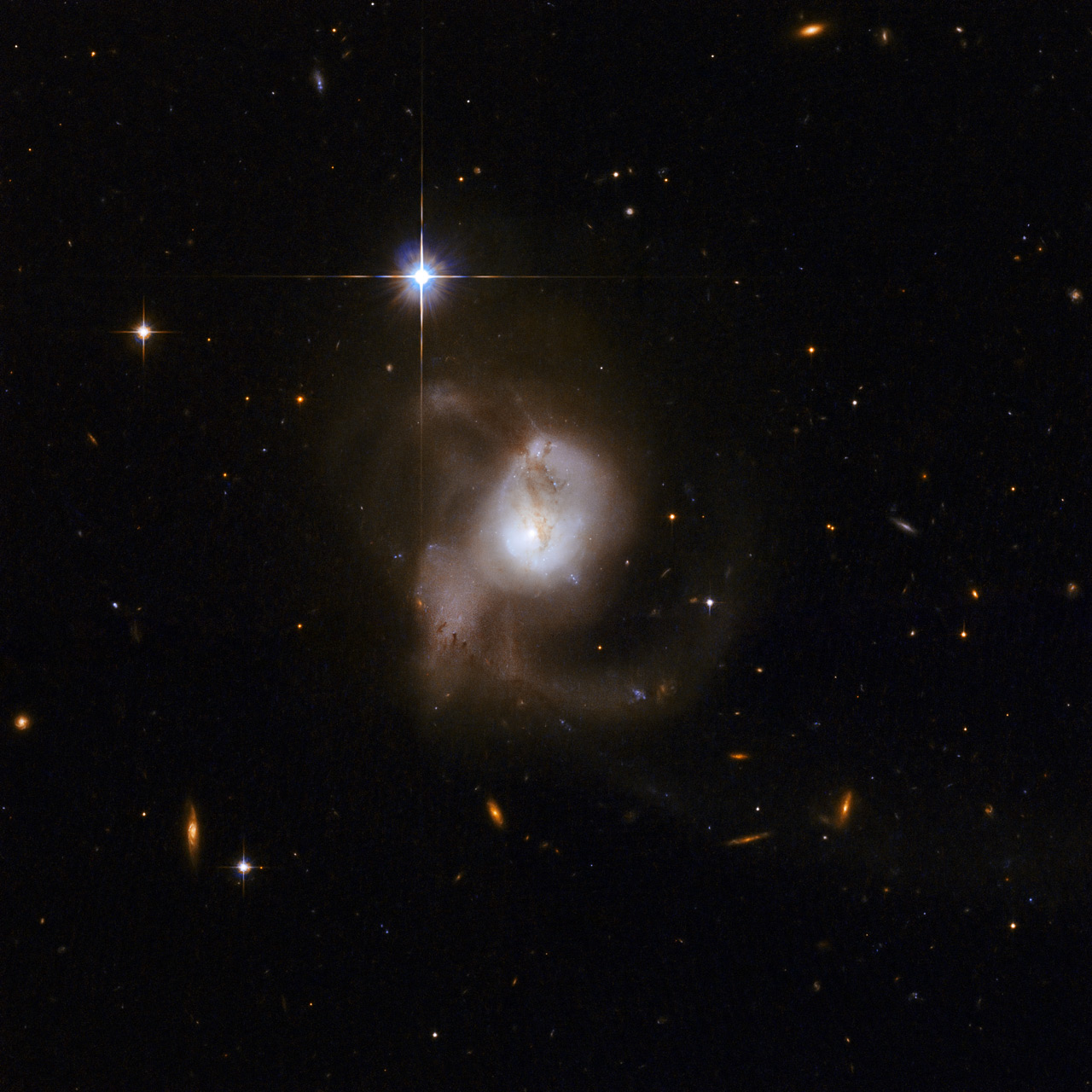
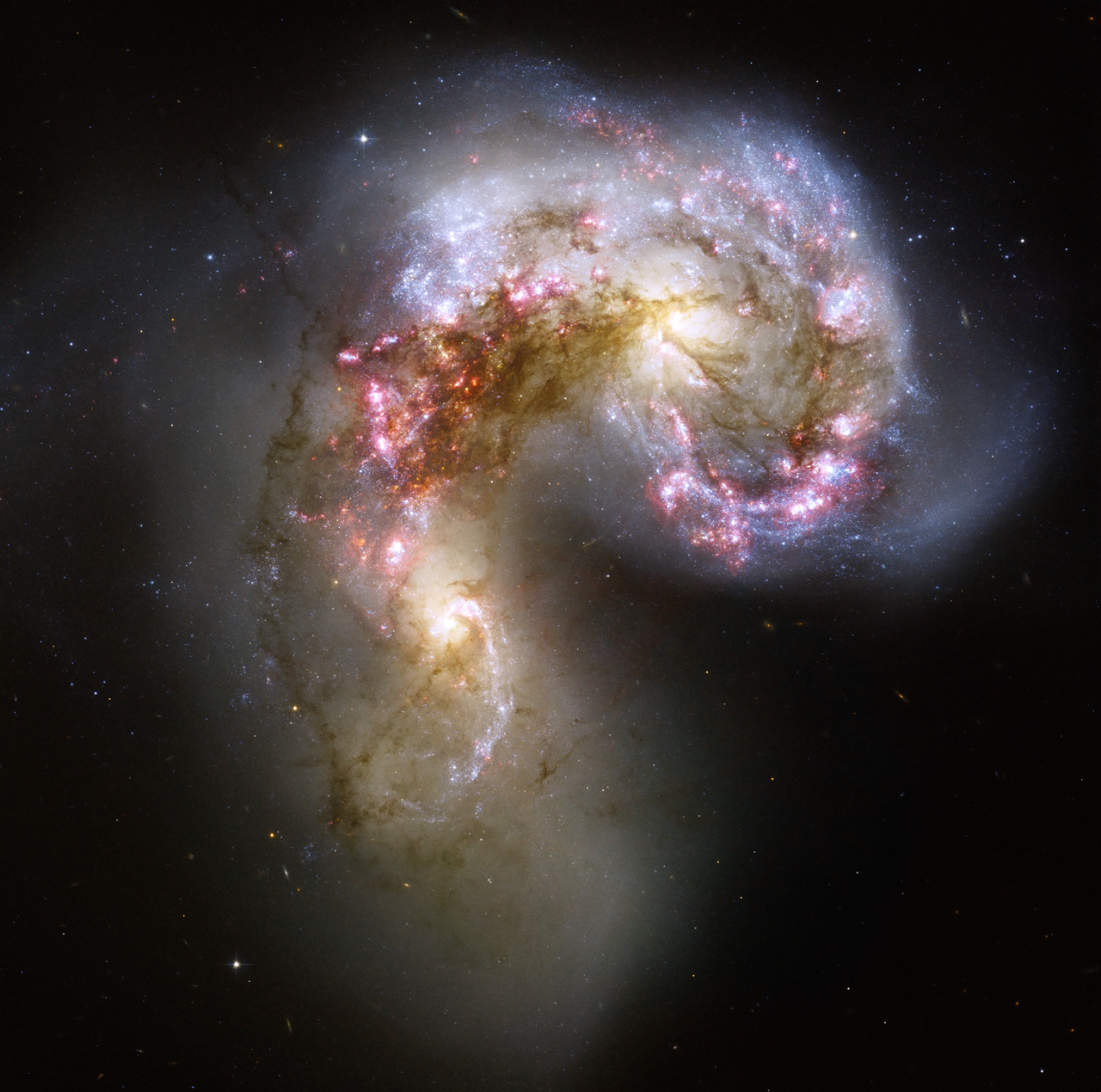
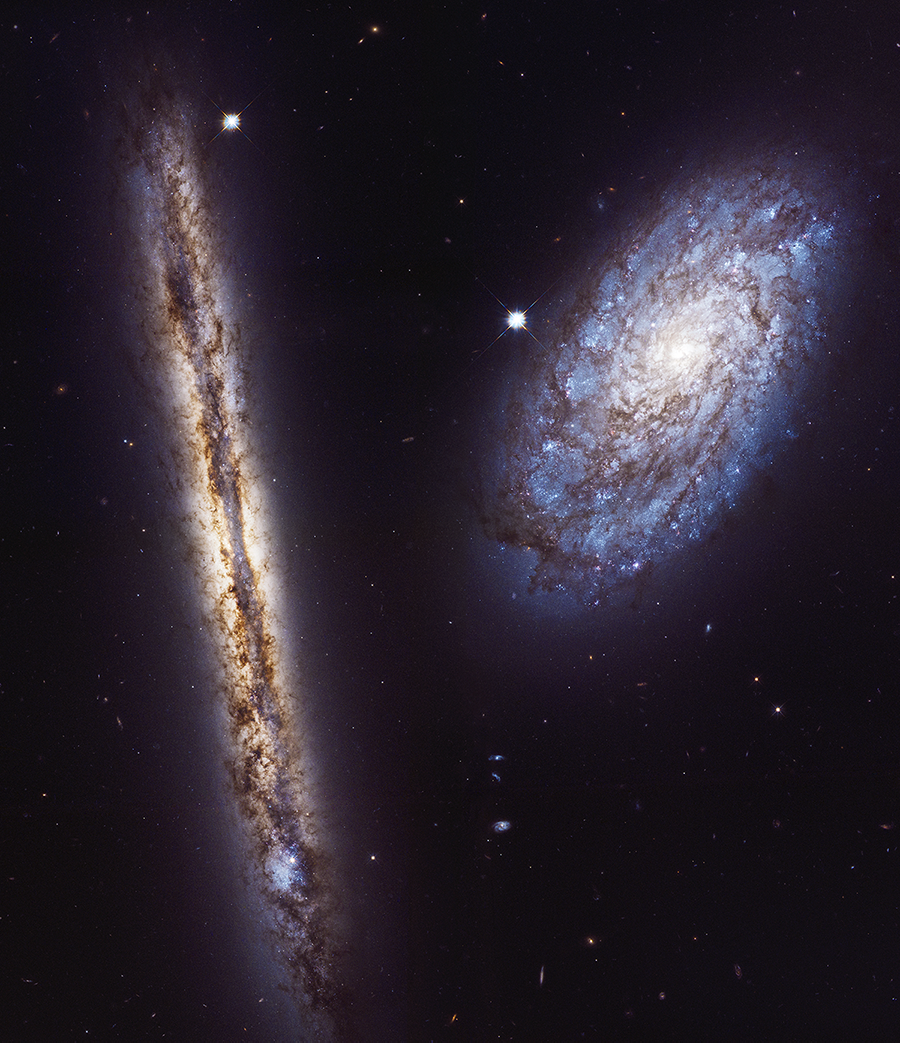
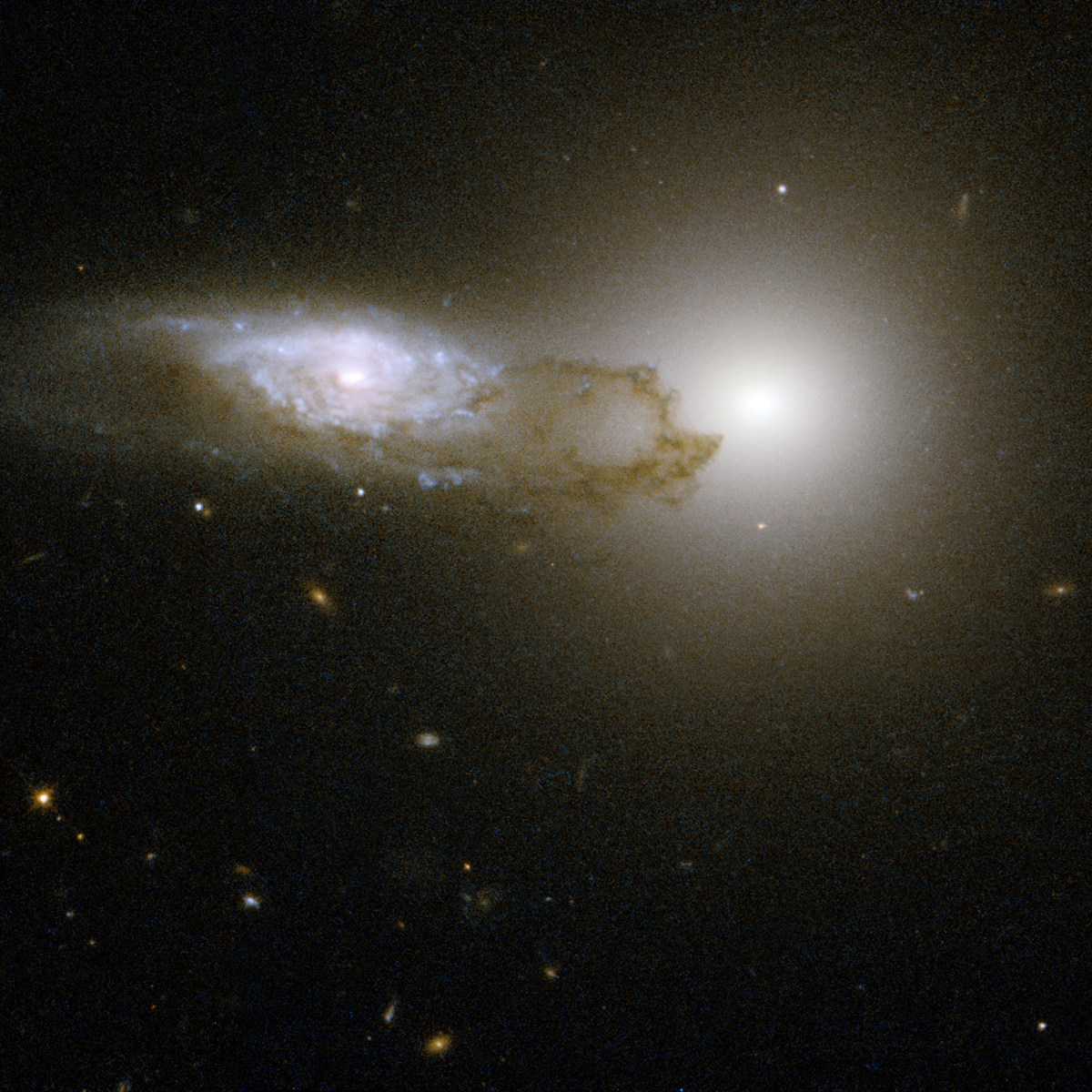
AM 1316-241 is made up of two interacting galaxies: a spiral galaxy (on the left) in front of an elliptical galaxy (on the right). The starlight from the background elliptical galaxy is partially obscured by bands and filaments of dust in the foreground spiral galaxy.
Scientific Significance
AM 1316-241 is valuable for measuring interstellar dust properties in external galaxies. Because one galaxy backlights the other, astronomers can estimate dust opacity and clumpiness directly from attenuation patterns. These constraints improve correction models for star-formation rates and stellar masses derived from galaxy photometry.
Observation Details
Hubble's sharp optical imaging resolves narrow dust filaments against the background elliptical light. Multi-band measurements compare attenuation at different wavelengths to infer dust behavior. The interaction geometry also reveals tidal distortions that can be matched with dynamical models.
Location in the Universe
Constellation
Unknown
Distance from Earth
145 million light-years
Fun Facts
- 1
AM 1316-241 aligns a dusty spiral in front of a smoother elliptical background galaxy.
- 2
The backlight from the elliptical lets astronomers map dust absorption in the foreground disk.
- 3
Foreground-background overlap systems are rare and scientifically very useful.
Image credit: NASA, ESA, Hubble Space Telescope