About This Image
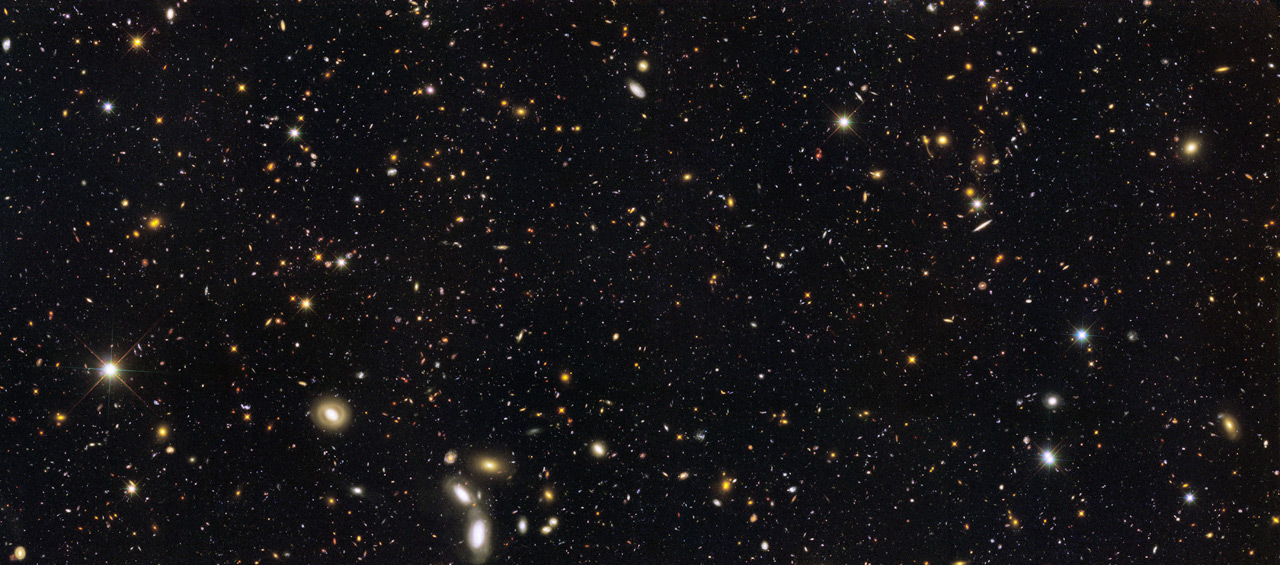
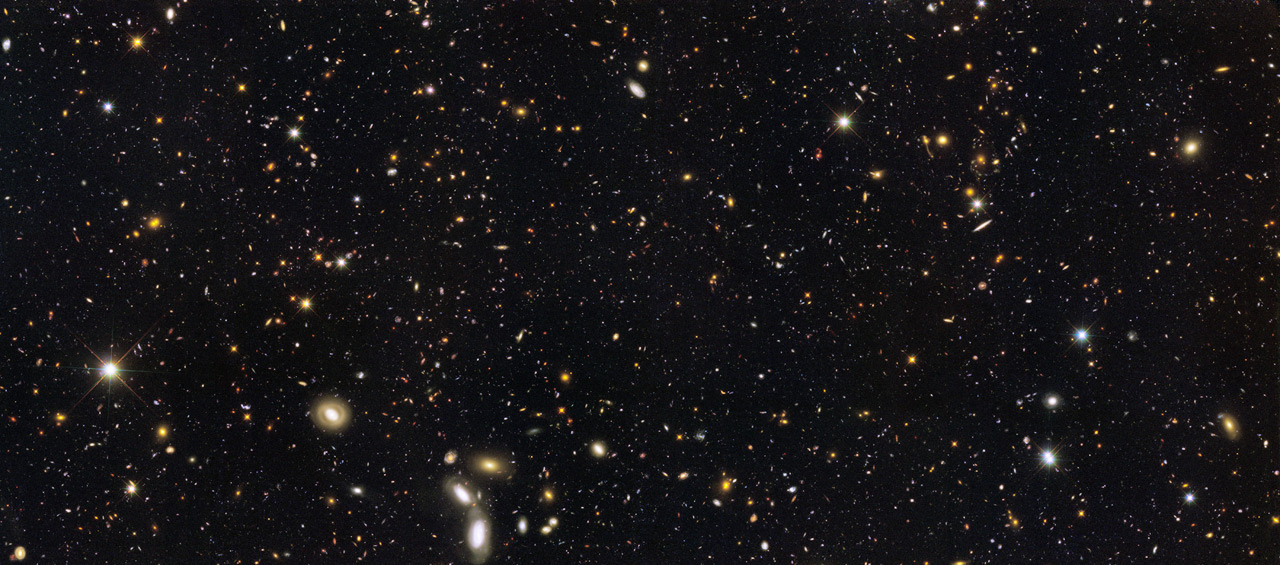
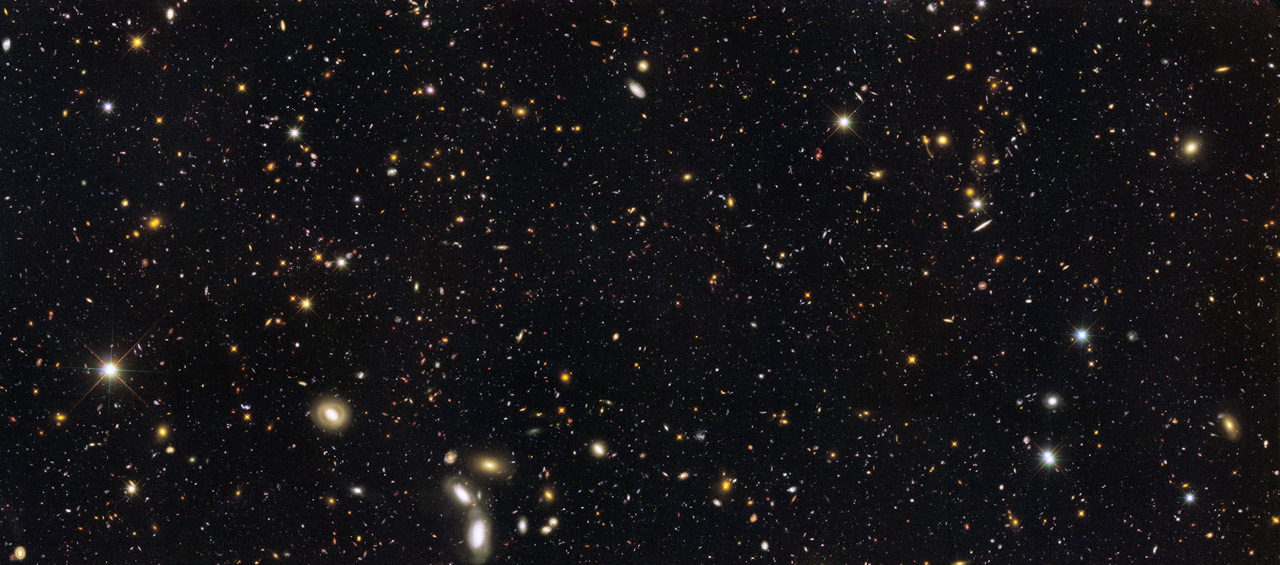
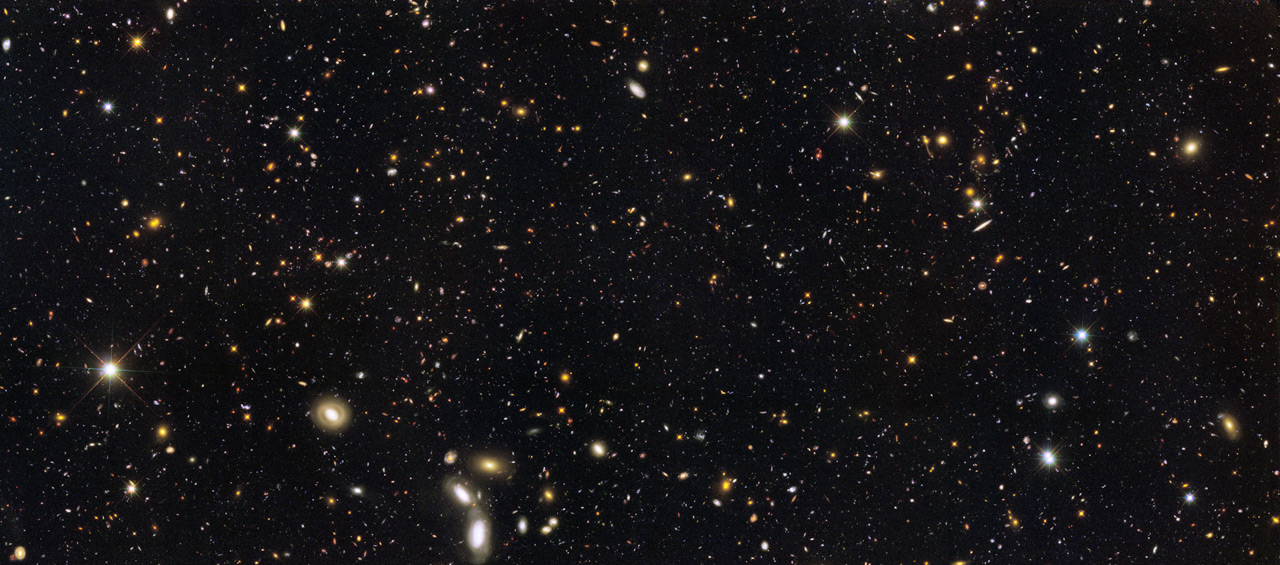
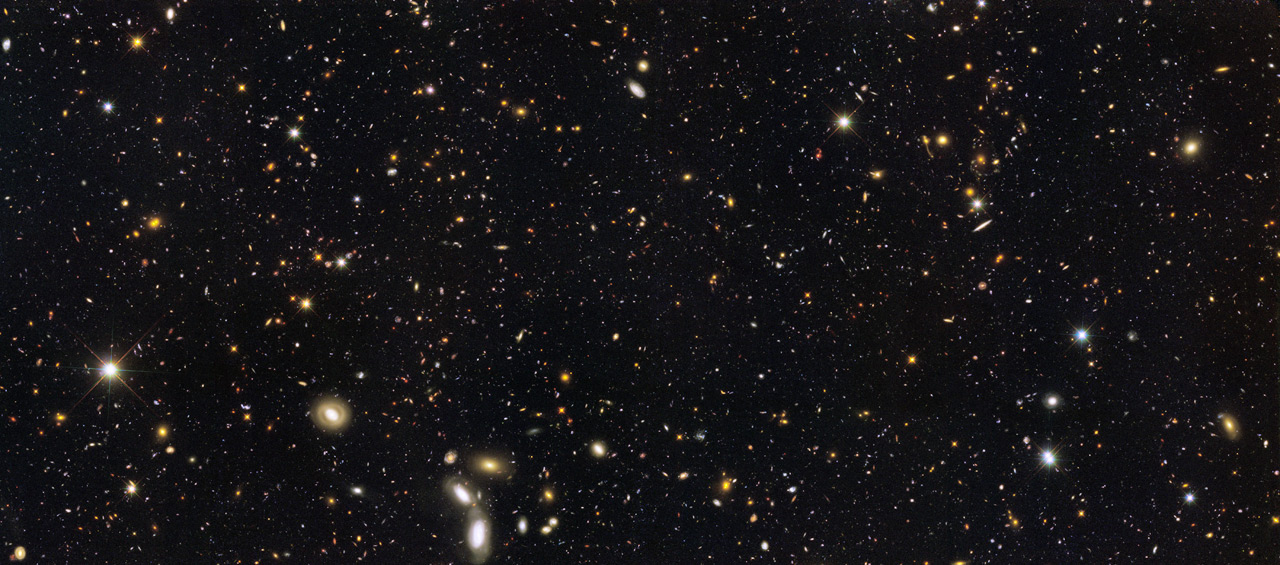
More than 12 billion years of cosmic history are shown in this panoramic view of thousands of galaxies in various stages of assembly. The view covers a portion of the southern field of a galaxy census called the Great Observatories Origins Deep Survey (GOODS). This region of the GOODS field showcases the remarkable diversity of galaxy types across cosmic time, from compact blue galaxies undergoing intense star formation to mature red ellipticals that have exhausted their star-forming gas. Each galaxy represents a unique snapshot in the ongoing story of cosmic evolution.
Scientific Significance
This portion of the GOODS South Field has been instrumental in discovering some of the earliest galaxies in the universe and understanding the process of cosmic reionization. The transition from a neutral to an ionized universe occurred during the first billion years of cosmic history, and galaxies visible in this field are thought to be the sources of the ultraviolet radiation that drove this transformation. By studying the UV emission, stellar masses, and morphologies of these early galaxies, astronomers have determined that galaxy formation was a much more chaotic and bursty process in the early universe compared to the more gradual evolution seen in later cosmic epochs. The field has also revealed populations of dusty, obscured galaxies that are forming stars at prodigious rates but are invisible in optical light.
Observation Details
This image represents updated observations of the GOODS South Field taken in 2009 with Hubble's newly installed Wide Field Camera 3 (WFC3). The WFC3 infrared channel extended Hubble's reach to longer wavelengths, revealing galaxies at higher redshifts than previously possible. The combination of ACS optical data and WFC3 infrared data allows astronomers to measure photometric redshifts and stellar masses for thousands of galaxies simultaneously. These observations were part of the Early Release Science program following Servicing Mission 4.
Location in the Universe
Constellation
Fornax
Distance from Earth
Up to 13 billion light-years
Fun Facts
- 1
The GOODS survey was designed to be observed by every major space telescope, making it one of the most comprehensively studied patches of sky in astronomical history.
- 2
Many of the tiny red dots in this image are among the most distant galaxies ever detected, seen as they appeared when the universe was less than 5% of its current age.
- 3
Some galaxies in this field are so young that they are still in the process of forming their first generation of stars.
Image credit: NASA, ESA, Hubble Space Telescope