About This Image
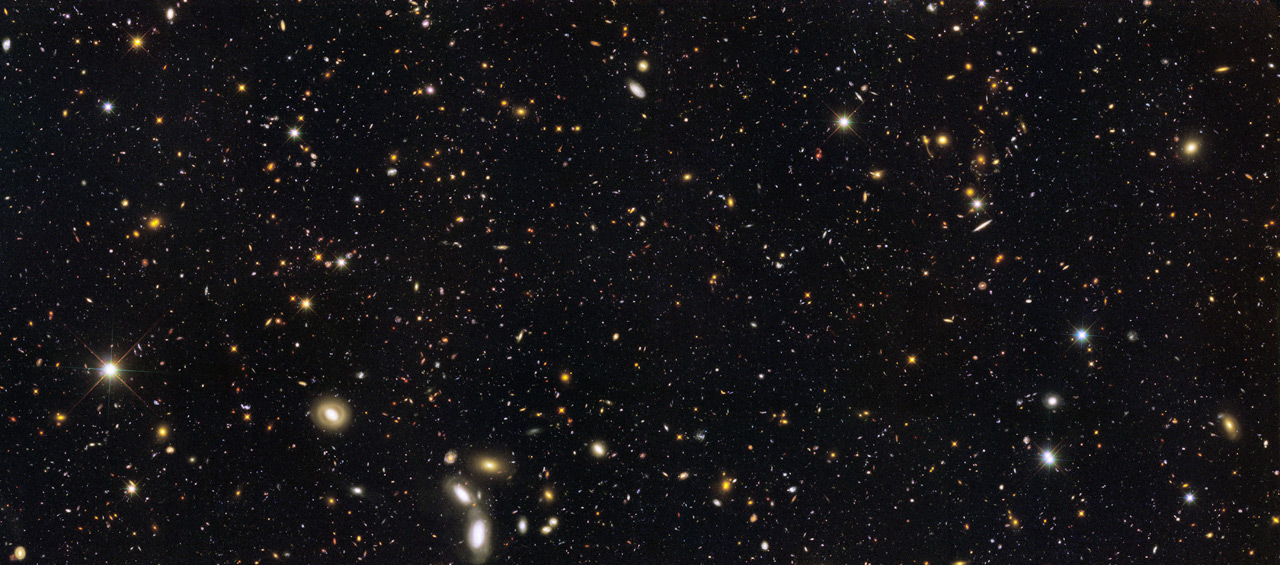
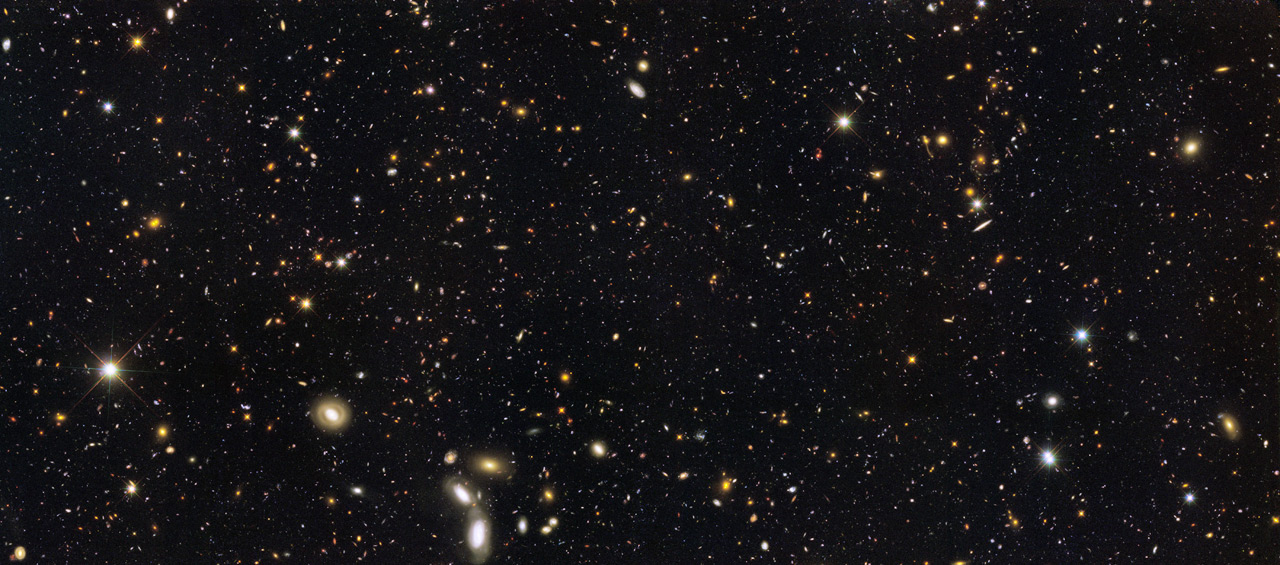
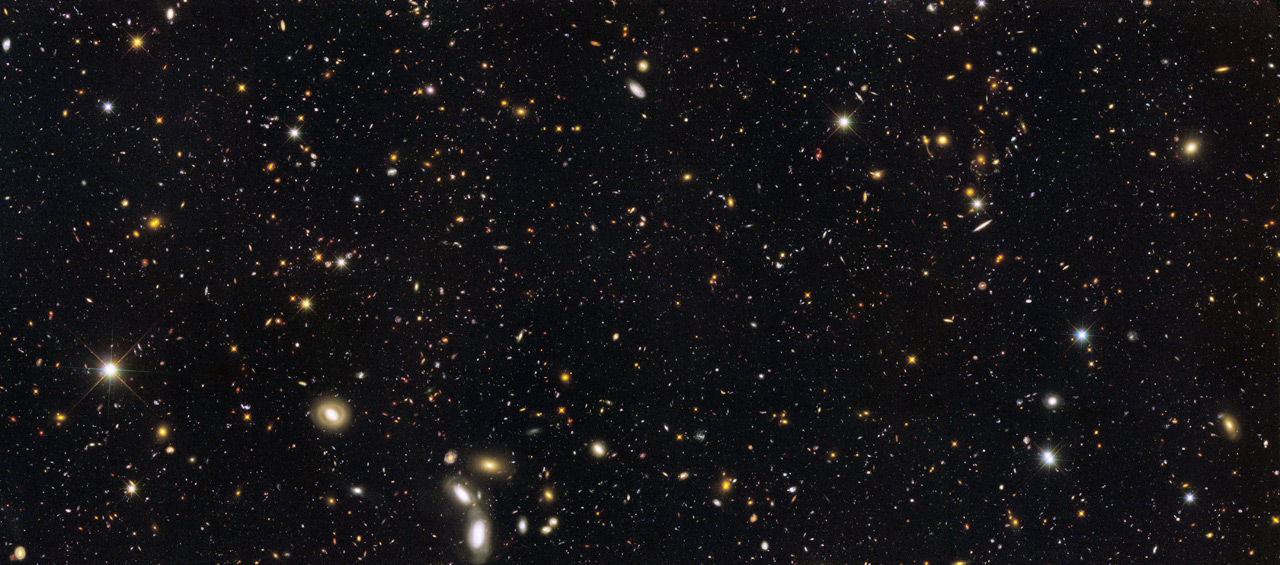
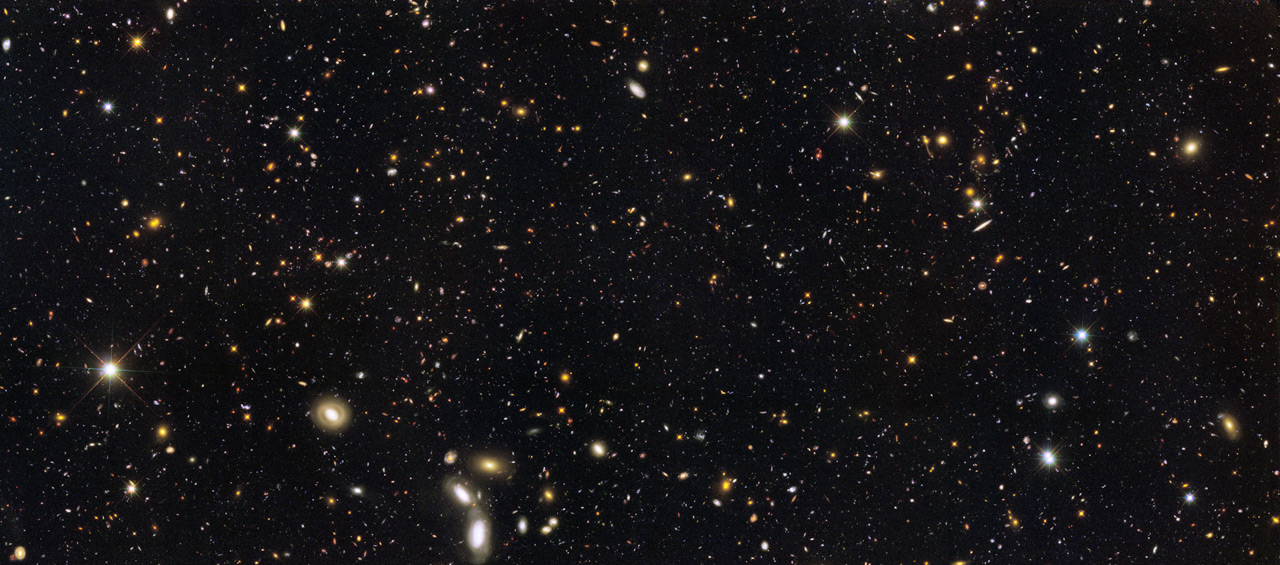
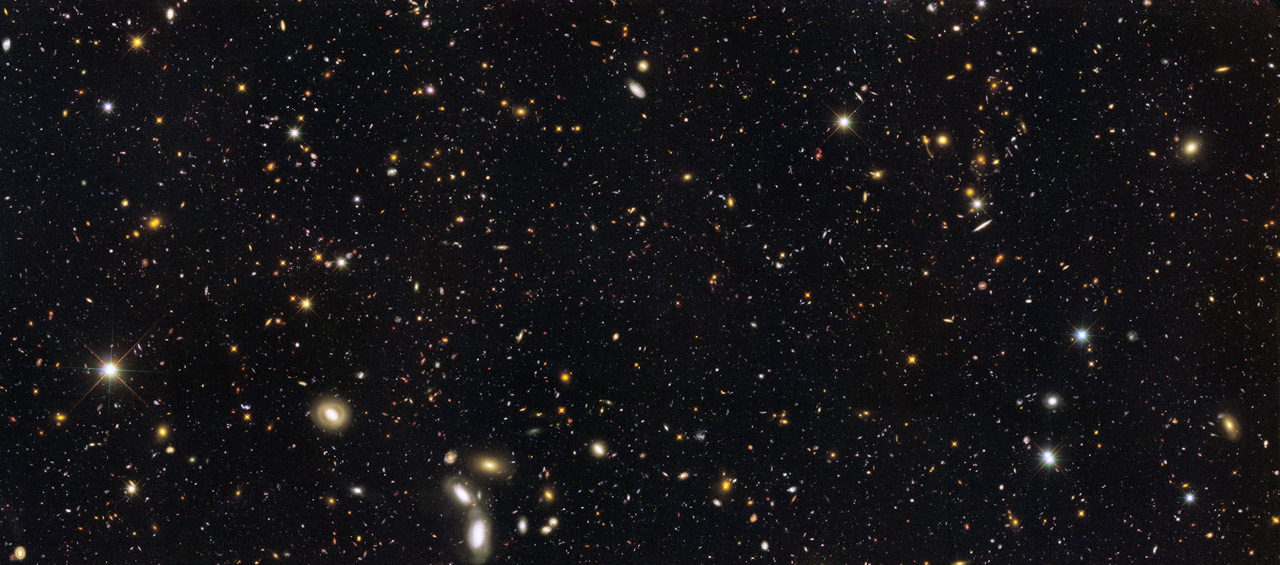
More than 12 billion years of cosmic history are shown in this panoramic view of thousands of galaxies in various stages of assembly. The view covers a portion of the southern field of a galaxy census called the Great Observatories Origins Deep Survey (GOODS). Each galaxy in this cosmic tapestry tells a unique story—some are actively forming stars at tremendous rates, while others have long since ceased star formation and are slowly fading as their stellar populations age.
Scientific Significance
The GOODS South Field has been essential for studying galaxy mergers and interactions across cosmic time. Hubble's sharp imaging has allowed astronomers to identify merging galaxy systems at high redshifts where ground-based telescopes cannot resolve the individual components. These studies have shown that galaxy mergers were much more common in the early universe, when galaxies were closer together and the universe was smaller. The merger rate has declined dramatically over the past 10 billion years as the expansion of the universe has increased the average separation between galaxies. Understanding merger rates is crucial because galaxy collisions trigger intense bursts of star formation and can fuel the growth of supermassive black holes. The morphological information from GOODS has been combined with spectroscopic data to trace how mergers transform galaxy structure and stellar populations.
Observation Details
The 2004 observations added significant depth to the GOODS South Field through additional ACS exposures in multiple filters. The observing strategy employed a pattern of overlapping pointings to ensure uniform coverage and maximize the survey area. Advanced dithering techniques were used to improve spatial sampling and remove detector artifacts. The data reduction pipeline developed for GOODS set new standards for precision astrometry and photometry in deep extragalactic surveys, with positional accuracies of a few milliarcseconds enabling robust cross-matching with catalogs from other observatories.
Location in the Universe
Constellation
Fornax
Distance from Earth
Up to 13 billion light-years
Fun Facts
- 1
The GOODS survey required coordination between five different space observatories: Hubble, Spitzer, Chandra, XMM-Newton, and Herschel.
- 2
Some of the faintest galaxies in this image have apparent brightnesses more than 10 billion times fainter than what the human eye can detect.
- 3
The data from GOODS has been used in over 1,000 scientific publications, making it one of the most productive astronomical datasets ever collected.
Image credit: NASA, ESA, Hubble Space Telescope