About This Image
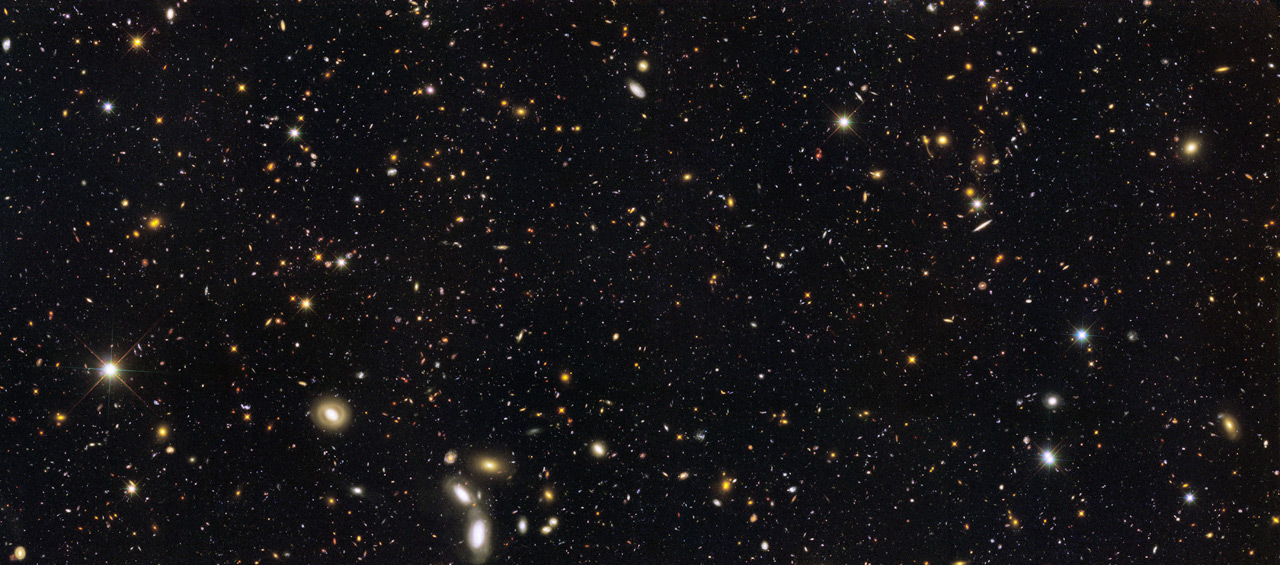
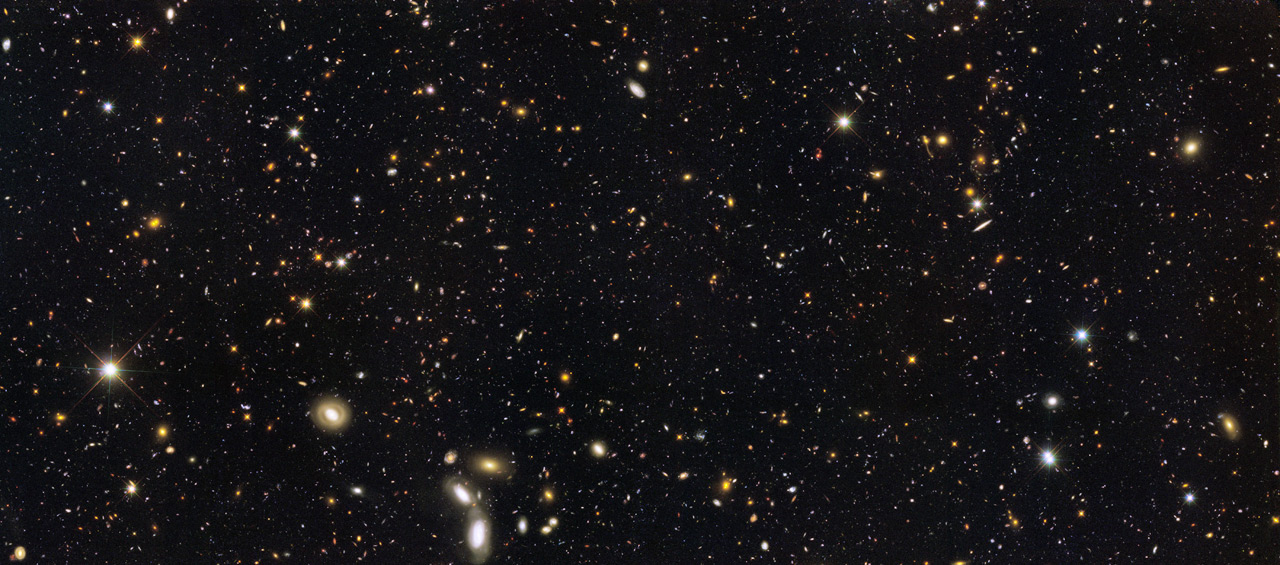
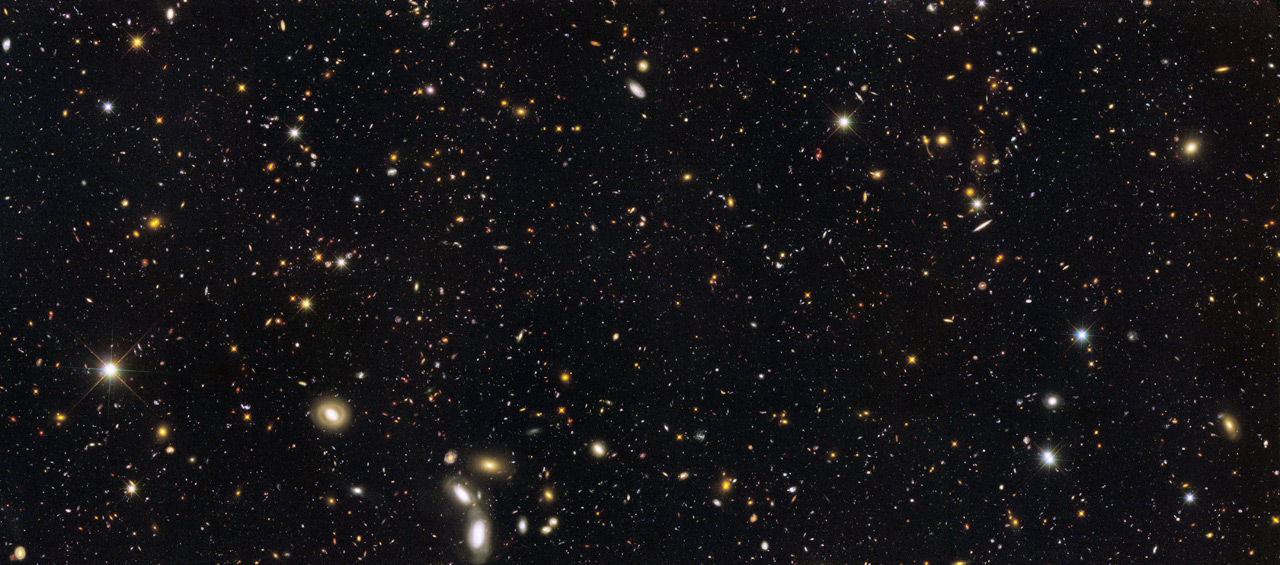
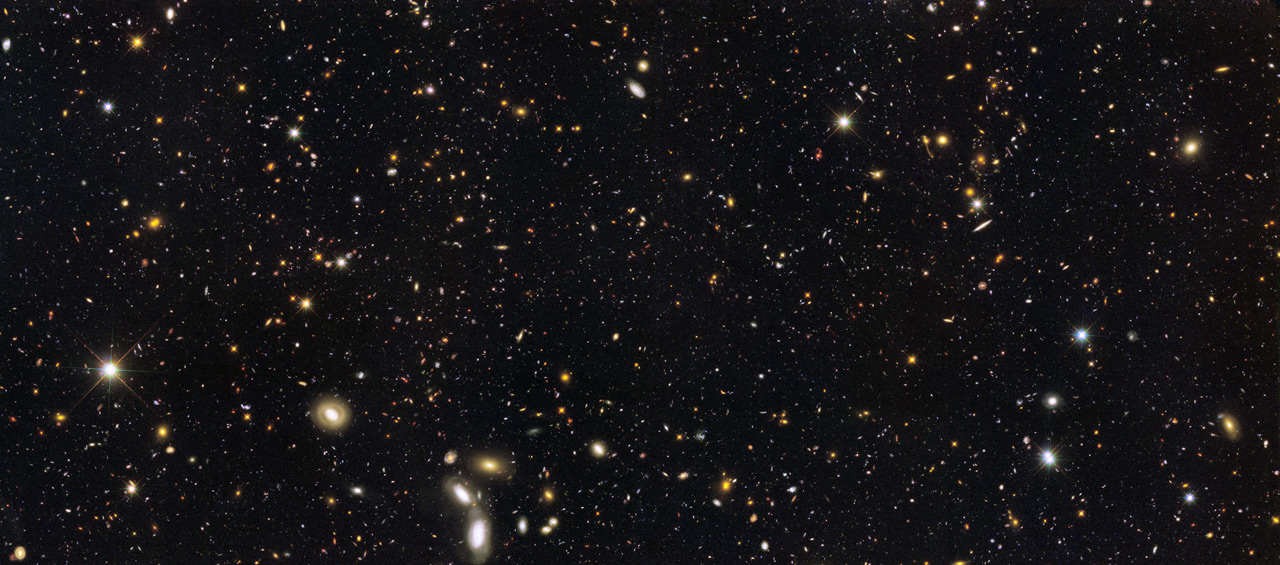
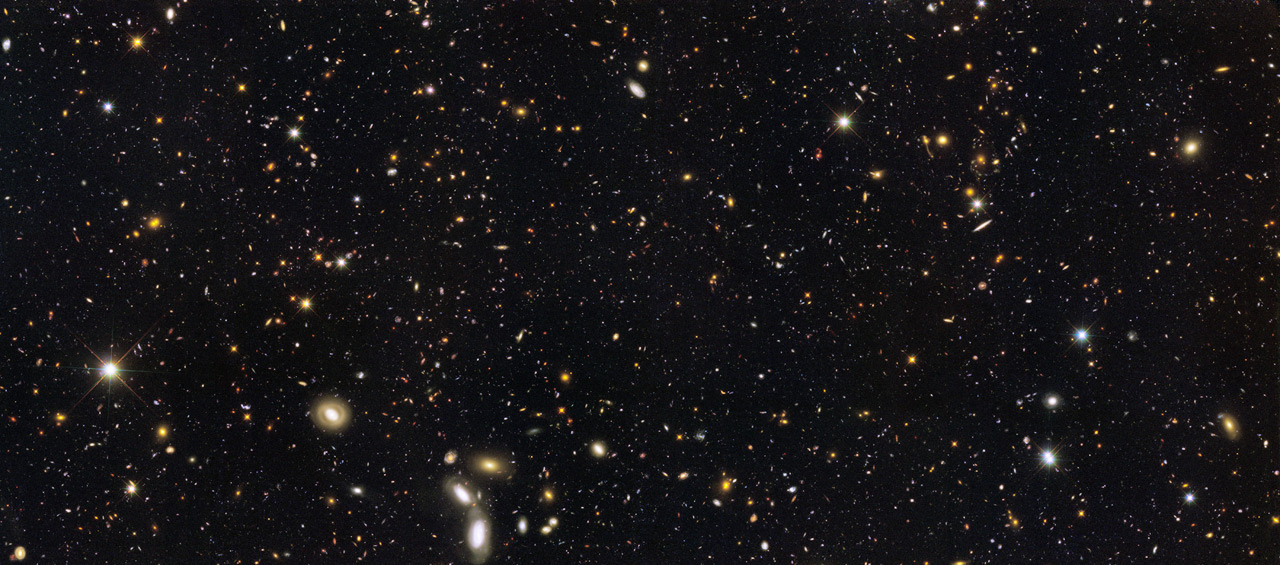
More than 12 billion years of cosmic history are shown in this panoramic view of thousands of galaxies in various stages of assembly. The view covers a portion of the southern field of a galaxy census called the Great Observatories Origins Deep Survey (GOODS). This deep exposure reveals not only distant galaxies but also the complex web of cosmic structure that connects them. Galaxies are not randomly distributed but are organized into filaments, walls, and voids that trace the underlying dark matter distribution of the universe.
Scientific Significance
The GOODS South Field has been crucial for understanding the cosmic star formation history—how the rate at which stars are born has changed over the 13.8 billion year history of the universe. Studies of galaxies in this field have confirmed that star formation peaked about 10 billion years ago, when the universe was roughly a quarter of its current age, and has been declining ever since as galaxies exhaust their gas reservoirs. The field has also been essential for understanding the relationship between galaxy mass and star formation, revealing that more massive galaxies tend to stop forming stars earlier than less massive ones—a phenomenon called 'downsizing.' Additionally, the detection of distant supernovae in repeat observations of this field has provided independent constraints on the expansion history of the universe.
Observation Details
This particular view of the GOODS South Field emphasizes the depth achieved through combining multiple observation epochs. The image stacks data from numerous Hubble visits spanning several years, with each new observation adding signal and improving the detection of the faintest sources. Advanced image processing techniques were used to align and combine the individual exposures while rejecting cosmic rays and other artifacts. The resulting mosaic reaches limiting magnitudes of approximately 29-30 in optical bands, making it sensitive to galaxies billions of times fainter than what the naked eye can see.
Location in the Universe
Constellation
Fornax
Distance from Earth
Up to 13 billion light-years
Fun Facts
- 1
If you held a grain of sand at arm's length, the area of sky it covers would contain thousands of galaxies like those seen in this image.
- 2
The colors of galaxies in this field encode their distances—redder galaxies are generally more distant because the expansion of the universe has stretched their light to longer wavelengths.
- 3
Some of the apparently close galaxy pairs in this image are actually separated by billions of light-years and only appear near each other due to our line of sight.
Image credit: NASA, ESA, Hubble Space Telescope