About This Image
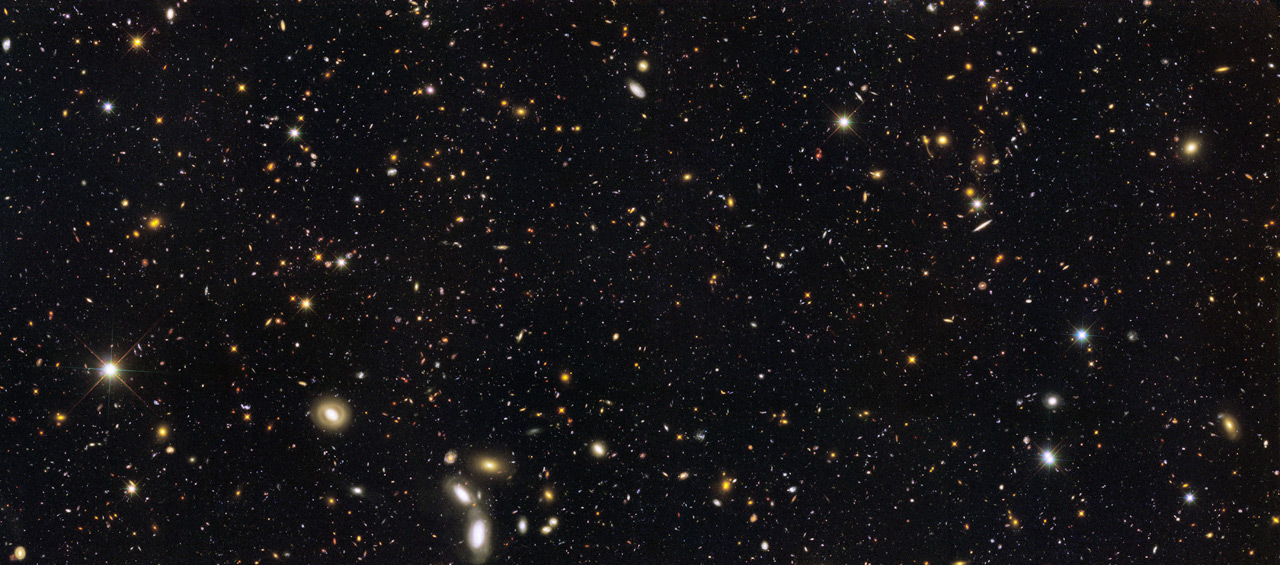
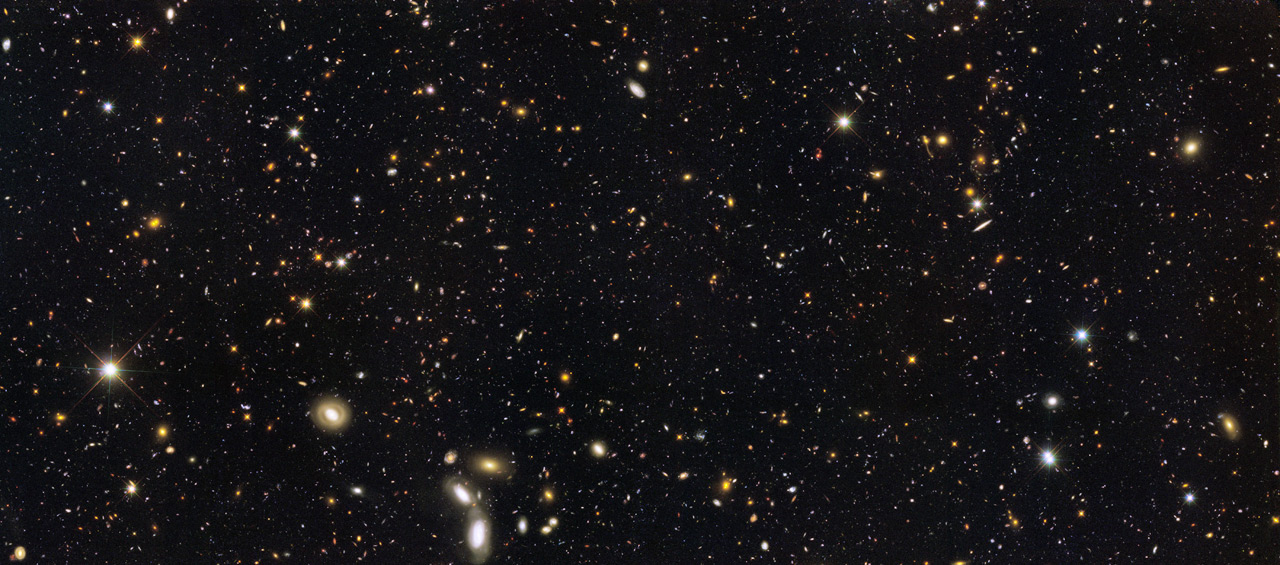
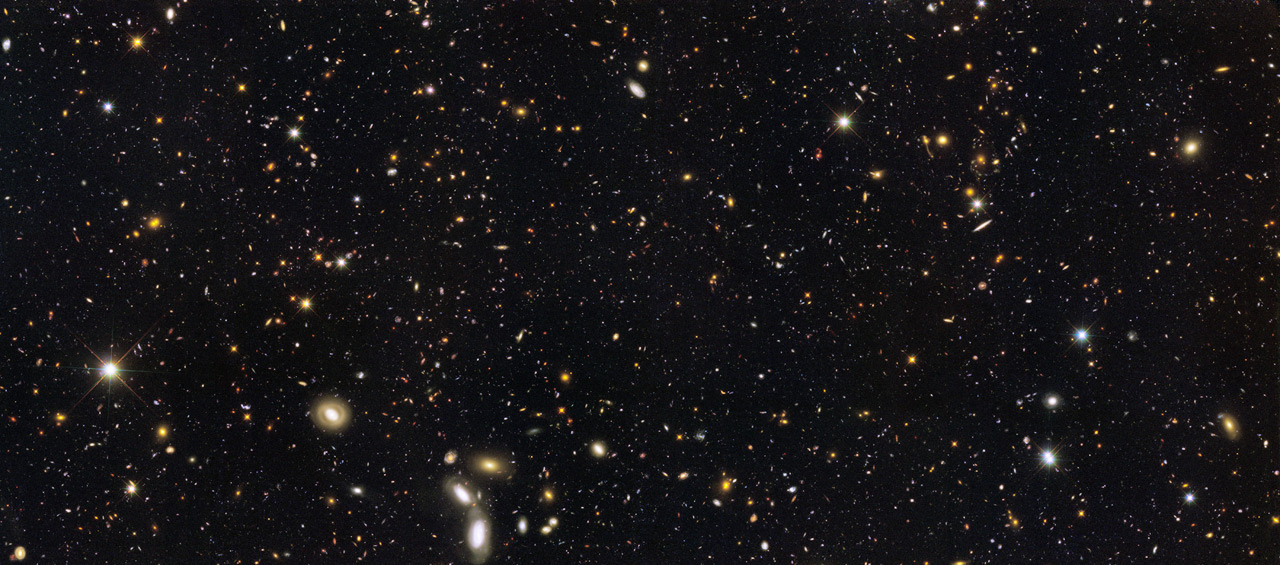
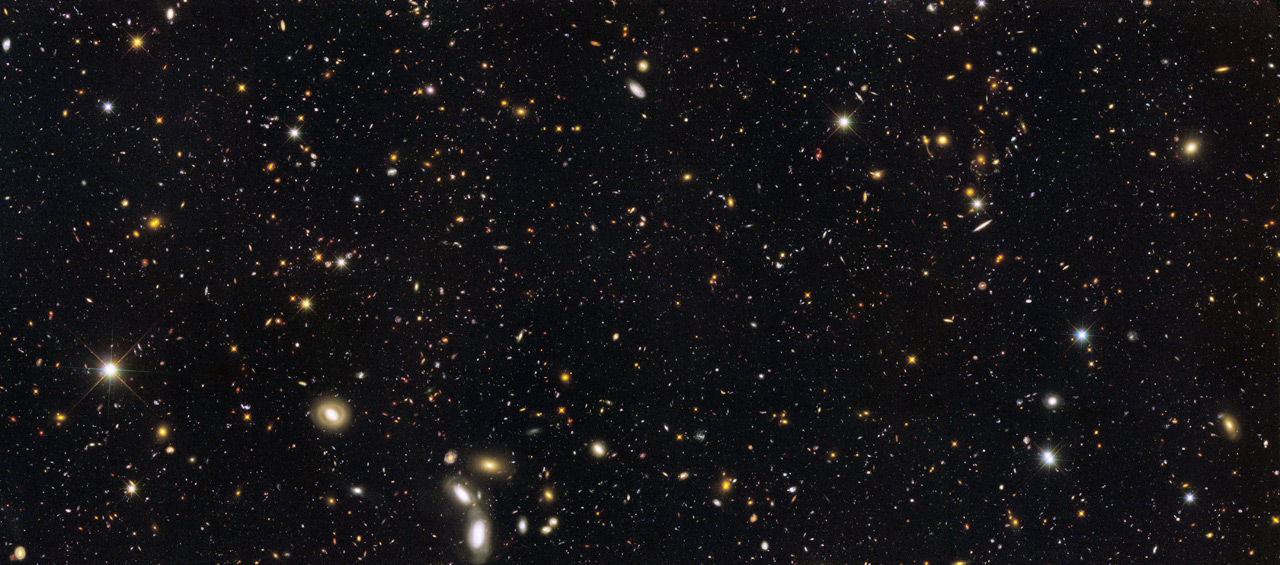
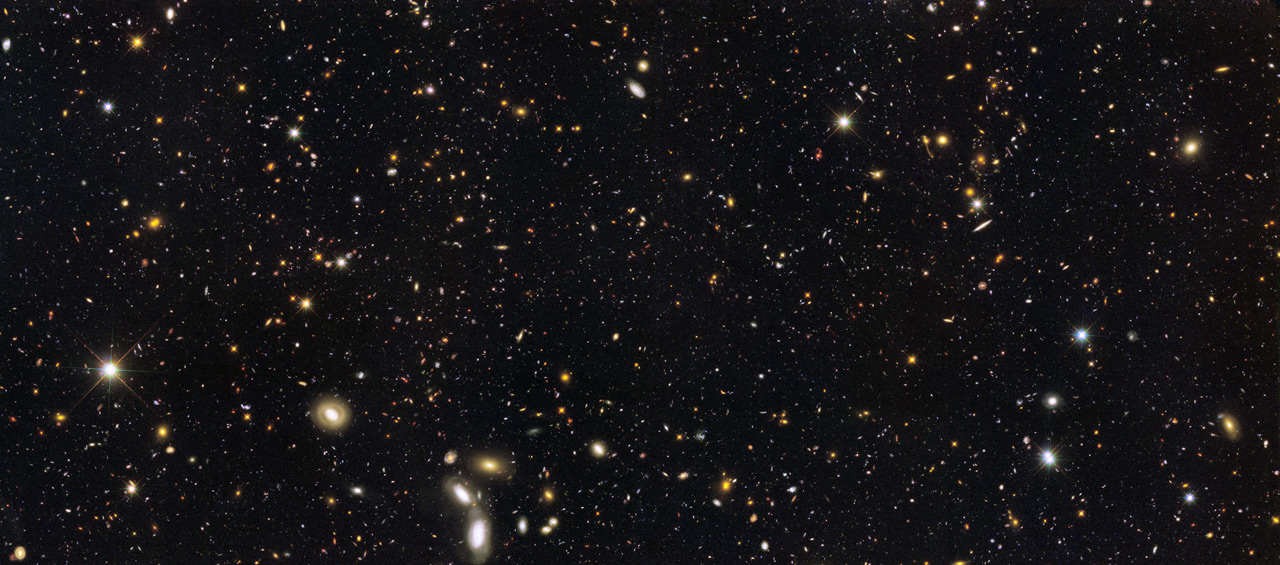
More than 12 billion years of cosmic history are shown in this panoramic view of thousands of galaxies in various stages of assembly. The view covers a portion of the southern field of a galaxy census called the Great Observatories Origins Deep Survey (GOODS). This section of the GOODS field contains some of the most distant galaxies ever observed, providing a window into the cosmic dawn when the first stars and galaxies were forming in the early universe.
Scientific Significance
The 2009 observations of the GOODS South Field with the newly installed Wide Field Camera 3 (WFC3) extended humanity's view to the earliest epochs of galaxy formation. The WFC3 infrared channel is sensitive to light that was originally emitted as ultraviolet radiation by young galaxies but has been redshifted into the infrared by the expansion of the universe. This capability allowed astronomers to identify candidate galaxies at redshifts of 8-10, corresponding to times when the universe was only 500-700 million years old. These early galaxies appear as tiny red dropouts, visible only in the longest-wavelength filters. The discovery and characterization of these objects has revolutionized our understanding of how quickly galaxies assembled in the early universe and how the universe transitioned from neutral hydrogen to the ionized state we observe today.
Observation Details
The WFC3 infrared observations of GOODS South were obtained as part of Hubble's Early Release Science program following Servicing Mission 4 in May 2009. The data include deep imaging in the Y, J, and H bands (approximately 1.0, 1.2, and 1.6 microns), reaching unprecedented depths for space-based near-infrared observations. The combination of the new WFC3 data with existing ACS optical observations enabled photometric redshift measurements for galaxies across a wide range of cosmic epochs. The image processing carefully accounted for the WFC3 infrared detector's unique characteristics, including persistence from previous observations and time-variable bias structures.
Location in the Universe
Constellation
Fornax
Distance from Earth
Up to 13 billion light-years
Fun Facts
- 1
The cumulative exposure time in the deepest parts of the GOODS field exceeds 800,000 seconds—equivalent to more than 9 days of continuous observation.
- 2
Several of the most distant spectroscopically confirmed galaxies were discovered in the GOODS South Field before the launch of JWST.
- 3
The field contains multiple examples of gravitationally lensed galaxies, where background galaxies are magnified by the mass of foreground clusters.
Image credit: NASA, ESA, Hubble Space Telescope