About This Image
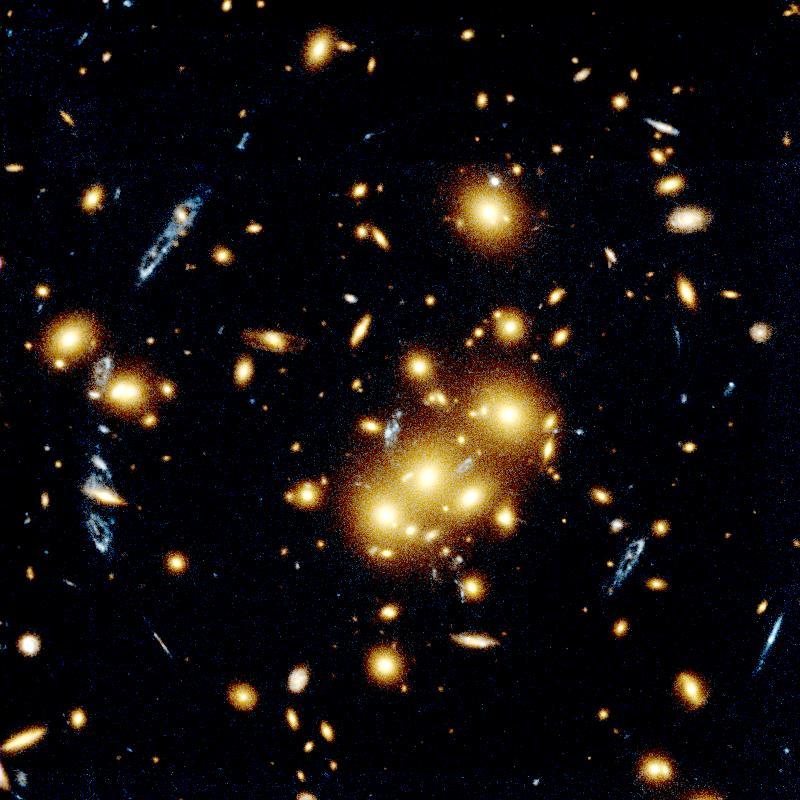
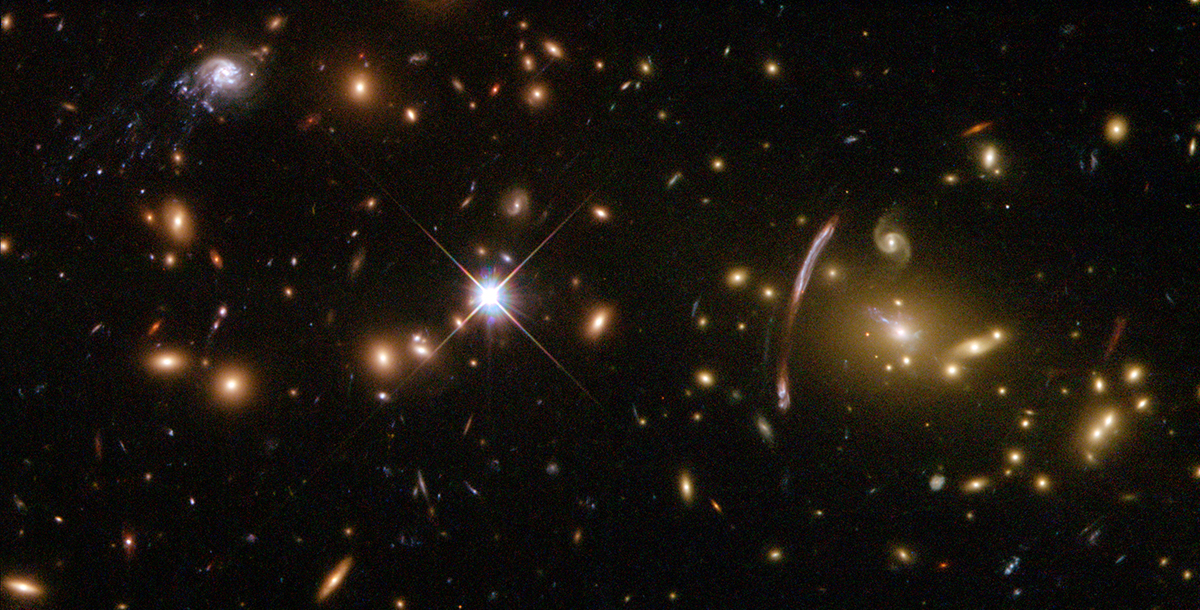
While looking at galaxy cluster Abell 2667, astronomers found an odd-looking spiral galaxy (in the upper left corner of the image) that is plowing through the cluster and being ripped apart by the galaxy cluster's gravitational field and harsh environment. This unfortunate galaxy, nicknamed 'the Comet,' is experiencing ram pressure stripping as it moves through the hot gas that pervades the cluster. Long streamers of gas and stars are being pulled from the galaxy, leaving a distinctive cometary tail that stretches for hundreds of thousands of light-years.
Scientific Significance
Abell 2667 and its infalling 'Comet' galaxy provide a dramatic demonstration of the environmental processes that transform galaxies in dense cluster environments. Ram pressure stripping occurs when a galaxy moves rapidly through the hot intracluster medium, and the pressure from this interaction pushes the galaxy's gas out like wind stripping leaves from a tree. This process can remove a galaxy's star-forming gas within a few hundred million years, effectively quenching star formation and transforming blue, star-forming spirals into red, passive systems. The detailed study of objects like the Comet galaxy allows astronomers to constrain the efficiency of ram pressure stripping and understand how cluster environments shape galaxy evolution. Additionally, the gravitational lensing properties of Abell 2667 make it a powerful cosmic telescope for studying extremely distant background galaxies.
Observation Details
These observations were made using Hubble's Wide Field Planetary Camera 2 (WFPC2) in multiple optical filters. The imaging reveals both the rich population of cluster member galaxies and the dramatic morphology of the ram-pressure stripped spiral. The long exposure times were necessary to detect the faint streams of material being stripped from the Comet galaxy. Follow-up spectroscopy confirmed the cluster membership of the stripped galaxy and measured the velocity with which it is plunging through the cluster environment.
Location in the Universe
Constellation
Sculptor
Distance from Earth
3.2 billion light-years
Fun Facts
- 1
The 'Comet' galaxy is moving through the cluster at approximately 2 million miles per hour, fast enough to travel from Earth to the Moon in just 7 minutes.
- 2
The hot gas in galaxy clusters like Abell 2667 has temperatures exceeding 100 million degrees, making it a harsh environment for any galaxy passing through.
- 3
The gravitational lensing effect of the cluster magnifies and distorts the images of even more distant background galaxies into arcs and streaks.
Image credit: NASA, ESA, Hubble Space Telescope