About This Image
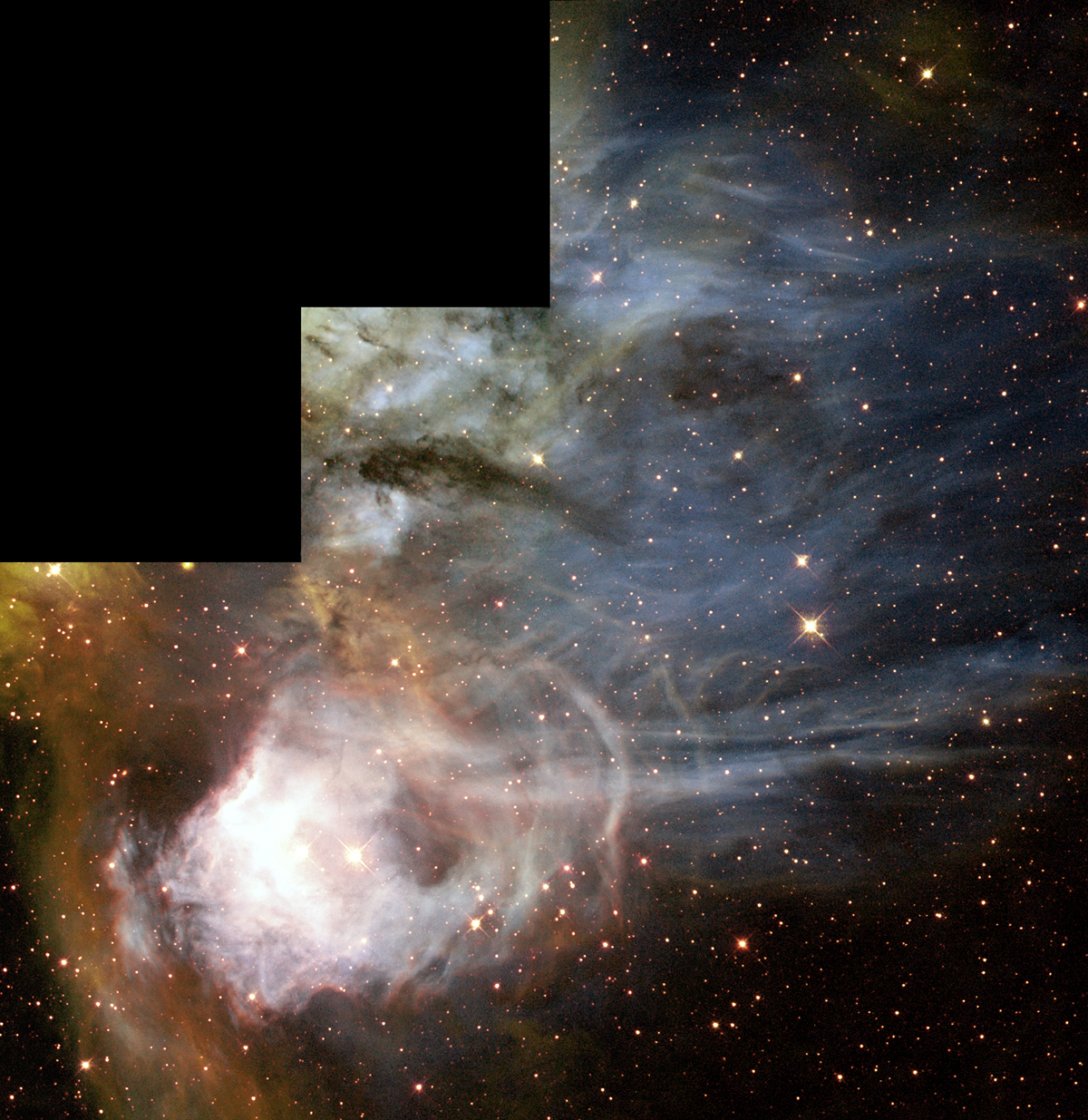
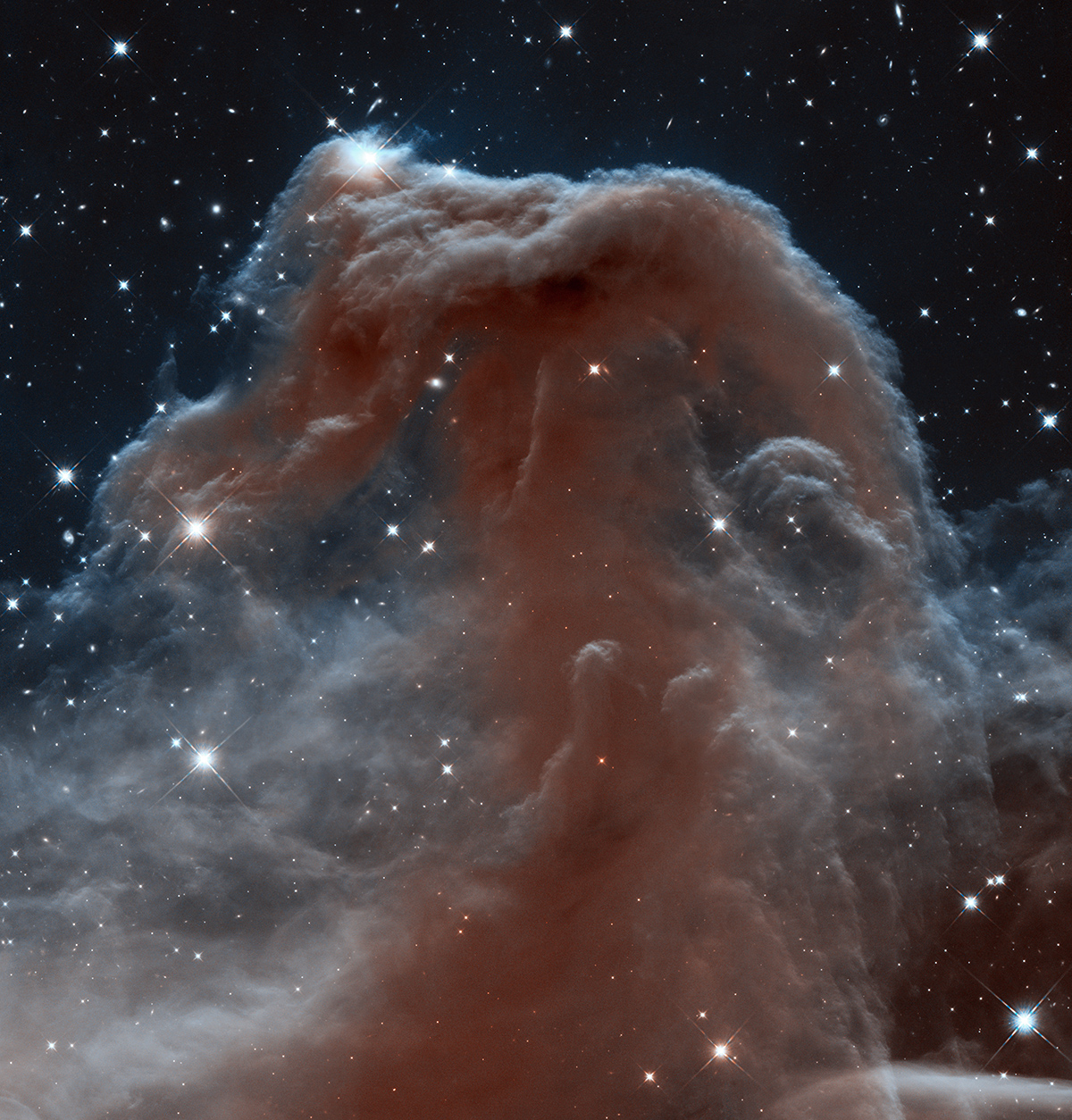
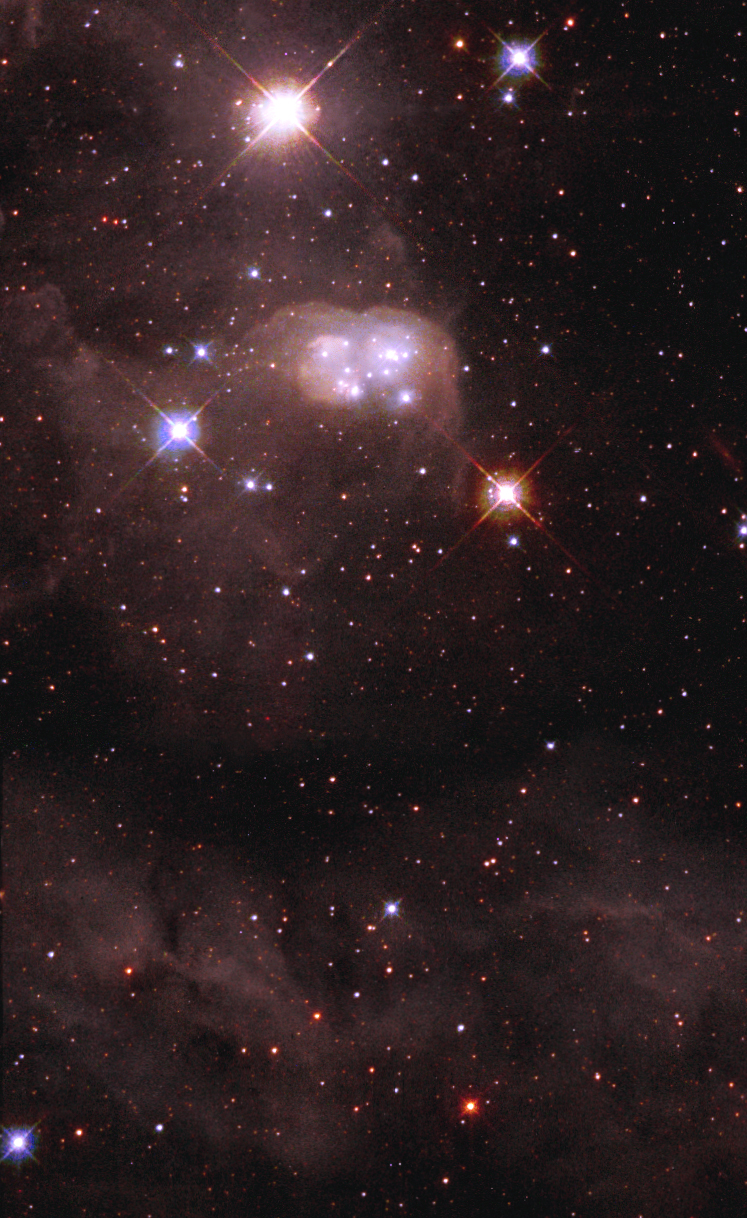
This unique peanut-shaped cocoon of dust envelops a cluster of young, hot stars in the heart of the Large Magellanic Cloud. The reflection nebula N30B glows not from its own internal energy but from starlight scattered by the countless dust grains suspended within it — a cosmic echo chamber where the brilliant blue light from embedded stars bounces off interstellar particles before reaching our telescopes. N30B is embedded within the much larger emission nebula DEM L 106, whose wispy filaments of ionized gas fill the surrounding region with a delicate tracery of red and pink. The striking bipolar morphology of N30B suggests that powerful outflows from the central stellar cluster have carved channels through the dusty cocoon, allowing light to escape more freely along the nebula's elongated axis while remaining trapped and scattered in the denser equatorial regions.
Scientific Significance
N30B provides a valuable window into the earliest stages of star cluster evolution, when young stars are still embedded within their natal dust cocoons. The bipolar morphology of the reflection nebula indicates that mechanical feedback from the central stellar cluster — through stellar winds, jets, or radiation pressure — is actively shaping the surrounding medium. Understanding how young stars disperse their birth clouds is crucial for determining star formation efficiency — the fraction of available gas that ultimately becomes stars. The contrast between N30B's reflection nebula (where dust scatters starlight) and the surrounding DEM L 106 emission nebula (where gas is ionized and glows on its own) illustrates the different physical processes that illuminate interstellar matter. Studies of N30B's dust properties reveal how grain sizes and compositions vary in star-forming regions, with implications for planet formation since the same types of dust grains serve as the building blocks for planetary systems.
Observation Details
Hubble observed N30B using the Wide Field Planetary Camera 2 (WFPC2) in broadband optical filters that capture both the blue scattered light of the reflection nebula and the red emission from surrounding ionized hydrogen. The color contrast between the blue reflection nebula and the red emission nebula background beautifully illustrates the different physical mechanisms at work. WFPC2's high resolution revealed the detailed structure of the dust cocoon, including the bipolar symmetry and the network of dark absorption features where dense dust blocks background light. The observations detected several of the central cluster stars responsible for illuminating the nebula.
Location in the Universe
Constellation
Dorado (Large Magellanic Cloud)
Distance from Earth
160,000 light-years
Fun Facts
- 1
Reflection nebulae appear blue for the same reason Earth's sky is blue — shorter wavelength blue light scatters more efficiently off small dust particles than longer wavelength red light.
- 2
The peanut-shaped appearance of N30B suggests bipolar outflows from the central stars have sculpted the surrounding dust into this distinctive geometry.
- 3
N30B contains enough dust and gas to form thousands of new stars, though most of this material may be dispersed before it can collapse into stellar objects.
Image credit: NASA, ESA, Hubble Space Telescope