About This Image
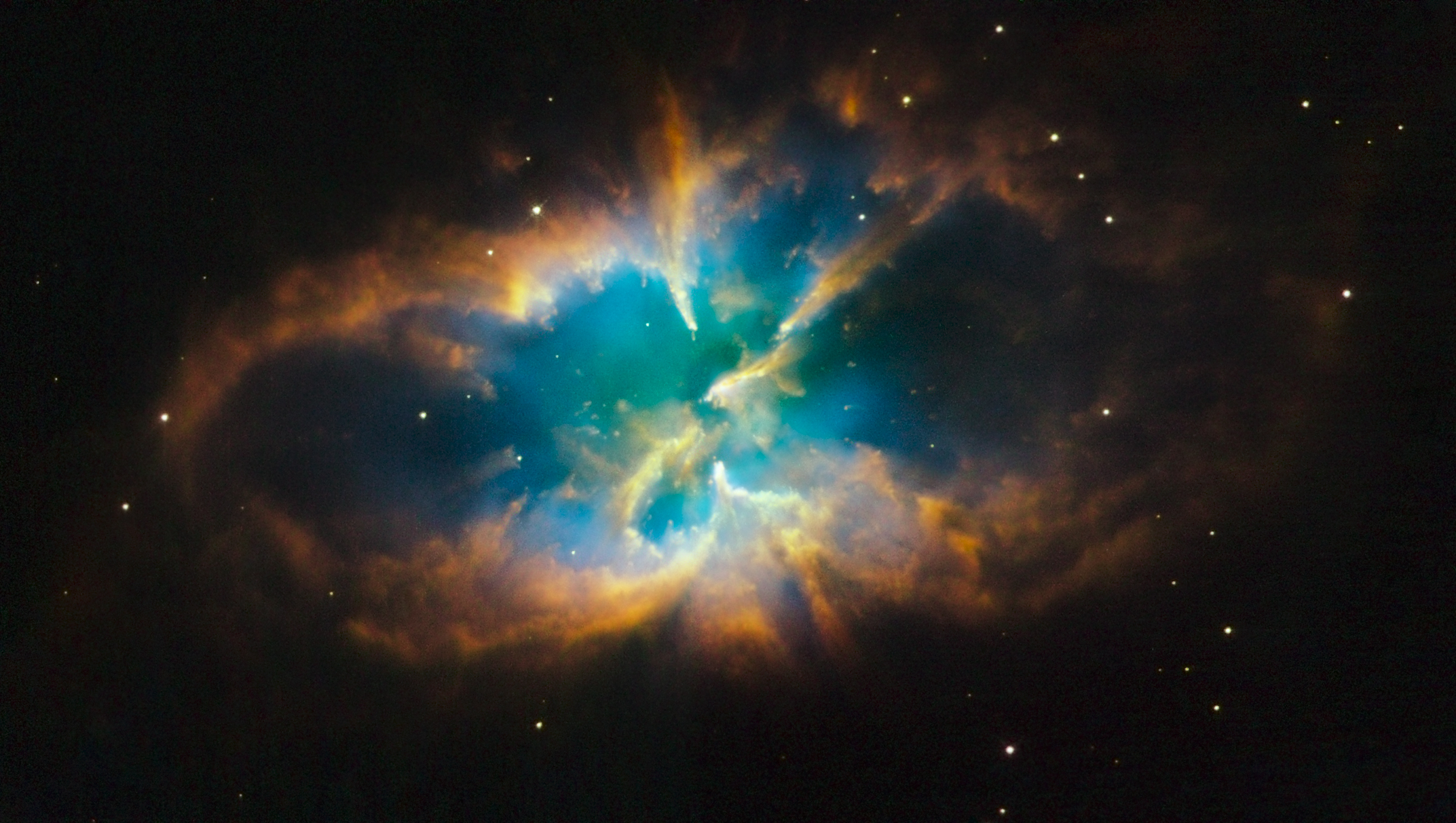
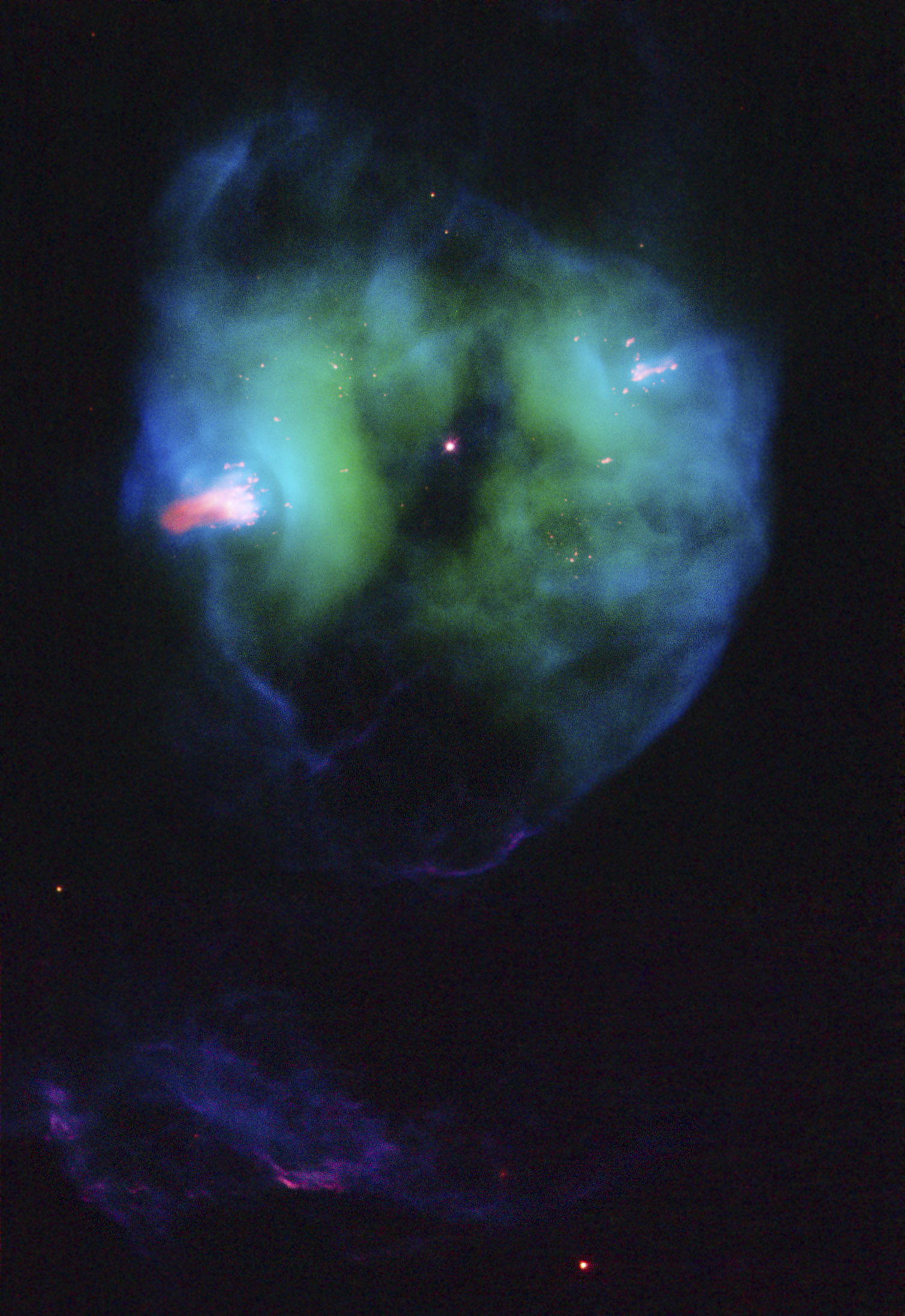
This remarkable image captures the planetary nebula NGC 2371, a luminous testament to the final evolutionary stages of a Sun-like star. The glowing shells of gas and dust visible here were once the outer layers of a red giant star, expelled into space as the star exhausted its nuclear fuel and could no longer support itself against gravitational collapse. At the heart of this celestial display lies the remnant central star — the super-hot, exposed core of the former giant, now compressed to roughly Earth's size yet shining with a surface temperature exceeding 130,000 Kelvin. This searing heat generates intense ultraviolet radiation that ionizes the surrounding expelled material, causing it to fluoresce with the vivid colors visible in this image. NGC 2371 showcases a distinctly bipolar structure, with two lobes of nebular material extending in opposite directions from the central star.
Scientific Significance
NGC 2371 is an important example of a bipolar planetary nebula, a class of objects that challenge simple models of stellar mass loss. The pronounced two-lobed structure implies that the mass ejection was strongly focused along a preferred axis, possibly due to rapid rotation of the progenitor star, the presence of a companion star, or strong magnetic fields. Understanding what shapes planetary nebulae has implications for the enrichment of the interstellar medium, since the ejected material carries heavy elements synthesized in the star's interior. The extremely high temperature of NGC 2371's central star places it among the hottest known post-asymptotic giant branch stars, indicating that the nebular ejection occurred relatively recently (astronomically speaking) before the core had time to cool. Spectroscopic studies of the nebula have revealed enhanced abundances of carbon and nitrogen, products of nuclear burning that were dredged up to the surface during the star's red giant phase and then expelled. NGC 2371 thus provides a snapshot of the chemical enrichment process that gradually increases the heavy element content of galaxies over cosmic time.
Observation Details
Hubble observed NGC 2371 using the Wide Field Planetary Camera 2 (WFPC2) with narrowband filters isolating emission from ionized hydrogen (H-alpha), doubly ionized oxygen ([OIII]), and ionized nitrogen ([NII]). The combination of these filters reveals the ionization structure of the nebula, with [OIII] emission dominating the inner regions closest to the hot central star and [NII] emission more prominent in the cooler outer zones. The central star itself is clearly visible as a point source, allowing measurements of its temperature and luminosity that constrain the progenitor star's mass and the evolutionary state of the system.
Location in the Universe
Constellation
Gemini
Distance from Earth
4,300 light-years
Fun Facts
- 1
The central star of NGC 2371, with a surface temperature of about 130,000 Kelvin, is nearly 25 times hotter than the Sun and is one of the hottest known stellar objects.
- 2
NGC 2371 is sometimes called a 'dual-lobed' planetary nebula because its bipolar structure creates the appearance of two separate nebulae — in fact, it was originally catalogued as two objects: NGC 2371 and NGC 2372.
- 3
In about 5 billion years, our own Sun will create a similar planetary nebula when it exhausts its hydrogen fuel and sheds its outer layers.
Image credit: NASA, ESA, Hubble Space Telescope