About This Image
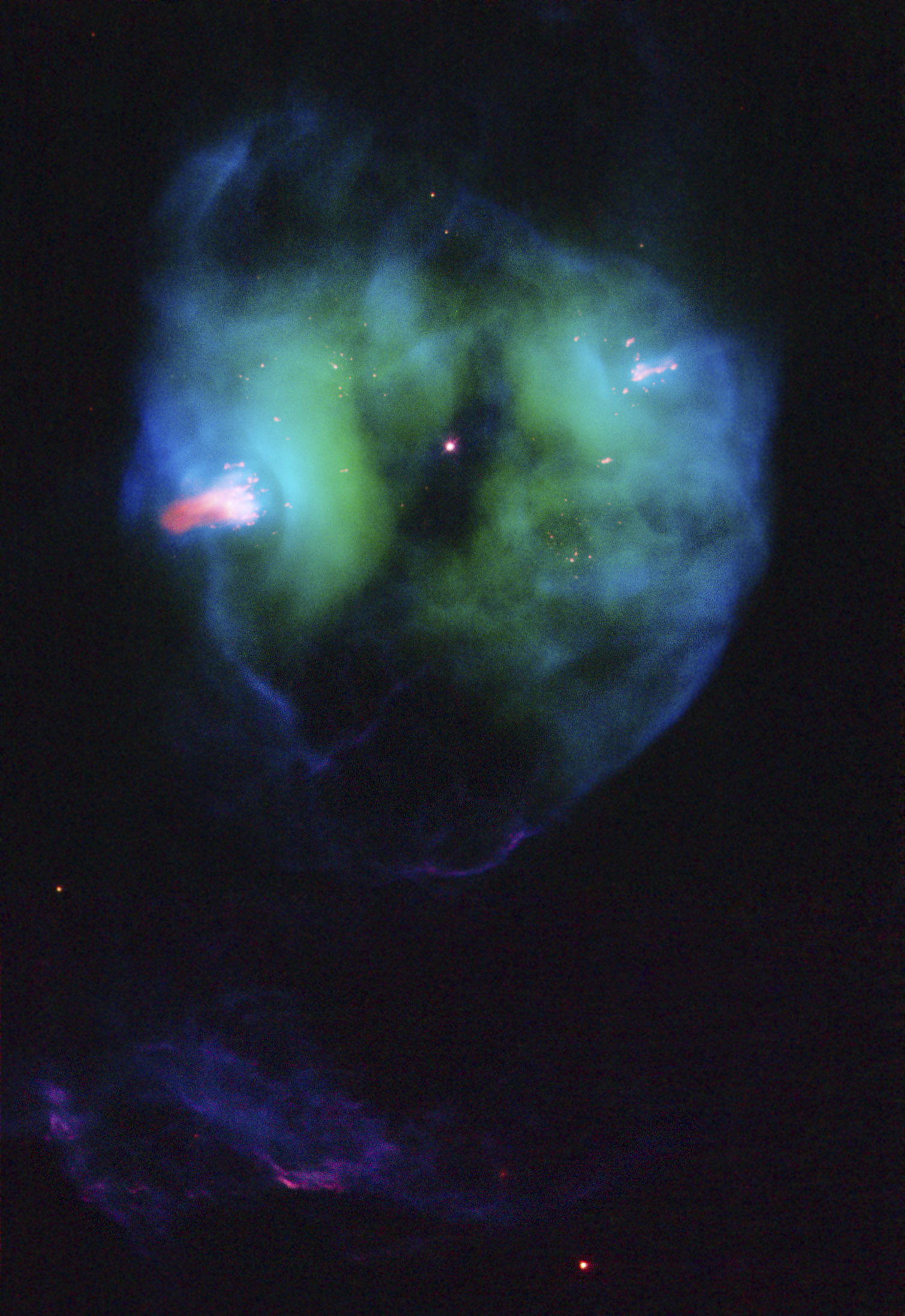
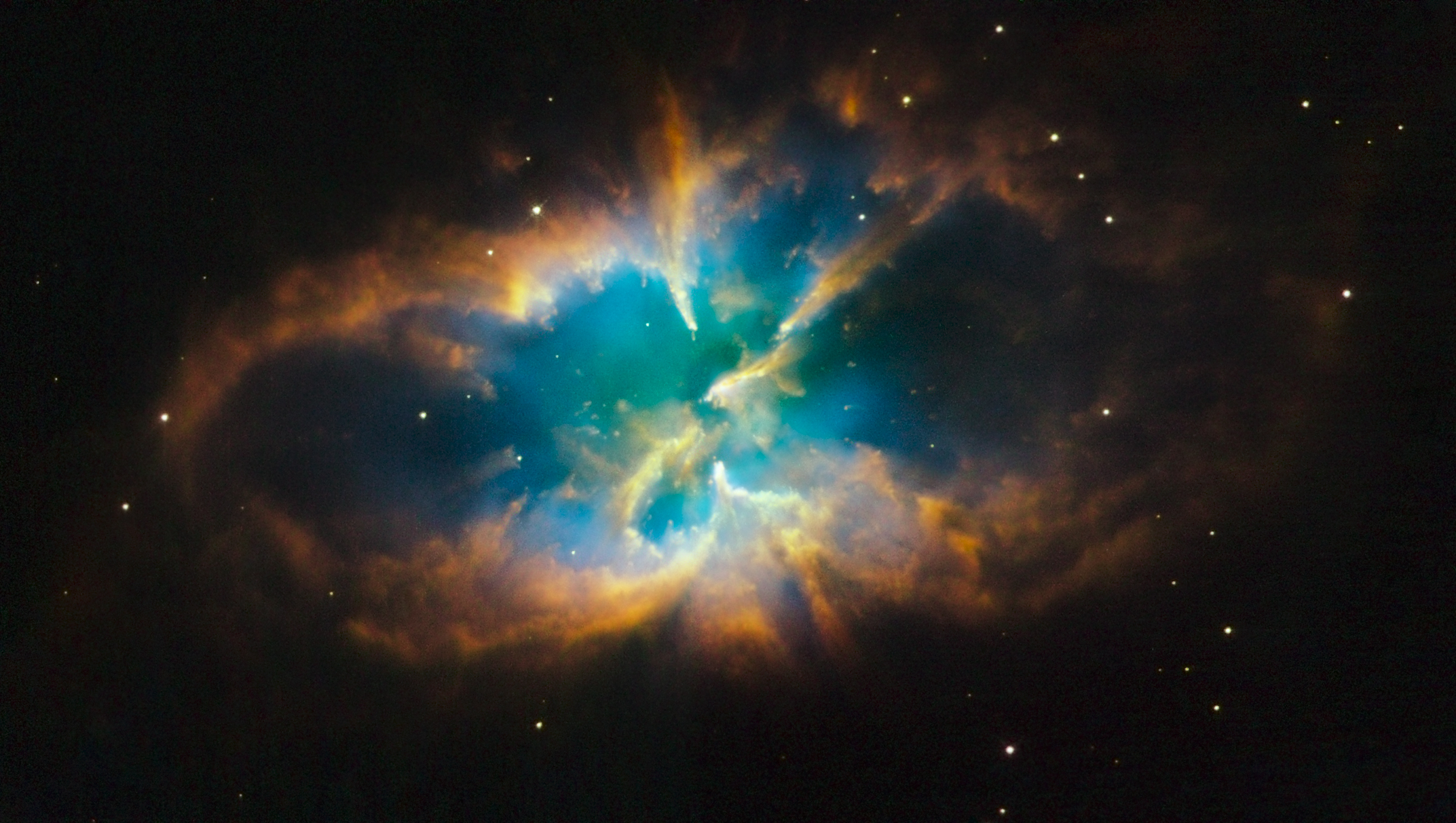
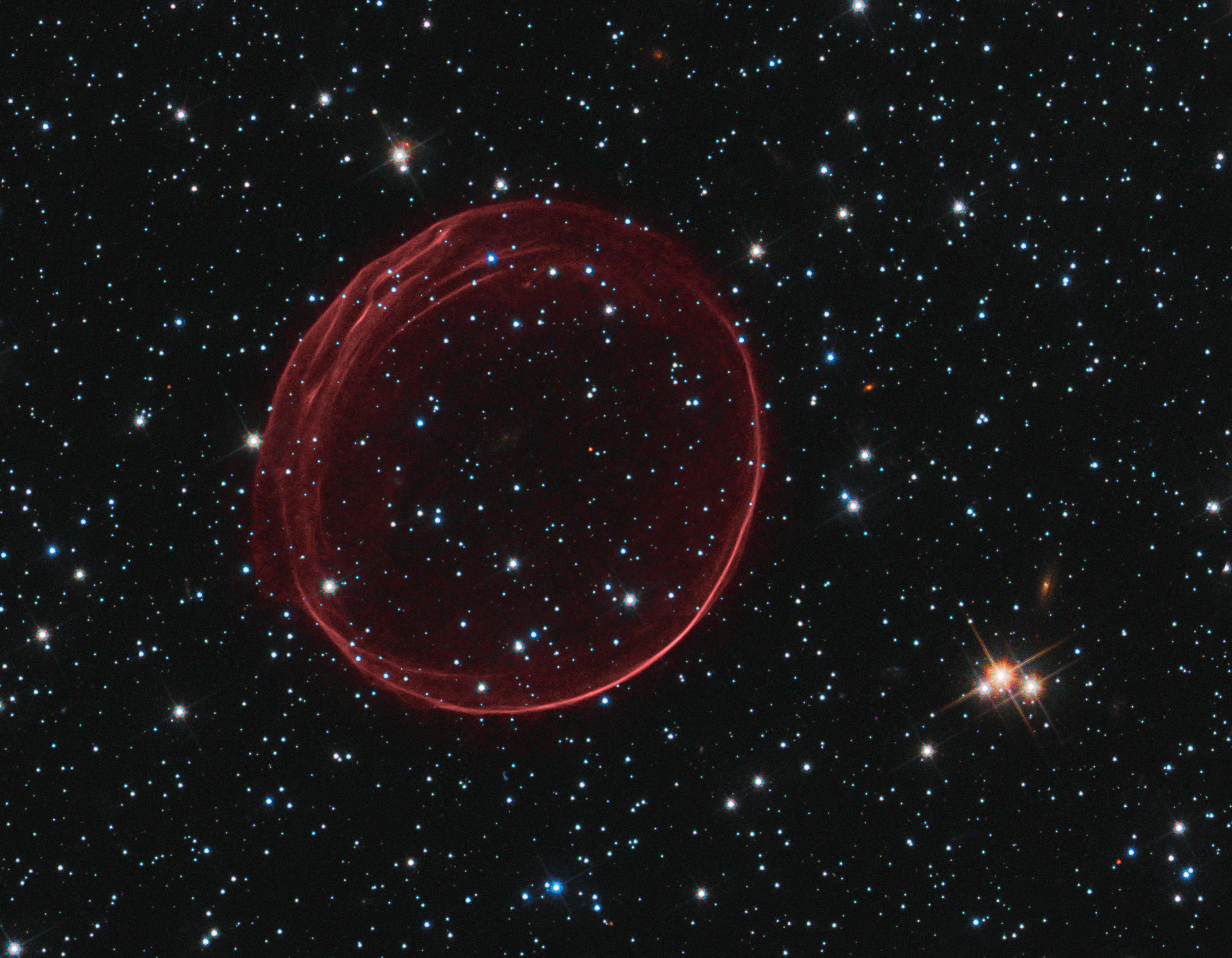
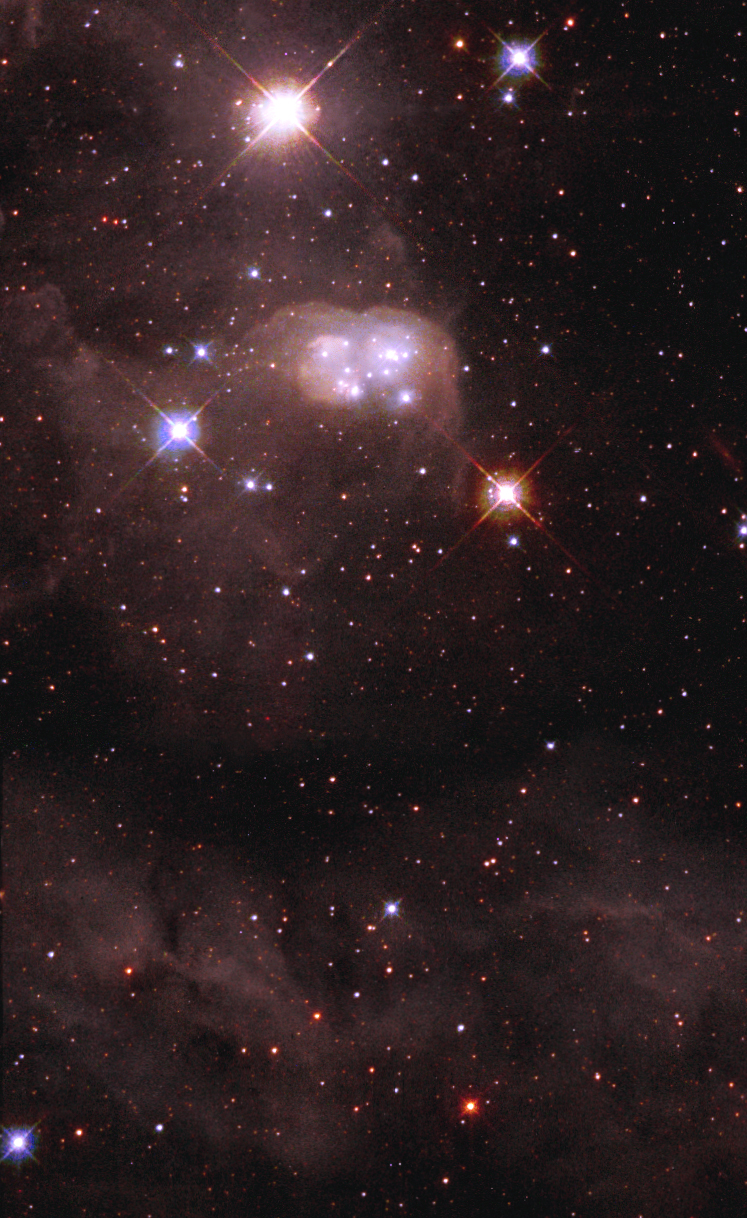
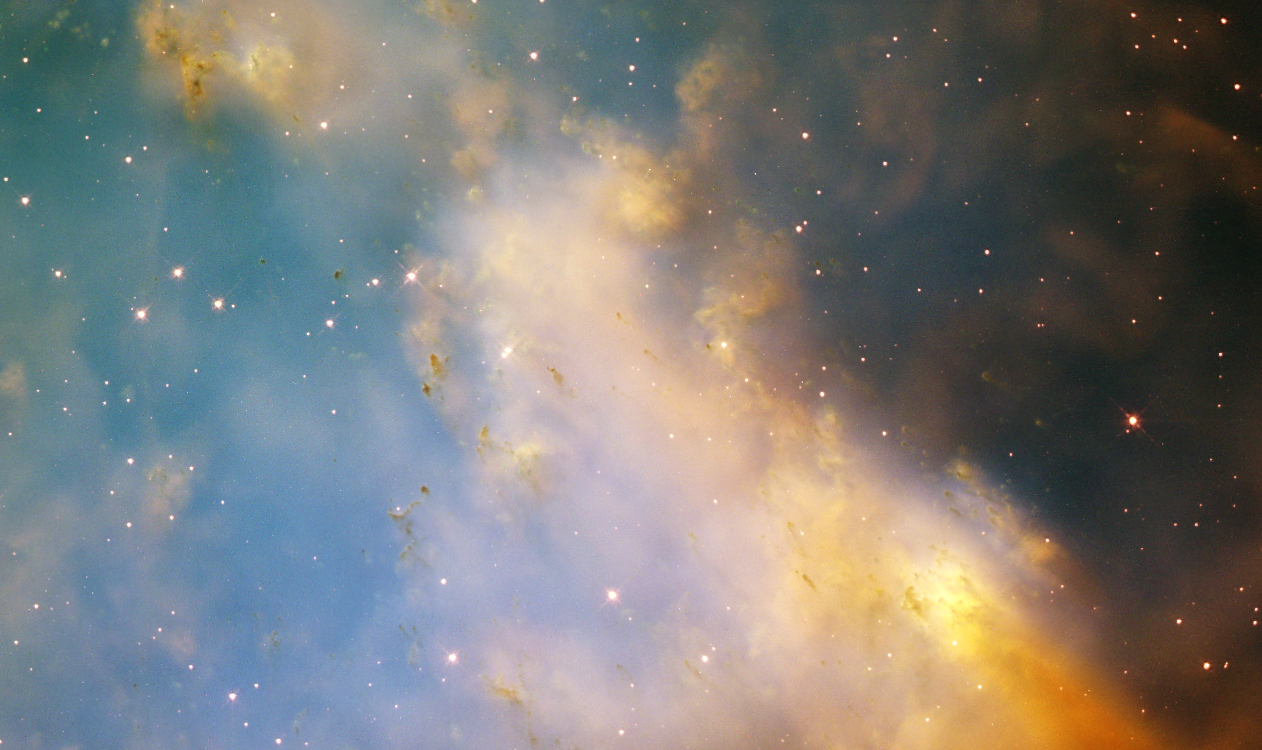
This detailed image captures a small portion of the historic Dumbbell Nebula (M27), the first planetary nebula ever discovered by astronomers. French astronomer Charles Messier found this celestial marvel in 1764, its distinctive hourglass shape earning it the 'dumbbell' moniker when viewed through early telescopes. Located approximately 1,200 light-years away in the constellation Vulpecula, the nebula represents the final chapter in the life of a Sun-like star that exhausted its nuclear fuel and expelled its outer layers into space roughly 10,000 years ago. The glowing gases visible here — rich in hydrogen, oxygen, and nitrogen — were once the outer atmosphere of a red giant star, now energized into fluorescence by the intense ultraviolet radiation from the searing hot stellar remnant at the nebula's center. The intricate knots and filaments visible in Hubble's detailed view reveal the complex physics of stellar death.
Scientific Significance
The Dumbbell Nebula holds special historical significance as the prototype planetary nebula that defined the class, though its importance extends far beyond history. Its relative proximity and large angular size make it an ideal laboratory for studying the detailed physics of stellar mass loss, nebular dynamics, and the enrichment of the interstellar medium with heavy elements. Hubble's high-resolution imaging has revealed thousands of dense, comet-shaped knots within the nebula — clumps of dense gas that resist the expanding nebular flow and develop tails pointing away from the central star. These knots may eventually form the building blocks of future planets as they disperse into the interstellar medium and become incorporated into new stellar systems. The chemical composition of the Dumbbell Nebula, enriched in carbon, nitrogen, and helium from nucleosynthesis in the progenitor star, demonstrates how planetary nebulae gradually increase the heavy element content of galaxies over cosmic time. As one of the nearest bright planetary nebulae, M27 continues to serve as a reference object for developing and testing theoretical models of post-main-sequence stellar evolution.
Observation Details
Hubble observed the Dumbbell Nebula using the Wide Field Planetary Camera 2 (WFPC2) with narrowband filters targeting specific emission lines from ionized hydrogen (H-alpha), doubly ionized oxygen ([OIII]), and singly ionized nitrogen ([NII]). These filters isolate light from gas at different temperatures and ionization states, revealing the layered structure of the nebula. The image shown captures only a small region of the full nebula, resolving individual knots and filaments that appear as smooth structure in ground-based images. The observations revealed the complex hydrodynamics of the nebular expansion and the ongoing interaction between fast stellar winds and previously ejected material.
Location in the Universe
Constellation
Vulpecula
Distance from Earth
1,200 light-years
Fun Facts
- 1
The Dumbbell Nebula was the first planetary nebula ever discovered, found by Charles Messier in 1764 — before anyone understood what these objects actually were.
- 2
The nebula is expanding at roughly 17 miles per second, and based on its current size, astronomers estimate the mass ejection began about 9,800 years ago.
- 3
The Dumbbell Nebula's central star is a white dwarf with a surface temperature of about 85,000 Kelvin — more than 14 times hotter than the Sun.
Image credit: NASA, ESA, Hubble Space Telescope