About This Image
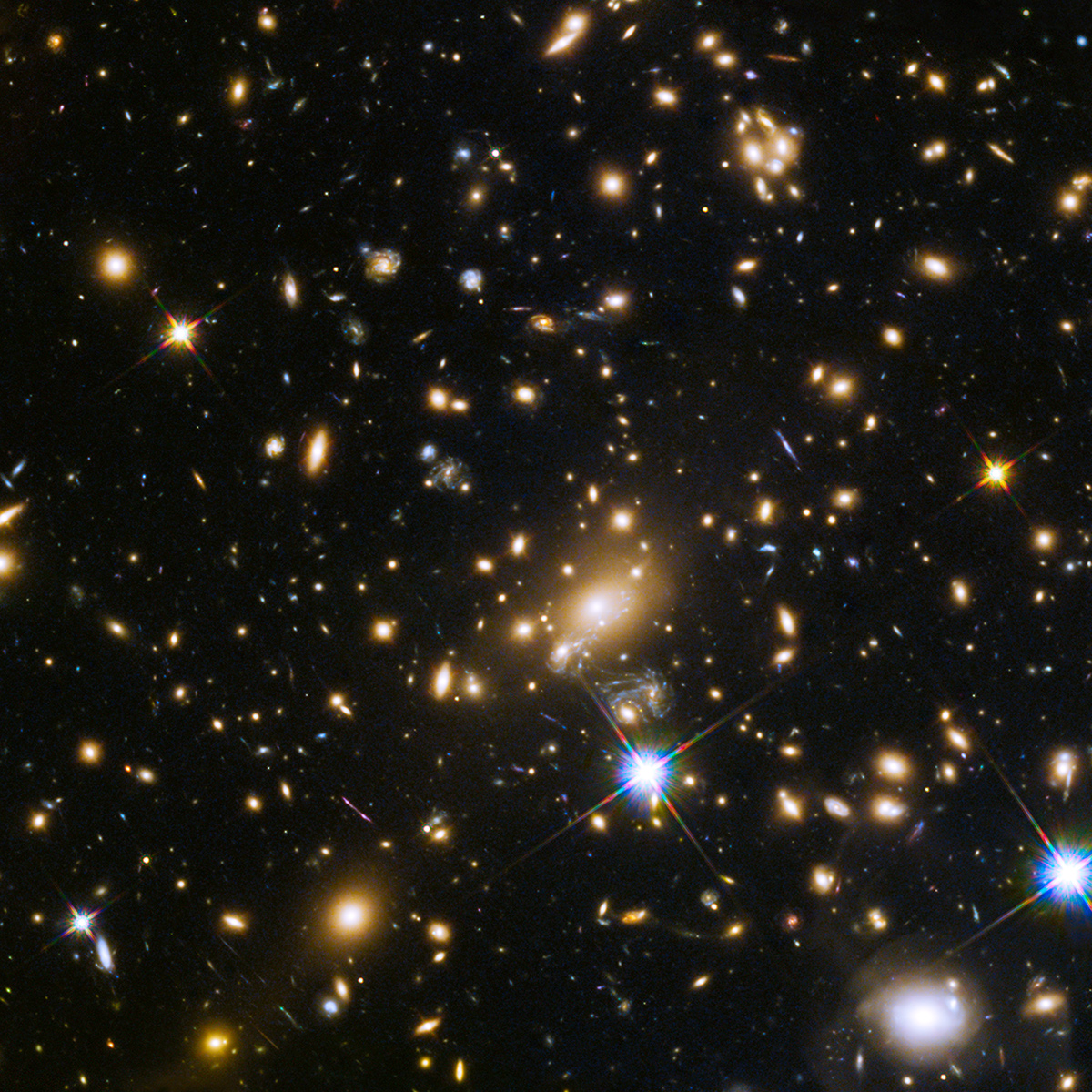
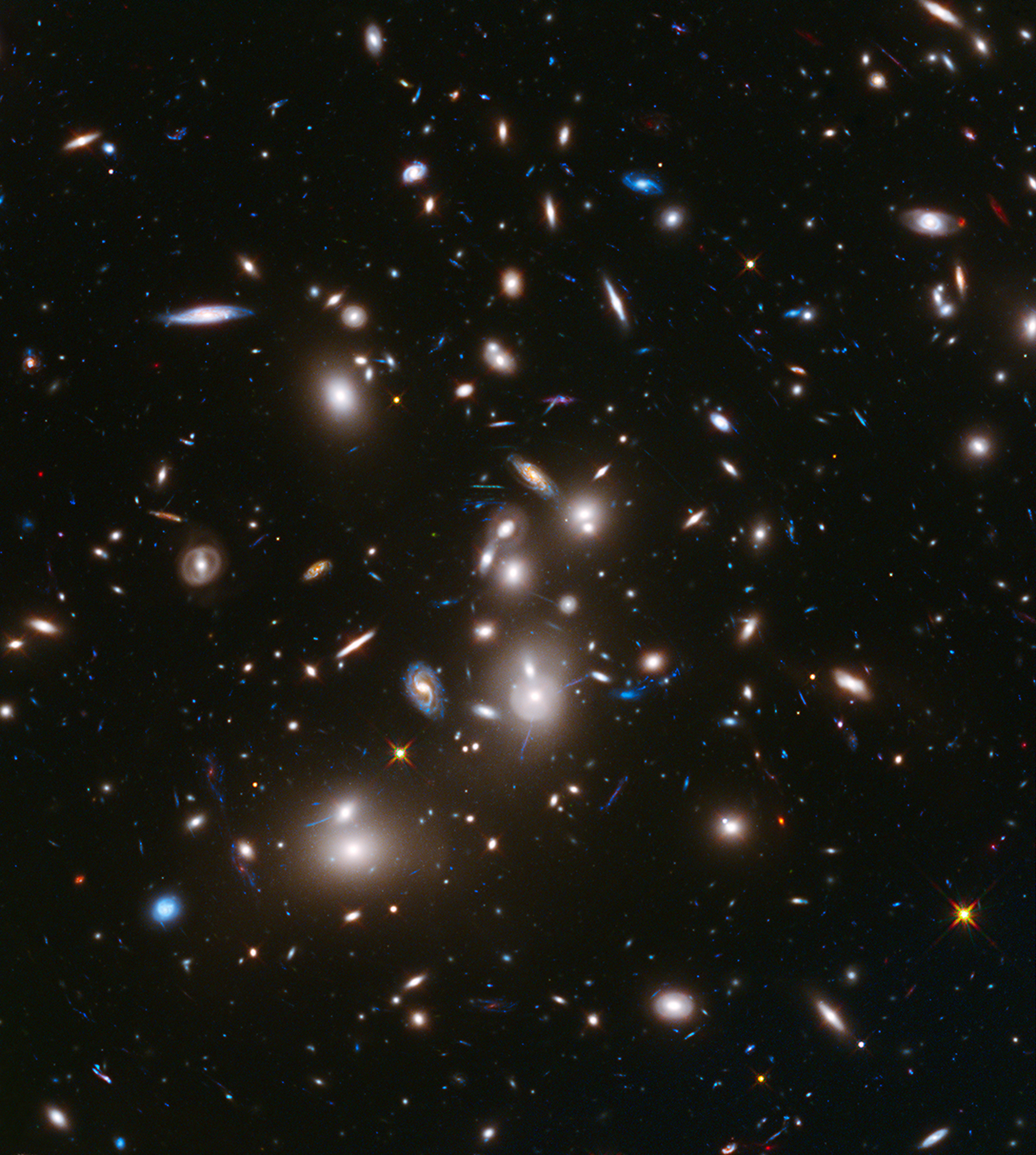
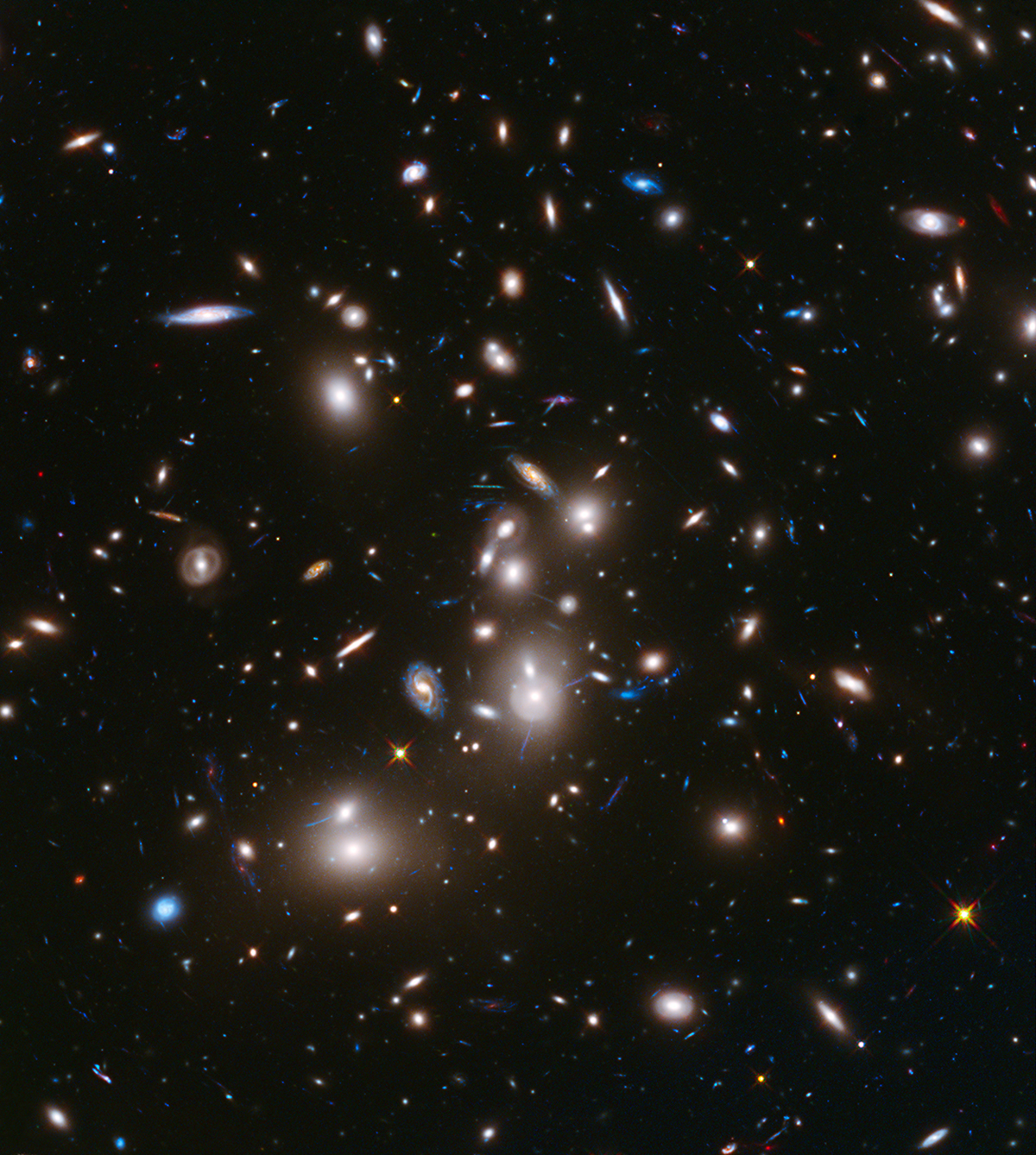
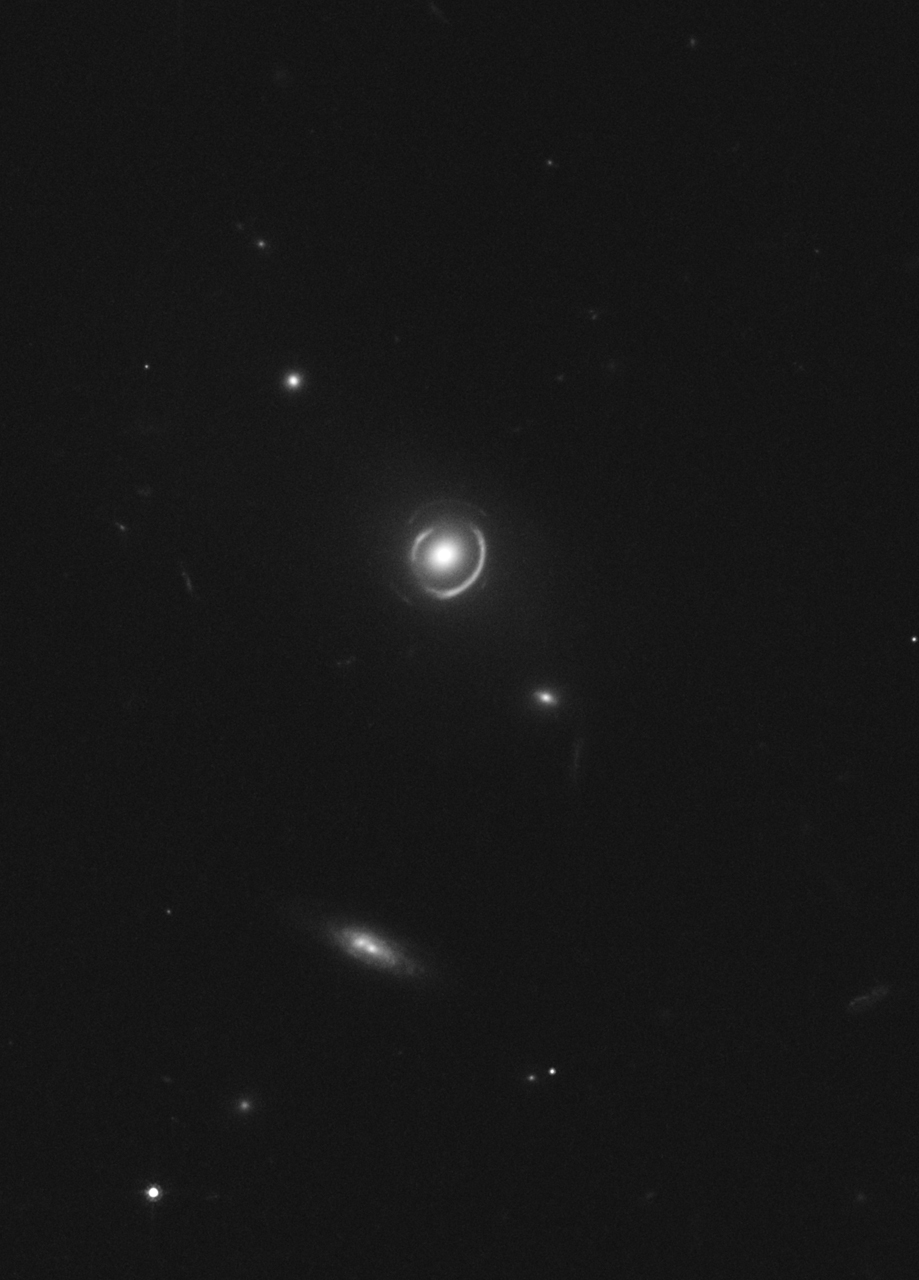
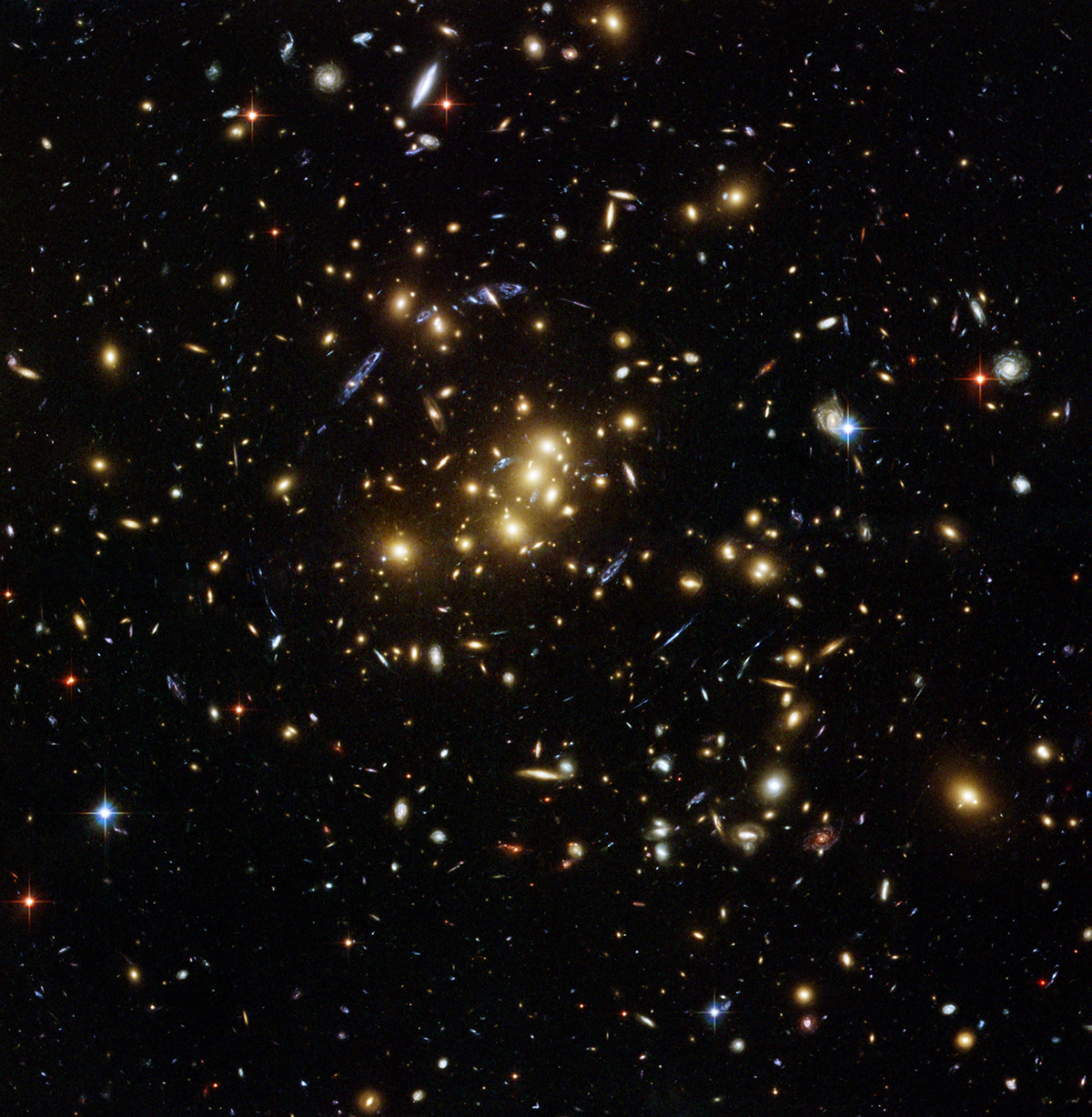
This stunning image of the galaxy cluster Cl 0024+17 reveals the extraordinary warping of space predicted by Einstein's general theory of relativity. The yellow-hued elliptical and spiral galaxies scattered throughout the image are members of the cluster itself, located roughly 4 billion light-years away. But the striking blue streaks and arcs are something far more remarkable: the distorted, magnified images of much more distant galaxies located far behind the cluster. The cluster's immense gravitational field — dominated by invisible dark matter — acts as a cosmic magnifying glass, bending and stretching the light from these background galaxies into the elongated arcs we see. This phenomenon, called gravitational lensing, transforms massive galaxy clusters into natural telescopes that allow astronomers to study galaxies that would otherwise be too faint and distant to observe.
Scientific Significance
Cl 0024+17 is one of the most extensively studied gravitational lensing systems and has been instrumental in mapping the distribution of dark matter in galaxy clusters. By carefully modeling the positions and shapes of the lensed background galaxies, astronomers can reconstruct the mass distribution of the lensing cluster — including the invisible dark matter that dominates its gravitational field. Studies of Cl 0024+17 have revealed a ring-like structure in its dark matter distribution, possibly the remnant of a collision between two massive clusters roughly 1-2 billion years ago. This 'dark matter ring' was one of the strongest pieces of evidence that dark matter is a real substance that can be separated from normal matter during violent cosmic collisions. The cluster also serves as a natural telescope, magnifying distant background galaxies and allowing studies of star formation and galaxy structure at epochs when the universe was less than half its current age.
Observation Details
Hubble observed Cl 0024+17 using the Advanced Camera for Surveys (ACS) and the Wide Field Camera 3 (WFC3) in multiple optical and near-infrared filters. The deep multi-wavelength observations enabled identification and measurement of both cluster member galaxies and the lensed background sources. Careful photometric and spectroscopic analysis distinguished the foreground cluster members (appearing predominantly yellow-red) from the more distant lensed galaxies (appearing blue due to active star formation). Gravitational lens modeling software was used to map the cluster's total mass distribution from the positions and shapes of multiple lensed images, revealing the underlying dark matter structure invisible to direct observation.
Location in the Universe
Constellation
Pisces
Distance from Earth
4 billion light-years
Fun Facts
- 1
Some of the blue arcs in this image are multiple images of the same background galaxy, distorted and duplicated by the cluster's gravitational lens.
- 2
Cl 0024+17 contains so much dark matter that its total mass is roughly 100 trillion times the mass of our Sun — yet most of this mass is completely invisible.
- 3
The gravitational lensing in Cl 0024+17 magnifies background galaxies by factors of 2-10, allowing Hubble to study objects that would otherwise be too faint to see.
Image credit: NASA, ESA, Hubble Space Telescope