About This Image
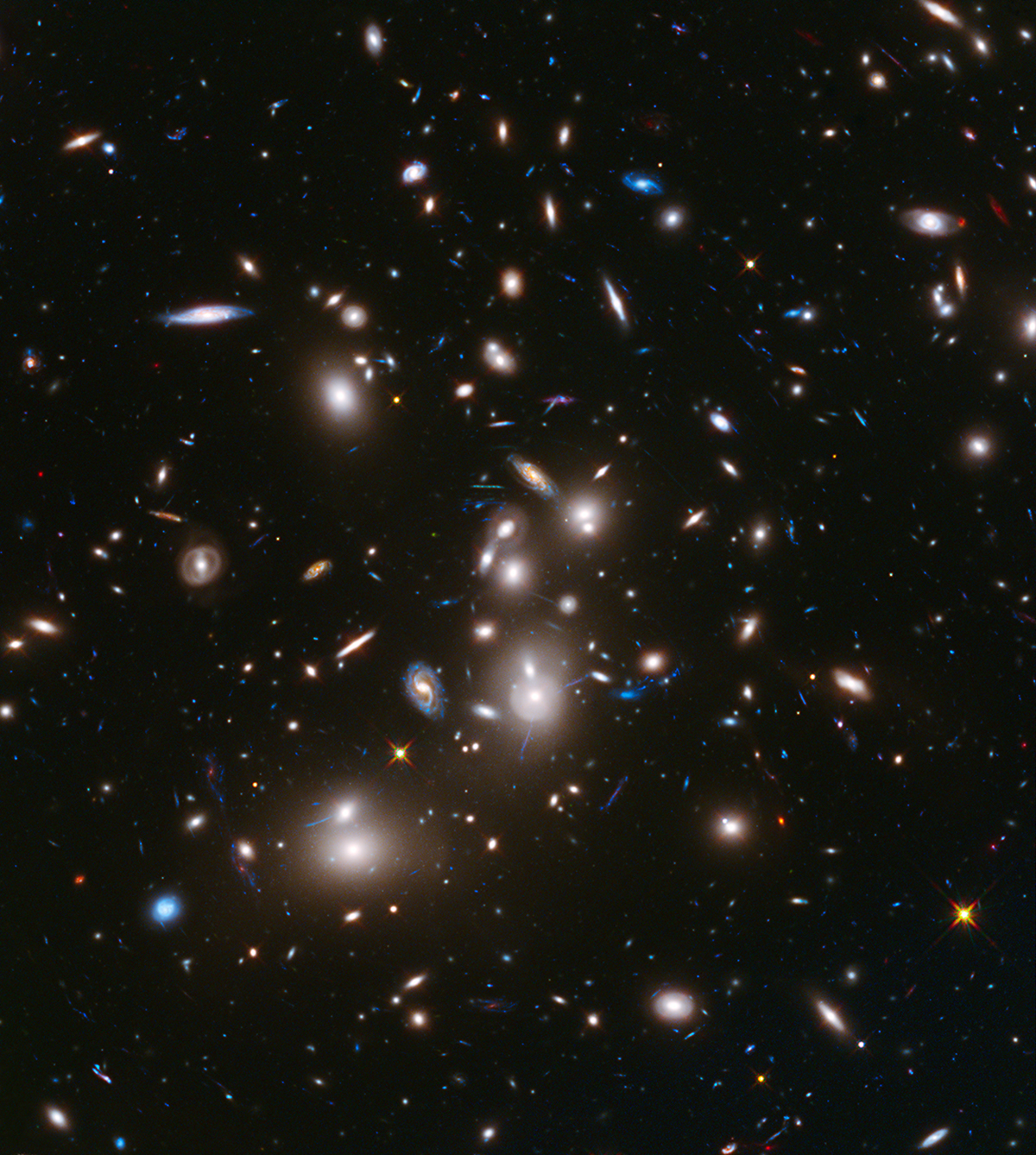
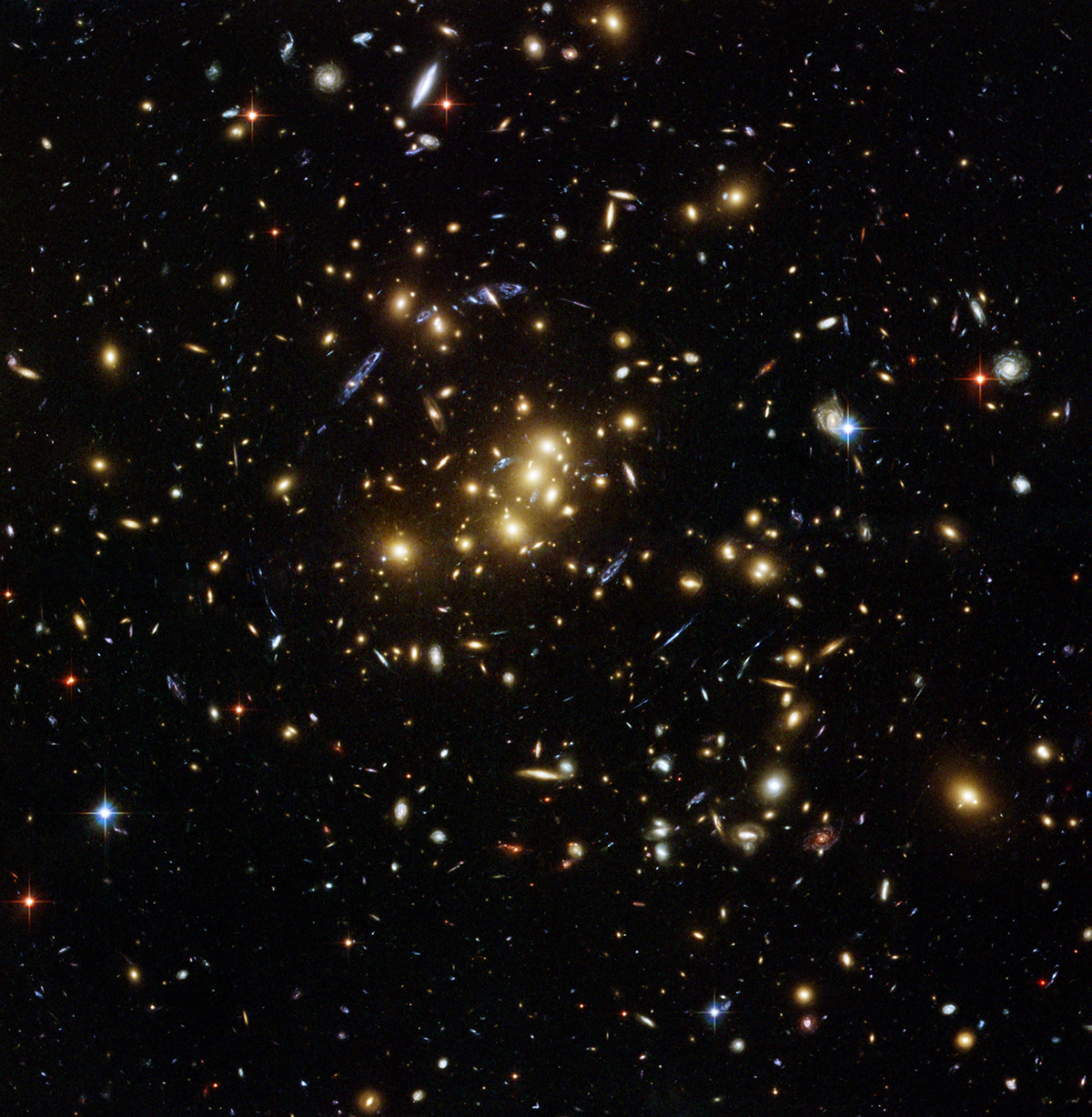
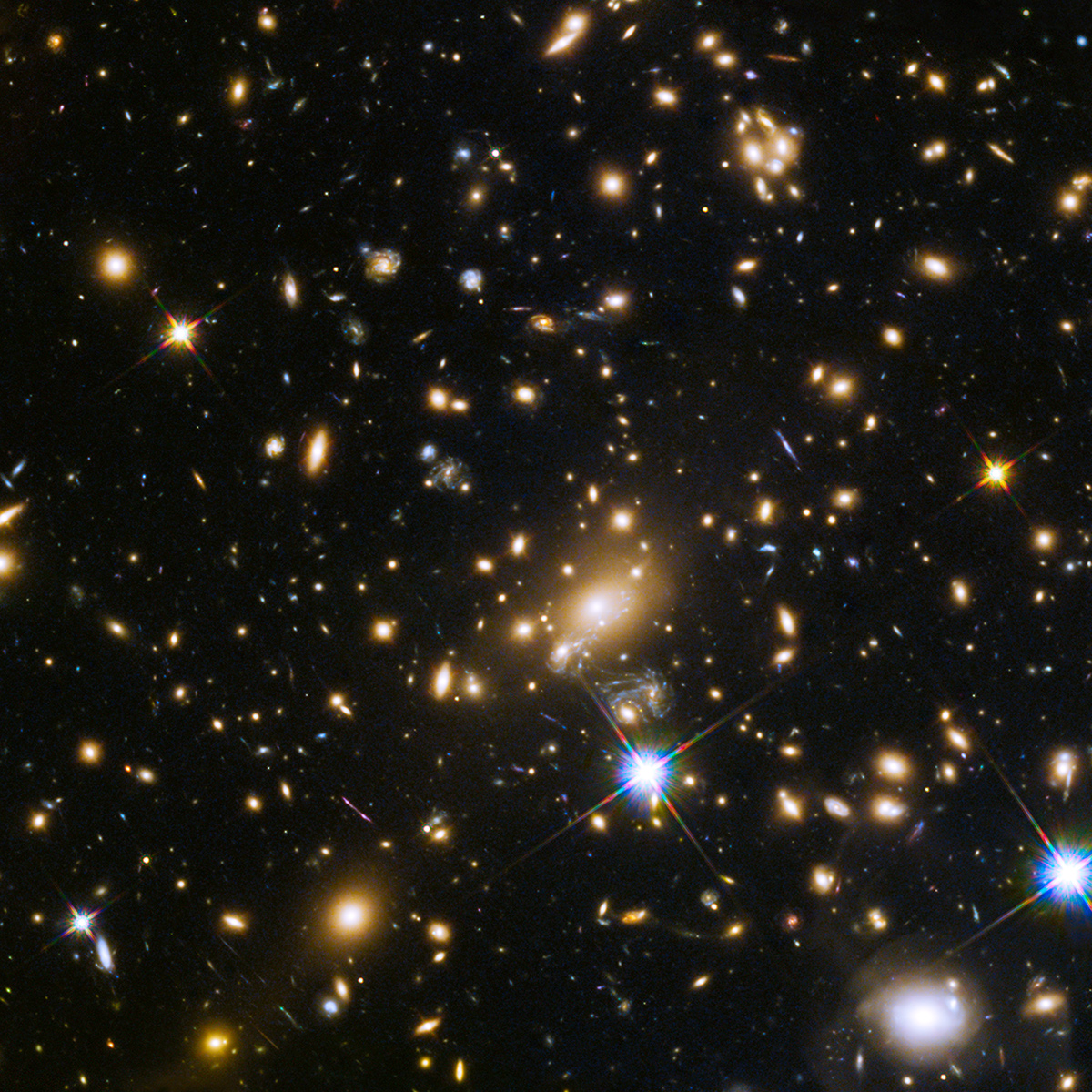
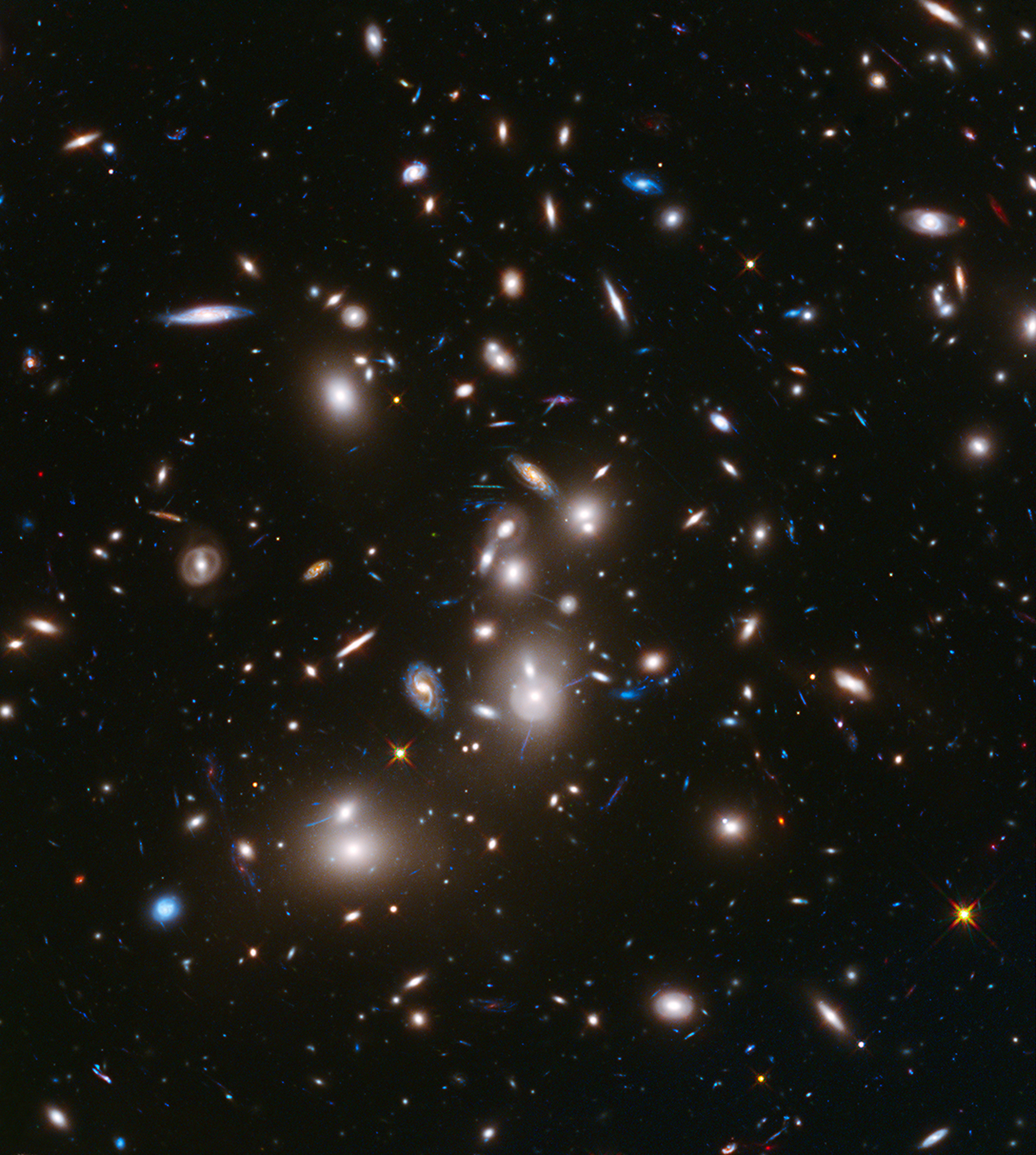
This majestic image captures Abell 2744, one of the most massive and complex galaxy clusters ever studied, nicknamed 'Pandora's Cluster' for the wealth of cosmic mysteries it has revealed. Located 3.5 billion light-years away in the constellation Sculptor, this behemoth contains several hundred galaxies bound together by gravity — but the visible galaxies represent only a small fraction of the cluster's true mass. The bulk of Abell 2744 consists of hot gas detectable in X-rays and vast quantities of invisible dark matter that outweigh the normal matter by roughly five to one. The cluster's complex structure suggests it formed from the violent collision of at least four smaller galaxy clusters over hundreds of millions of years. Acting as a powerful gravitational lens, Abell 2744's enormous mass magnifies and distorts the light from nearly 3,000 background galaxies, including some of the most distant objects ever observed.
Scientific Significance
Abell 2744 is one of the most scientifically productive galaxy clusters ever observed, serving as both a natural laboratory for studying cluster physics and a cosmic telescope for viewing the distant universe. The cluster's complex morphology — with multiple cores, separated concentrations of dark matter, hot gas, and galaxies — provides the clearest evidence yet for the collisionless nature of dark matter. During the cluster mergers that built Abell 2744, the dark matter passed through relatively unimpeded while the hot gas was slowed by electromagnetic interactions, causing the two components to separate spatially. This separation is directly visible in comparisons between X-ray observations (which trace the gas) and gravitational lensing maps (which trace all mass including dark matter). As part of the Hubble Frontier Fields program, Abell 2744's powerful gravitational lensing was used to magnify and detect galaxies in the early universe that would otherwise be far too faint to observe, including candidates at redshifts above z=10 — less than 500 million years after the Big Bang.
Observation Details
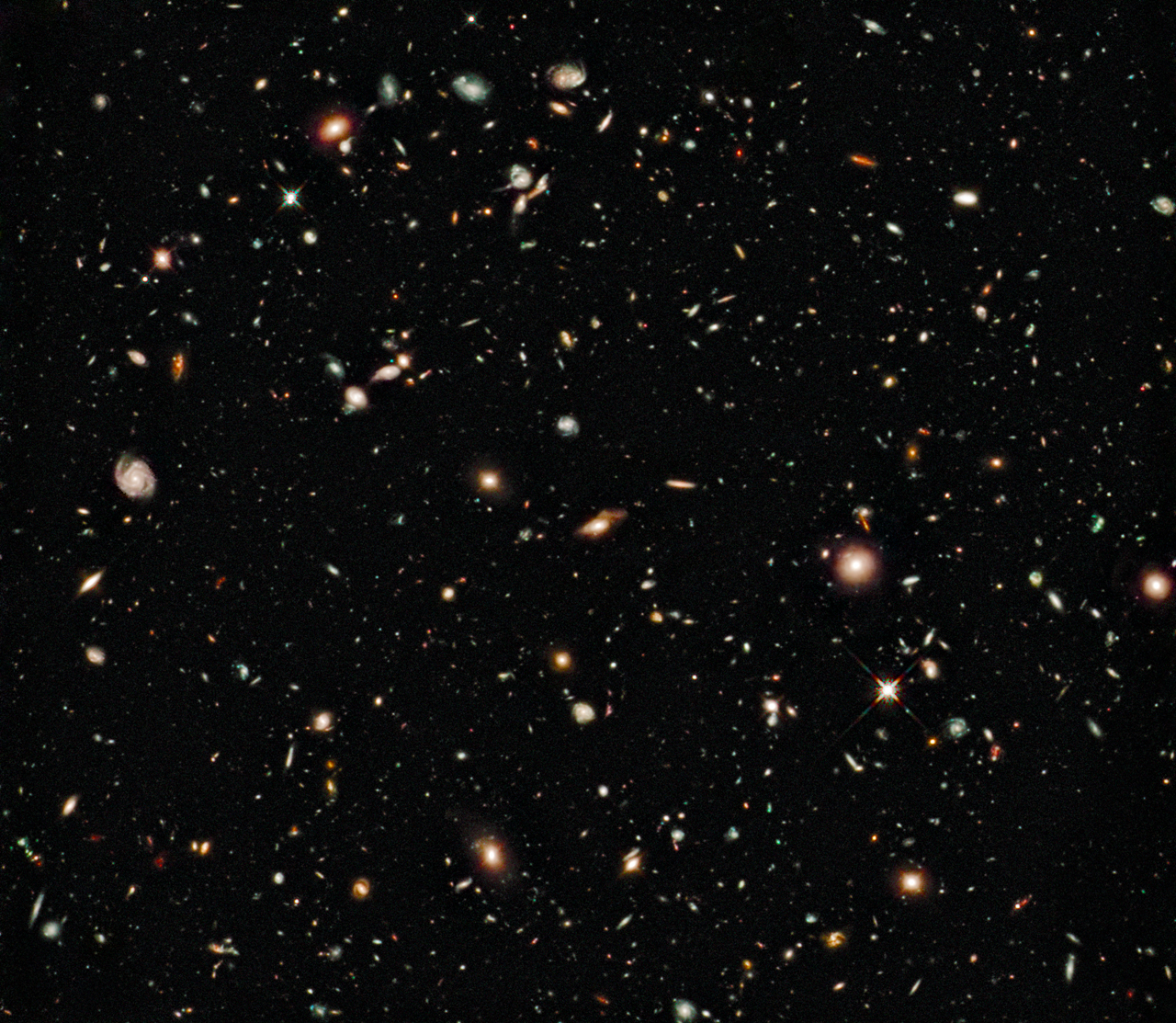
Hubble observed Abell 2744 as part of the Frontier Fields program, accumulating over 70 hours of exposure time in visible and near-infrared filters using the Advanced Camera for Surveys (ACS) and the Wide Field Camera 3 (WFC3). The deep multi-wavelength observations enabled detection of thousands of background galaxies magnified by the cluster's gravitational lens, while also mapping the cluster's member galaxies in detail. Parallel observations captured a 'blank' field adjacent to the cluster for comparison. The Hubble data were combined with Chandra X-ray observations to map the hot gas distribution and with spectroscopic follow-up from ground-based telescopes to measure redshifts of the lensed sources.
Location in the Universe
Constellation
Sculptor
Distance from Earth
3.5 billion light-years
Fun Facts
- 1
Abell 2744 earned the nickname 'Pandora's Cluster' because observations revealed an unexpected mixture of phenomena that challenged astronomers' understanding of cluster physics.
- 2
The cluster's mass is equivalent to roughly 4 quadrillion Suns — that's a 4 followed by 15 zeros — yet 75% of this mass is invisible dark matter.
- 3
Abell 2744 served as one of six clusters in the Hubble Frontier Fields program, which used gravitational lensing to observe the most distant galaxies ever detected.
Image credit: NASA, ESA, Hubble Space Telescope