About This Image
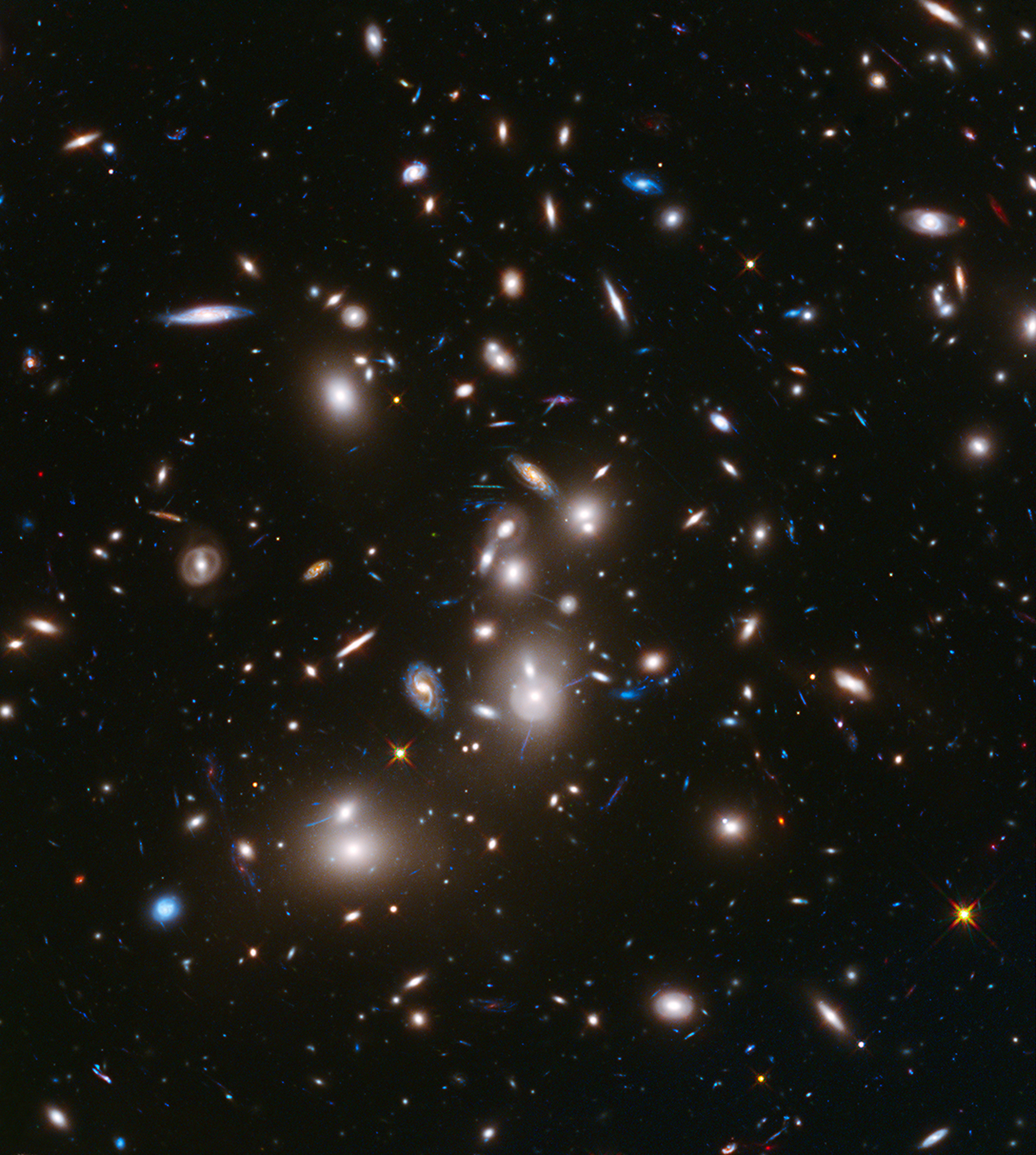
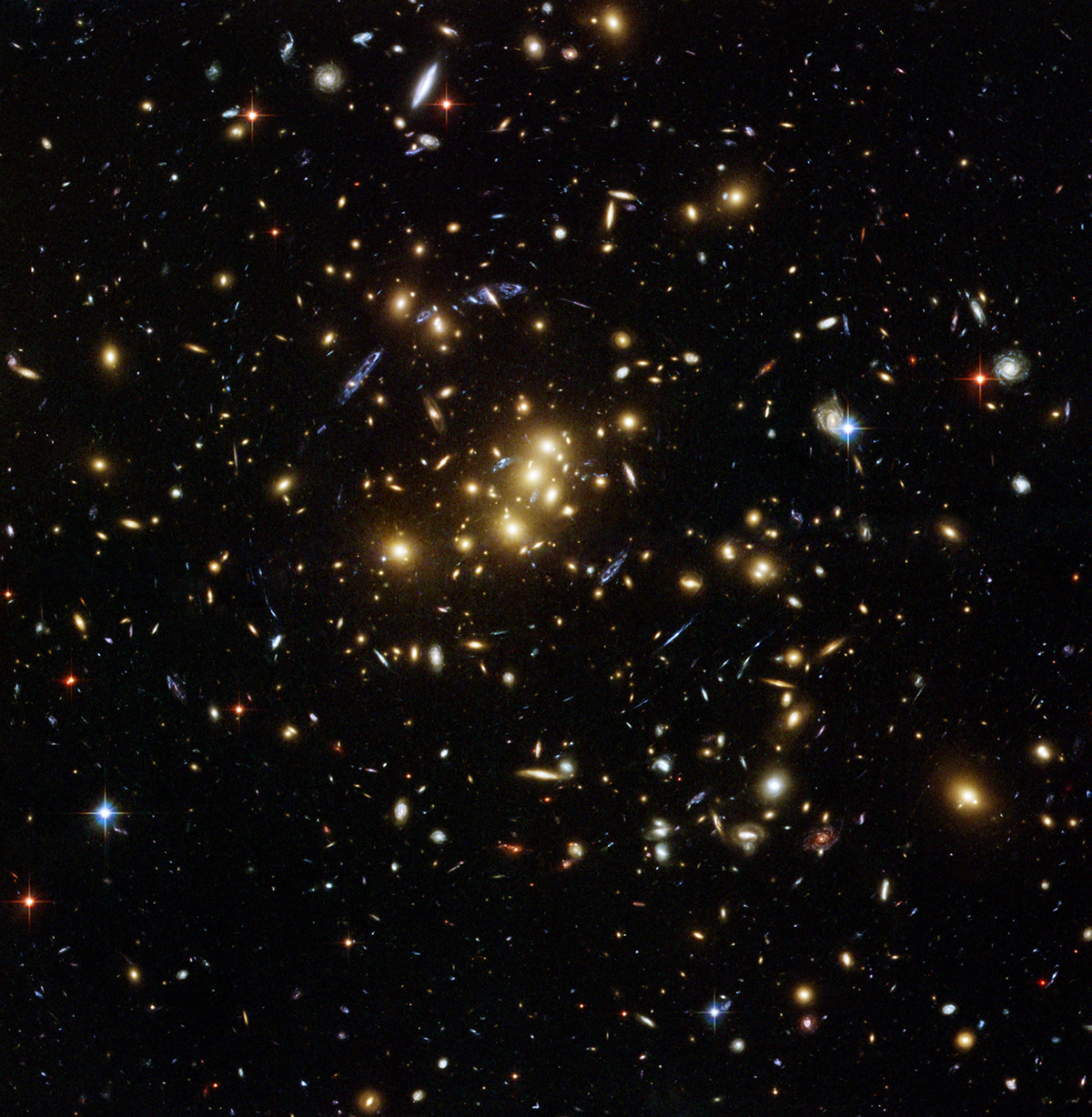
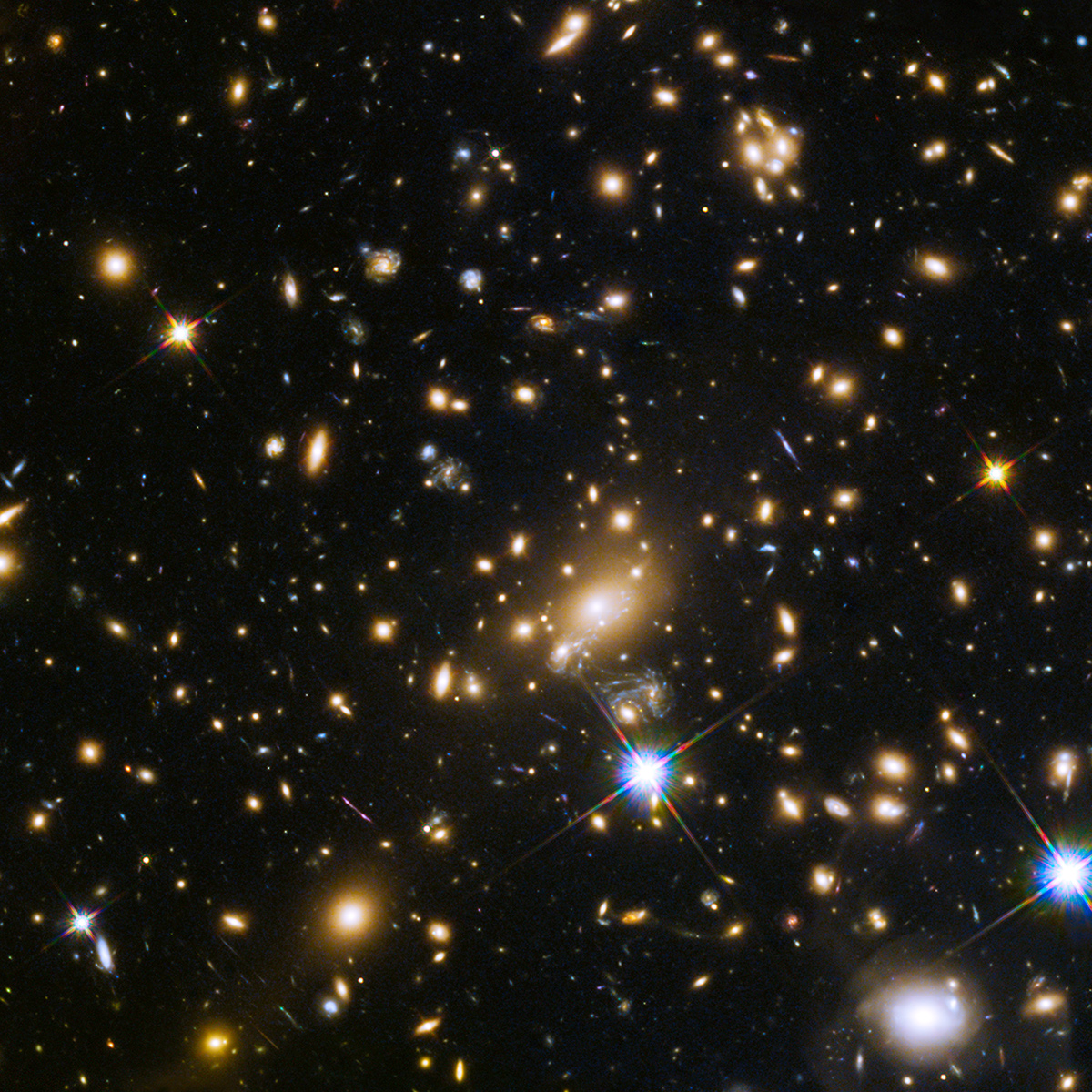
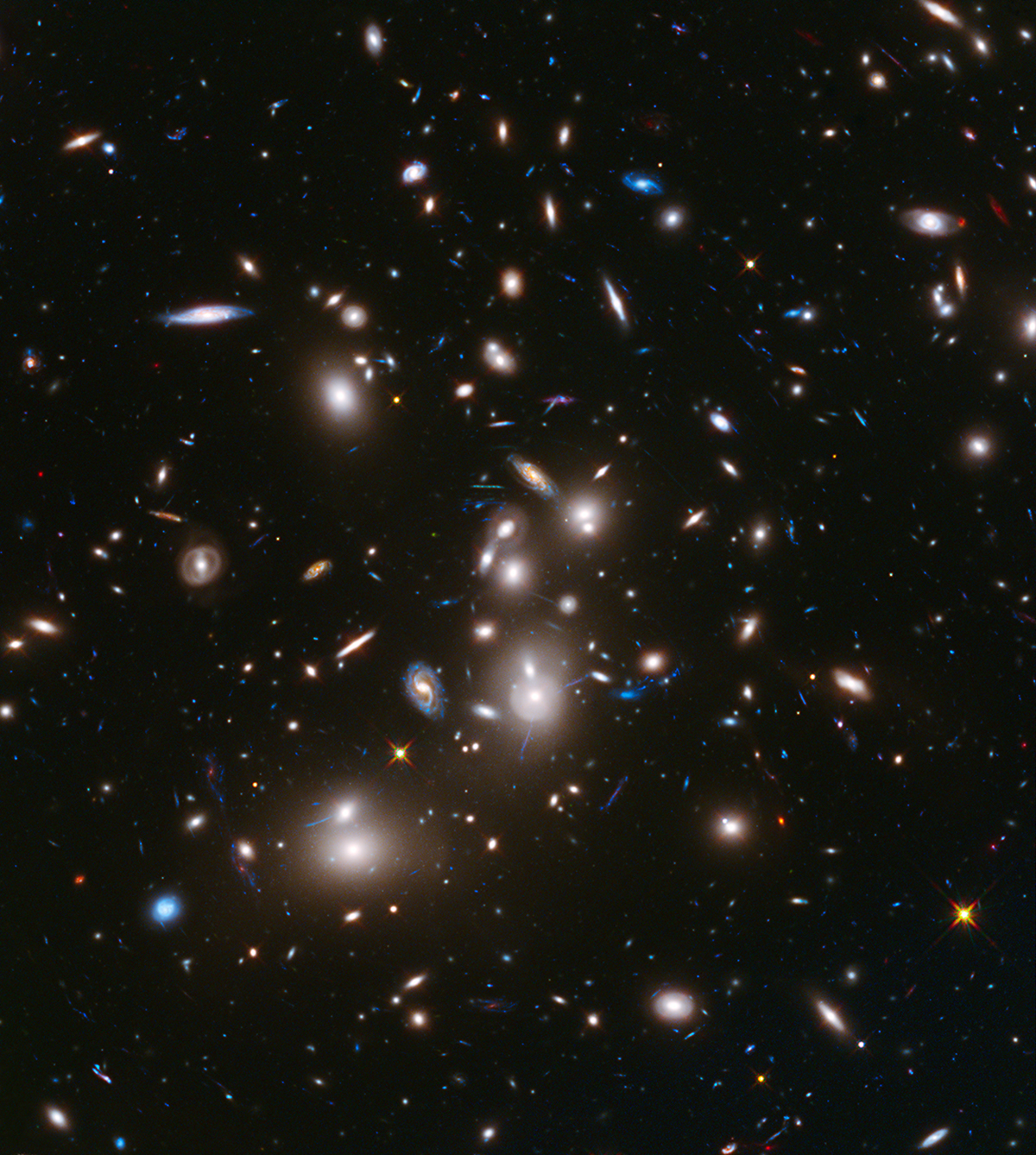
This alternative view of the colossal galaxy cluster Abell 2744 highlights different aspects of this remarkable cosmic structure. Known as 'Pandora's Cluster,' this massive aggregation of galaxies represents one of the most violent ongoing collisions in the observable universe. The yellowish elliptical galaxies scattered throughout the image are cluster members, their old stellar populations giving them a reddish-golden hue, while bluer spiral galaxies — both cluster members and magnified background objects — display active star formation. The gravitational mass of this cluster is so immense that it visibly warps the images of background galaxies into elongated arcs and distorted shapes, providing direct visual evidence of Einstein's prediction that mass bends spacetime. This particular field of view captures the complex dynamics of a cluster still in the process of assembly, where multiple smaller clusters are merging into a single titanic structure.
Scientific Significance
This complementary observation of Abell 2744 reveals different structural features and magnified background sources than other views of the same cluster. The ongoing assembly of Abell 2744 from multiple merging subclusters provides a window into the hierarchical formation of cosmic structure, where the largest objects in the universe grow through successive accretion and mergers of smaller systems. The distinct spatial separations between the cluster's dark matter (traced by gravitational lensing), hot gas (traced by X-ray emission), and galaxies observed in different regions of Abell 2744 provide some of the strongest evidence that dark matter is a real substance rather than an artifact of modified gravity theories. Each subcluster brought its own complement of dark matter, gas, and galaxies into the merger, and the different collisional properties of these components caused them to separate during the violent encounters. Studies of the magnified background galaxies in this image have revealed some of the youngest and most distant galaxies ever detected, providing crucial data on galaxy formation in the first billion years of cosmic history.
Observation Details
This observation of Abell 2744 utilized Hubble's Advanced Camera for Surveys (ACS) and Wide Field Camera 3 (WFC3) with a different pointing or filter combination than the primary Frontier Fields observation, capturing additional cluster structure and magnified sources. The deep exposures, totaling many hours of integration time, reached limiting magnitudes sufficient to detect galaxies billions of times fainter than visible to the unaided eye. Photometric redshift techniques were applied to the detected sources to separate foreground cluster members from the more distant lensed population, enabling construction of magnification maps that predict the amplification of background sources at any position in the field.
Location in the Universe
Constellation
Sculptor
Distance from Earth
3.5 billion light-years
Fun Facts
- 1
The mergers that built Abell 2744 released energies equivalent to trillions of supernova explosions, heating the cluster's gas to temperatures exceeding 100 million degrees.
- 2
Individual galaxies in Abell 2744 are moving through the cluster at speeds up to 3,000 kilometers per second — roughly 1% of the speed of light.
- 3
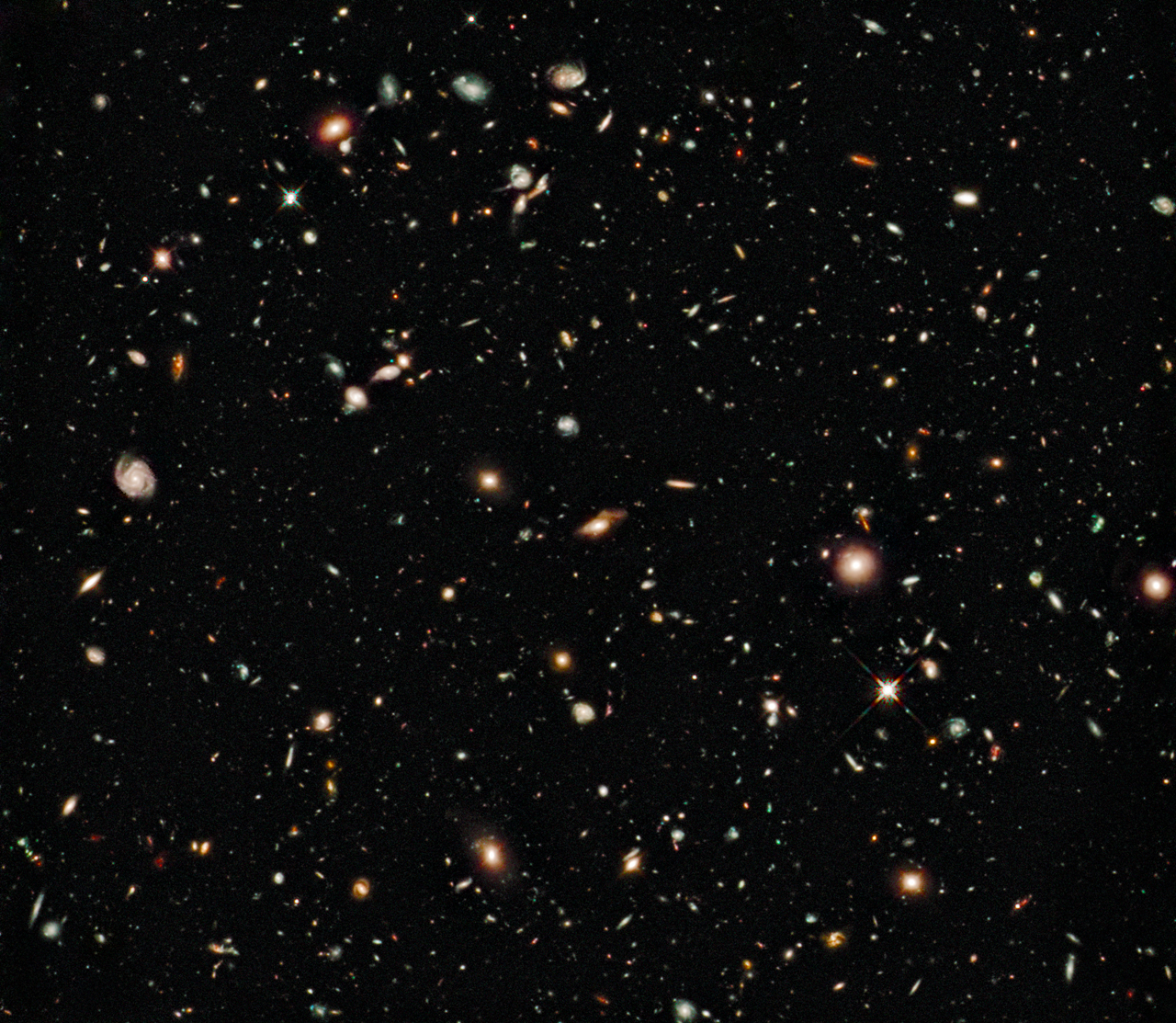
Some of the faintest smudges in this deep image are galaxies so distant that their light has been traveling for over 13 billion years.
Image credit: NASA, ESA, Hubble Space Telescope