About This Image
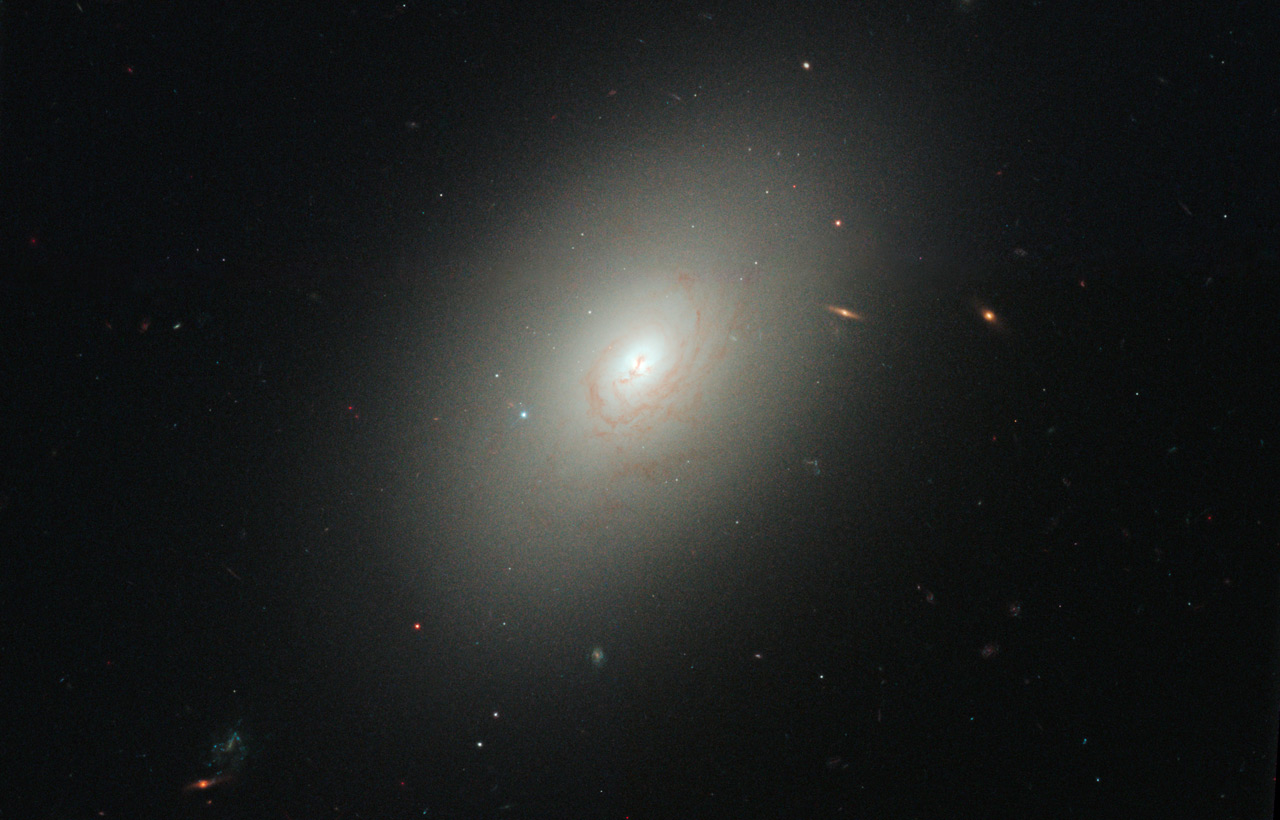
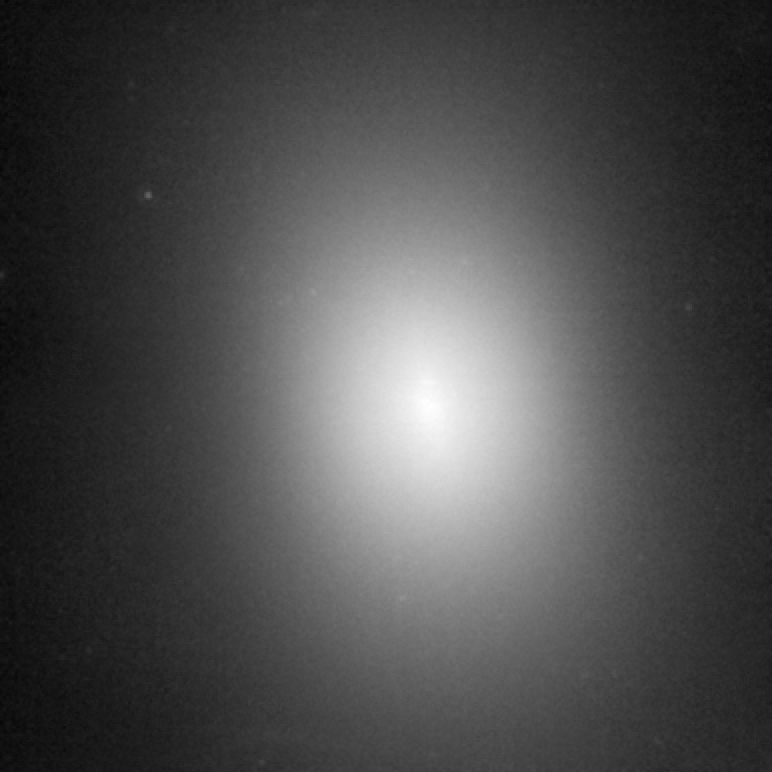
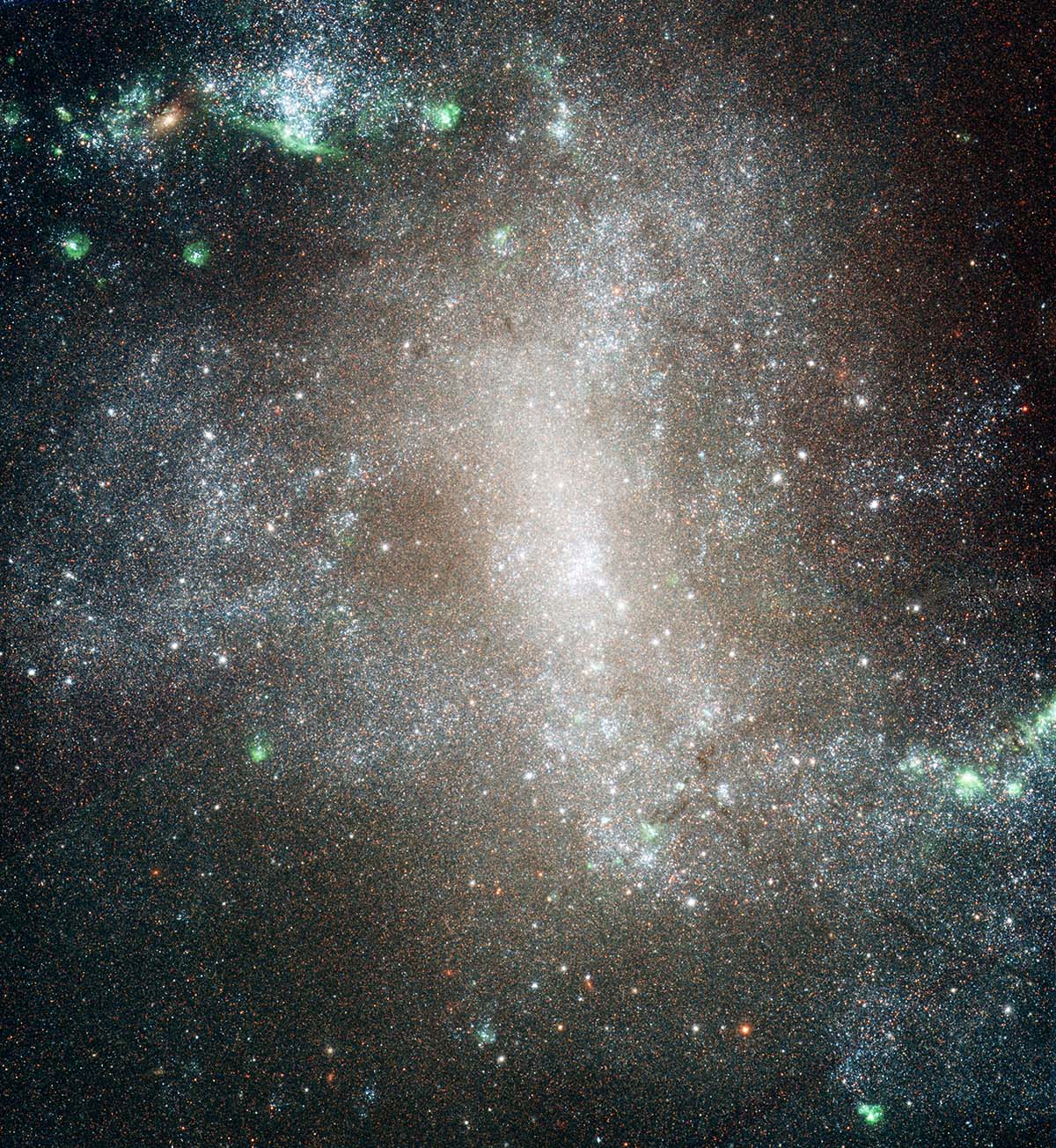
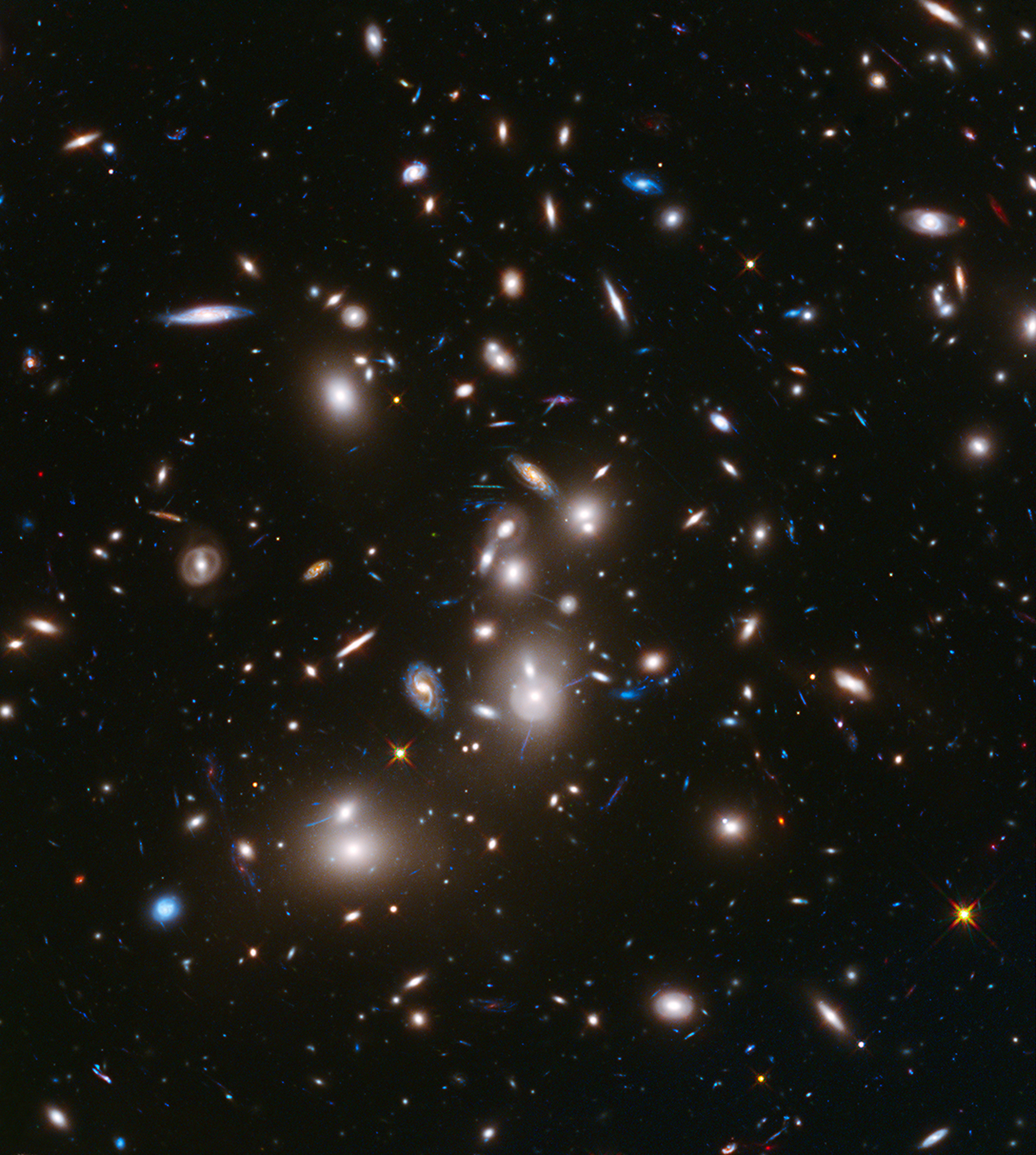
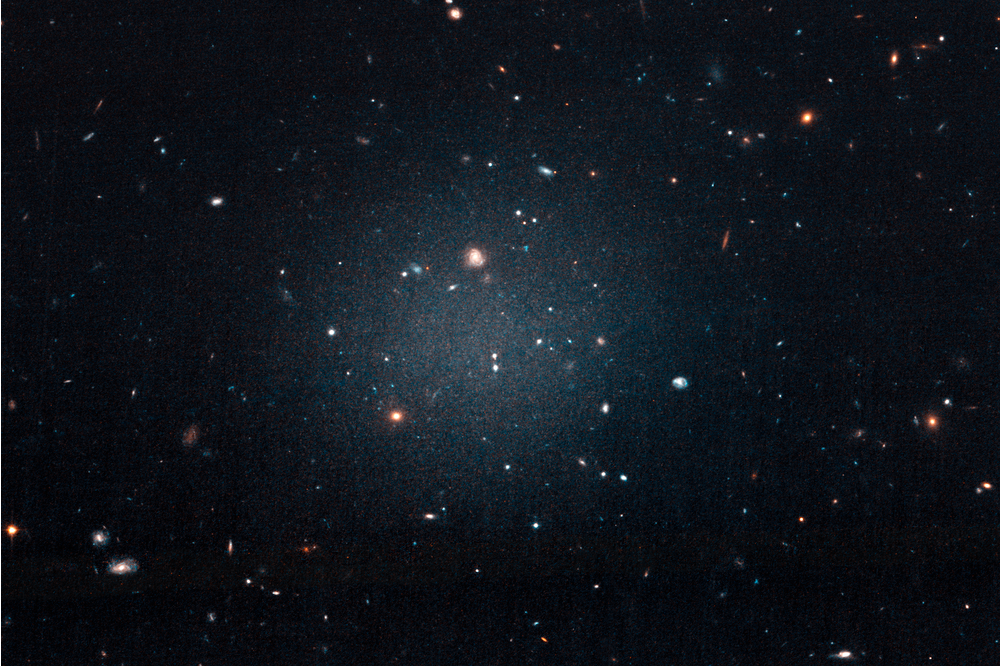
This ghostly galaxy defies our fundamental understanding of how galaxies form and evolve. NGC 1052-DF2 is so extraordinarily diffuse and transparent that we can see distant background galaxies shining clearly through its sparse stellar population — an eerie cosmic window that hints at this object's bizarre nature. What makes this galaxy truly remarkable is what it apparently lacks: dark matter, the invisible substance that according to standard cosmological models should dominate the mass of every galaxy. Measurements of the motions of NGC 1052-DF2's globular clusters revealed velocities far lower than expected, indicating the galaxy's total mass is roughly equal to its visible stellar mass alone, with little or no room for dark matter. This discovery challenges fundamental assumptions about galaxy formation and suggests that dark matter, while ubiquitous, may not be required for all galaxies to form.
Scientific Significance
NGC 1052-DF2 sent shockwaves through the astronomical community because it apparently contradicts a cornerstone of modern cosmology: that dark matter halos are essential for galaxy formation. In the standard model, galaxies form when dark matter haloes gravitationally collect normal matter, meaning every galaxy should be dark-matter dominated. NGC 1052-DF2's apparent dark matter deficiency suggests either that some galaxies can form without dark matter through exotic processes, or that dark matter can be stripped away after formation. Proposed explanations include tidal stripping by the nearby massive galaxy NGC 1052, formation from material expelled during a galaxy collision, or birth in an unusually dark-matter-poor region. Ironically, this discovery strengthens the case for dark matter as a real particle (rather than a modification of gravity), because it demonstrates that dark matter and normal matter can be separated — something impossible if 'dark matter' effects were simply due to modified gravitational physics.
Observation Details
Hubble observed NGC 1052-DF2 using the Advanced Camera for Surveys (ACS) in broadband optical filters. The deep exposures revealed the galaxy's sparse stellar population and identified ten compact globular clusters orbiting within it. Measuring the velocities of these globular clusters using spectroscopy from the Keck telescope was the key observation — their low velocity dispersion implied a total mass consistent with the visible stars alone, with no additional dark matter needed. Hubble's resolution was essential for identifying the globular clusters and separating them from background galaxies visible through the diffuse stellar body. The observations also revealed the galaxy's extremely low surface brightness, roughly 100 times fainter per unit area than typical galaxies.
Location in the Universe
Constellation
Cetus
Distance from Earth
65 million light-years
Fun Facts
- 1
NGC 1052-DF2 has roughly the same physical size as the Milky Way but contains only about 1/200th as many stars, making it essentially a 'galaxy-sized cloud' of scattered stars.
- 2
The discovery of a galaxy apparently lacking dark matter actually strengthens the case for dark matter's existence — it shows dark matter is a real substance that can be separated from normal matter, not just an artifact of modified gravity.
- 3
A second dark-matter-deficient galaxy, NGC 1052-DF4, was later discovered in the same galaxy group, suggesting some unusual process stripped both objects of their dark matter.
Image credit: NASA, ESA, Hubble Space Telescope