About This Image
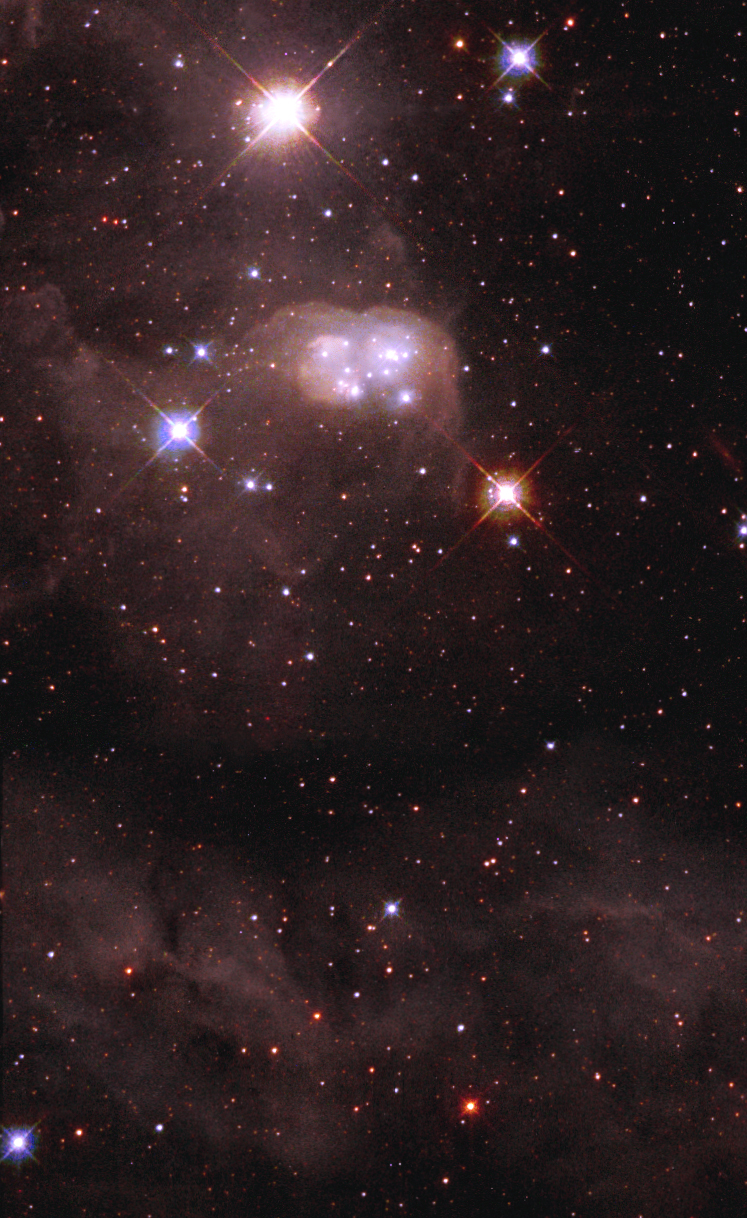
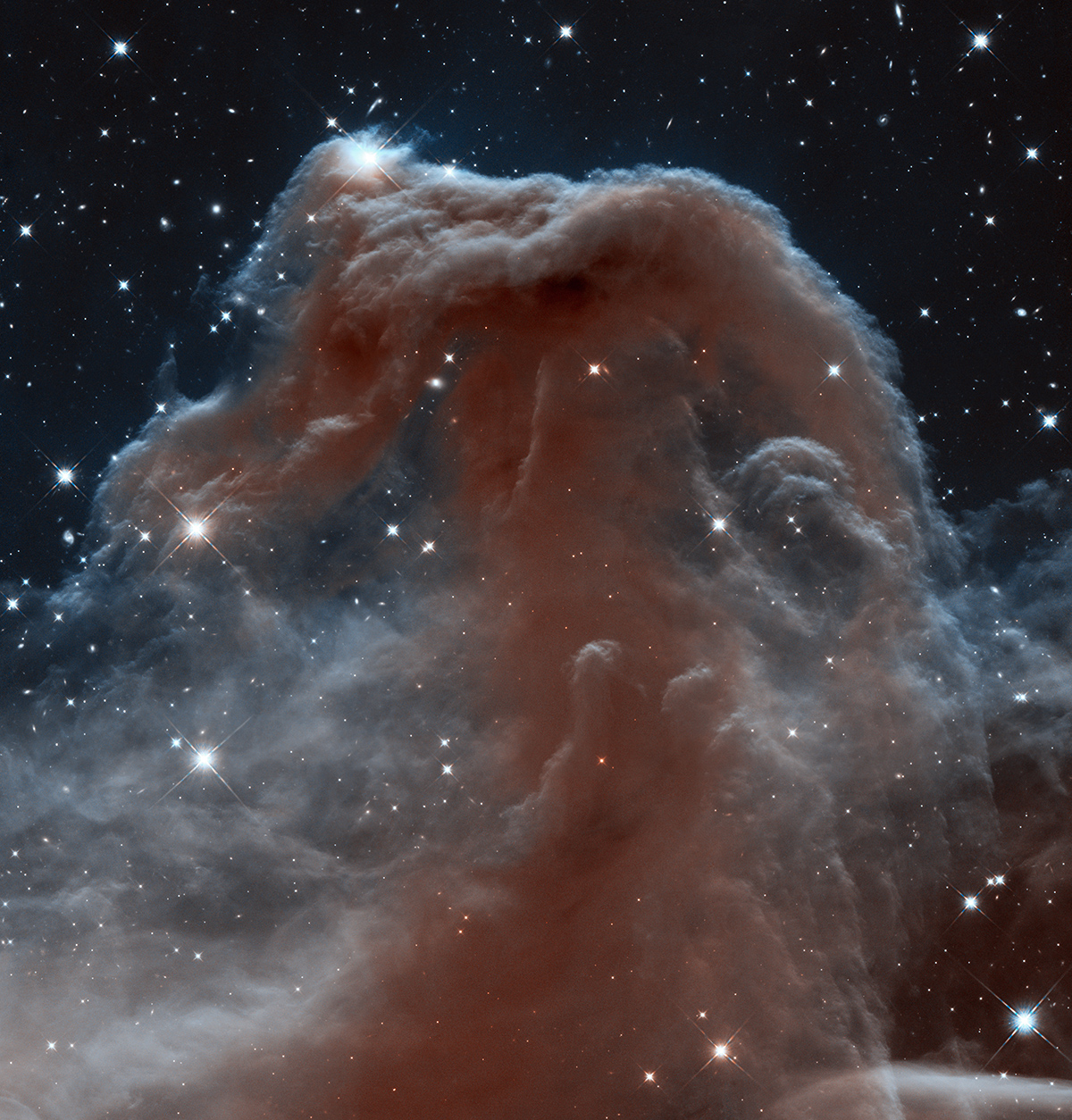
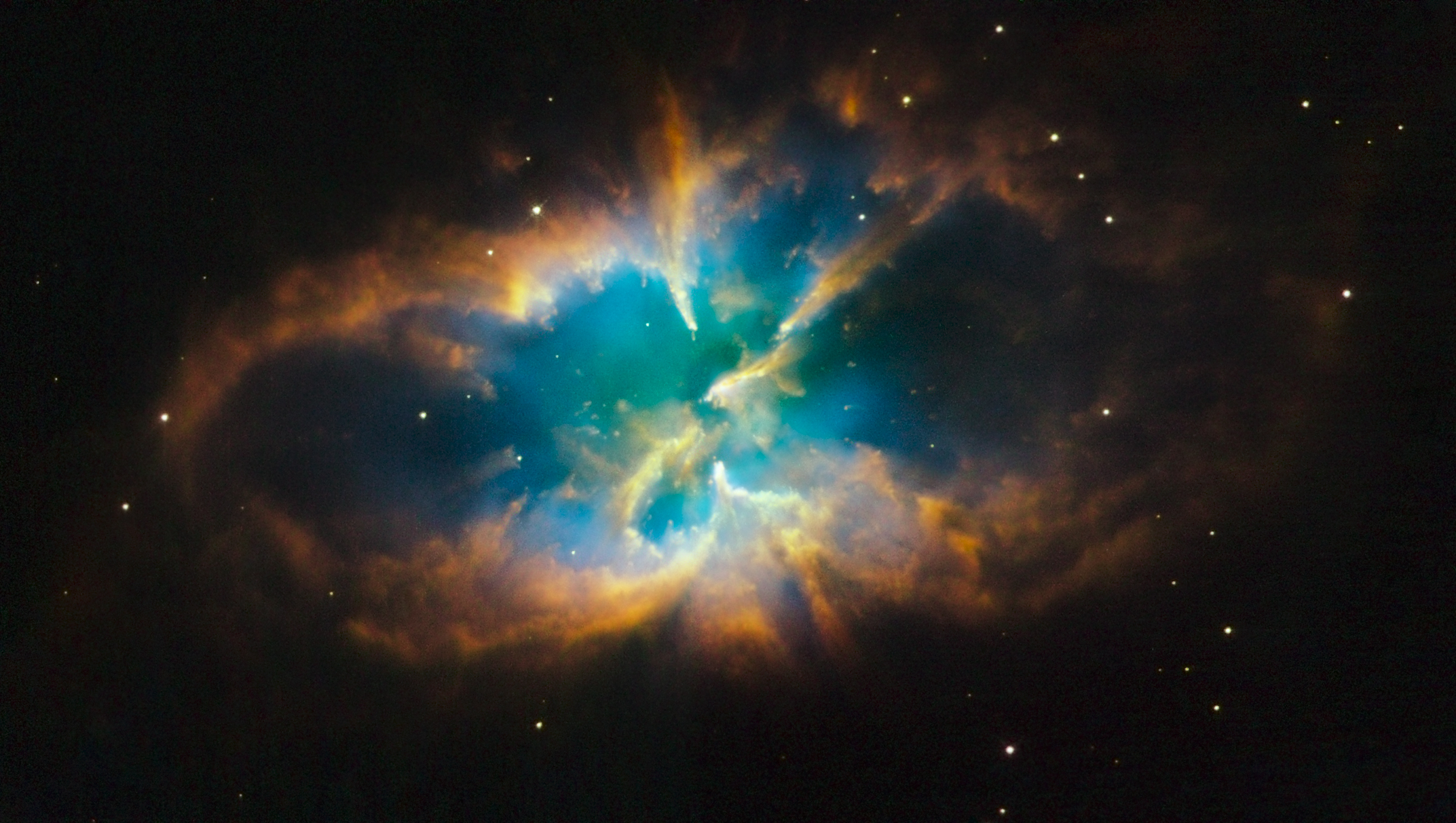
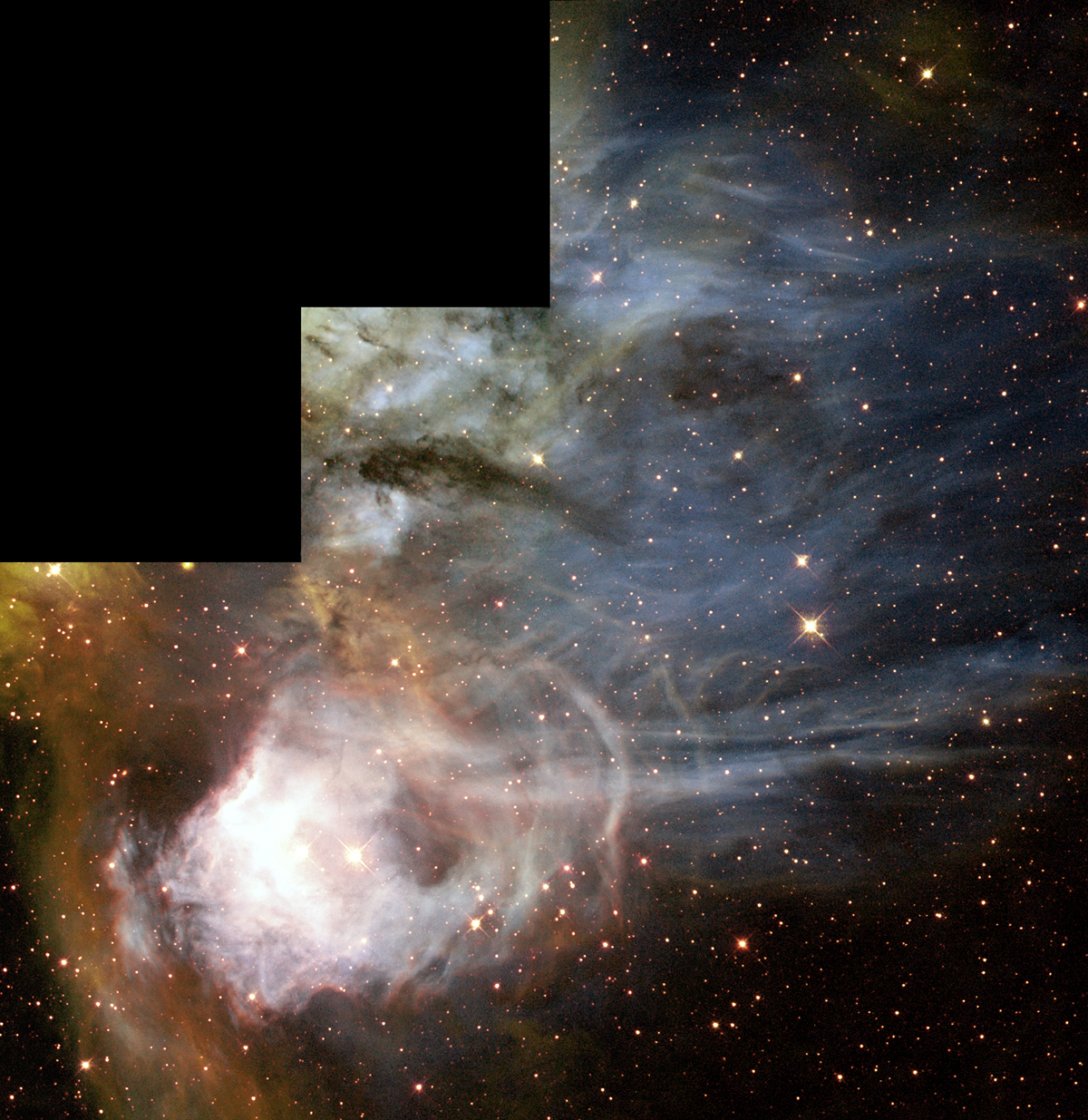
These ethereal wisps of glowing gas form N44C, a luminous emission nebula embedded within the much larger N44 complex in the Large Magellanic Cloud. This intricate network of ionized hydrogen is illuminated and energized by the intense ultraviolet radiation from a nearby cluster of hot, massive stars, whose powerful stellar winds and eventual supernova explosions have sculpted the surrounding gas into dramatic filamentary structures. N44C is part of an enormous stellar nursery spanning over 1,000 light-years across, containing multiple generations of stars from ancient red giants to newborn protostars still embedded in their natal cocoons. The N44 complex also harbors a 'superbubble' — a vast cavity blown out of the interstellar medium by the combined effects of stellar winds and multiple supernovae, demonstrating the profound impact that massive star formation has on its galactic environment.
Scientific Significance
N44C and the larger N44 complex provide an exceptional laboratory for studying triggered star formation and the interplay between massive stars and their natal molecular clouds. The superbubble structure demonstrates how energy from massive star clusters accumulates over millions of years, eventually dominating the dynamics of the surrounding interstellar medium. Studies of N44 have revealed that new generations of stars form preferentially along the compressed edges of the superbubble, where the expanding shell sweeps up and compresses ambient gas to densities that trigger gravitational collapse. The low metallicity of the Large Magellanic Cloud — about half that of the Milky Way — means that the stellar winds and nebular physics in N44 more closely resemble conditions in the early universe. This makes N44 valuable for understanding how star formation proceeded in younger, less chemically enriched galaxies. The nebula's location at a well-determined distance also enables precise measurements of stellar and nebular properties that would be more uncertain for Milky Way nebulae.
Observation Details
Hubble observed N44C using the Wide Field Planetary Camera 2 (WFPC2) with narrowband filters isolating emission from ionized hydrogen (H-alpha), ionized nitrogen ([NII]), and doubly ionized oxygen ([OIII]). This combination reveals the ionization structure of the nebula, with [OIII] emission dominating regions closest to the ionizing star where temperatures are highest, and [NII] emission stronger in cooler, partially ionized zones. The observations resolved filamentary structures on scales of less than a light-year, revealing the detailed morphology created by hydrodynamic instabilities at the interface between hot stellar winds and cool nebular gas.
Location in the Universe
Constellation
Dorado (Large Magellanic Cloud)
Distance from Earth
160,000 light-years
Fun Facts
- 1
The N44 complex contains a superbubble roughly 400 light-years in diameter, carved by the combined winds and explosions of dozens of massive stars over millions of years.
- 2
N44C is ionized primarily by a single hot star with a surface temperature exceeding 45,000 Kelvin — nearly eight times hotter than our Sun.
- 3
The Large Magellanic Cloud, where N44C resides, is visible to the naked eye from the Southern Hemisphere as a faint, fuzzy patch near the constellation Dorado.
Image credit: NASA, ESA, Hubble Space Telescope