About This Image
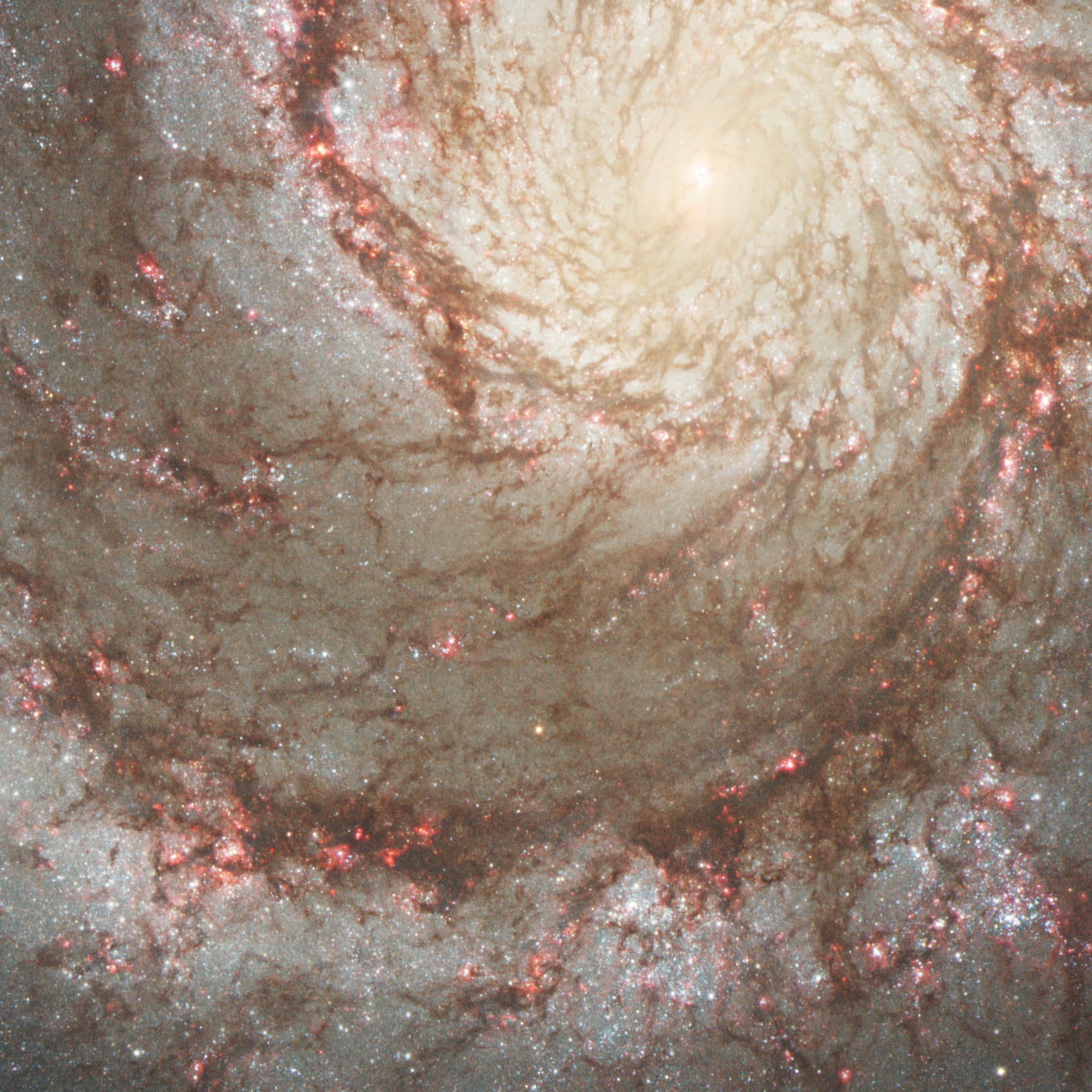
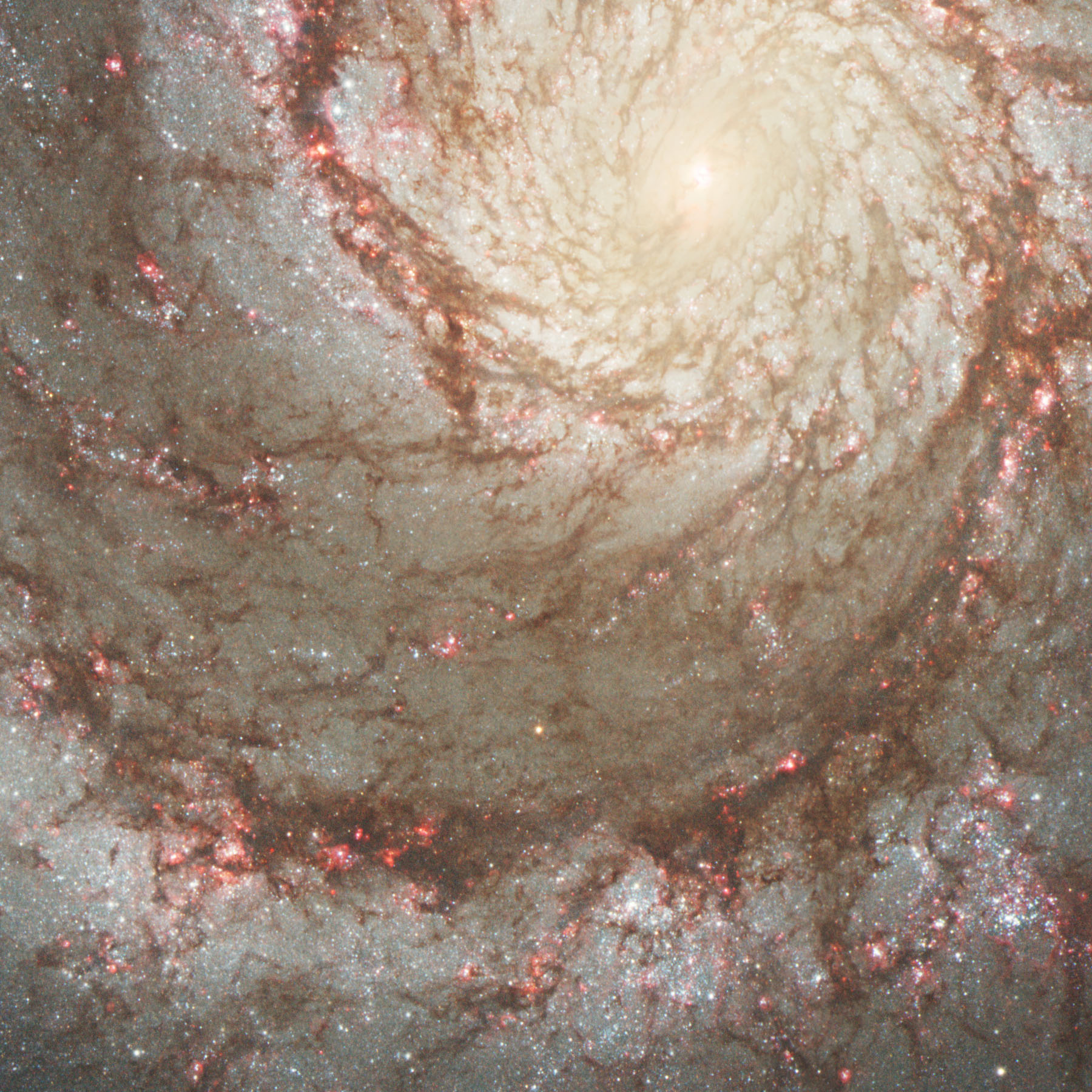
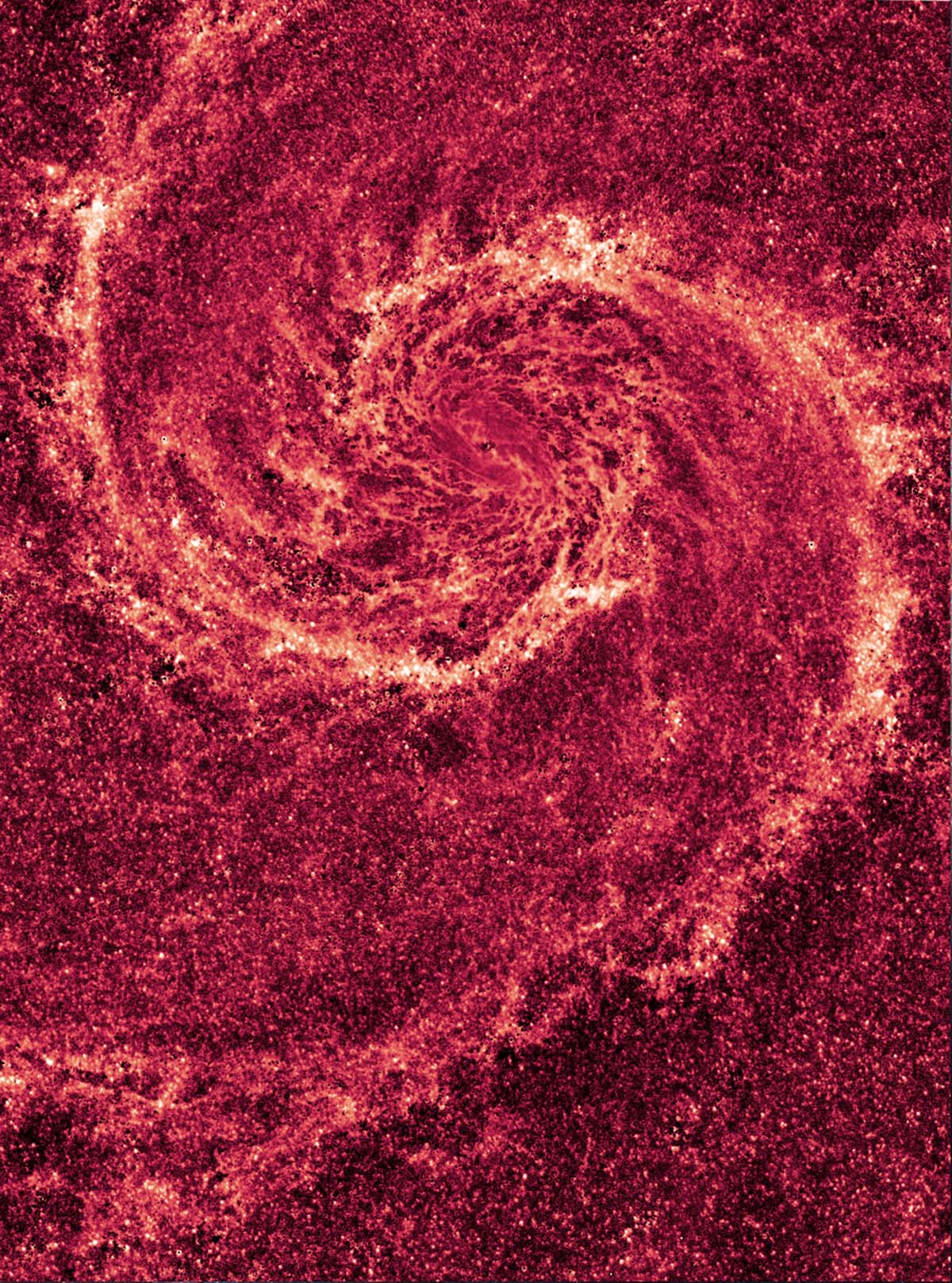
This image reveals the Whirlpool galaxy's skeletal dust structure, as seen in infrared light. The red color in this infrared image traces the galaxy's dust, which is punctuated by hundreds of clumps of stars, each about 65 light-years wide.
Scientific Significance
Infrared structure in M51 connects galaxy-scale dynamics to star-formation physics by tracing dust and gas reservoirs. It helps separate stellar light from interstellar material in the same spiral arms.
Observation Details
Hubble combined infrared-sensitive exposures and calibrated color mapping to emphasize dust morphology. The processed image supports comparison with optical and radio studies of star-forming regions.
Location in the Universe
Constellation
Canes Venatici
Distance from Earth
23 million light-years
Fun Facts
- 1
Infrared imaging highlights dust lanes that are harder to isolate in visible light.
- 2
M51 is interacting with NGC 5195, which helps shape its prominent spiral arms.
- 3
Warm dust clumps often trace regions where new stars are forming or about to form.
Image credit: NASA, ESA, Hubble Space Telescope