About This Image
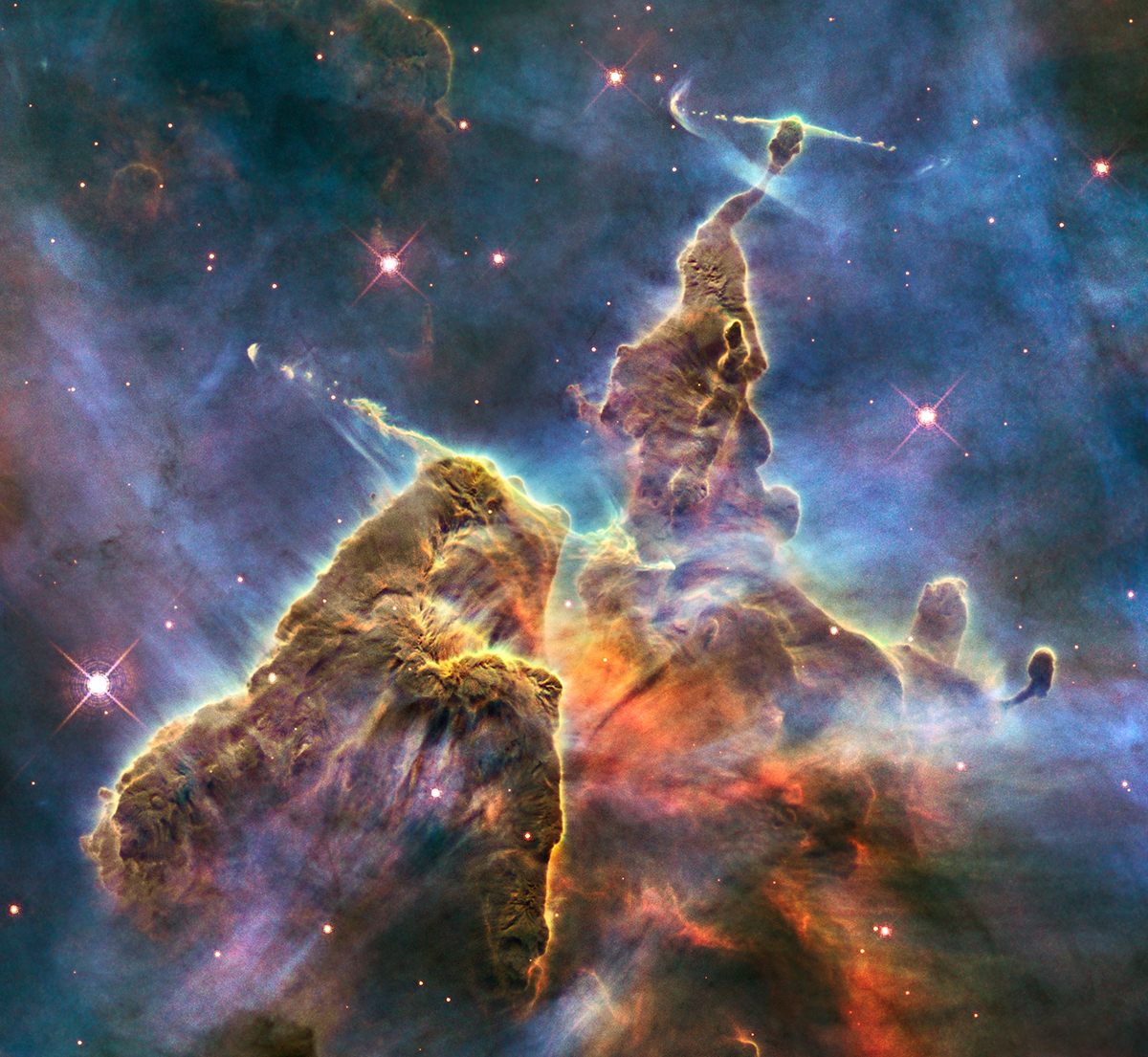
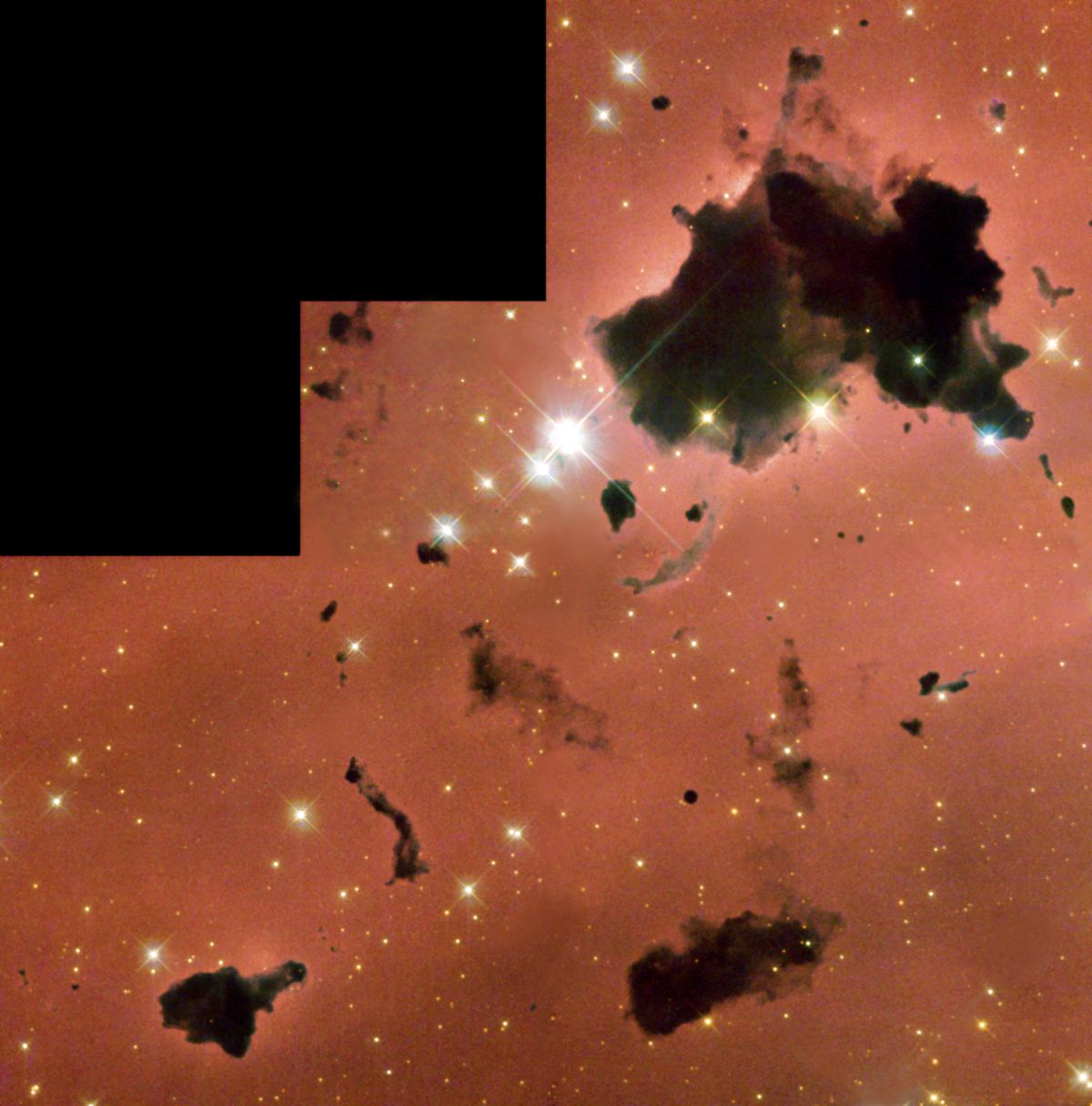
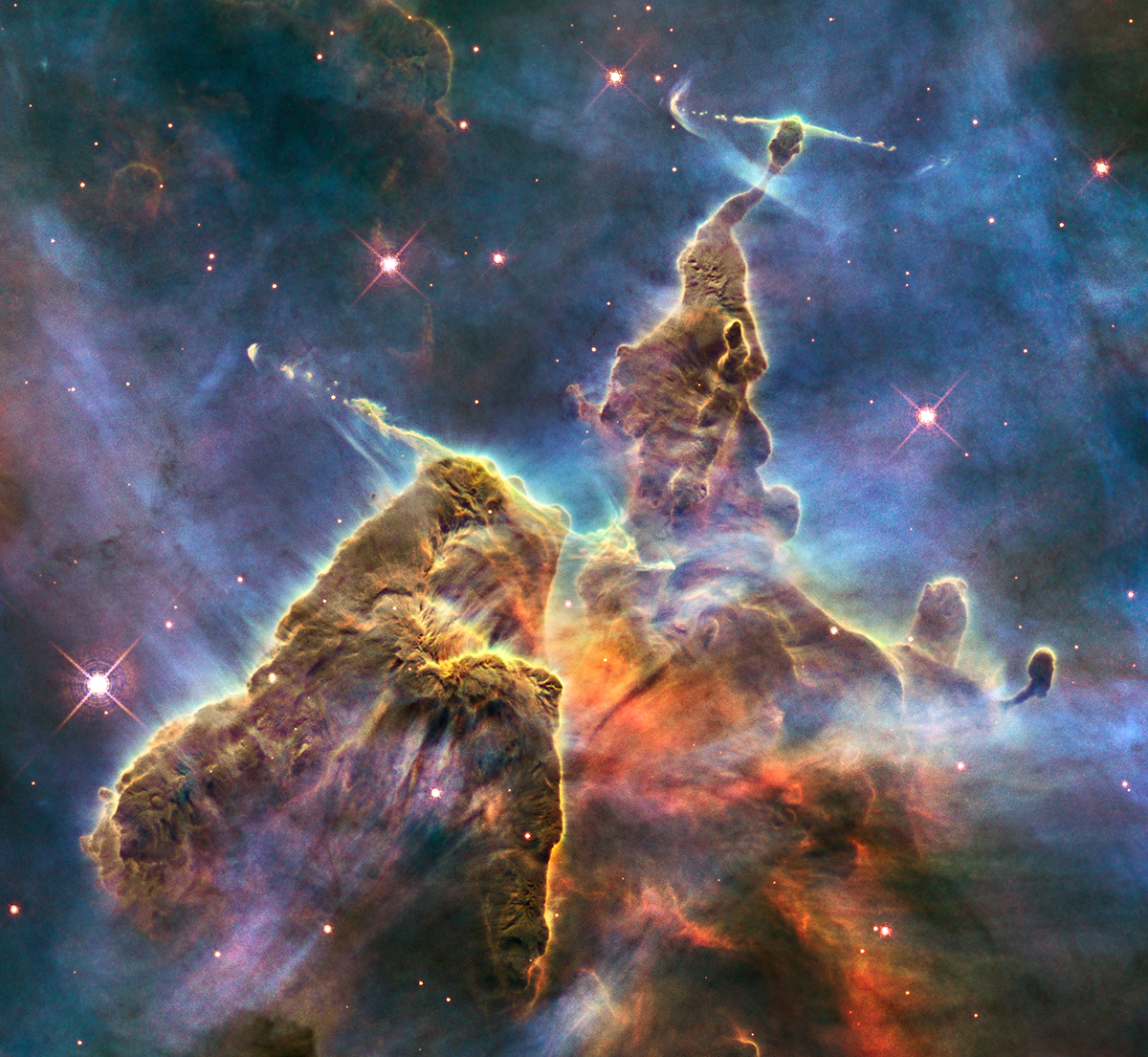
This companion view of the Carina Nebula's towering pillars reveals a different perspective of these massive columns of cold gas and dust being sculpted by the relentless radiation of nearby massive stars. While the pillars appear solid and permanent, they are in fact transient structures on cosmic timescales, slowly being eroded and photoevaporated by intense ultraviolet light. The tops of the pillars glow brightly where stellar radiation heats and ionizes the gas, creating a luminous boundary layer that traces the ongoing destruction of these stellar nurseries. Deep within the densest regions, however, small pockets of gas have been compressed to the point of gravitational collapse, spawning new stars that will eventually emerge from their dusty cocoons. The interplay of destruction and creation visible in this image encapsulates the fundamental cycle of stellar evolution — where the death of one generation of stars provides the energy and enriched material for the birth of the next.
Scientific Significance
This view of the Carina Nebula pillars provides critical data on the process of photoevaporation, where high-energy radiation from massive stars gradually strips material from molecular clouds. By comparing detailed observations of pillar morphology with theoretical simulations, astronomers can refine models of how radiation-driven feedback regulates star formation efficiency in giant molecular clouds. The Carina Nebula is particularly valuable for this research because it hosts stars across a wide range of evolutionary stages, from deeply embedded protostars within the pillars to fully exposed massive stars driving the destruction. Mass-loss rate measurements from these pillars constrain how quickly stellar feedback can halt or trigger star formation, a key parameter in galaxy evolution models. The simultaneous presence of both photoionization-driven implosion and thermal evaporation in these structures makes them a uniquely rich laboratory for studying the complex physics of the interstellar medium.
Observation Details
Hubble captured this view using the Advanced Camera for Surveys (ACS) and Wide Field Camera 3 (WFC3) across multiple observing epochs. Narrowband filters targeting hydrogen-alpha (656 nm), sulfur II (672 nm), and oxygen III (501 nm) emission lines were used to create a false-color composite that highlights the temperature and density structure of the ionized gas. The high angular resolution of Hubble, approximately 0.05 arcseconds, was essential for resolving fine structural details within the pillar surfaces, including small protrusions called evaporating gaseous globules (EGGs) that may harbor forming stars.
Location in the Universe
Constellation
Carina
Distance from Earth
7,500 light-years
Fun Facts
- 1
The Carina Nebula contains at least 14,000 known stars, including some of the hottest and most massive stars in the entire Milky Way galaxy.
- 2
The pillars visible in this image will likely be completely eroded away within a few million years — a blink of an eye in cosmic terms — as the powerful radiation continues to strip away their outer layers.
- 3
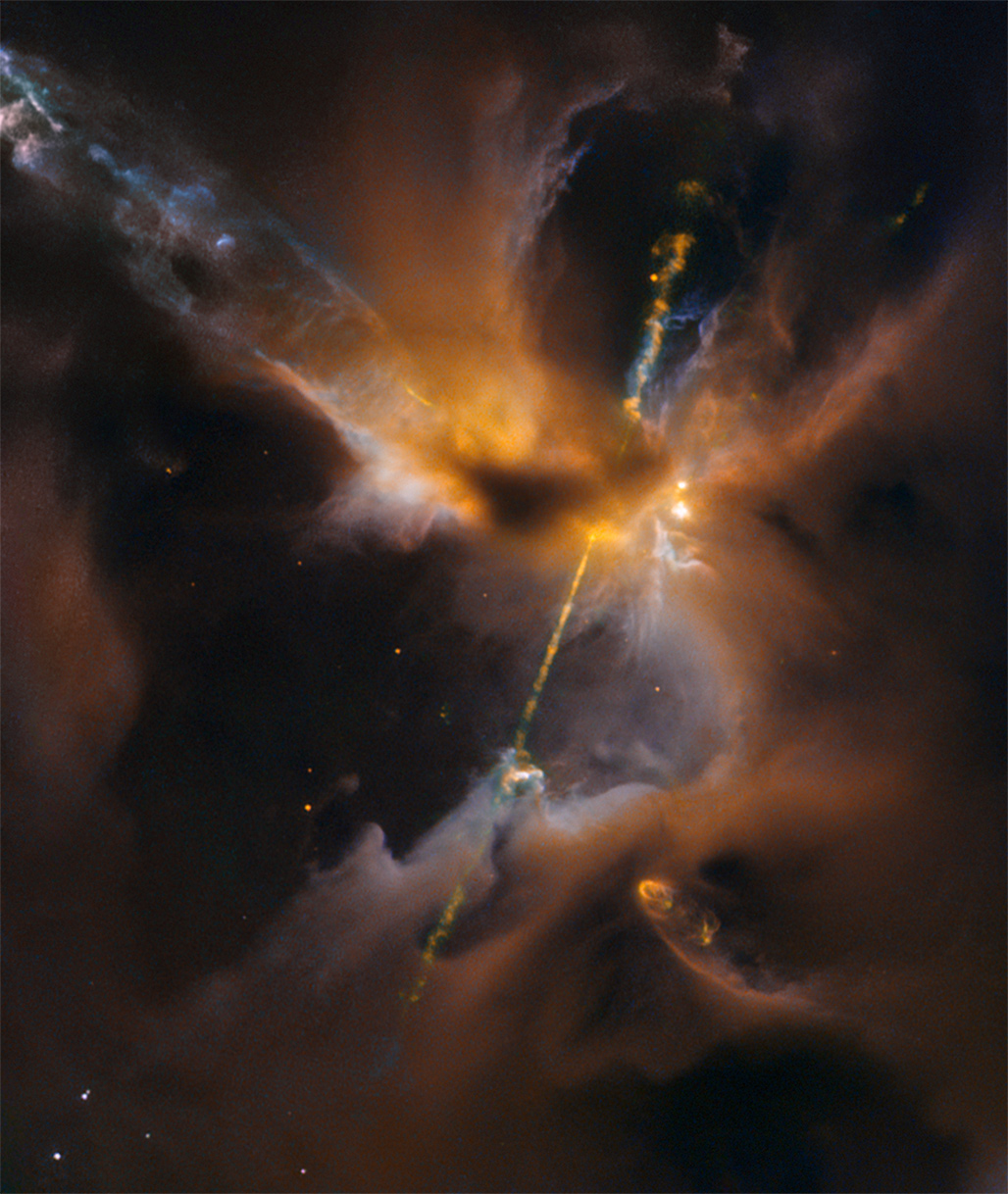
Hubble's observations of the Carina Nebula have revealed dozens of Herbig-Haro objects — bright patches created when jets from newborn stars collide with surrounding gas at supersonic speeds.
Image credit: NASA, ESA, Hubble Space Telescope