About This Image
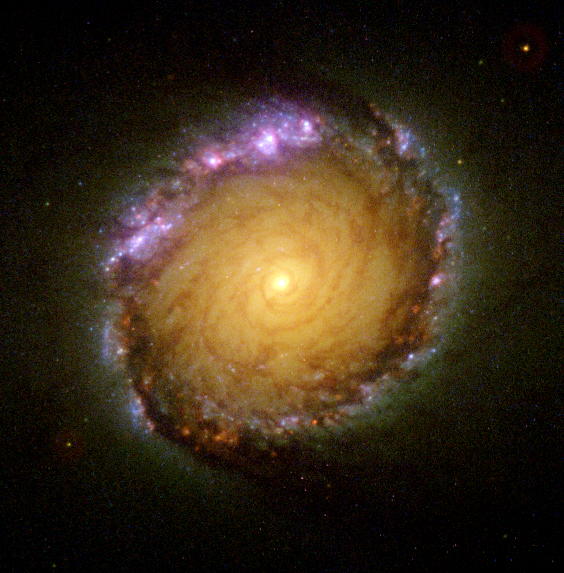
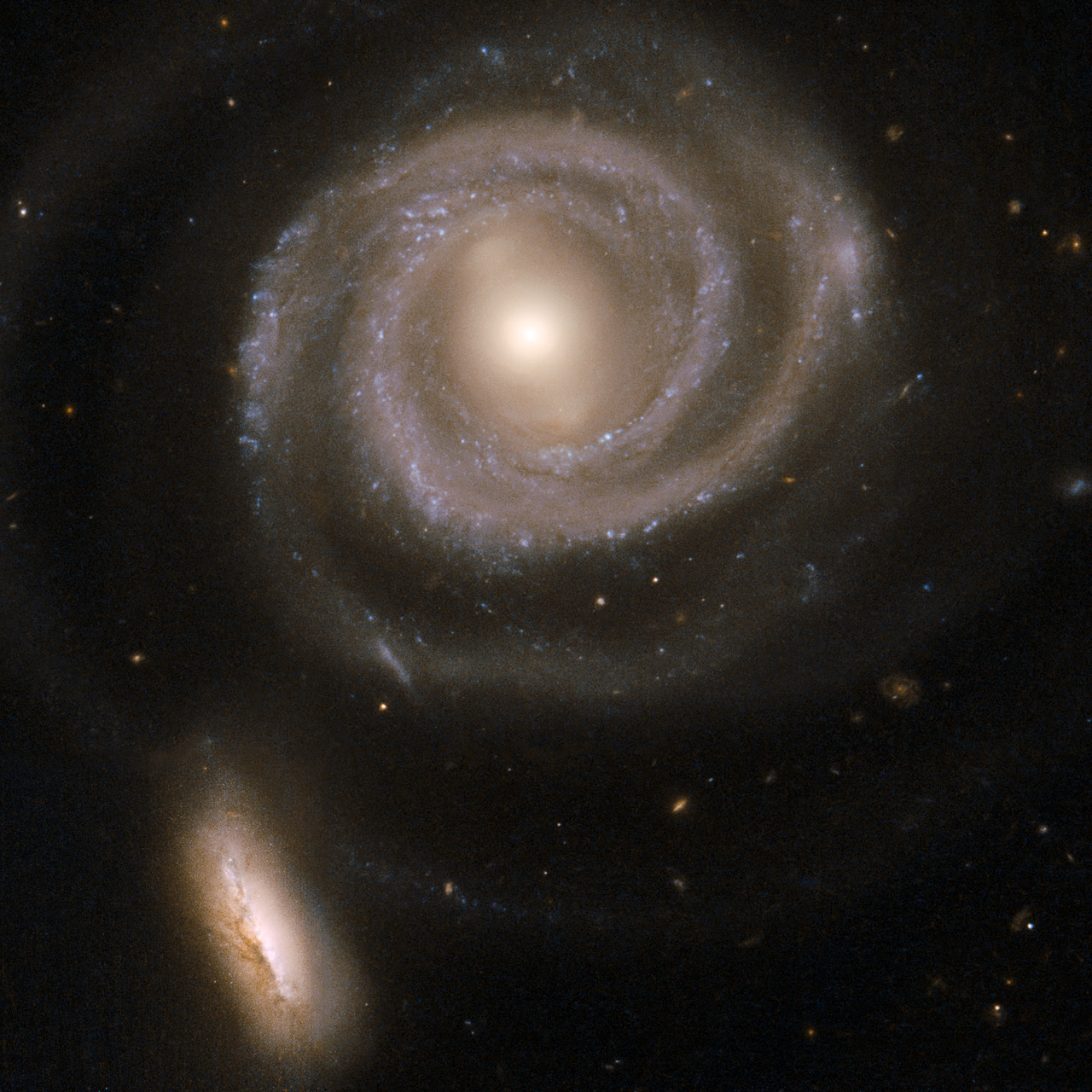
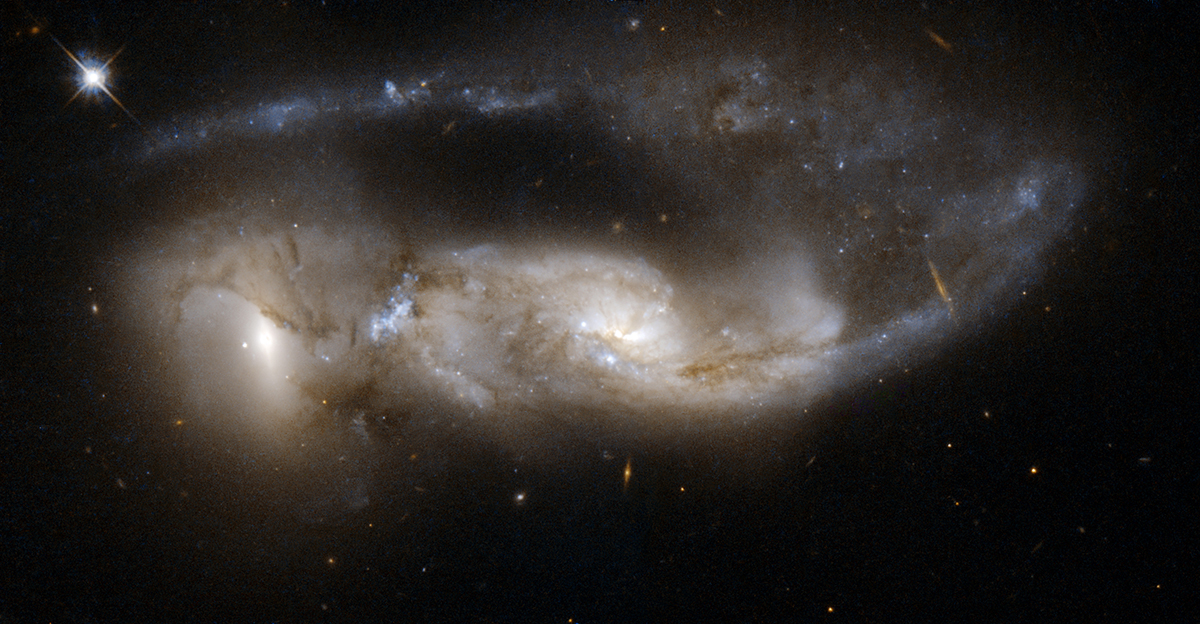
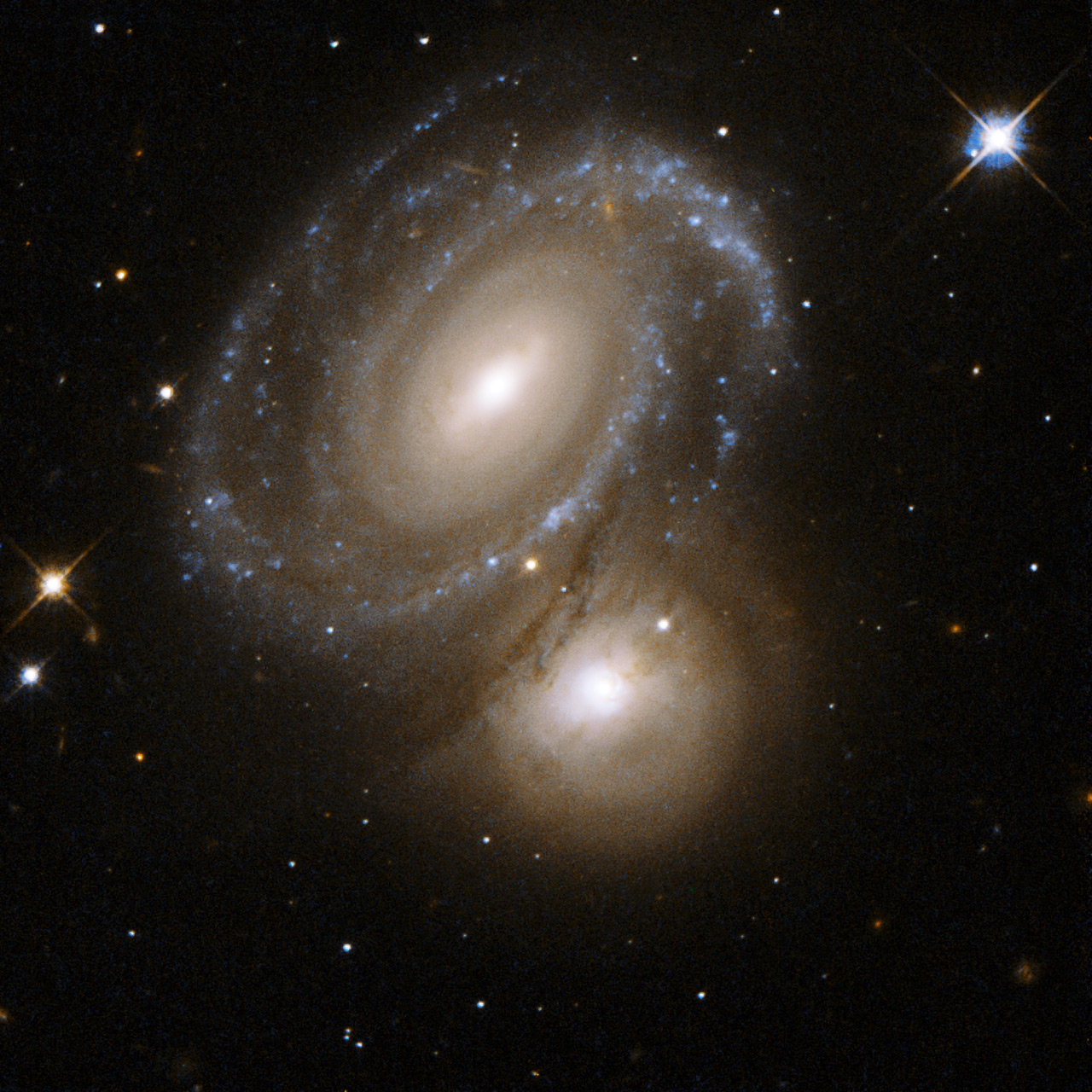
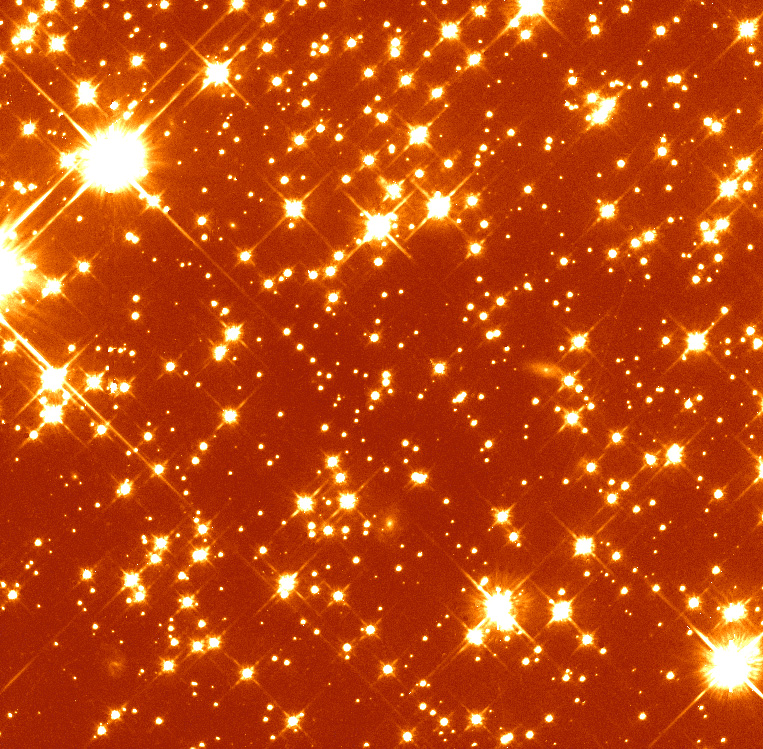
The dust lanes and star clusters of this giant elliptical galaxy, known as Fornax A (NGC 1316), give compelling evidence that the galaxy formed from a past merger of two gas-rich galaxies. Complex networks of dark dust lanes thread through the galaxy's smooth stellar envelope — features that are highly unusual for an elliptical galaxy and serve as smoking-gun evidence of a relatively recent galactic collision. Fornax A is also one of the strongest sources of radio emission in the sky, powered by a supermassive black hole at its center that is actively feeding on infalling material and launching enormous jets of energized plasma extending far beyond the visible galaxy. This combination of merger signatures and extreme radio activity makes Fornax A a crucial object for understanding how galaxy collisions fuel the growth of supermassive black holes.
Scientific Significance
Fornax A provides one of the clearest nearby examples of how galaxy mergers drive the transformation of spiral galaxies into elliptical galaxies while simultaneously fueling active galactic nuclei. The galaxy's prominent dust lanes and numerous globular clusters of intermediate age serve as forensic evidence of a major merger that occurred roughly 3 billion years ago. This merger funneled large quantities of gas toward the galaxy's center, feeding the supermassive black hole and powering the enormous radio jets that make Fornax A the fourth-brightest radio source in the sky. The study of Fornax A's globular cluster system has revealed two distinct populations — ancient metal-poor clusters from the original progenitor galaxies and younger, more metal-rich clusters formed during the merger event itself — providing a timeline of the galaxy's assembly history. Furthermore, the multiple Type Ia supernovae observed in Fornax A have been used to calibrate the luminosity-distance relationship that underpins measurements of the accelerating expansion of the universe.
Observation Details
Hubble observed Fornax A using the Advanced Camera for Surveys (ACS) in multiple optical filters to create a detailed color composite that highlights the contrast between the smooth underlying stellar population and the dark dust features. The high angular resolution of ACS was essential for resolving individual globular clusters and young star clusters embedded within the dust lanes, enabling age-dating through photometric analysis. Complementary observations from radio telescopes (including the Very Large Array and the Australia Telescope Compact Array) mapped the enormous radio lobes, while Chandra X-ray Observatory data revealed hot gas associated with the active galactic nucleus.
Location in the Universe
Constellation
Fornax
Distance from Earth
60 million light-years
Fun Facts
- 1
Fornax A's radio jets extend over 500,000 light-years from the galaxy's center — more than five times the diameter of our Milky Way — making it one of the most powerful radio sources in the nearby universe.
- 2
The galaxy has hosted four observed Type Ia supernovae (in 1980, 1981, 2006, and 2012), making it one of the most prolific supernova producers among nearby galaxies and a valuable calibrator for measuring cosmic distances.
- 3
The complex dust lanes crisscrossing Fornax A are remnants of a spiral galaxy that was consumed approximately 3 billion years ago — the dust has not yet been fully dispersed or destroyed, preserving a ghostly record of the merger.
Image credit: NASA, ESA, Hubble Space Telescope