About This Image
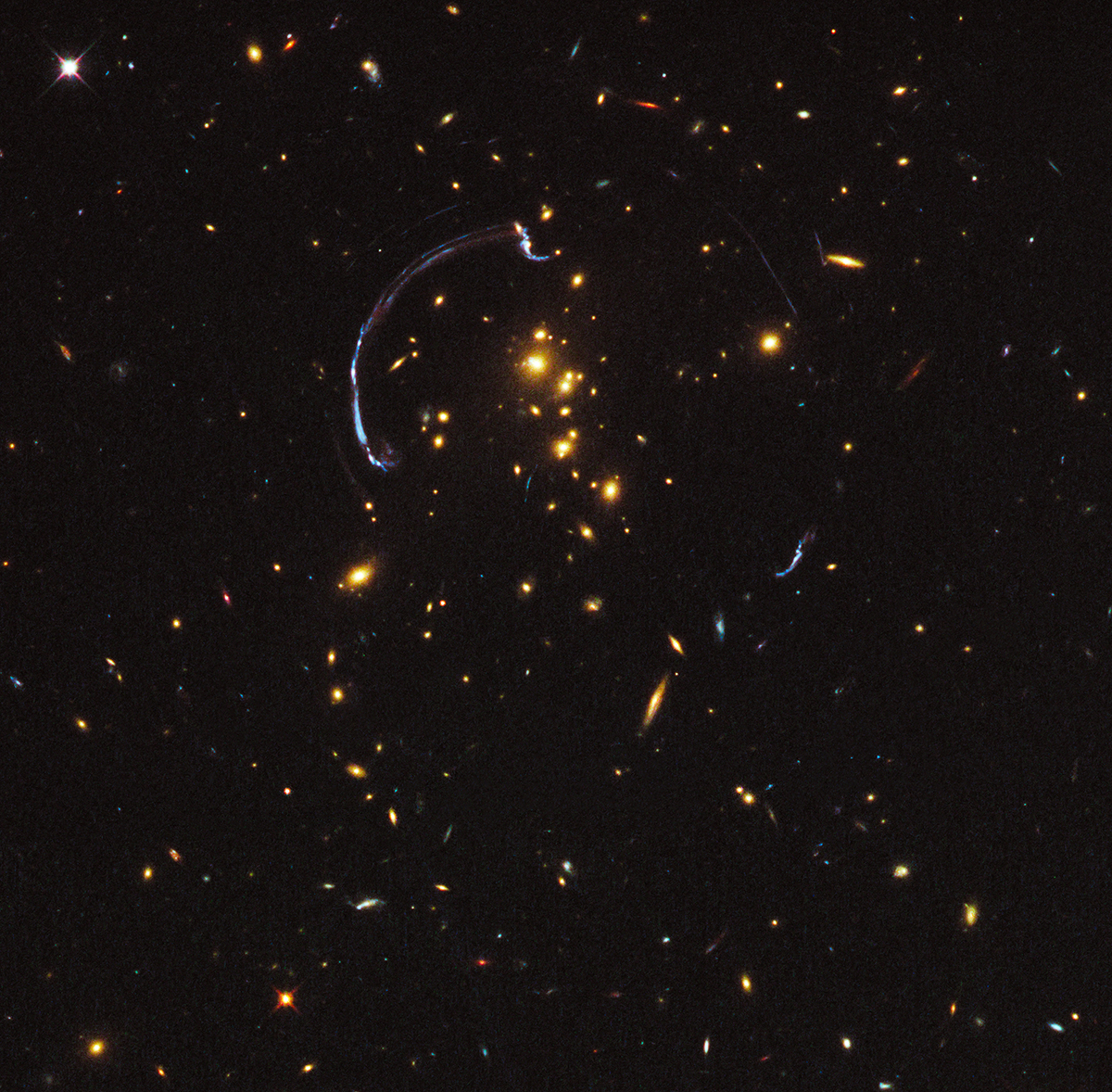
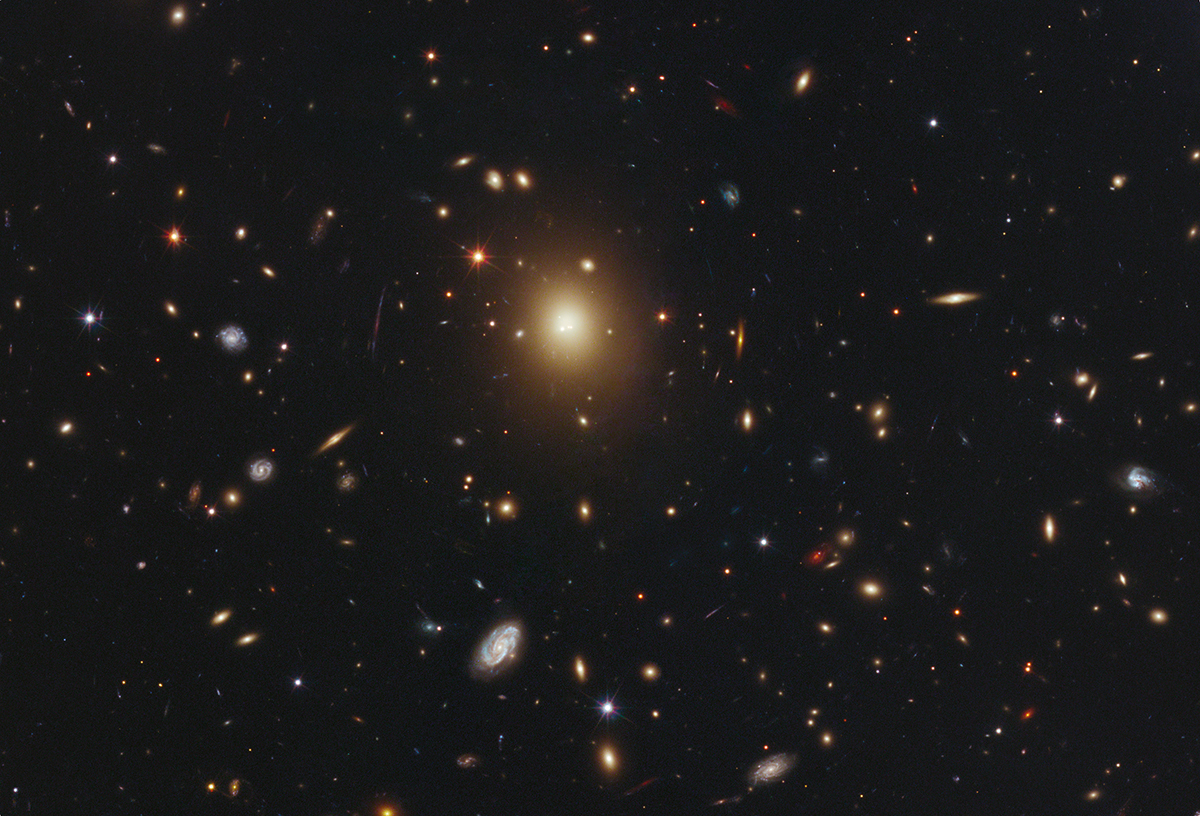
The giant elliptical galaxy in the center of this image is the most massive and brightest member of galaxy cluster Abell 2261, a colossal congregation of galaxies bound together by gravity. More than a million light-years wide, this central galaxy — designated A2261-BCG (brightest cluster galaxy) — is about 10 times bigger than our Milky Way galaxy and contains a diffuse, bloated core unlike anything seen in other galaxies of its class. The surrounding cluster environment teems with hundreds of galaxies of all shapes and sizes, embedded in a vast cloud of superheated gas that glows in X-ray wavelengths. This image provides a window into the extreme environments found at the hearts of galaxy clusters, where the largest and most massive galaxies in the universe reside.
Scientific Significance
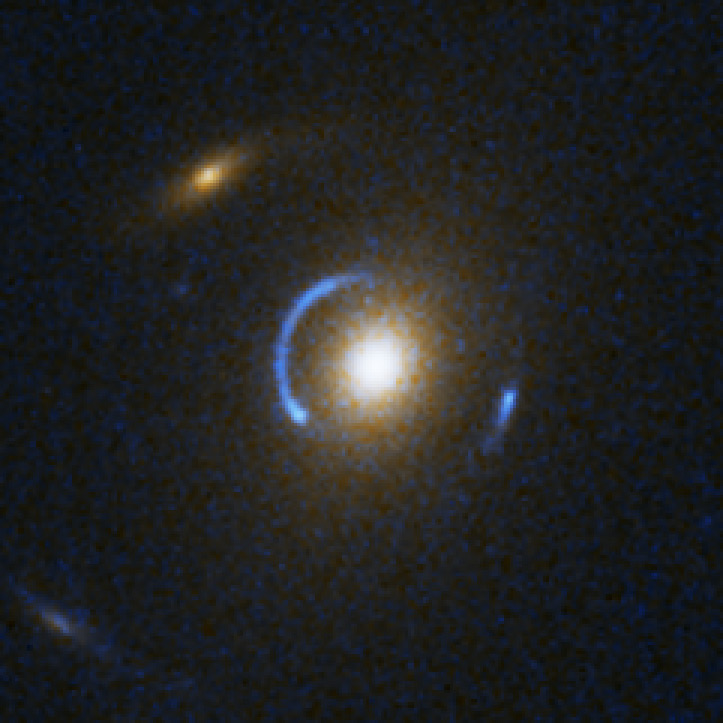
Abell 2261 has become a focal point for one of the most intriguing puzzles in extragalactic astronomy: the case of the missing supermassive black hole. Every massive galaxy observed to date contains a supermassive black hole at its center, yet the central galaxy of Abell 2261 shows no clear evidence of one in the expected location. The galaxy's unusually large, diffuse core — the largest ever measured — may hold the key to this mystery. One hypothesis suggests that a binary supermassive black hole, formed during a past galaxy merger, expelled itself from the galactic center through gravitational recoil after the two black holes merged, carrying enough momentum to escape the core entirely. Alternatively, the binary black hole may have scattered nearby stars outward during its inspiral, inflating the core without a complete ejection. The cluster also serves as a powerful gravitational lens, magnifying and distorting background galaxies into arcs that enable precision measurements of the cluster's total mass distribution, including the dominant dark matter component.
Observation Details
This image was captured using Hubble's Wide Field Camera 3 (WFC3) in multiple optical and near-infrared filters as part of the Cluster Lensing and Supernova survey with Hubble (CLASH) program. CLASH observed 25 massive galaxy clusters to study dark matter distributions, search for lensed supernovae, and detect the most distant galaxies amplified by gravitational lensing. The Hubble observations were complemented by deep X-ray imaging from the Chandra X-ray Observatory, which mapped the hot intracluster gas and searched for X-ray emission from an active galactic nucleus that would betray the presence of an accreting supermassive black hole.
Location in the Universe
Constellation
Hercules
Distance from Earth
3 billion light-years
Fun Facts
- 1
The central galaxy of Abell 2261 has the largest known galactic core ever measured — spanning about 10,000 light-years across, it is vastly more diffuse than expected, leading astronomers to suspect that its supermassive black hole may have been ejected or is in an unusual state.
- 2
Despite extensive searches with Hubble and the Chandra X-ray Observatory, astronomers have been unable to definitively locate a supermassive black hole at the center of this galaxy — a mystery that has generated significant scientific debate about the fate of black holes during galaxy mergers.
- 3
Galaxy clusters like Abell 2261 are the most massive gravitationally bound structures in the universe, containing up to a quadrillion (10^15) solar masses of galaxies, hot gas, and dark matter.
Image credit: NASA, ESA, Hubble Space Telescope