About This Image
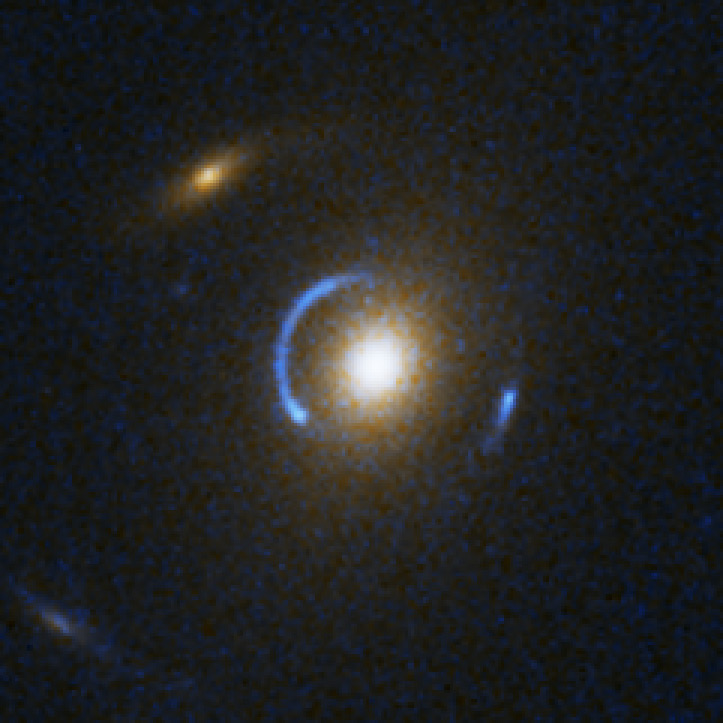
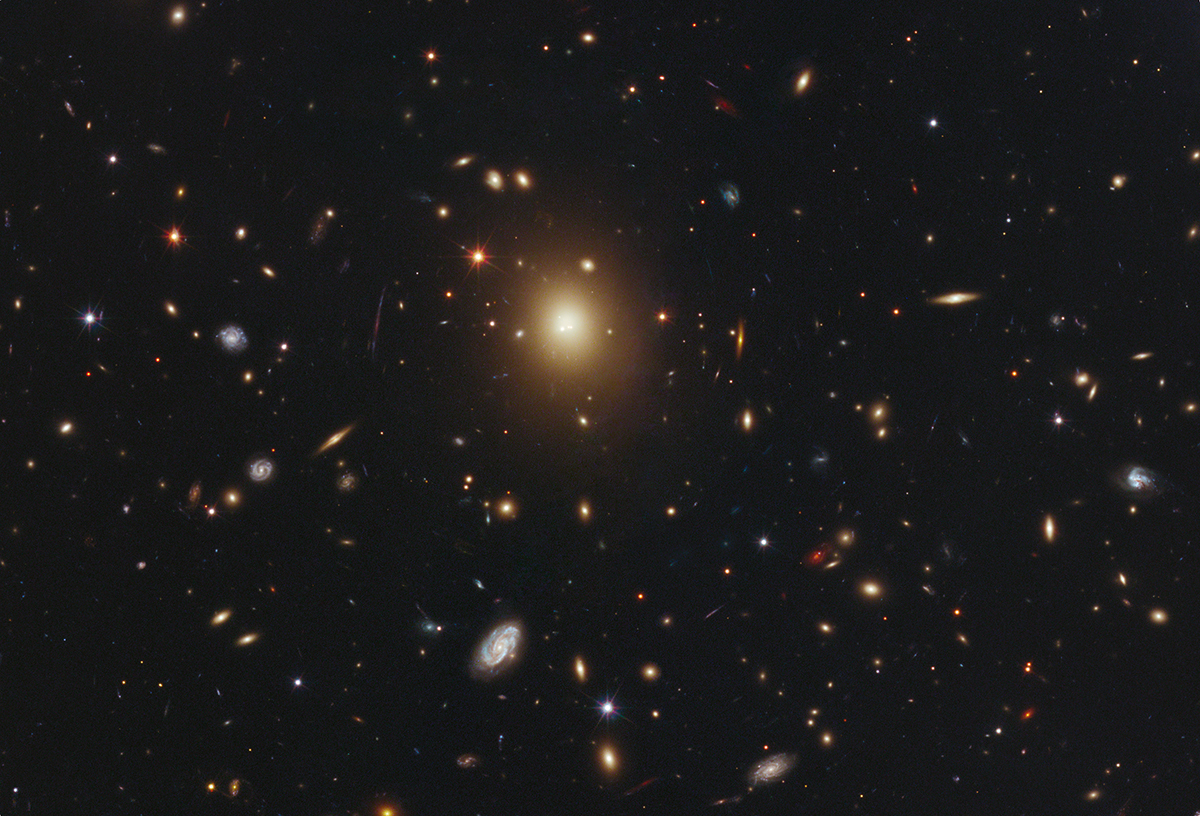
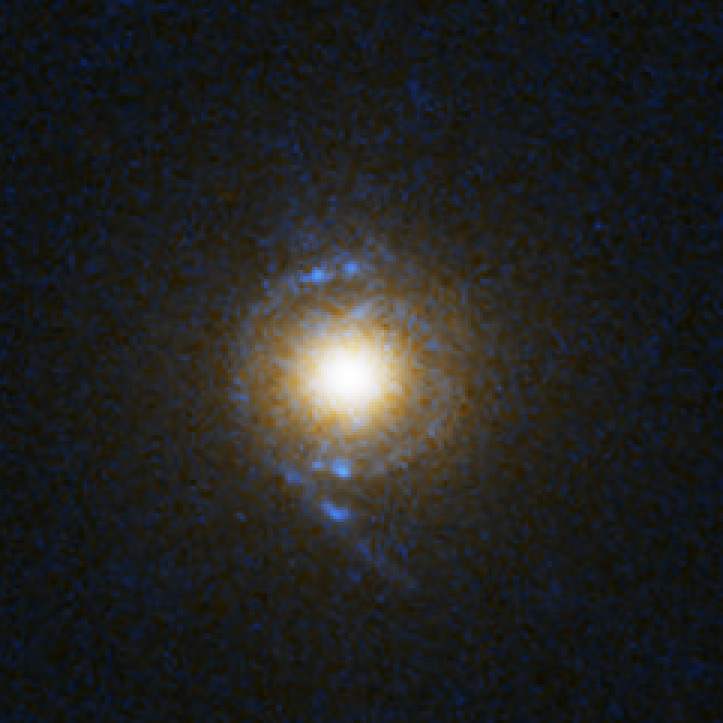
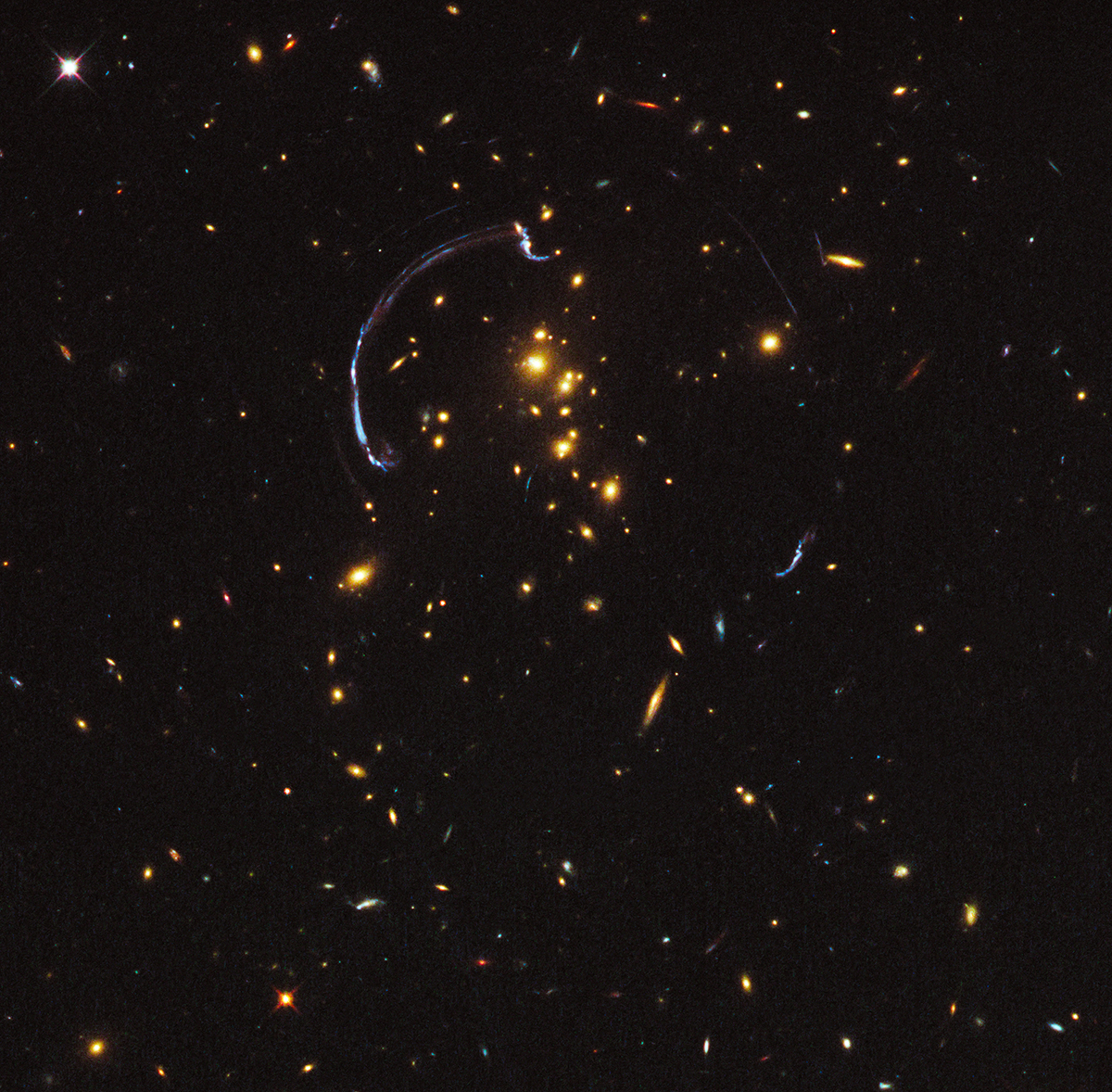
The light from a distant galaxy, nearly 10 billion light-years away, has been warped into arcs and streaks by the gravity of galaxy cluster RCS2 032727-132623. This massive galaxy cluster acts as a powerful gravitational lens, bending and amplifying the light from the background galaxy in a spectacular demonstration of Einstein's general relativity. The lensing effect magnifies the distant galaxy's light by a factor of nearly 20, allowing astronomers to study a galaxy from the early universe in unprecedented detail. The warped arcs and streaks paint a cosmic portrait of how gravity shapes the very fabric of spacetime, turning galaxy clusters into natural telescopes that reveal the hidden universe beyond our normal observational reach.
Scientific Significance
RCS2 032727-132623 stands as one of the most powerful gravitational lenses known, providing astronomers with a rare opportunity to study a distant star-forming galaxy in extraordinary detail. The extreme magnification produced by the cluster's gravitational field effectively transforms it into a cosmic telescope with resolving power far beyond what any human-built instrument could achieve alone. By carefully modeling the distorted images of the background galaxy, researchers have reconstructed its true appearance, revealing intense knots of star formation and complex gas dynamics characteristic of galaxies in the early universe. This gravitational lensing analysis also provides precise measurements of the cluster's total mass distribution, including the contribution of dark matter, which accounts for roughly 85% of the cluster's gravitational influence. The discovery of this extraordinary lens has contributed significantly to our understanding of both galaxy evolution at high redshift and the distribution of matter in massive cosmic structures.
Observation Details
This image was captured using Hubble's Wide Field Camera 3 (WFC3) in near-infrared wavelengths, which are optimal for detecting the redshifted light from the distant background galaxy. The observations were complemented by ground-based spectroscopy to confirm the redshifts of both the lensing cluster and the background source. The natural magnification provided by the gravitational lens allowed Hubble to resolve structural details in the background galaxy that would normally require a telescope mirror many times larger than Hubble's 2.4-meter primary mirror.
Location in the Universe
Constellation
Cetus
Distance from Earth
5.4 billion light-years
Fun Facts
- 1
The gravitational lensing by this cluster magnifies the background galaxy nearly 20 times, making it one of the brightest lensed galaxies in the infrared sky and enabling astronomers to study details that would otherwise be invisible.
- 2
The background galaxy being lensed is forming stars at a rate hundreds of times faster than our Milky Way, offering a window into the intense star-forming conditions of the early universe nearly 10 billion years ago.
- 3
Galaxy clusters like RCS2 032727-132623 contain so much mass — both visible and dark matter — that they can bend light from multiple background sources simultaneously, creating a complex web of arcs and distorted images across the sky.
Image credit: NASA, ESA, Hubble Space Telescope