About This Image
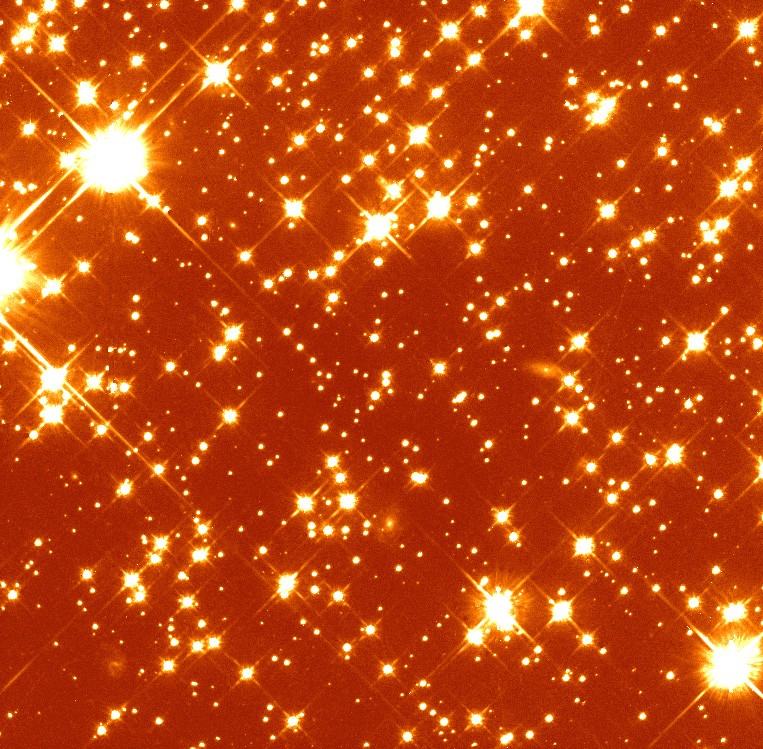
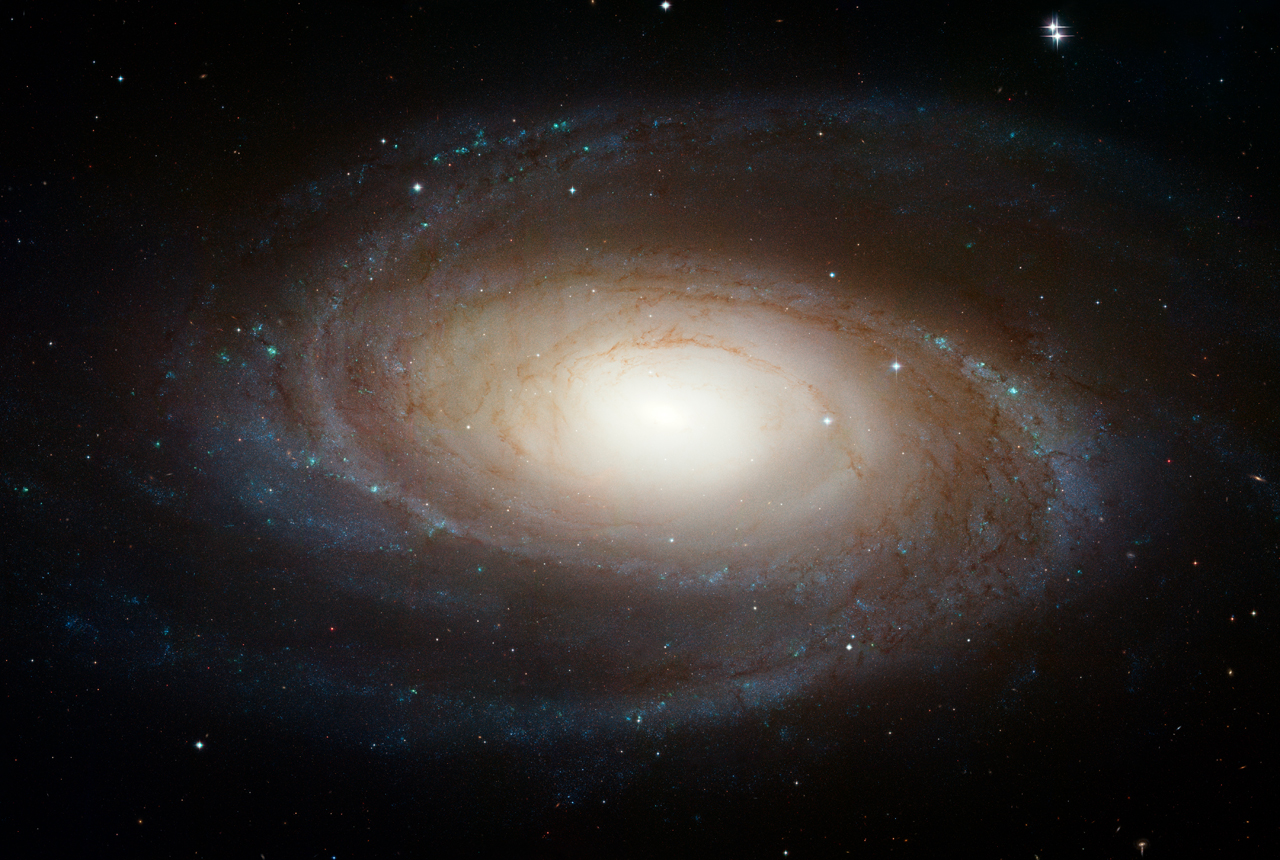
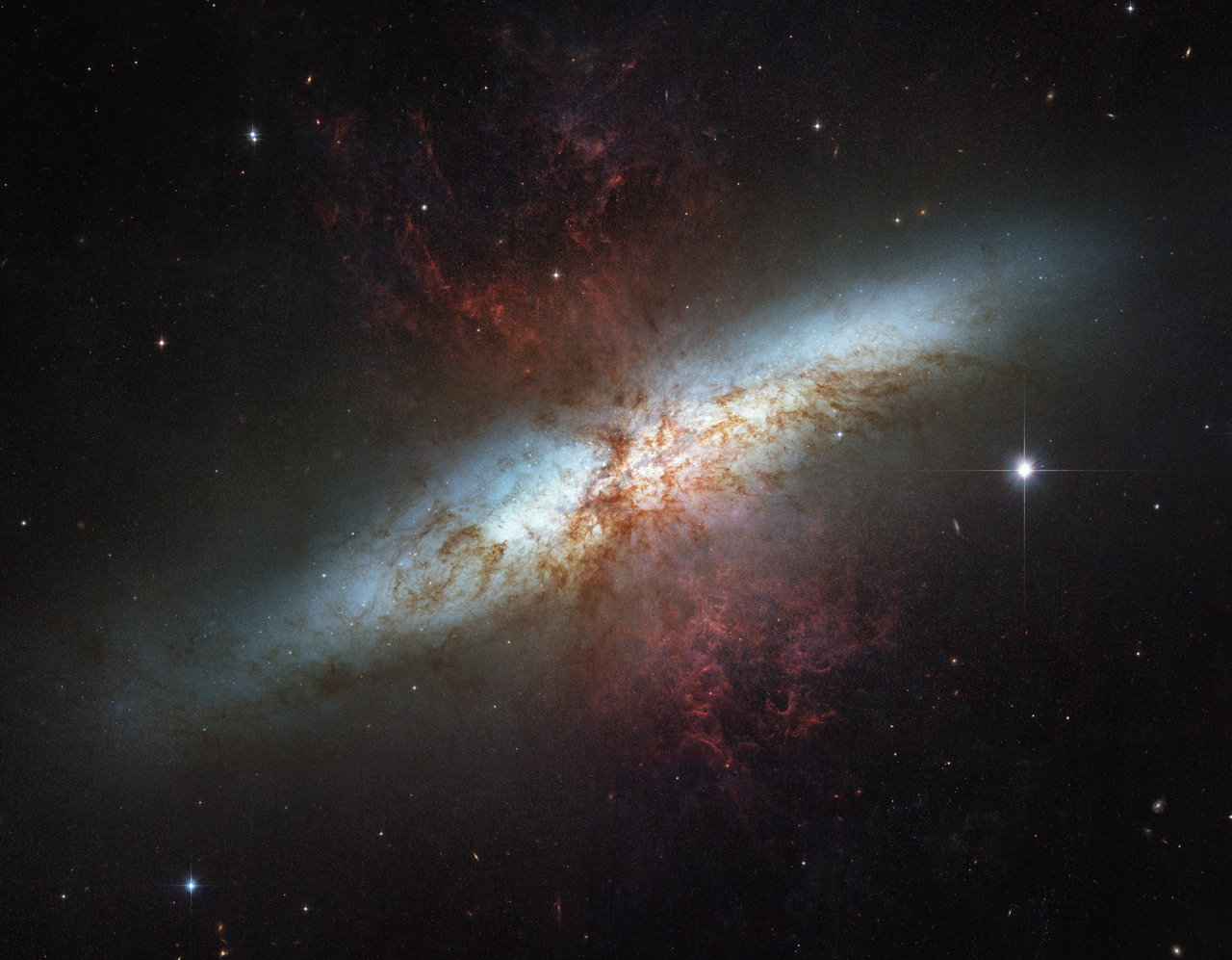
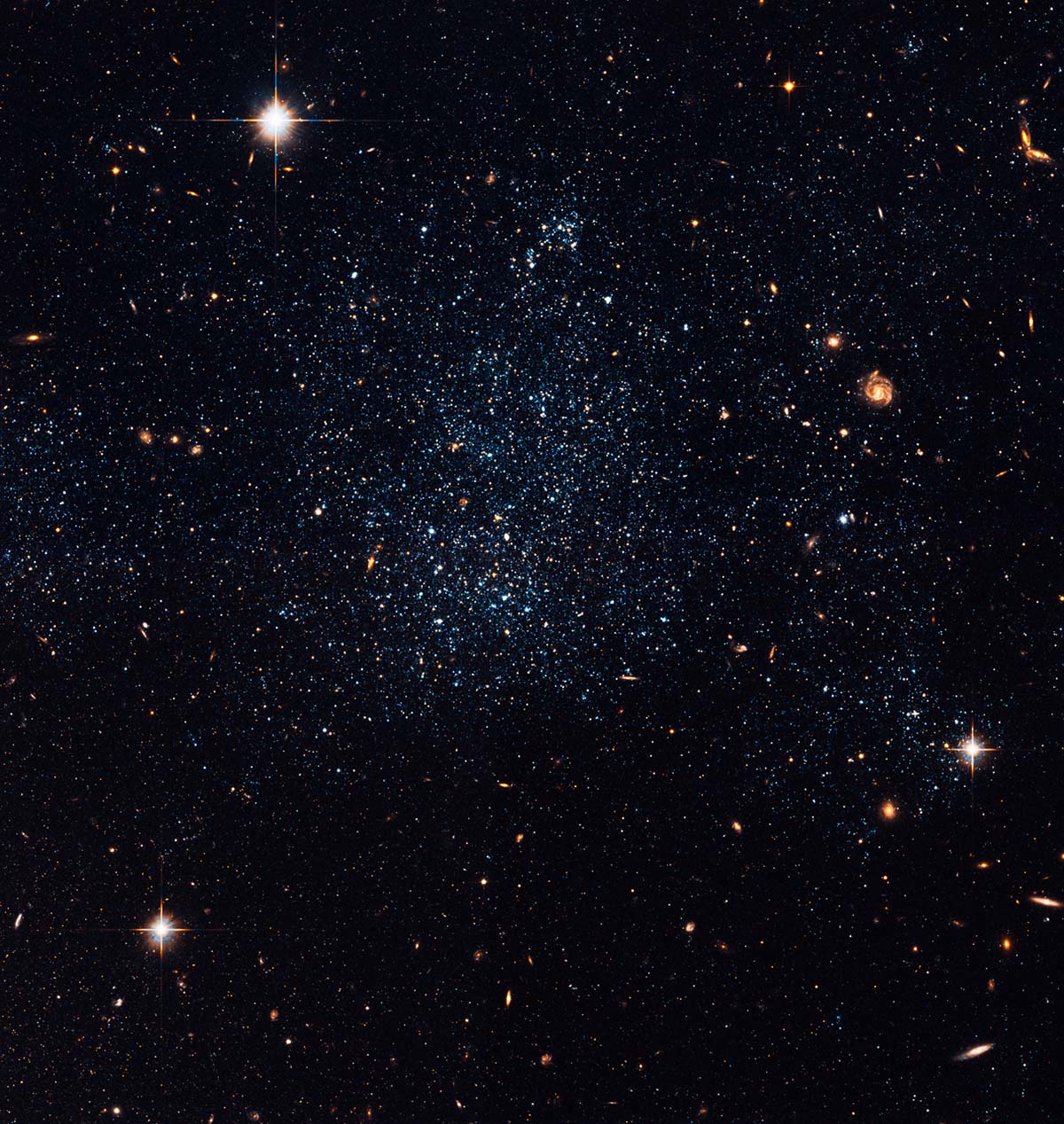
This loose collection of stars is actually a dwarf irregular galaxy, called Holmberg IX, orbiting the much larger spiral galaxy M81 as a small satellite companion. Of the more than 20,000 stars that can be resolved in this image, only about 10 percent are considered to be old stars, making Holmberg IX one of the youngest known galaxies in the local universe. The overwhelming dominance of young blue stars suggests that this galaxy may have formed relatively recently — within the last 200 million years — possibly pulled together from streams of gas and debris torn from M81 and its neighbors during a three-way gravitational interaction with galaxies M82 and NGC 3077. If confirmed, Holmberg IX would represent one of the few known examples of a galaxy created through tidal interactions rather than forming independently from primordial gas in the early universe.
Scientific Significance
Holmberg IX is a prime candidate for a 'tidal dwarf galaxy' — a galaxy that forms not from primordial material in the early universe but from gas and stars stripped from larger galaxies during gravitational interactions. The existence of tidal dwarf galaxies has profound implications for our understanding of galaxy formation and dark matter. Unlike normal dwarf galaxies, which are expected to be embedded within dark matter halos, tidal dwarfs form from material already separated from its original dark matter halo and therefore should contain little to no dark matter. Testing this prediction through dynamical measurements of Holmberg IX's mass-to-light ratio is an active area of research. The galaxy's extremely young stellar population provides a unique opportunity to study the initial conditions of galaxy formation — what the first stages of building a galaxy from scratch look like — without the complications of ancient stellar populations that dominate older galaxies. Holmberg IX's location within the M81 group interaction also makes it a key piece of evidence for reconstructing the gravitational dynamics of one of the nearest galaxy group interactions to Earth.
Observation Details
This image was obtained using Hubble's Advanced Camera for Surveys (ACS) in broadband visible and near-infrared filters. The observations resolved more than 20,000 individual stars within Holmberg IX, enabling construction of a color-magnitude diagram that reveals the age distribution of the galaxy's stellar population. The predominance of blue main-sequence and blue supergiant stars confirmed the galaxy's extreme youth. The ACS's wide field of view captured the galaxy in its entirety while also including foreground Milky Way stars that were carefully distinguished from Holmberg IX's population based on their colors and brightnesses. Complementary radio observations from the Very Large Array mapped the neutral hydrogen gas from which Holmberg IX appears to have condensed.
Location in the Universe
Constellation
Ursa Major
Distance from Earth
12 million light-years
Fun Facts
- 1
Holmberg IX may be one of the youngest galaxies in the nearby universe — its stellar population suggests it formed only about 200 million years ago, making it a cosmic toddler compared to the Milky Way's age of 13 billion years.
- 2
The galaxy sits within an enormous cloud of neutral hydrogen gas that was pulled out of M81 and M82 during their gravitational interaction, and Holmberg IX appears to have condensed from this tidal debris like a raindrop forming in a cloud.
- 3
With fewer than 30 million stars, Holmberg IX contains roughly as many stars as a single large globular cluster in the Milky Way, yet it spans a much larger volume of space, giving it the diffuse, irregular appearance of a galaxy caught in the process of assembling itself.
Image credit: NASA, ESA, Hubble Space Telescope