About This Image
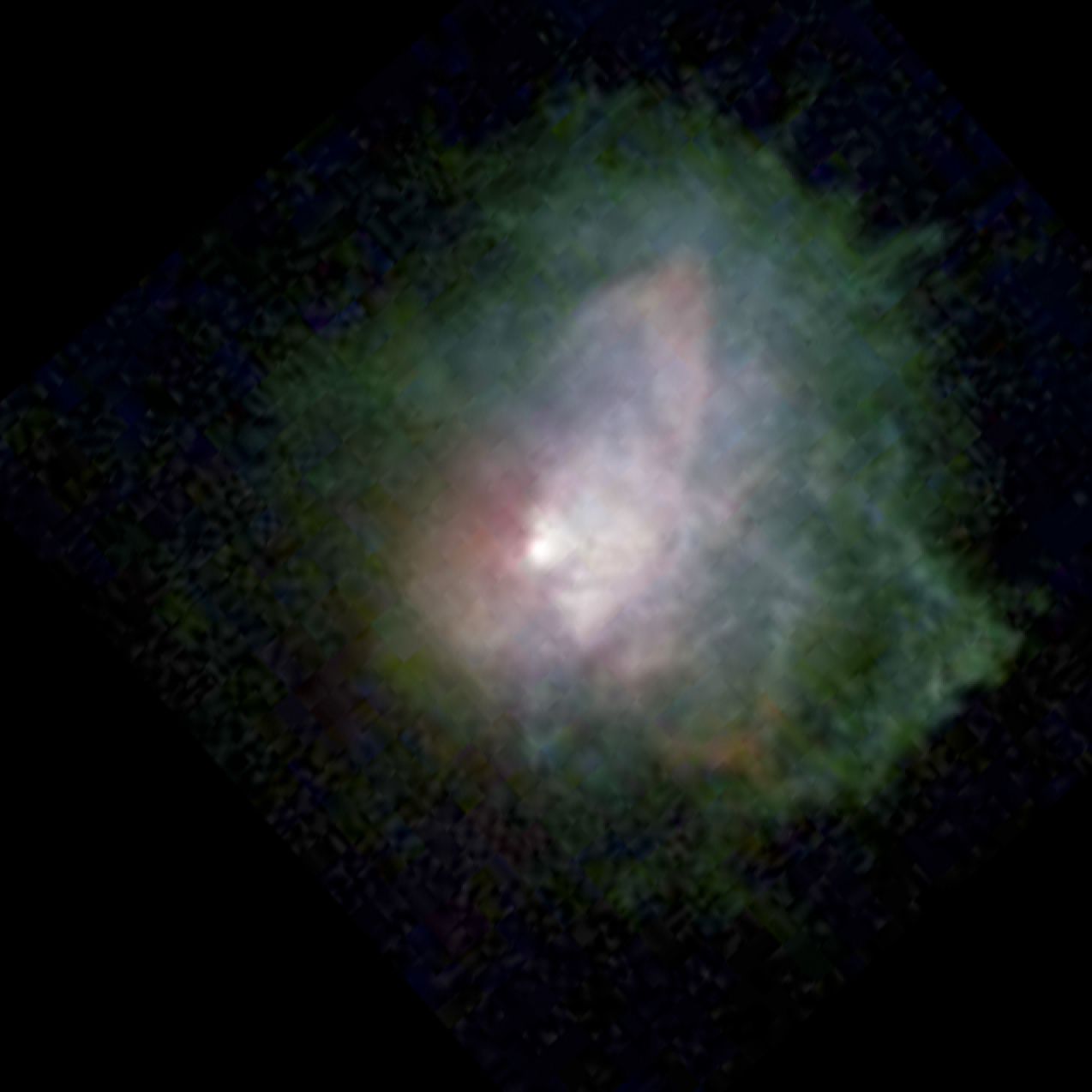
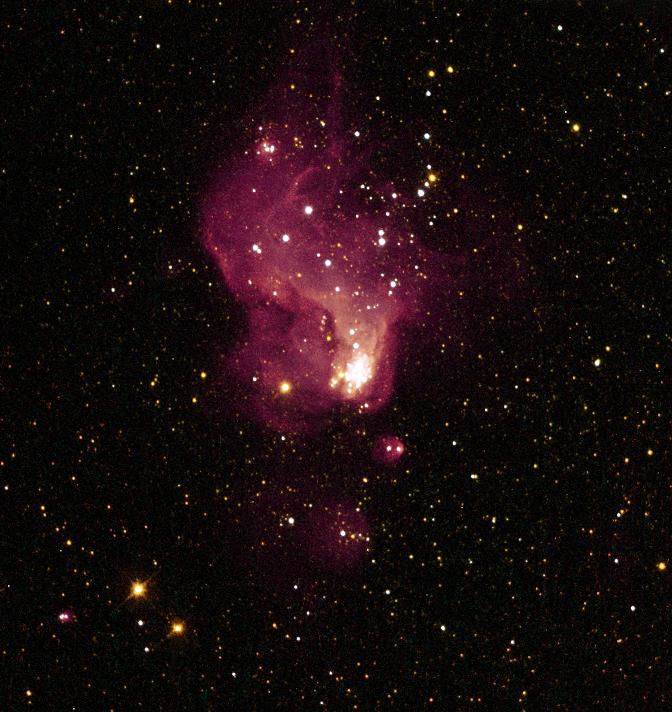
Hubble-V is a luminous and intensely active star-forming region embedded within the irregular dwarf galaxy NGC 6822, also known as Barnard's Galaxy, located approximately 1.6 million light-years from Earth in the constellation Sagittarius. This compact emission nebula spans roughly 200 light-years across and contains a dense knot of dozens of recently formed ultra-hot, massive stars, each blazing with a luminosity up to 100,000 times greater than our Sun. The fierce ultraviolet radiation and powerful stellar winds pouring from these young stars are sculpting the surrounding gas and dust into dramatic pillars, ridges, and cavities, while simultaneously ionizing the hydrogen gas and causing it to glow with its characteristic reddish hue. Hubble-V represents one of the most vigorous star-formation episodes occurring in any galaxy within the Local Group, the collection of galaxies that includes our own Milky Way and the Andromeda Galaxy.
Scientific Significance
Hubble-V provides astronomers with a uniquely accessible window into the processes of massive star formation in a low-metallicity environment that closely mimics conditions in the early universe. Because NGC 6822 has a chemical composition significantly poorer in heavy elements than the Milky Way, star formation in Hubble-V proceeds under fundamentally different physical conditions — lower dust content means less shielding from ultraviolet radiation, different cooling rates in collapsing gas clouds, and potentially different stellar mass distributions. Understanding how these factors affect star formation is essential for interpreting observations of distant, metal-poor galaxies in the early universe that are too far away to study in comparable detail. The compactness and youth of the stellar cluster within Hubble-V make it an ideal target for studying the initial mass function of stars — the distribution of stellar masses at birth — under conditions representative of cosmic dawn. Hubble-V also serves as a benchmark for calibrating star-formation rate indicators used to estimate stellar birth rates across cosmic history.
Observation Details
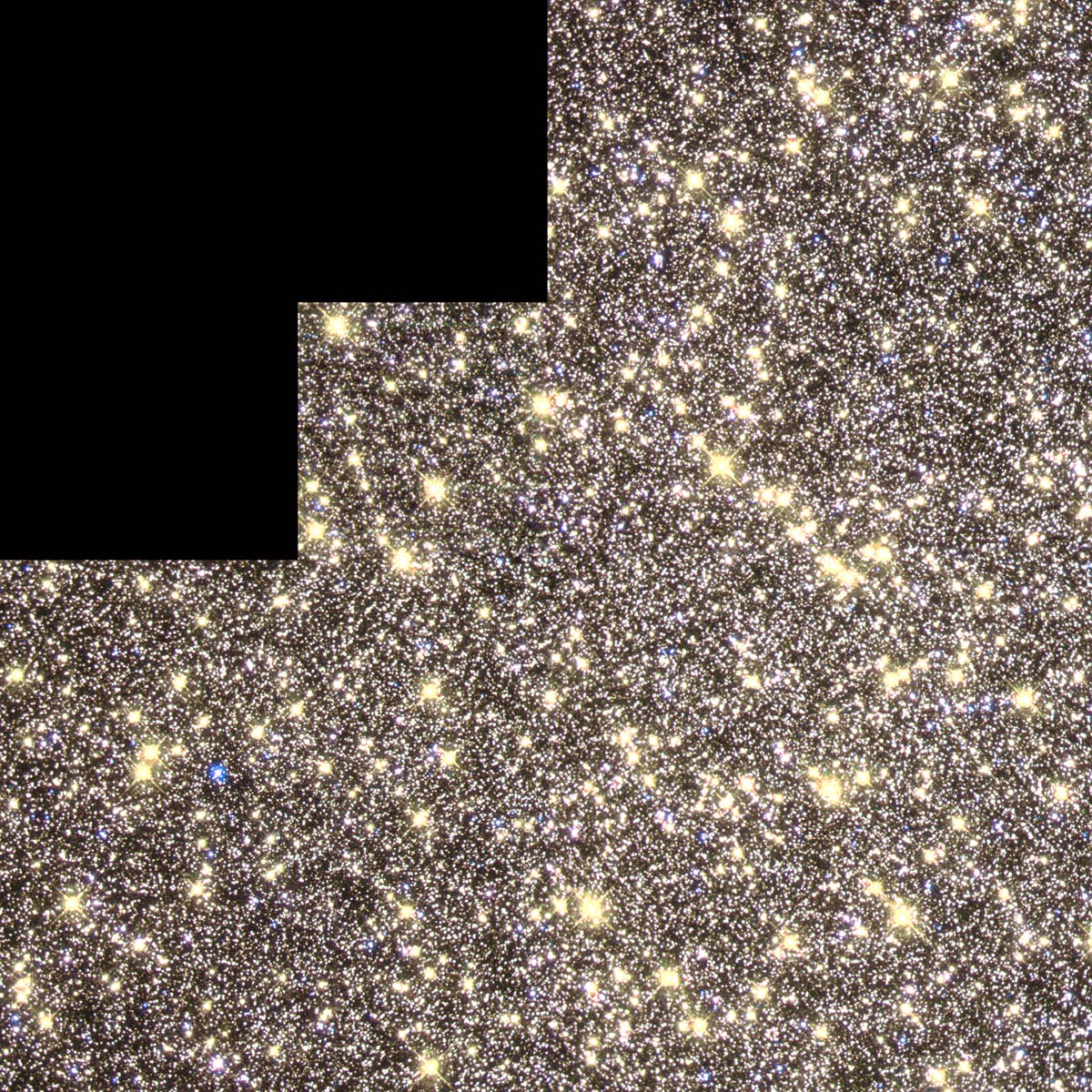
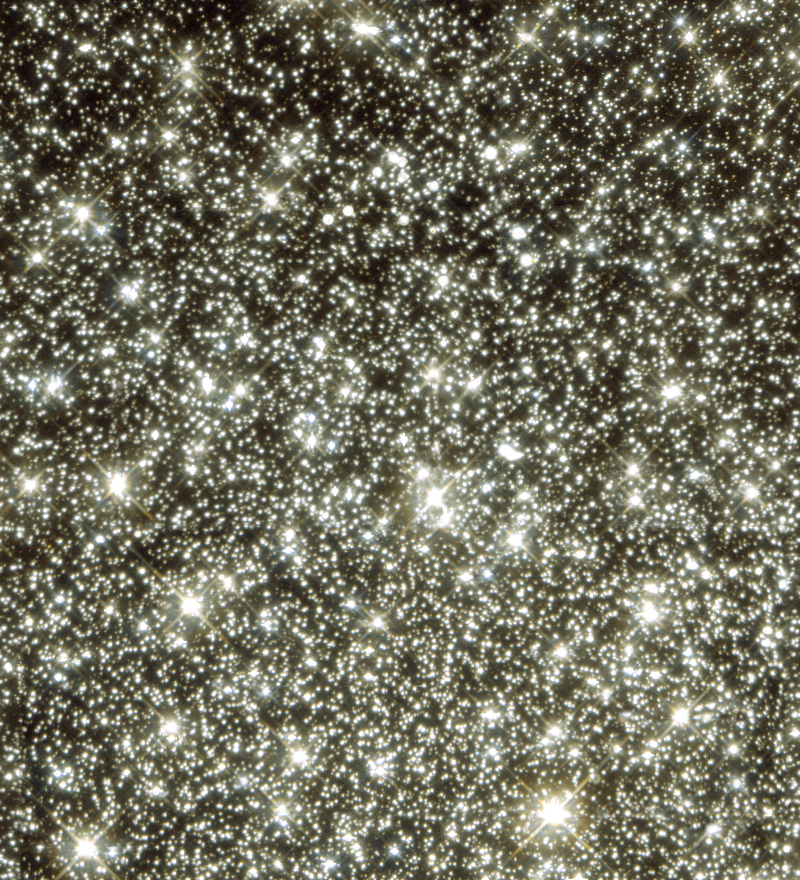
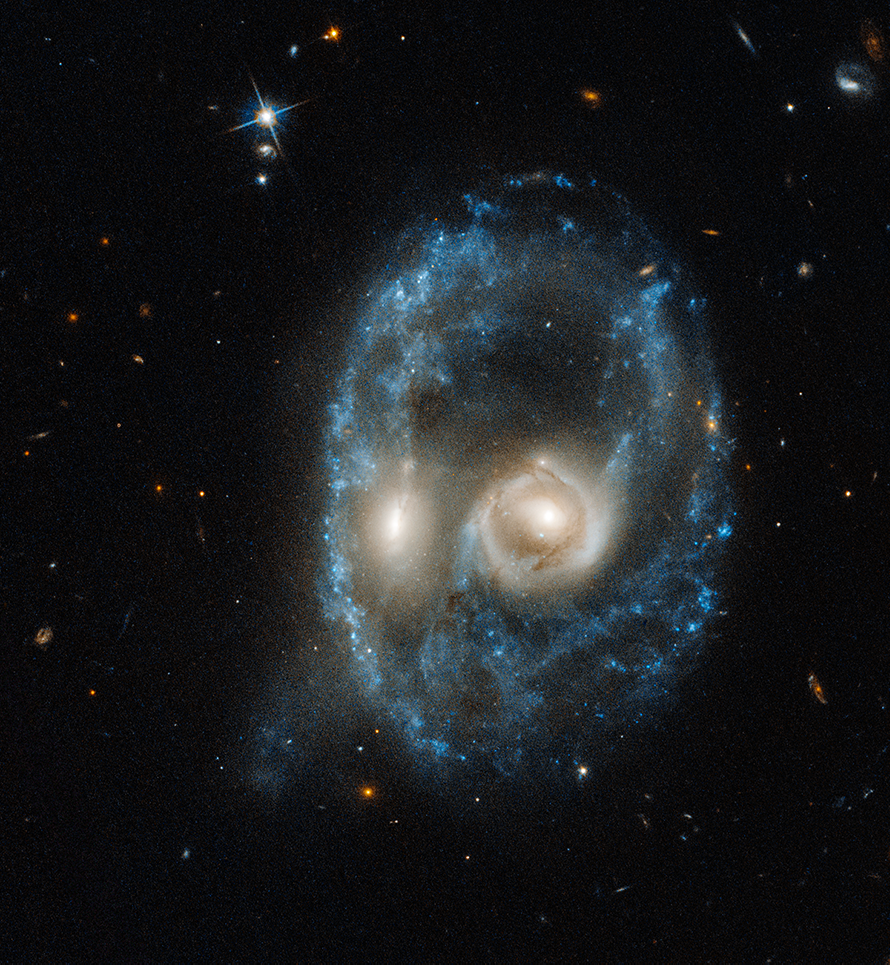
This image was captured using Hubble's Wide Field and Planetary Camera 2 (WFPC2) in narrow-band filters isolating the emission lines of hydrogen-alpha and oxygen, as well as broadband visible-light filters. The narrow-band imaging revealed the detailed structure of the ionized gas sculpted by the central star cluster's radiation and winds, while the broadband filters captured the stellar continuum light, enabling identification of individual massive stars within the cluster. The observations resolved structures on scales of just a few light-years at the distance of NGC 6822, providing an unprecedented view of the interplay between newly formed stars and their natal gas cloud in an extragalactic environment.
Location in the Universe
Constellation
Sagittarius
Distance from Earth
1.6 million light-years
Fun Facts
- 1
The young massive stars within Hubble-V are each individually up to 100,000 times more luminous than our Sun, yet they will exhaust their nuclear fuel and die in supernova explosions within just a few million years — a cosmically brief lifetime compared to our Sun's 10-billion-year lifespan.
- 2
NGC 6822, the host galaxy of Hubble-V, was one of the first galaxies recognized as lying beyond the Milky Way — Edwin Hubble himself studied its Cepheid variable stars in 1925 to establish its extragalactic distance, helping to prove that the universe extends far beyond our own galaxy.
- 3
Hubble-V's host galaxy NGC 6822 has a very low metallicity — meaning it contains far fewer heavy elements than the Milky Way — making it an excellent analog for the conditions that prevailed in galaxies during the early universe when most elements had not yet been forged in stellar cores.
Image credit: NASA, ESA, Hubble Space Telescope