About This Image
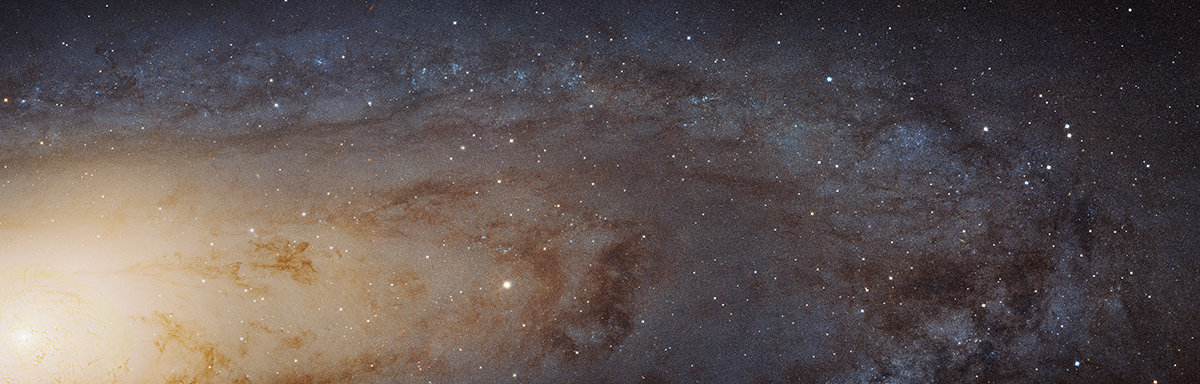
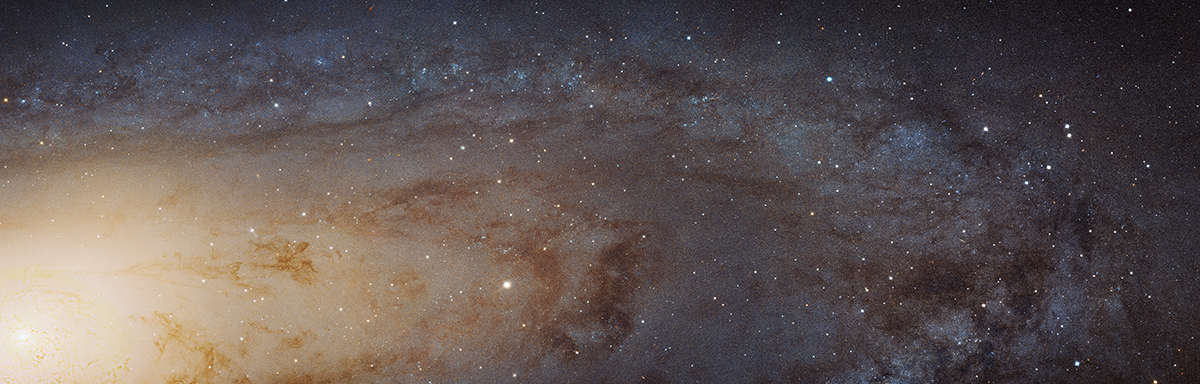
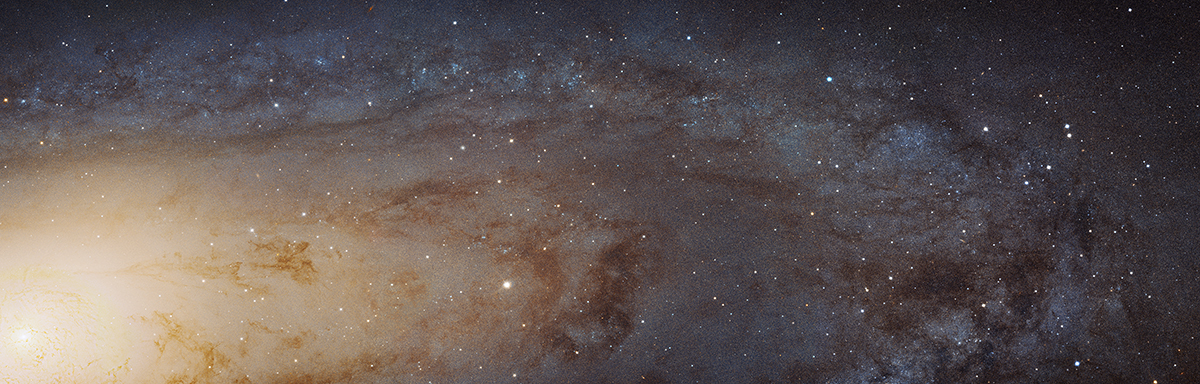
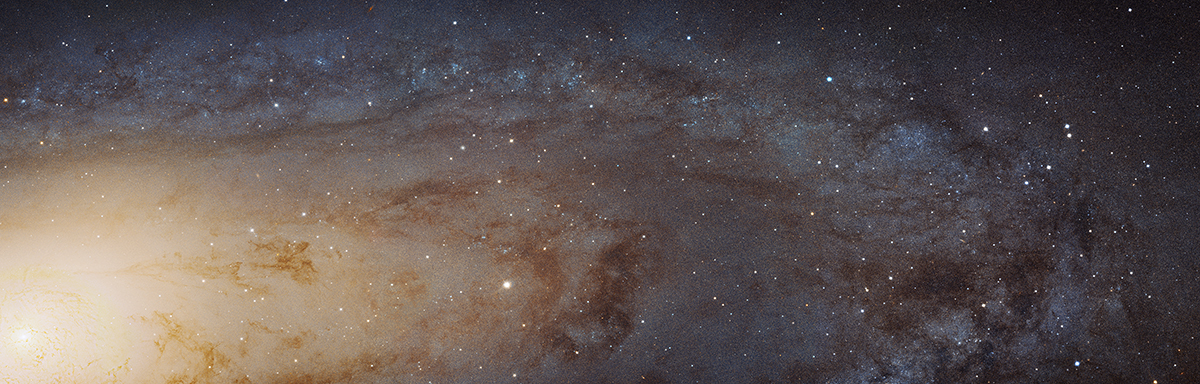
Over 100 million stars are on display in this portion of the Andromeda galaxy, located over 2 million light-years away. This portrait of our galactic neighbor is the largest image yet assembled by Hubble.
Scientific Significance
Andromeda is the primary nearby benchmark for spiral galaxy structure, stellar populations, and distance calibration beyond the Milky Way. Star-by-star maps from Hubble allow direct tests of galaxy evolution models at a level impossible for most external galaxies. It is also central to forecasting the long-term dynamical future of our Local Group.
Observation Details
Hubble acquired thousands of exposures across ultraviolet, visible, and near-infrared filters to build a large mosaic of Andromeda's disk. The multi-band dataset enables classification of stars by age and evolutionary stage. Its breadth and depth make it one of the most important resolved-stellar surveys ever produced.
Location in the Universe
Constellation
Andromeda
Distance from Earth
2.5 million light-years
Fun Facts
- 1
This Hubble mosaic contains more than 100 million resolved stars in Andromeda.
- 2
Andromeda is the nearest large spiral galaxy to the Milky Way.
- 3
The Milky Way and Andromeda are expected to merge in about 4.5 billion years.
Image credit: NASA, ESA, Hubble Space Telescope