About This Image
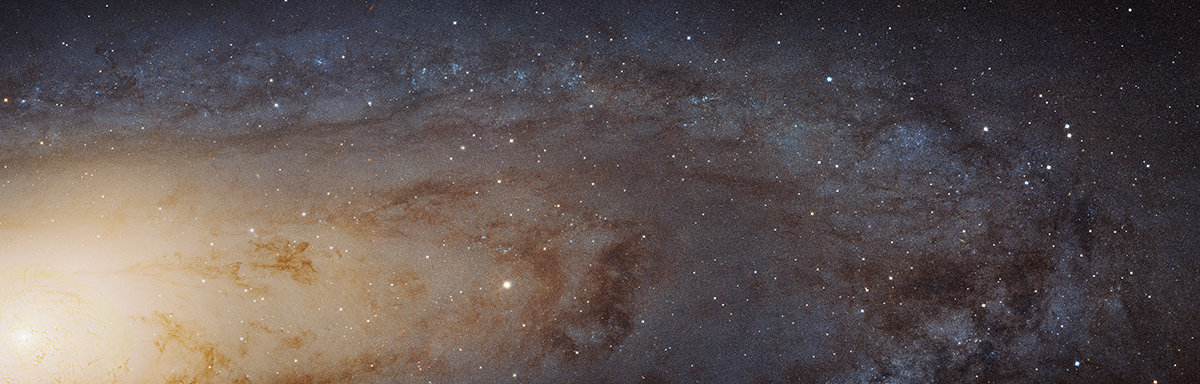
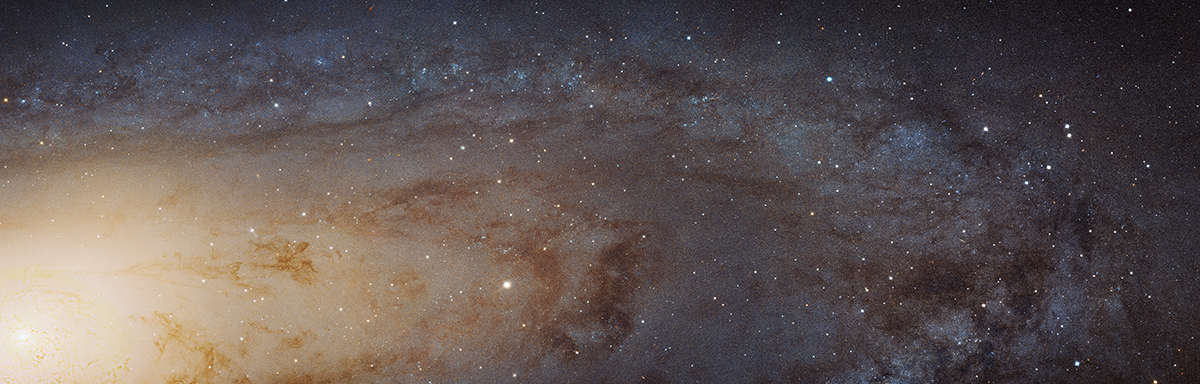
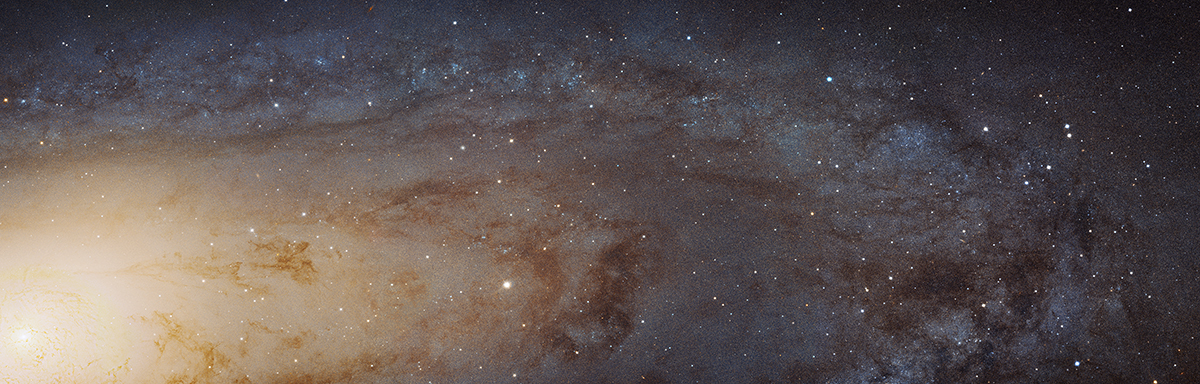
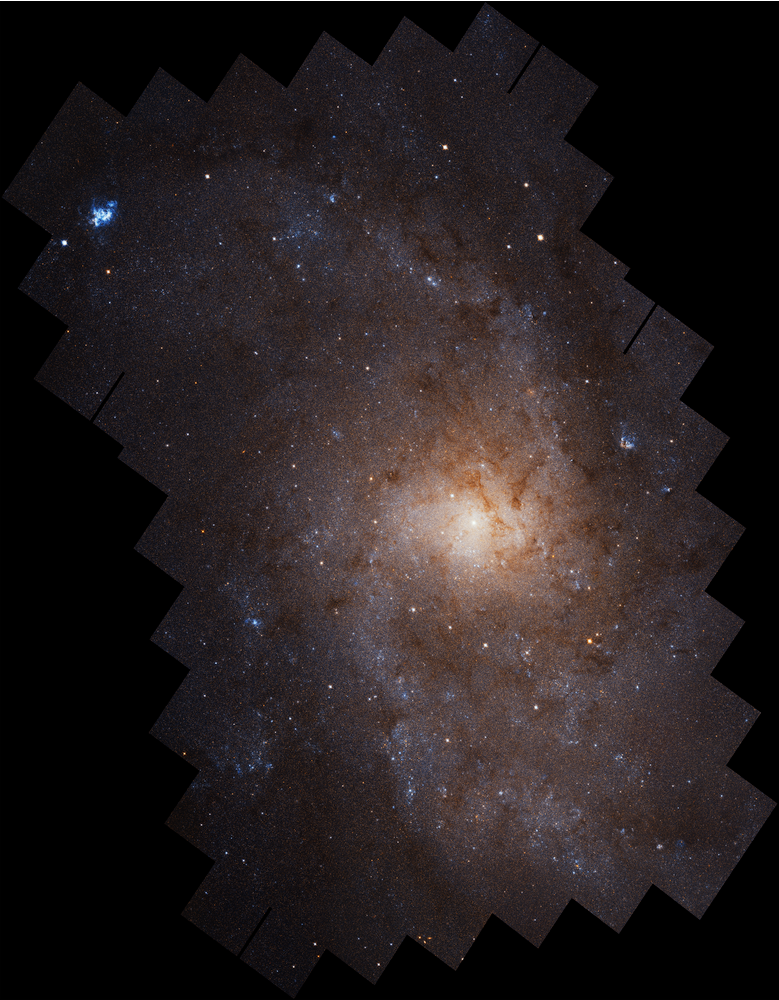
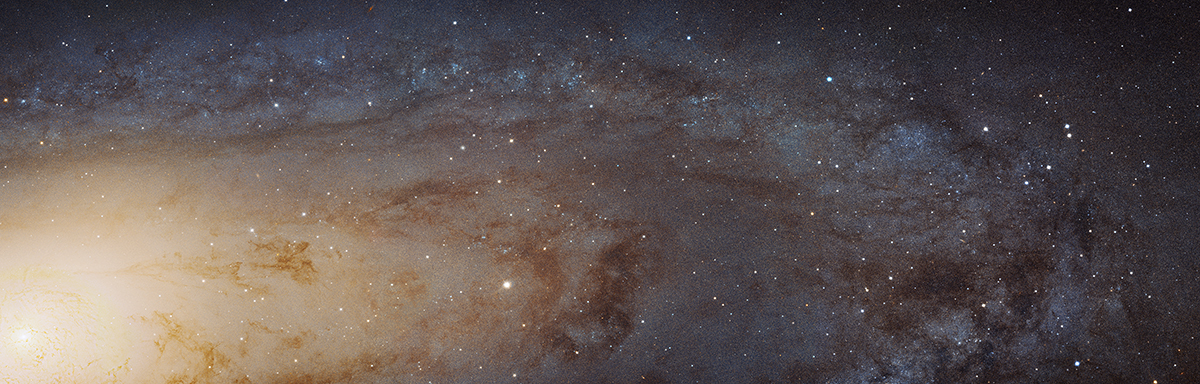
Over 100 million stars are on display in this portion of the Andromeda galaxy, located over 2 million light-years away. This portrait of our galactic neighbor is the largest image yet assembled by Hubble.
Scientific Significance
Repeated Andromeda observations provide an essential reference for comparing Local Group spirals. The resolved stellar census constrains star-formation history, metallicity evolution, and substructure from accreted satellites. These results anchor interpretations of unresolved distant galaxies where only integrated light is available.
Observation Details
Hubble imaging programs combined ACS and WFC3 observations to cover major sections of the Andromeda disk and inner halo. Cross-filter photometry supports precise color-magnitude analysis at large scale. The data are widely reused for stellar evolution, dynamics, and dust studies.
Location in the Universe
Constellation
Andromeda
Distance from Earth
2.5 million light-years
Fun Facts
- 1
Andromeda is visible to the naked eye from dark sites and is the farthest naked-eye object for many observers.
- 2
Its stellar disk and halo preserve records of past mergers with smaller galaxies.
- 3
Large Hubble mosaics reveal star clusters, dust lanes, and population gradients in extreme detail.
Image credit: NASA, ESA, Hubble Space Telescope