About This Image
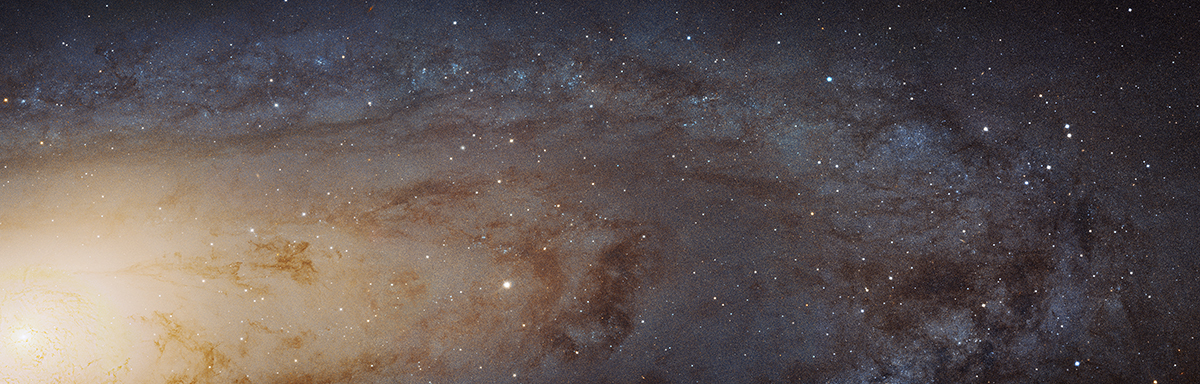
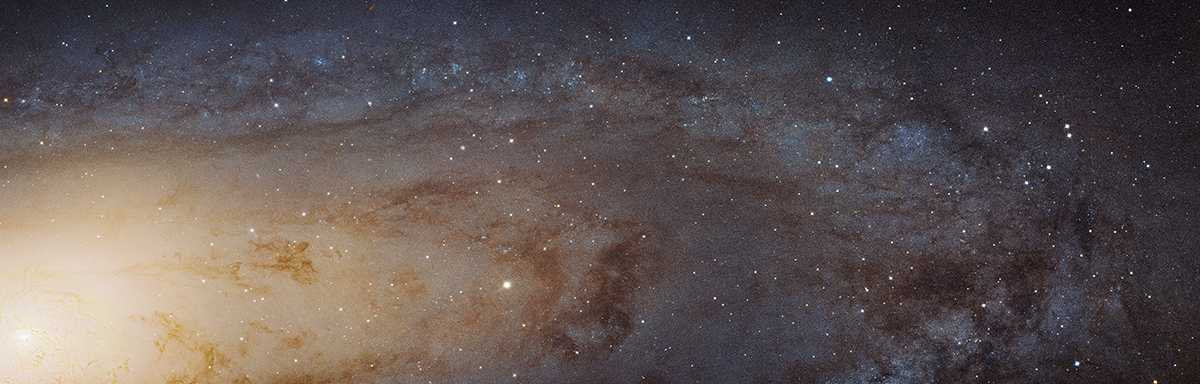
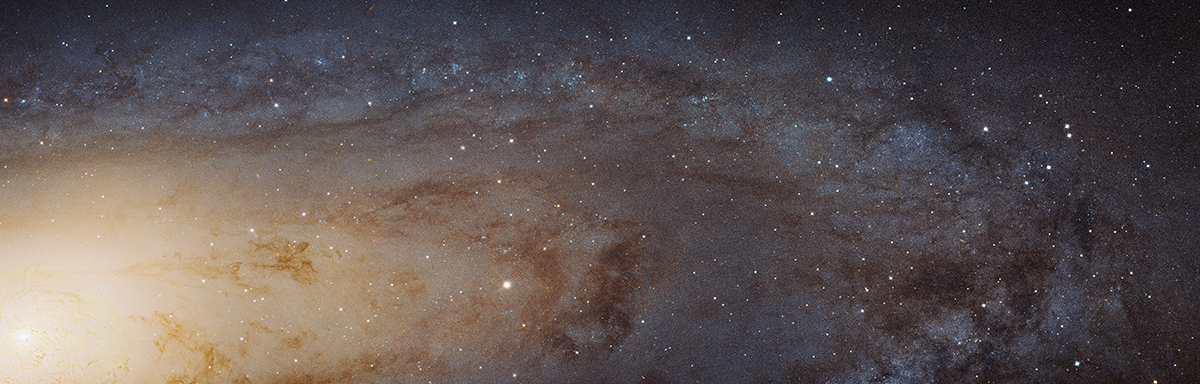
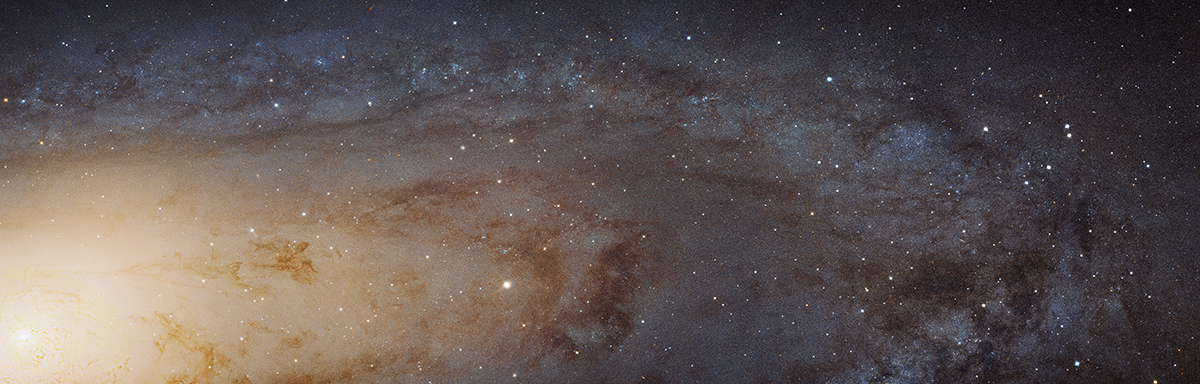
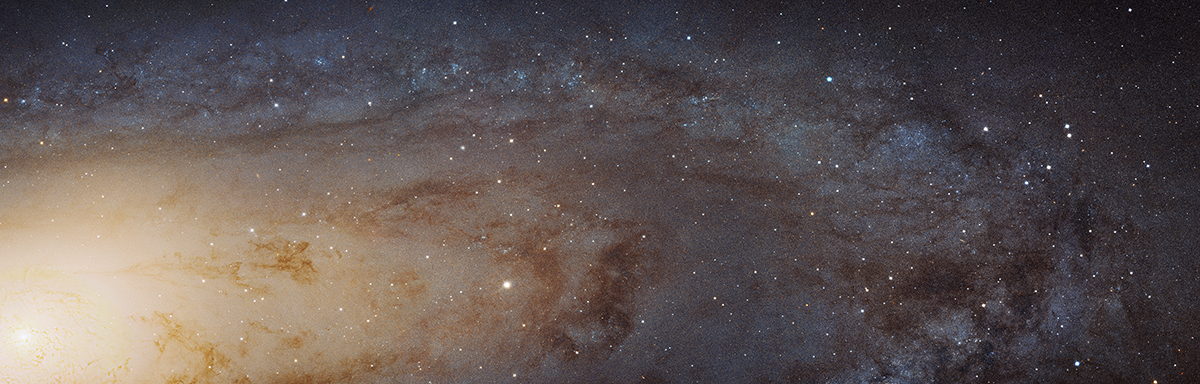
Over 100 million stars are on display in this sweeping panorama of the Andromeda galaxy, our nearest major galactic neighbor located over 2 million light-years away. This portrait represents one section of the largest image ever assembled by Hubble, covering a vast swath of the galaxy's disk and revealing individual stars with unprecedented clarity. The image captures stars across all stages of stellar evolution, from brilliant young blue supergiants to ancient red giants nearing the end of their lives. Dense star clusters, dark dust lanes, and glowing nebulae create a complex tapestry that mirrors the structure of our own Milky Way. This extraordinary view offers a preview of what our galaxy might look like when observed from a similar vantage point in the cosmos.
Scientific Significance
The Panchromatic Hubble Andromeda Treasury (PHAT) survey, which produced this image, represents the most comprehensive census of stars in any galaxy beyond our own. By resolving over 100 million individual stars and measuring their colors and brightnesses, astronomers constructed detailed maps of Andromeda's stellar populations, star formation history, and dust distribution. The survey revealed that Andromeda's disk contains a more complex mix of stellar ages than previously thought, with episodes of enhanced star formation that may correlate with past interactions with satellite galaxies. The data enable direct comparisons between Andromeda and the Milky Way, testing whether our galaxy is typical or unusual among large spirals. The survey also provides templates for interpreting observations of more distant galaxies where individual stars cannot be resolved.
Observation Details
This image is part of the PHAT survey, which used Hubble's Wide Field Camera 3 (WFC3) and Advanced Camera for Surveys (ACS) to observe Andromeda in six different filters spanning ultraviolet through near-infrared wavelengths. The survey covered approximately one-third of Andromeda's disk, requiring over 7,000 individual exposures taken over several years. The multi-wavelength approach allowed astronomers to determine the temperature, luminosity, and approximate age of each resolved star through color-magnitude diagram analysis. The mosaic was carefully calibrated and assembled to create a seamless view across the surveyed region, with careful attention to photometric consistency between adjacent pointings.
Location in the Universe
Constellation
Andromeda
Distance from Earth
2.5 million light-years
Fun Facts
- 1
The full Andromeda survey from which this image is taken contains over 1.5 billion pixels and would require more than 600 HD television screens to display at full resolution.
- 2
Andromeda is approaching the Milky Way at about 250,000 miles per hour and will collide with our galaxy in approximately 4.5 billion years, eventually merging to form a giant elliptical galaxy.
- 3
Despite containing roughly one trillion stars — more than double the Milky Way's count — Andromeda is visible to the naked eye from Earth as a faint fuzzy patch on clear, dark nights.
Image credit: NASA, ESA, Hubble Space Telescope