About This Image
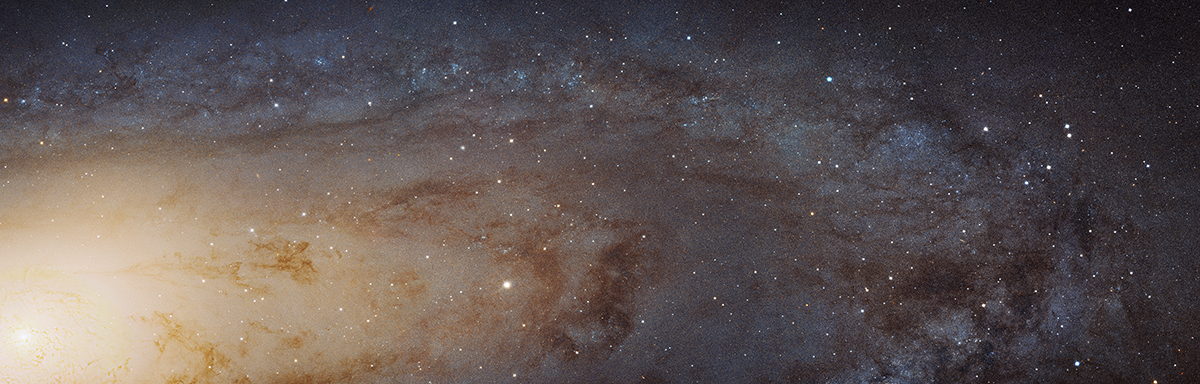
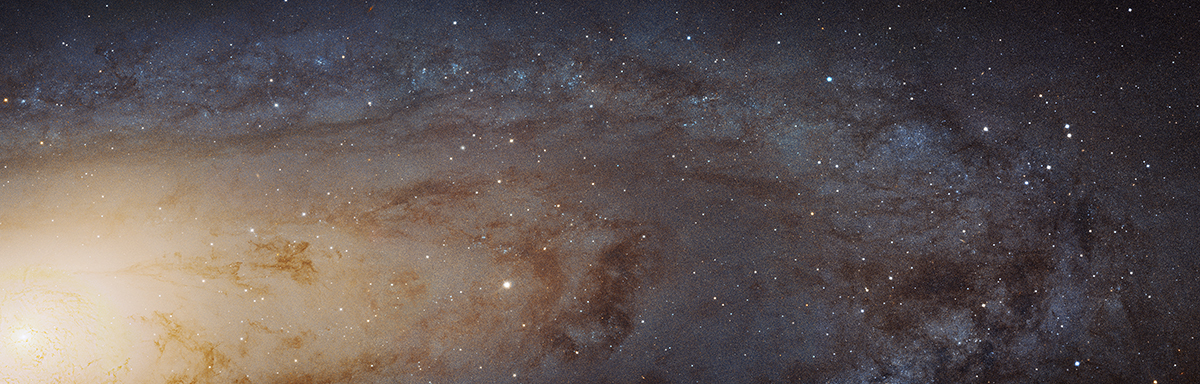
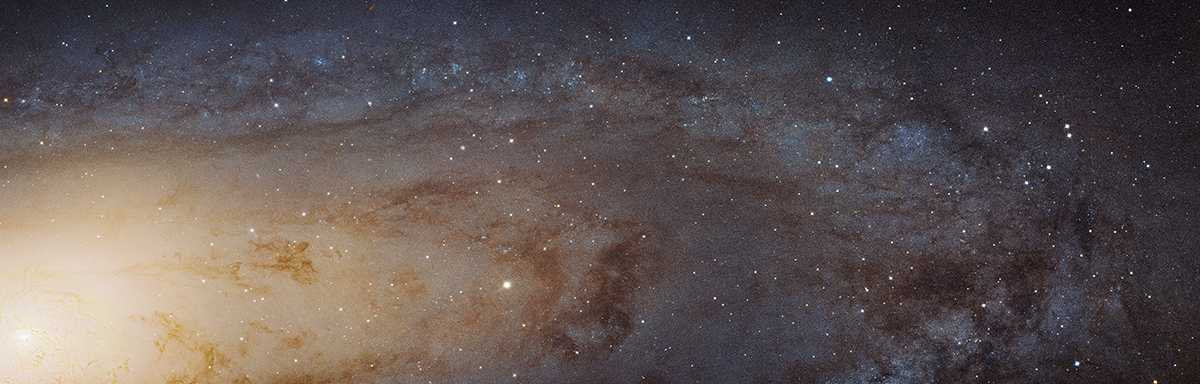
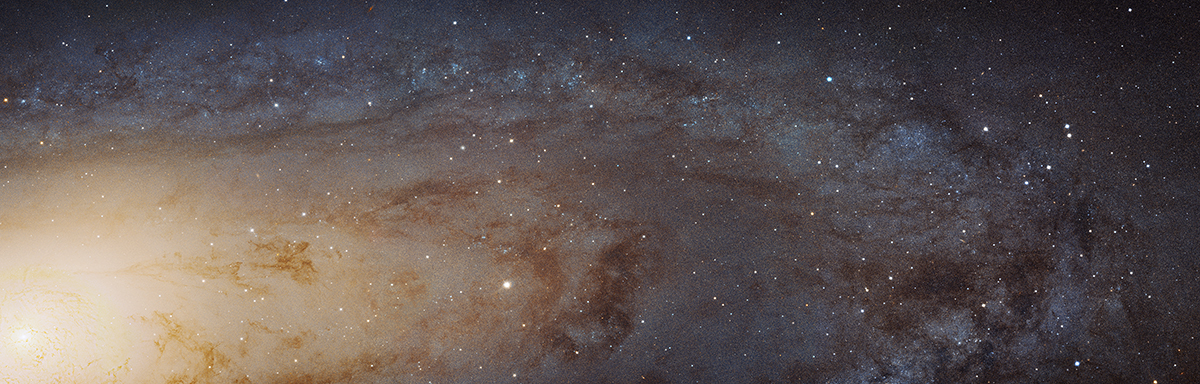
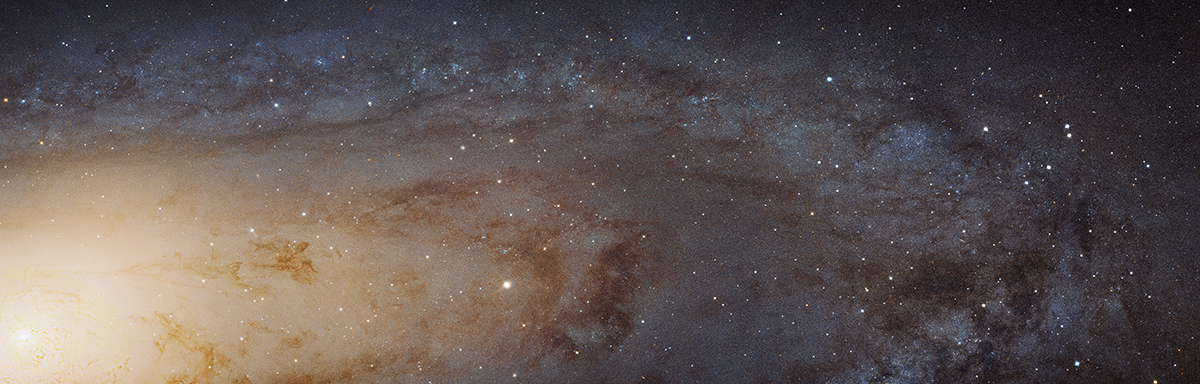
This magnificent view showcases another portion of the Andromeda galaxy's stellar disk, where over 100 million individual stars have been resolved by Hubble's sharp vision. The image represents one segment of the most detailed survey ever conducted of stars in any external galaxy, providing an unprecedented look at our nearest spiral neighbor. The scene reveals the full majesty of a large spiral galaxy, with its mix of young blue stars concentrated along spiral arm segments and older red stars distributed throughout the disk. Filamentary dust lanes thread through the stellar field, marking the locations of the interstellar medium from which new stars continue to form. This cosmic snapshot captures Andromeda as it appeared over 2 million years ago, the time required for its light to reach Earth.
Scientific Significance
This region of the Andromeda survey captures the transition zone between the galaxy's inner and outer disk, where stellar population properties change significantly with galactocentric radius. Analysis reveals that the stellar mass surface density decreases exponentially outward, following the classic disk galaxy profile, while the star formation rate per unit mass actually increases in the outer regions. This 'inside-out' growth pattern, where galaxies build their outer disks more recently than their inner regions, appears to be common among large spirals. The observations also detected numerous classical Cepheid variable stars whose period-luminosity relationship provides independent distance measurements, contributing to efforts to calibrate the cosmic distance ladder.
Observation Details
The observations utilized Hubble's Wide Field Camera 3 (WFC3) in its UVIS channel for ultraviolet and optical imaging, combined with ACS observations in optical and near-infrared filters. The multi-wavelength coverage enables precise determination of stellar temperatures and luminosities through comparison with theoretical stellar evolution models. Photometric measurements reached sufficient depth to detect stars on the main sequence turnoff of intermediate-age populations, enabling detailed reconstruction of the star formation history over the past several billion years. Careful treatment of photometric errors and completeness corrections ensures reliable statistical analysis of the stellar populations.
Location in the Universe
Constellation
Andromeda
Distance from Earth
2.5 million light-years
Fun Facts
- 1
The amount of data collected in the full Andromeda survey exceeds 2 terabytes — enough to fill hundreds of DVDs with stellar information.
- 2
Andromeda's disk contains so many stars that if you counted one per second, it would take over 30,000 years to count them all.
- 3
The dust lanes visible in Andromeda contain complex organic molecules similar to those found in the Milky Way, including compounds that may be precursors to life.
Image credit: NASA, ESA, Hubble Space Telescope