About This Image
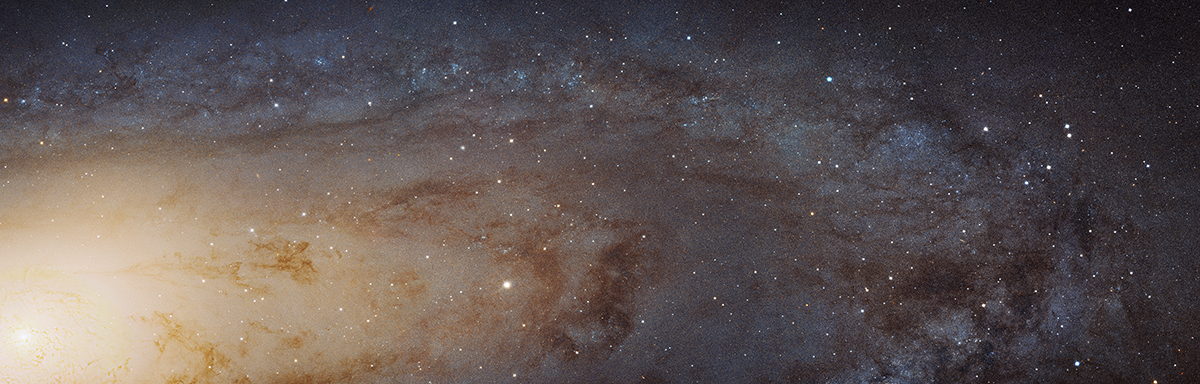
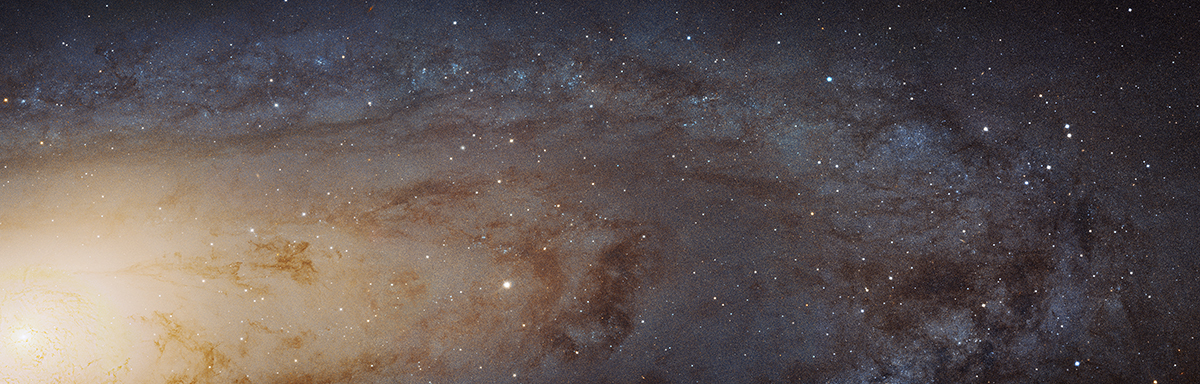
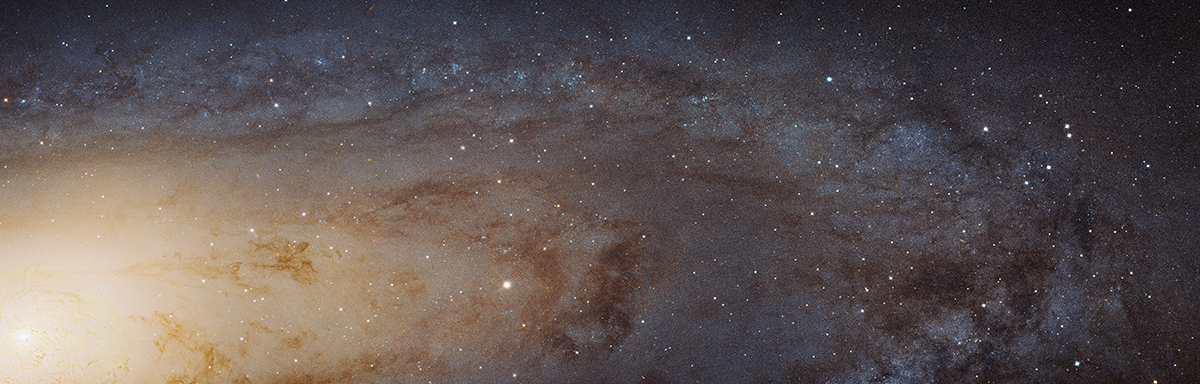
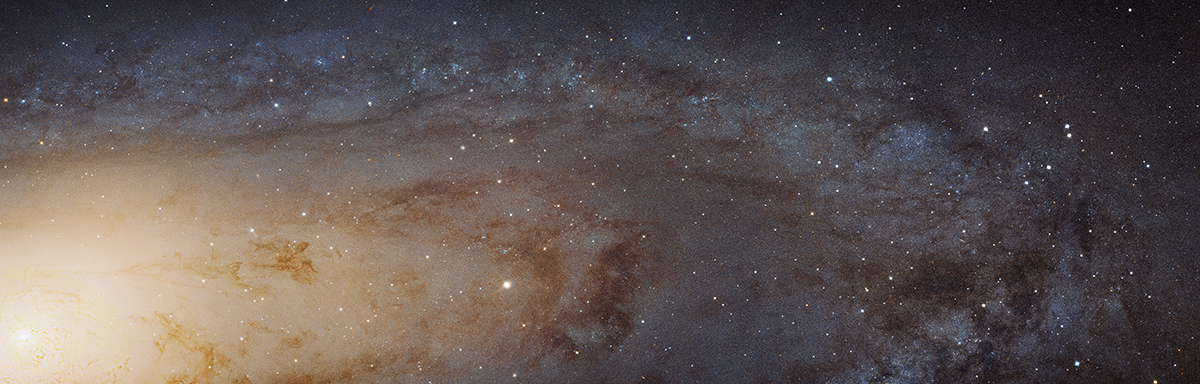
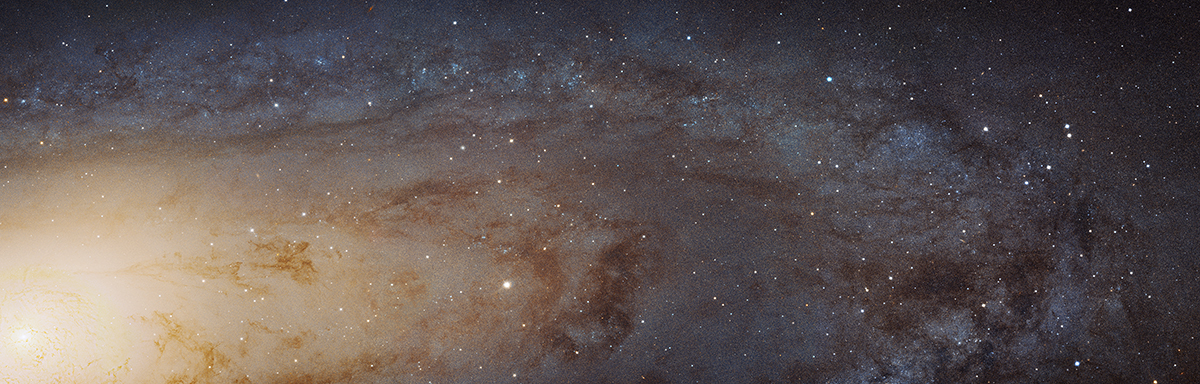
Over 100 million stars populate this view of the Andromeda galaxy, continuing Hubble's systematic exploration of our nearest major galactic neighbor. This section of the galaxy's disk showcases the remarkable diversity of stellar environments present in a large spiral galaxy. Young blue stars trace the spiral arm patterns where gas clouds have recently collapsed to form new suns, while older red and yellow stars dominate the underlying disk population. The image captures stars at every stage of their life cycle, from newborn objects still embedded in their birth clouds to ancient red giants expanded to hundreds of times their original size. Together, these stars record over 10 billion years of stellar evolution in a galaxy very similar to our own Milky Way.
Scientific Significance
This portion of the PHAT survey provides essential data for understanding the relationship between spiral structure and star formation in disk galaxies. By mapping the spatial distribution of stars of different ages, astronomers can trace how the spiral pattern has influenced star formation over the past billion years. The observations reveal that spiral arms are not fixed structures but transient density enhancements that migrate through the disk, with stars born in the arms eventually dispersing into the general disk population. This understanding helps explain why spiral arms remain visible in galaxies despite being composed of different stars at different times. The survey also enables searches for rare stellar types that probe extreme phases of stellar evolution.
Observation Details
The observations employed the same standardized observing strategy used throughout the PHAT survey, ensuring homogeneous data quality across the entire mosaic. Each field was observed in six filters: F275W and F336W in the ultraviolet with WFC3/UVIS, F475W and F814W in the optical with ACS/WFC, and F110W and F160W in the near-infrared with WFC3/IR. This wavelength coverage enables precise determination of stellar temperatures, luminosities, and estimates of dust extinction for individual stars. The near-infrared observations are particularly valuable for detecting red supergiants and asymptotic giant branch stars that are heavily obscured at optical wavelengths.
Location in the Universe
Constellation
Andromeda
Distance from Earth
2.5 million light-years
Fun Facts
- 1
The total stellar mass visible in the PHAT survey region exceeds 10 billion solar masses — roughly one-tenth of Andromeda's total stellar content.
- 2
Hubble can resolve individual bright stars in Andromeda that are over 100,000 times more luminous than the Sun, while fainter stars blend into the background glow.
- 3
The age spread among stars in this image spans the entire history of the universe — from stars nearly as old as the Big Bang to stars born within the last million years.
Image credit: NASA, ESA, Hubble Space Telescope