About This Image
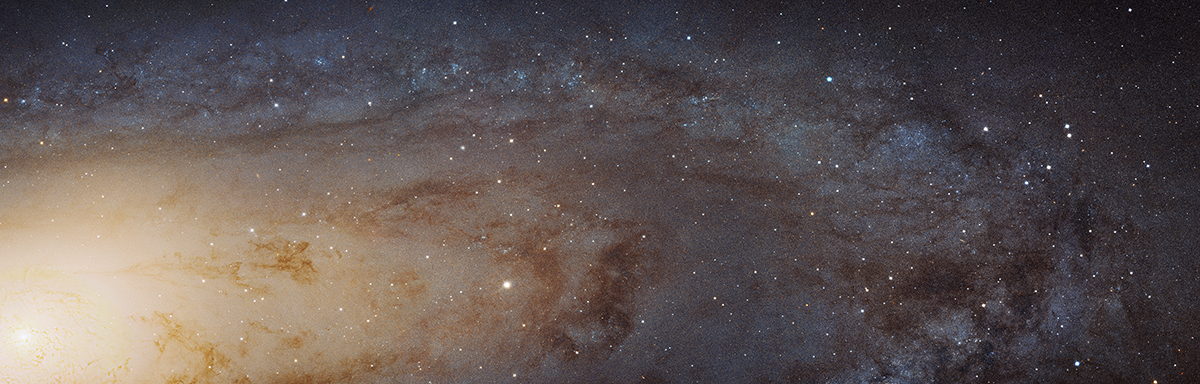
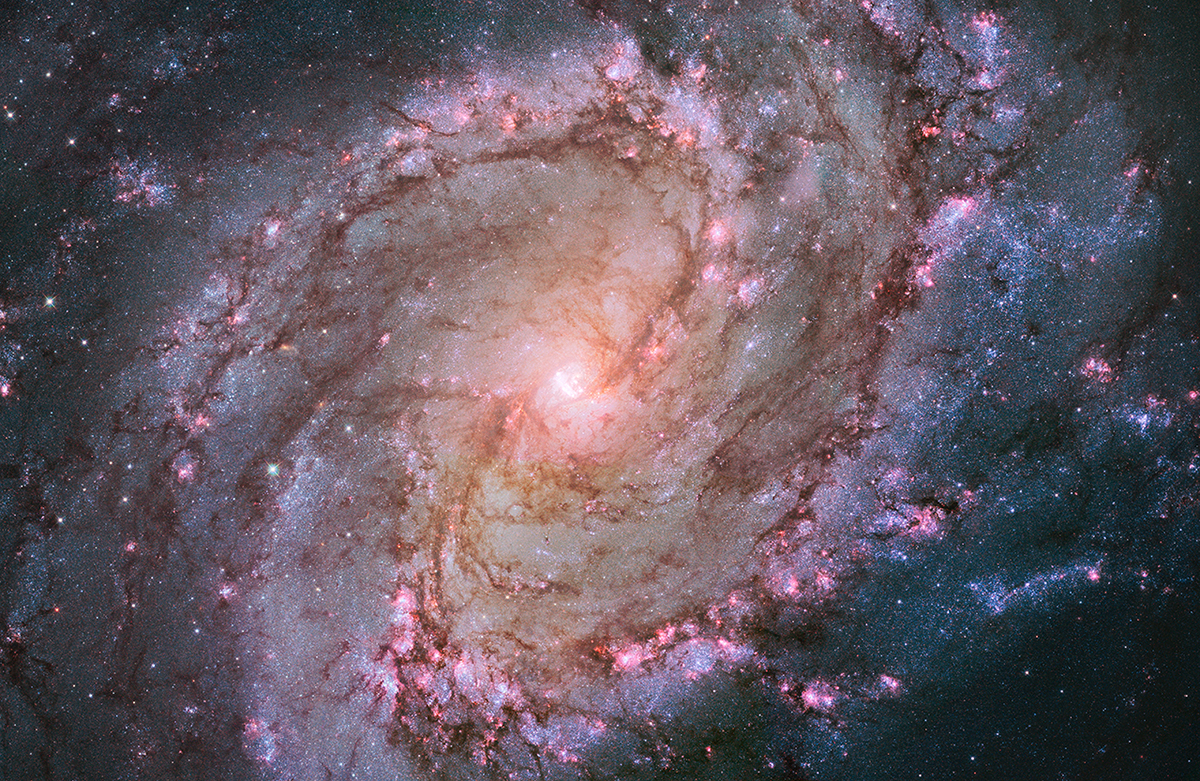
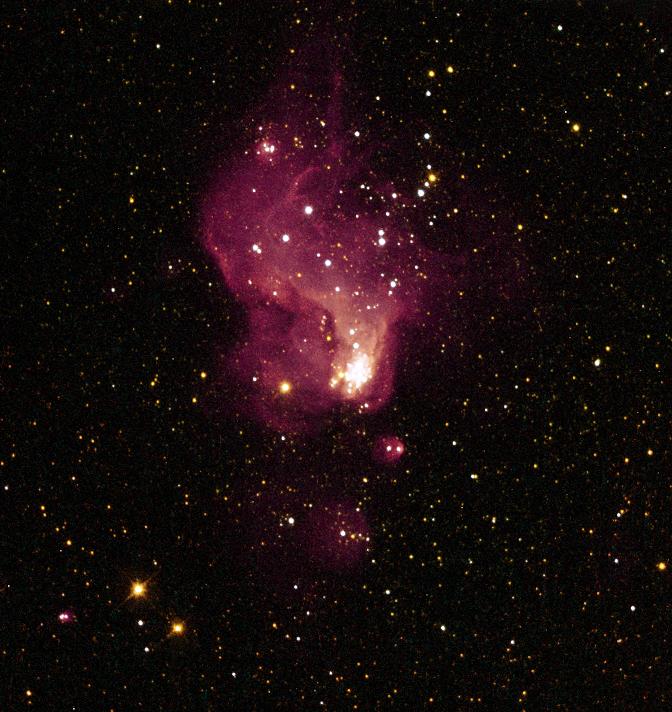
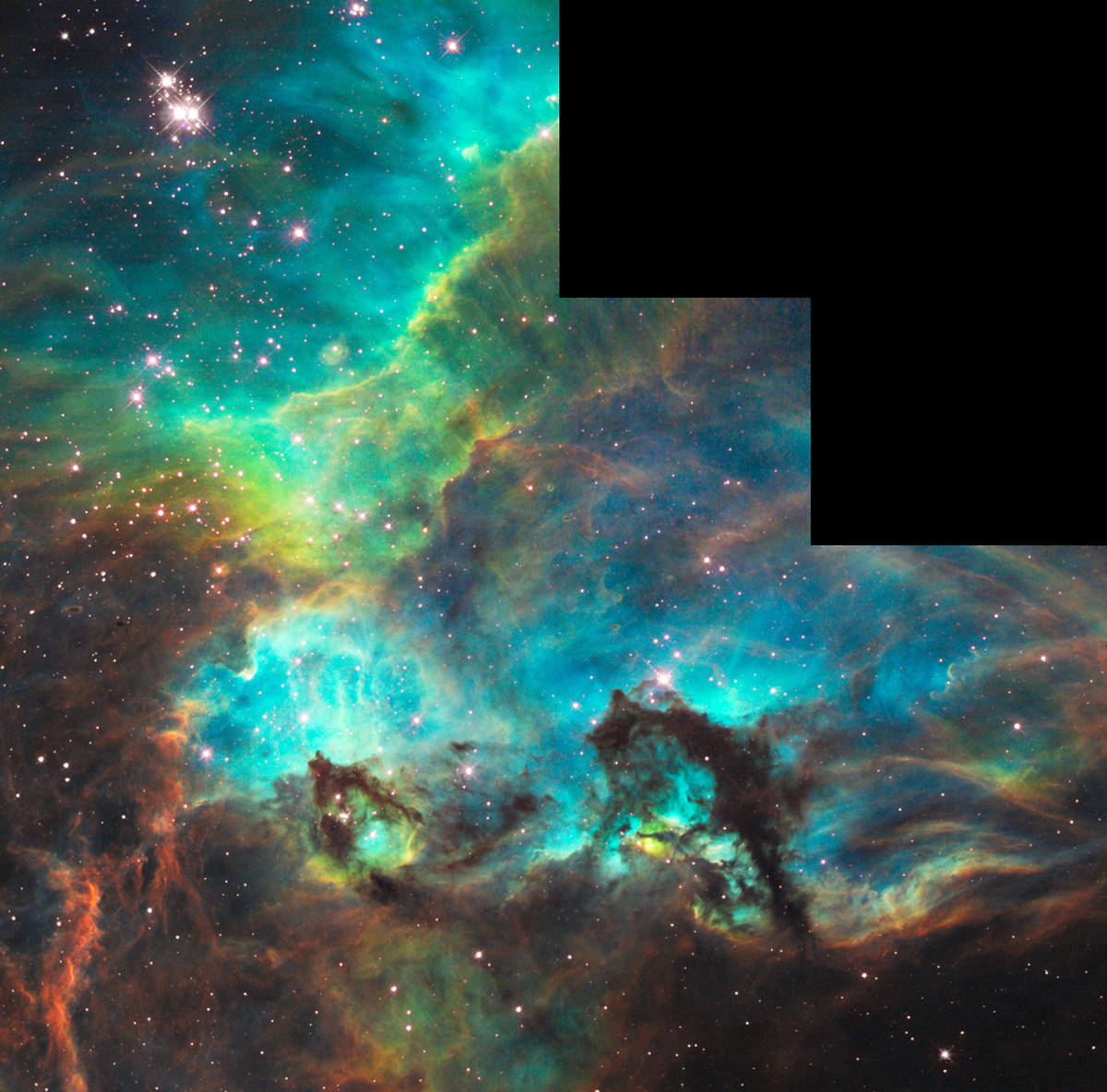
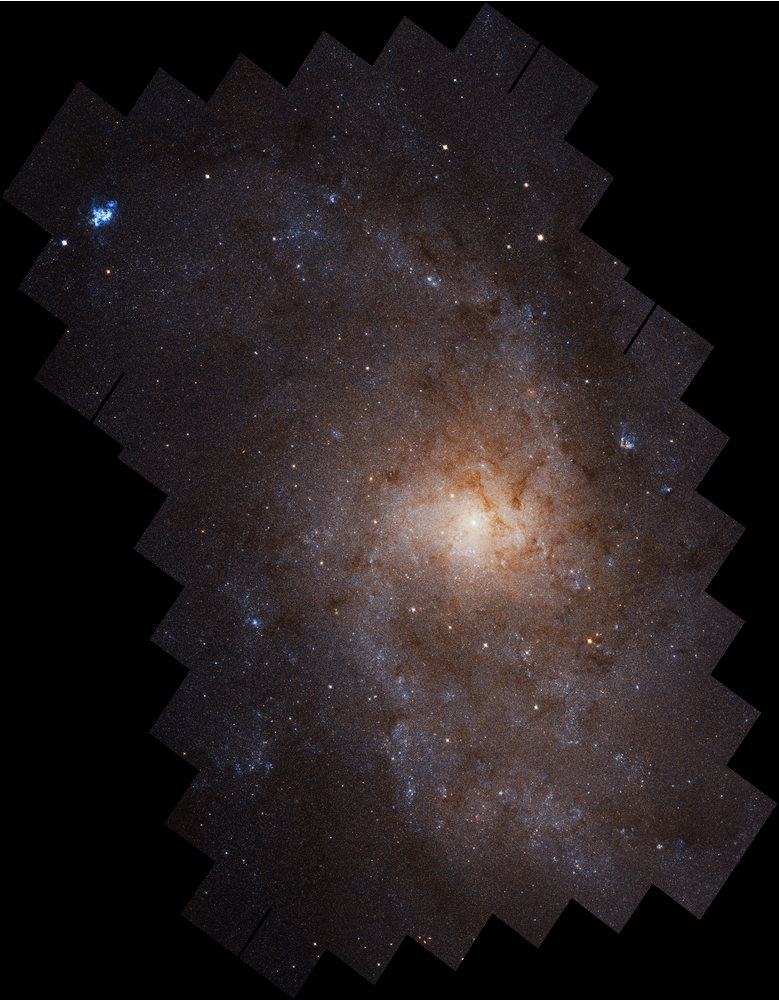
This expansive mosaic captures the nearby Triangulum galaxy (M33), the third-largest member of our Local Group of galaxies after Andromeda and the Milky Way. Striking areas of star birth glow bright blue throughout the galaxy's loosely wound spiral arms, while beautiful nebulas of hot gas — particularly the giant star-forming region NGC 604 visible in the upper left — punctuate the stellar disk with brilliant emission. The Triangulum galaxy's relatively face-on orientation provides an unobstructed view of its spiral structure, revealing how stars of different ages distribute across the disk. Unlike the tightly wound arms of many spirals, Triangulum's arms are more loosely organized, creating a flocculent appearance that suggests star formation occurs in a more chaotic, self-propagating manner rather than being organized by strong density waves.
Scientific Significance
The Triangulum galaxy provides a valuable counterpoint to studies of Andromeda, allowing astronomers to compare how two different spiral galaxies of similar distance but different properties have evolved. Unlike Andromeda, Triangulum shows no evidence of a recent major merger and appears to have experienced a more quiescent history. Its high gas fraction and active star formation make it an excellent laboratory for studying how stars form in spiral galaxies without the complications of a violent past. The giant HII region NGC 604 has been studied in detail as an example of massive star formation in a metal-poor environment, providing insights into how such regions appeared in the early universe. The Hubble mosaic, comprising 54 separate pointings, resolves tens of millions of individual stars for detailed population studies.
Observation Details
This image represents one of the largest mosaics ever assembled by Hubble, combining 54 separate fields observed with the Advanced Camera for Surveys (ACS) and Wide Field Camera 3 (WFC3). The observations used multiple broadband filters spanning ultraviolet through near-infrared wavelengths, enabling characterization of stellar populations across the full range of ages. The mosaic covers approximately 19,000 light-years by 14,000 light-years, encompassing a significant fraction of the galaxy's optical disk. Processing required careful treatment of field-to-field variations and creation of a seamless mosaic despite the different camera field geometries. The final image contains millions of cataloged stars with precise photometric measurements.
Location in the Universe
Constellation
Triangulum
Distance from Earth
2.7 million light-years
Fun Facts
- 1
NGC 604, the giant nebula visible in this image, is one of the largest HII regions known — over 40 times the size of the Orion Nebula and powered by over 200 hot young stars.
- 2
Despite being smaller than both the Milky Way and Andromeda, Triangulum may contain a higher fraction of its mass in the form of gas available for future star formation.
- 3
Triangulum is the most distant object that can be seen with the naked eye under excellent conditions — a testament to its high rate of star formation which makes it intrinsically bright.
Image credit: NASA, ESA, Hubble Space Telescope