About This Image
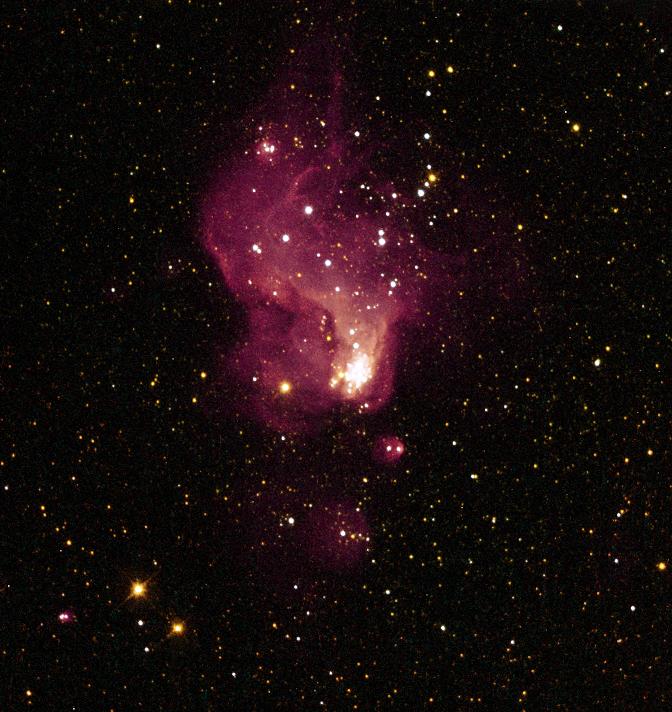
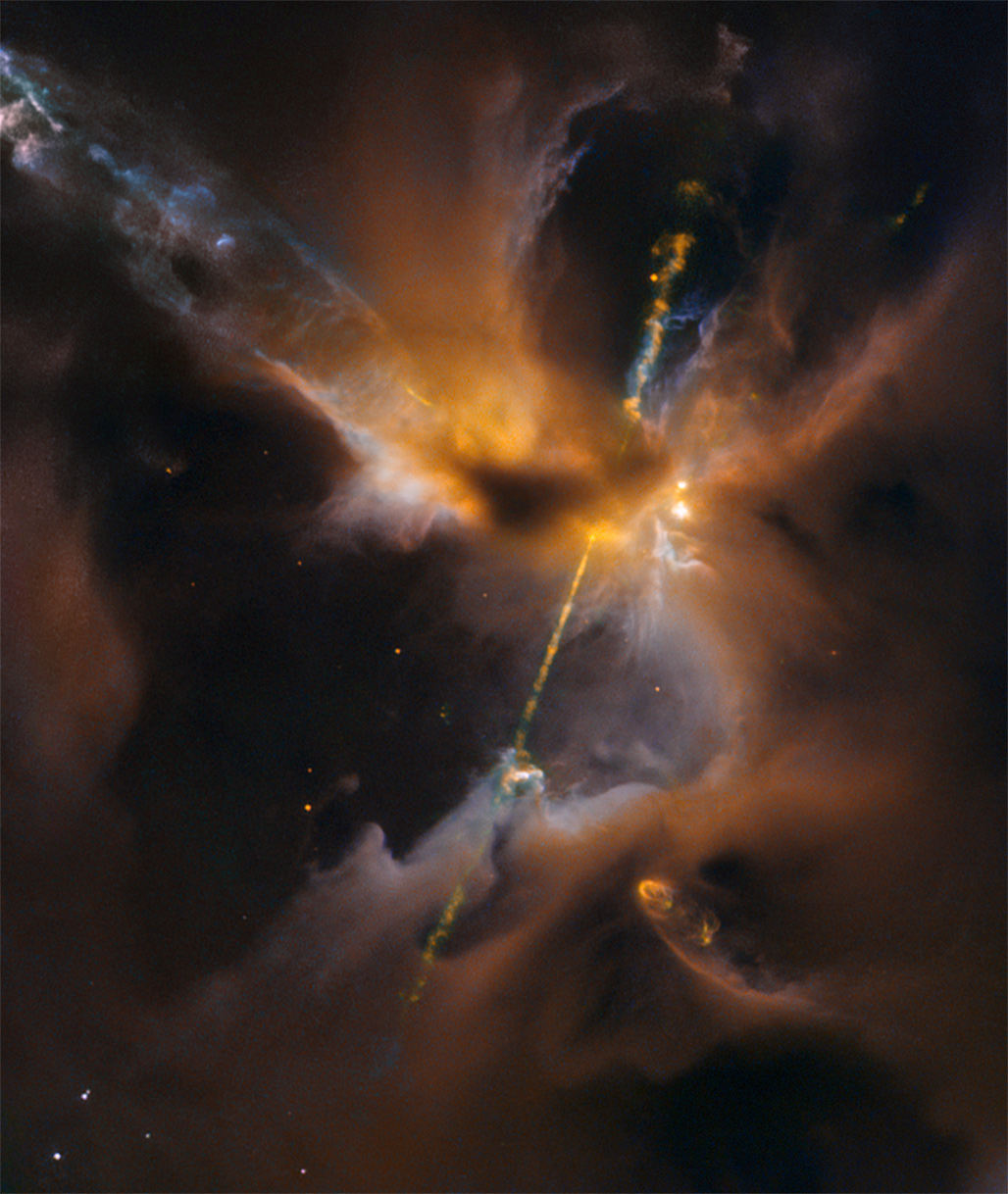
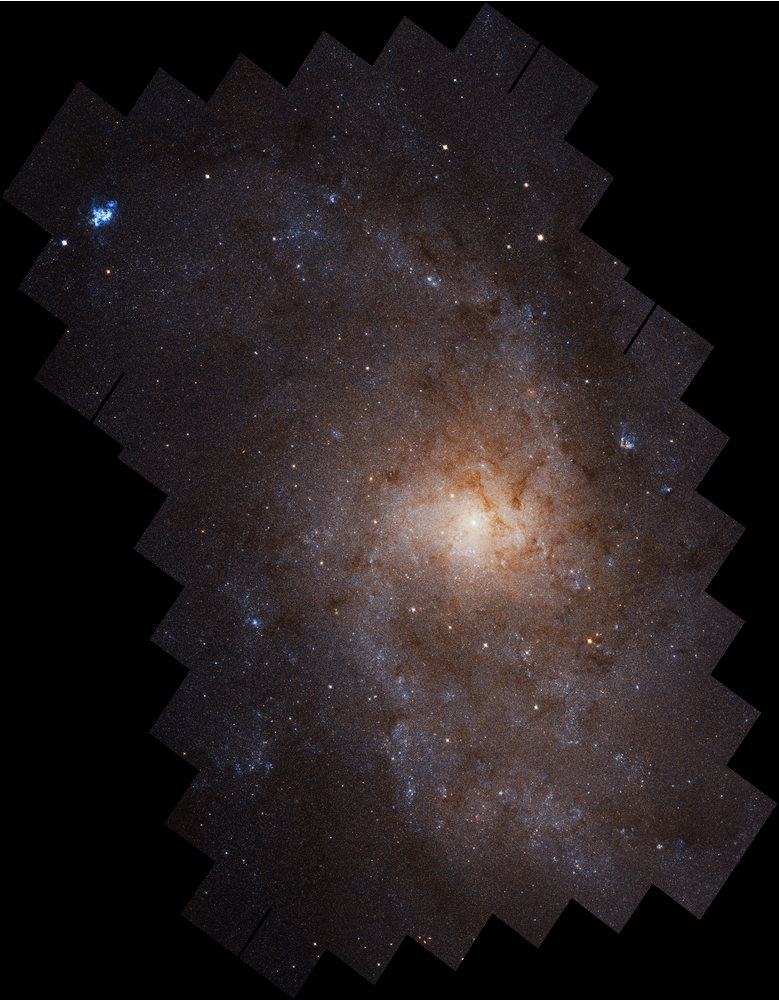
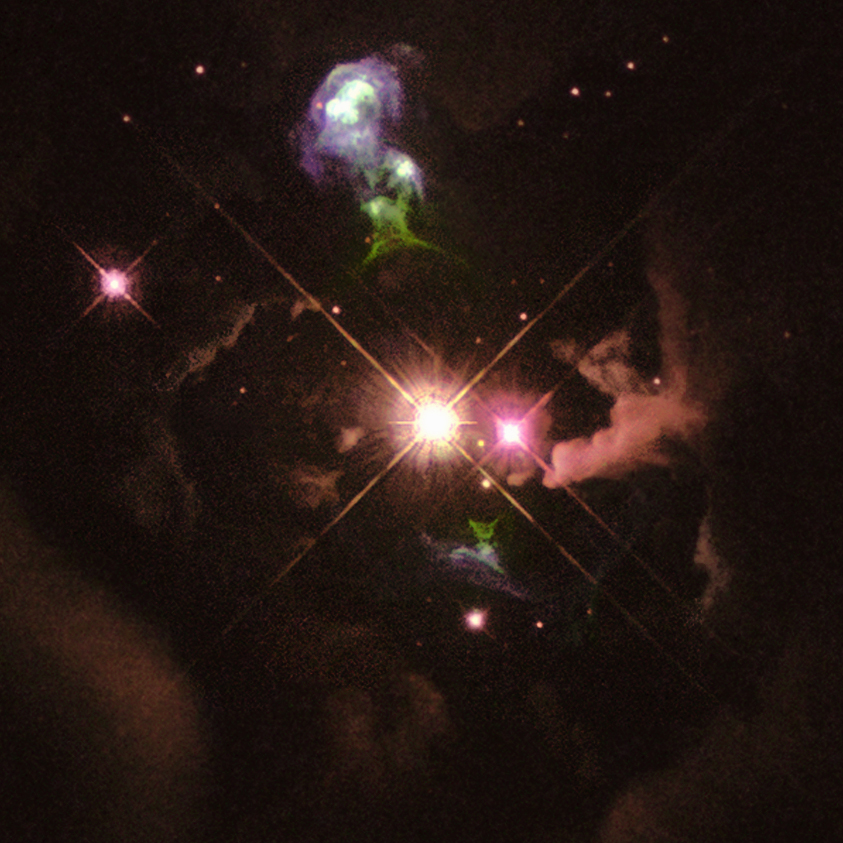
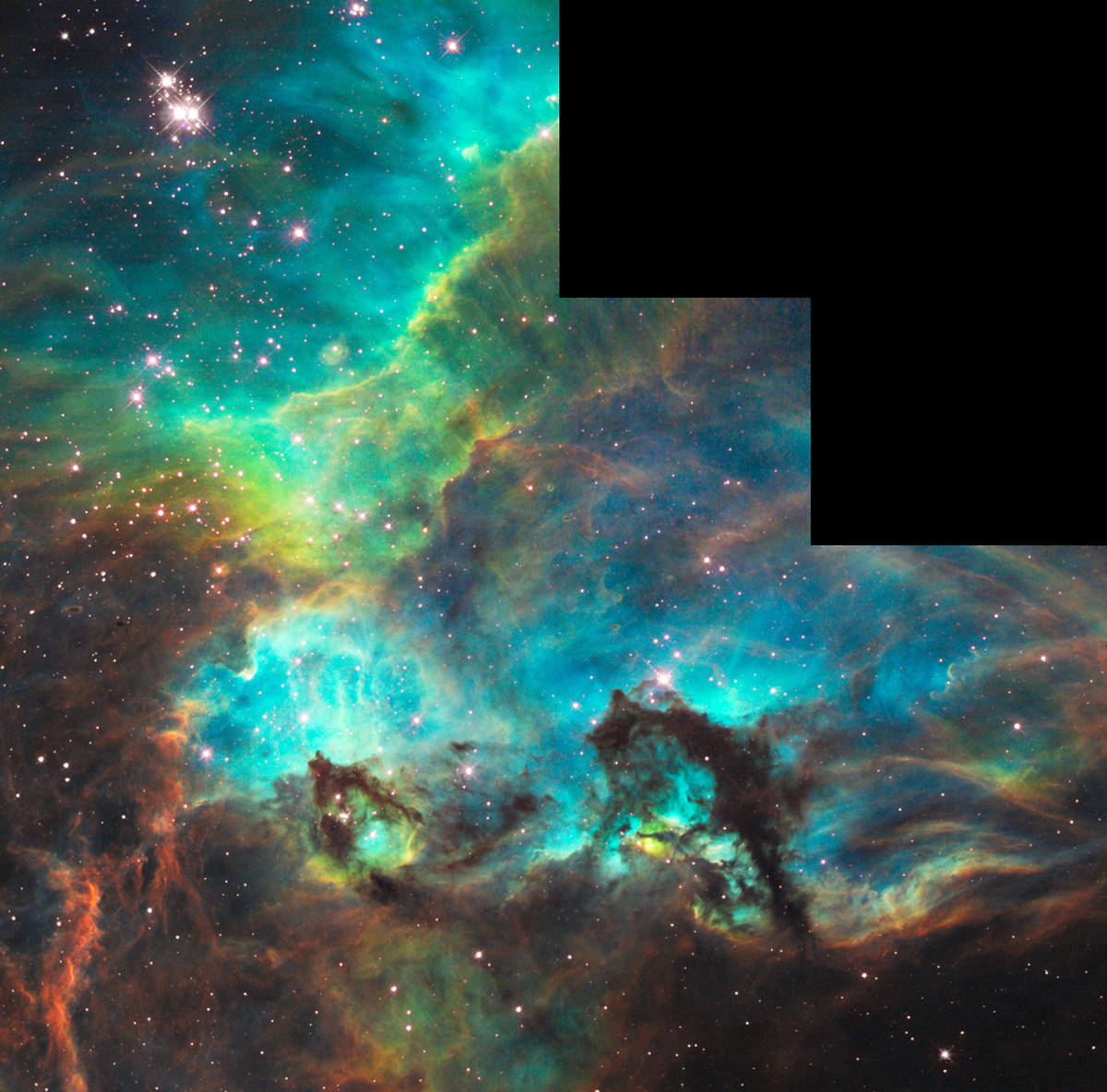
The nebula NGC 2074 blazes as a firestorm of raw stellar creation, a cosmic forge where new suns are being born from collapsing clouds of gas and dust. This violent stellar nursery may have been triggered by the shockwave from a nearby supernova explosion that compressed the surrounding interstellar medium. Located in the Large Magellanic Cloud, a satellite galaxy of the Milky Way about 170,000 light-years away, NGC 2074 showcases the dramatic processes that shape stars throughout the universe. Towering pillars of dense gas and dust — sculpted by the fierce radiation and stellar winds from already-born stars — resist erosion while harboring the seeds of future stellar generations within their shadowy interiors. The scene illustrates the creative destruction that drives cosmic evolution.
Scientific Significance
NGC 2074 provides a window into star formation under conditions different from those in the Milky Way's disk. The Large Magellanic Cloud has lower metallicity than our galaxy — its gas contains fewer heavy elements — which affects the cooling and fragmentation of star-forming clouds. Studies of nebulae like NGC 2074 help astronomers understand how the initial mass function of stars (the distribution of stellar masses at birth) depends on environmental conditions. The pillar structures in NGC 2074 are particularly valuable for studying triggered star formation, where the radiation and winds from one generation of stars compress nearby gas to initiate the formation of the next generation. Infrared observations have revealed young stellar objects still embedded within the dusty pillars, catching stars in their earliest formative stages.
Observation Details
Hubble captured this image using the Wide Field Planetary Camera 2 (WFPC2) shortly before it was replaced during Servicing Mission 4. The observations combined multiple narrowband filters targeting emission lines from hydrogen (H-alpha and H-beta), oxygen ([O III]), and sulfur ([S II]). This filter combination, often called the 'Hubble palette,' maps different ionization states to different colors, revealing the temperature and density structure of the nebula. Blue regions indicate highly ionized gas near hot stars, while red and orange regions show cooler, partially ionized material at the boundaries of the HII region. The image spans approximately 100 light-years across at the distance of the Large Magellanic Cloud.
Location in the Universe
Constellation
Dorado
Distance from Earth
170,000 light-years
Fun Facts
- 1
NGC 2074 lies near the Tarantula Nebula, the most luminous star-forming region in the entire Local Group of galaxies — together they dominate the Large Magellanic Cloud's appearance.
- 2
The pillar structures in NGC 2074 are being actively eroded by radiation from nearby hot stars at rates of several hundred million miles per year.
- 3
This image was released to celebrate Hubble's 18th anniversary in orbit, continuing NASA's tradition of marking Hubble milestones with spectacular new images.
Image credit: NASA, ESA, Hubble Space Telescope