About This Image
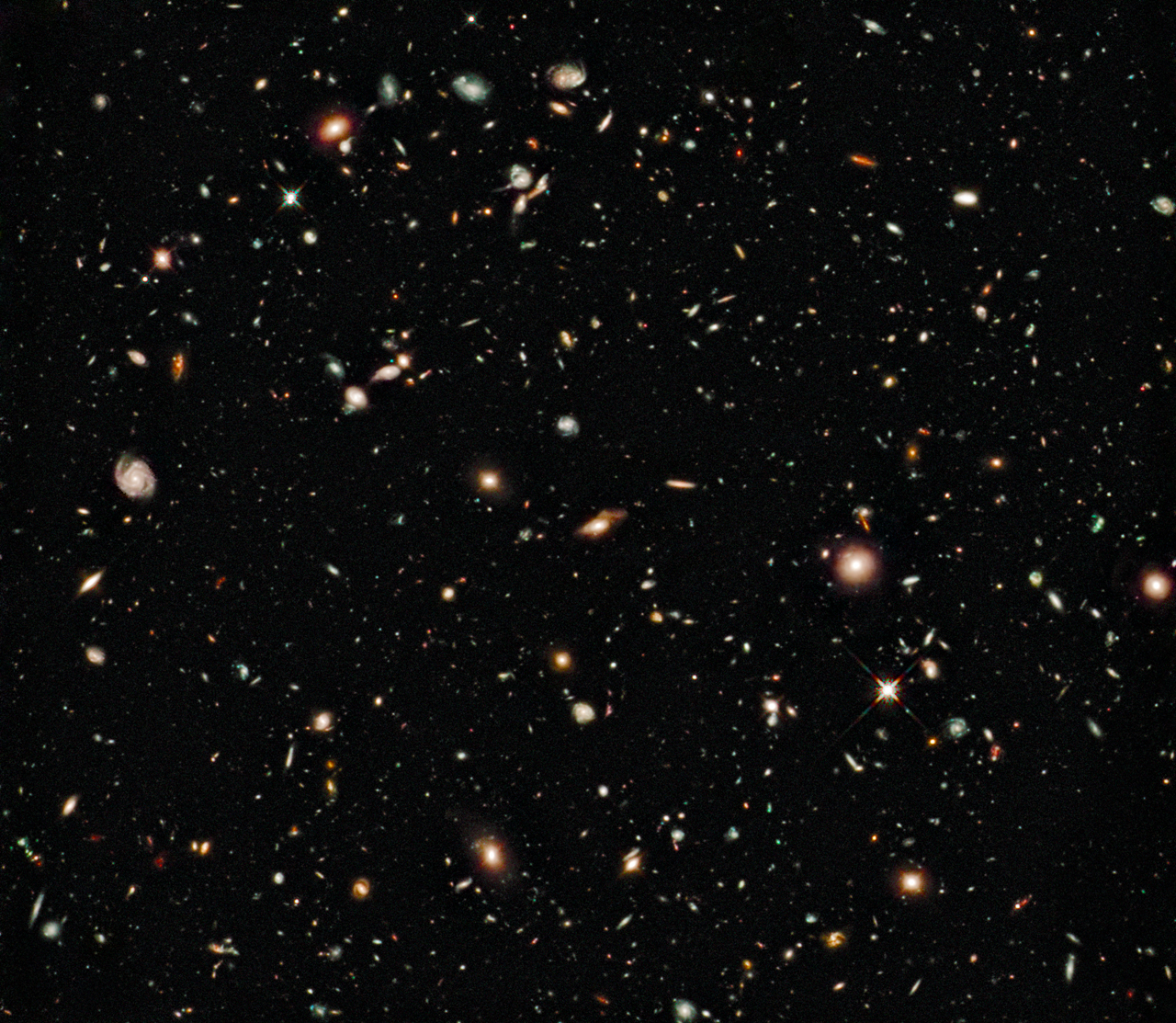
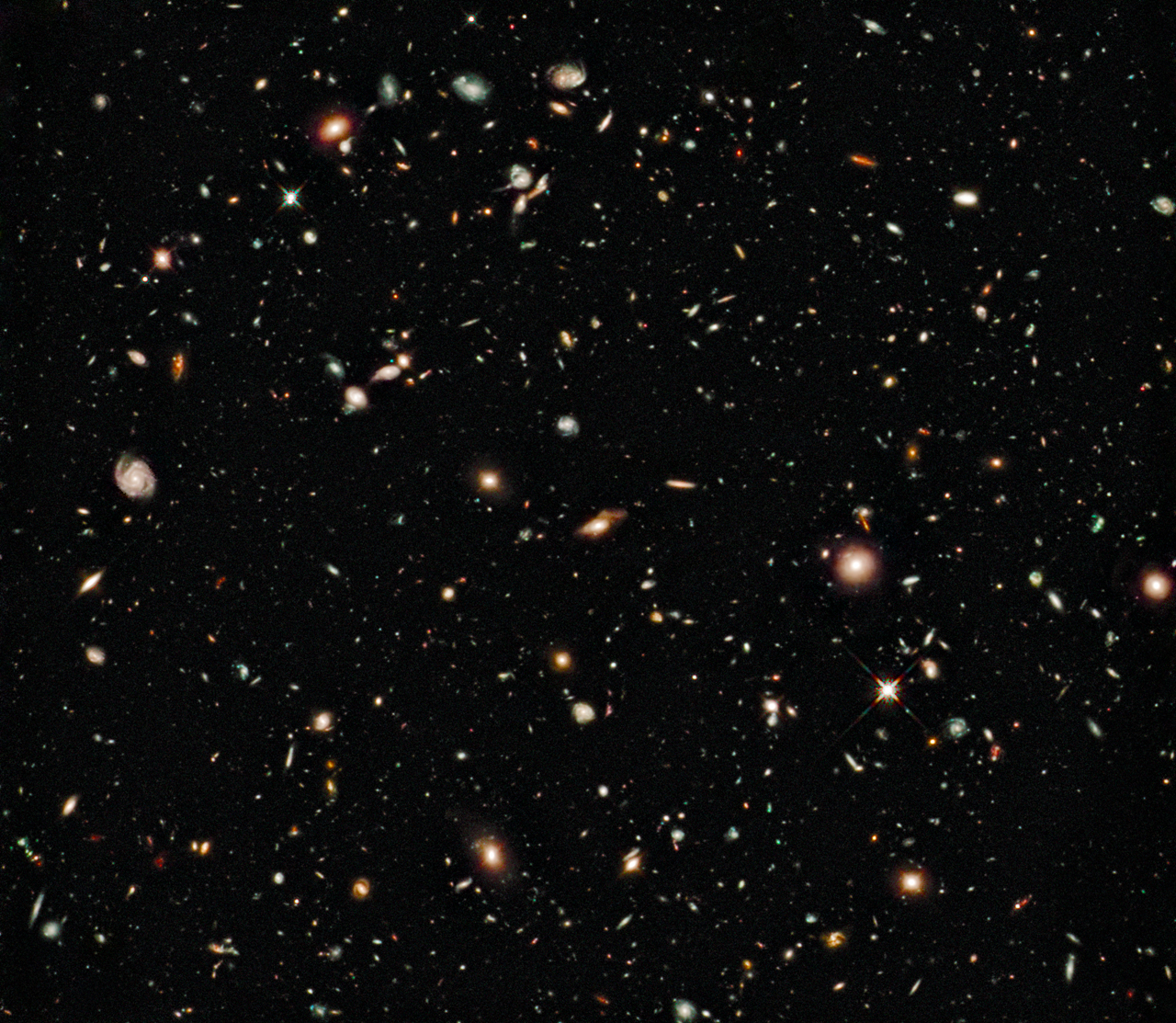
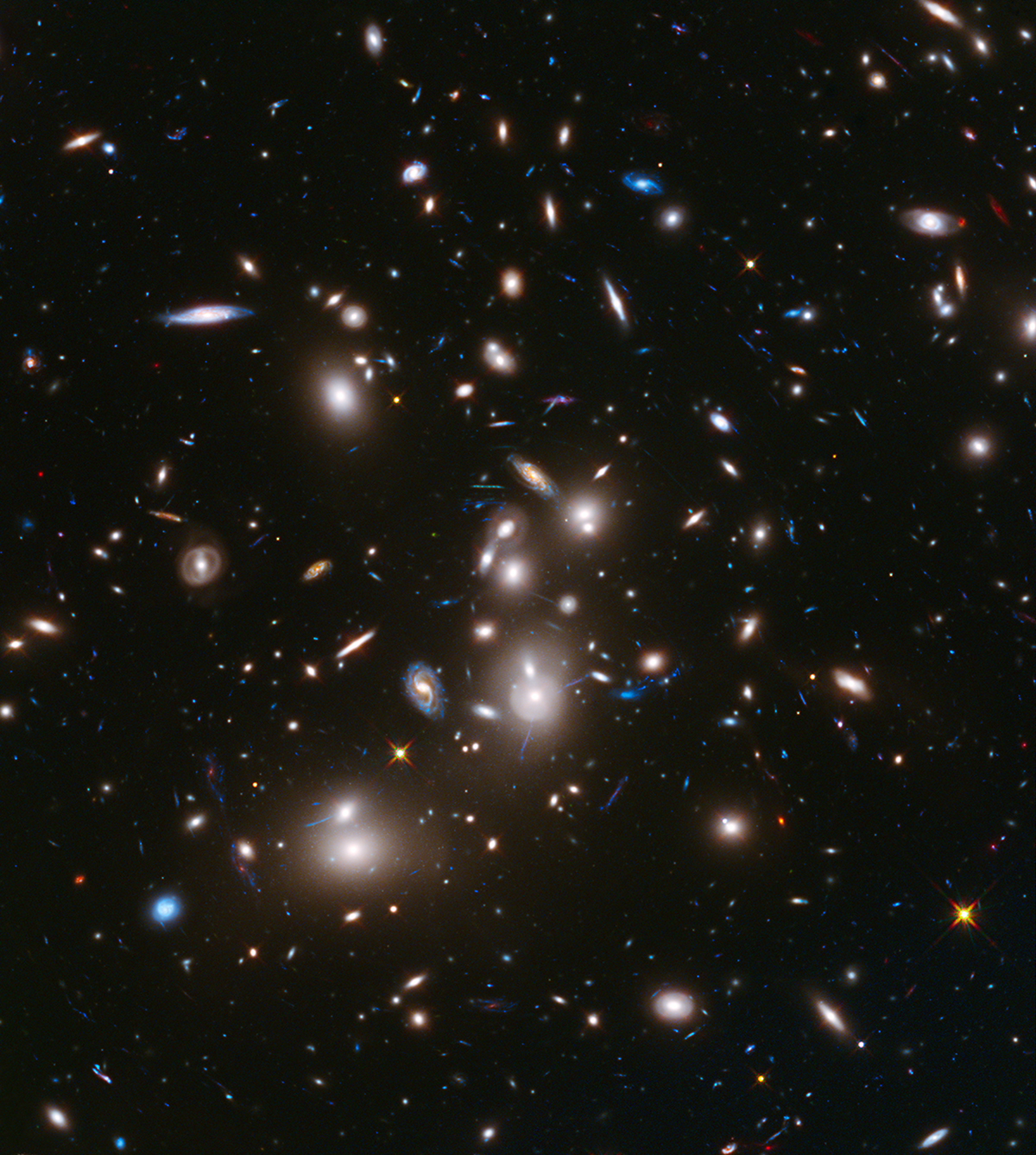
Located 3.5 billion light-years away, Abell 2744 is one of the most massive and complex galaxy clusters known, containing several hundred galaxies bound together by their mutual gravity. This behemoth appears to be the result of a cosmic pile-up of at least four smaller galaxy clusters colliding and merging over hundreds of millions of years. Abell 2744's immense gravitational field acts as a powerful cosmic lens, bending and magnifying the light of nearly 3,000 background galaxies that would otherwise be too faint to observe. The gravitational lensing effect distorts these distant galaxies into arcs, streaks, and multiple images, while simultaneously amplifying their light by factors of up to 100 times. This natural telescope reveals the universe as it appeared over 12 billion years ago.
Scientific Significance
Abell 2744 was the first target of the Hubble Frontier Fields program, a major initiative to push the boundaries of deep-field astronomy using gravitational lensing. By observing massive clusters that act as natural telescopes, astronomers can detect galaxies up to 100 times fainter than possible with Hubble alone. The observations revealed hundreds of background galaxies at redshifts up to z~10, corresponding to the universe's first few hundred million years. The complex merging history of Abell 2744 itself provides a unique laboratory for studying dark matter, as observations in different wavelengths trace the separate distributions of galaxies, hot gas, and dark matter. The separation between these components during the collision provides some of the most direct evidence for the existence of dark matter.
Observation Details
Hubble observed Abell 2744 as part of the Frontier Fields program using the Wide Field Camera 3 (WFC3) and Advanced Camera for Surveys (ACS) in seven different filters spanning optical through near-infrared wavelengths. The observations totaled approximately 100 hours of exposure time, reaching unprecedented depths for a cluster field. In parallel with the cluster observations, Hubble imaged an adjacent blank field to similar depth, providing comparison data for field galaxy studies. The gravitational lensing model for the cluster was carefully constructed by identifying multiple images of the same background galaxies, enabling precise magnification estimates for the lensed sources. Complementary observations from Spitzer, Chandra, and ground-based observatories provided additional wavelength coverage.
Location in the Universe
Constellation
Sculptor
Distance from Earth
3.5 billion light-years
Fun Facts
- 1
Abell 2744 is nicknamed 'Pandora's Cluster' because the many strange phenomena discovered there opened a metaphorical box of cosmic puzzles.
- 2
The cluster's total mass — including dark matter — equals about 4 million billion solar masses, making it one of the most massive structures in the universe.
- 3
X-ray observations reveal that the cluster's hot gas has been separated from the dark matter during the collision, providing direct evidence for dark matter's existence.
Image credit: NASA, ESA, Hubble Space Telescope