About This Image
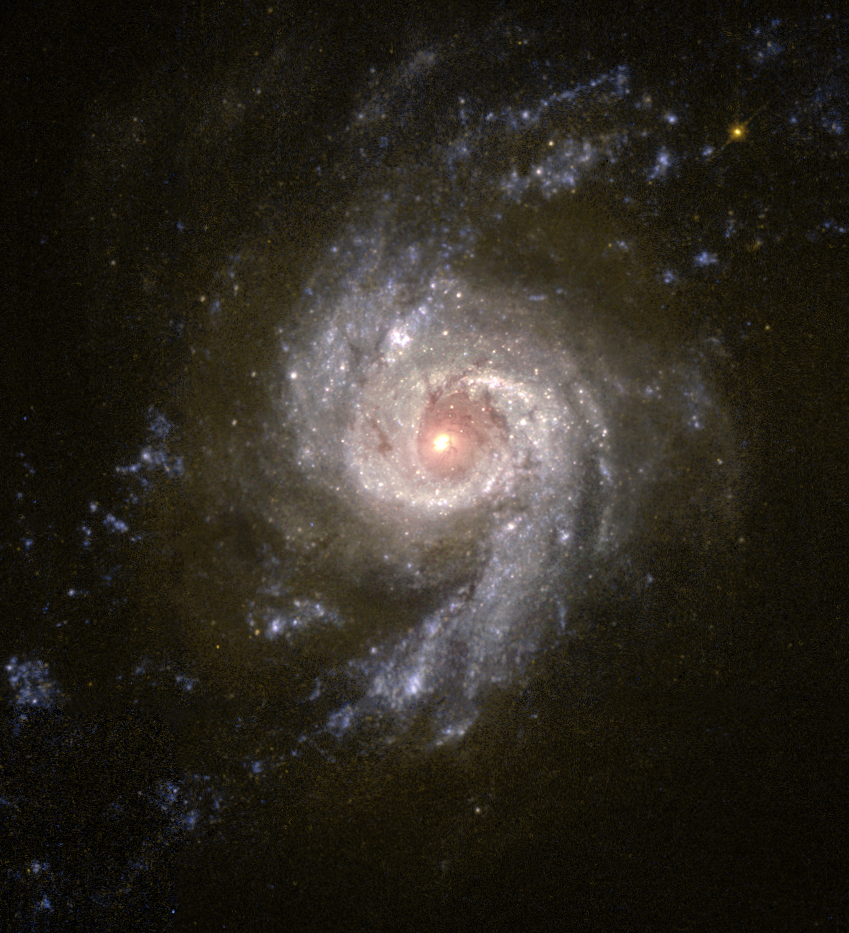
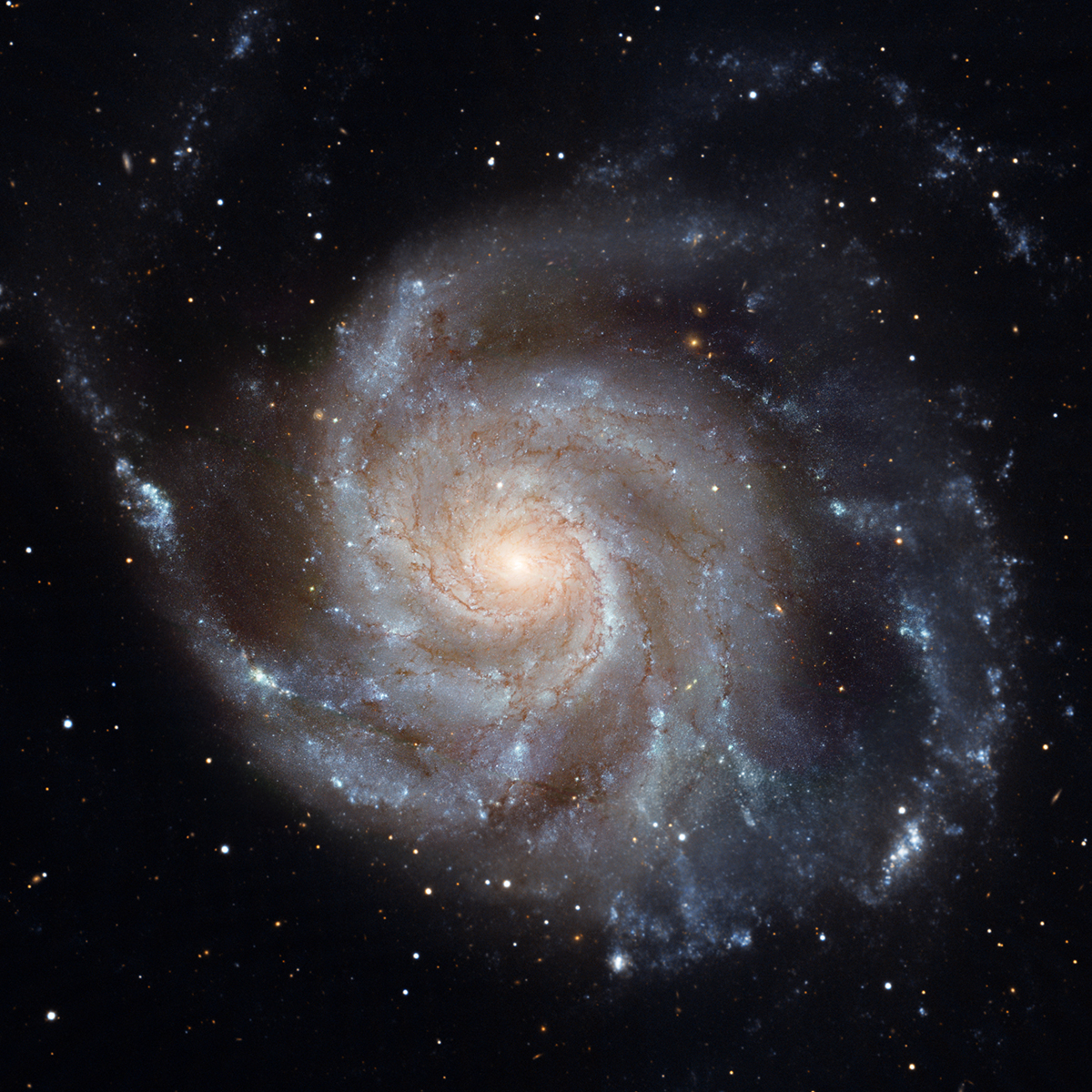
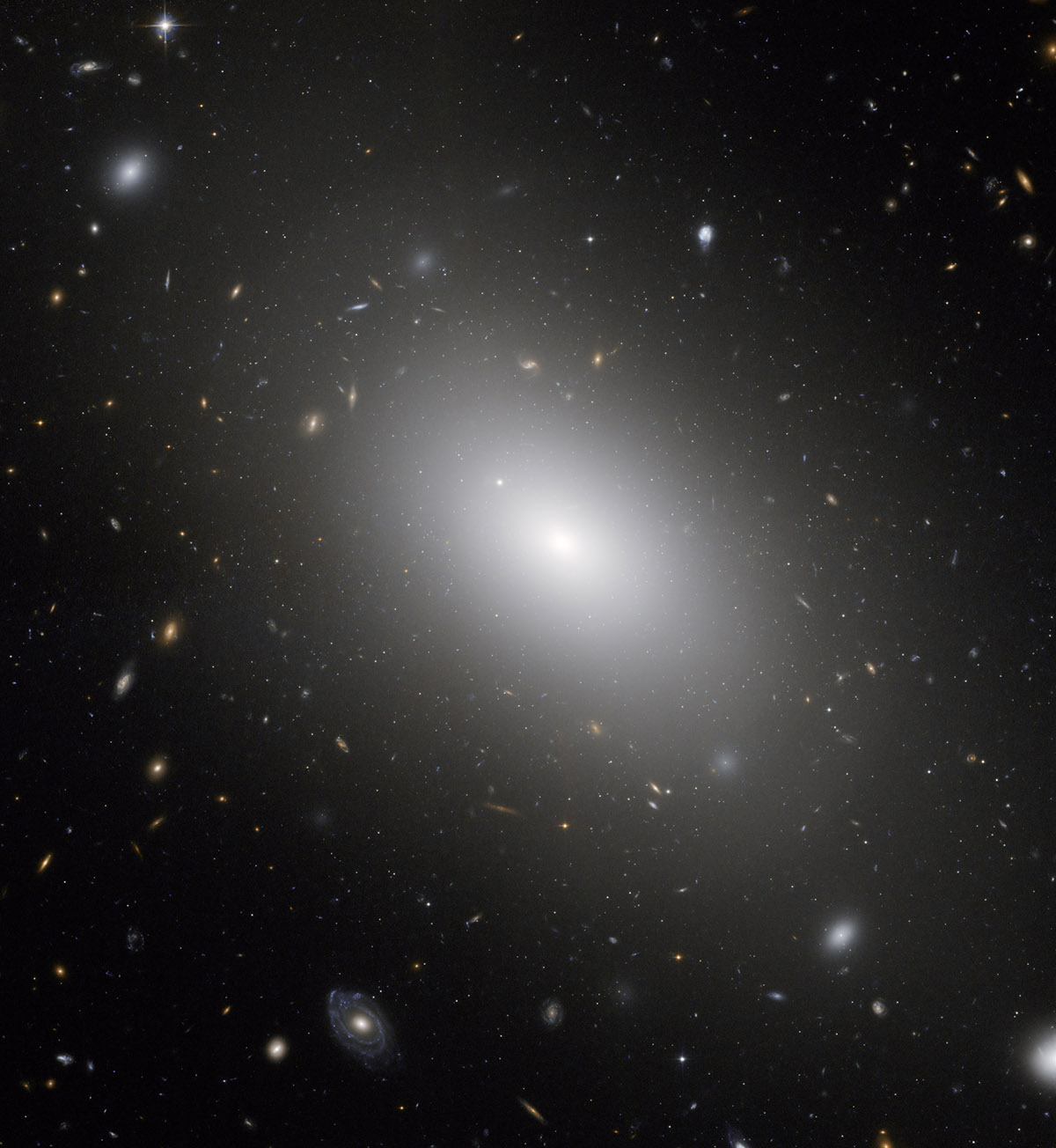
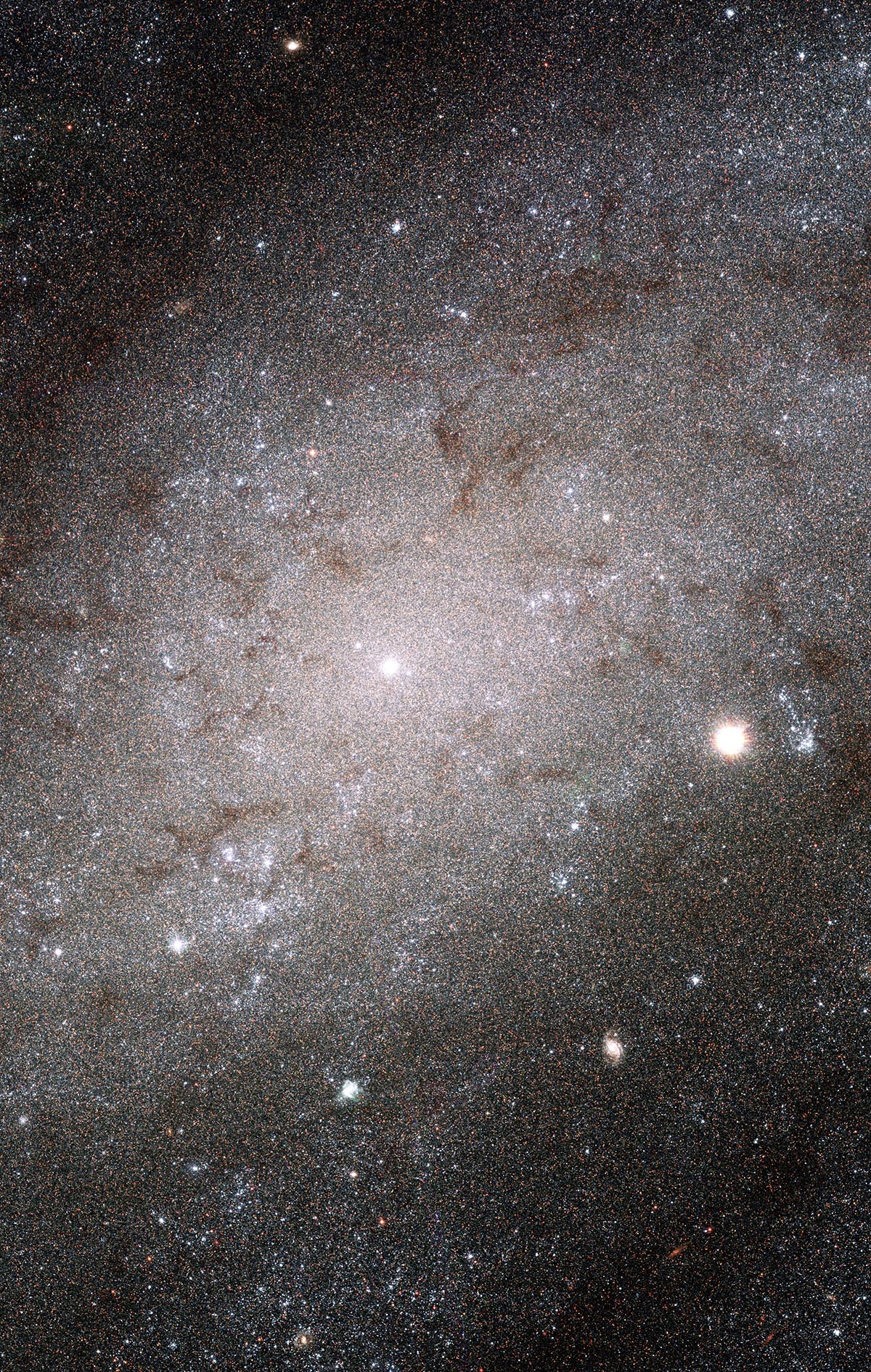
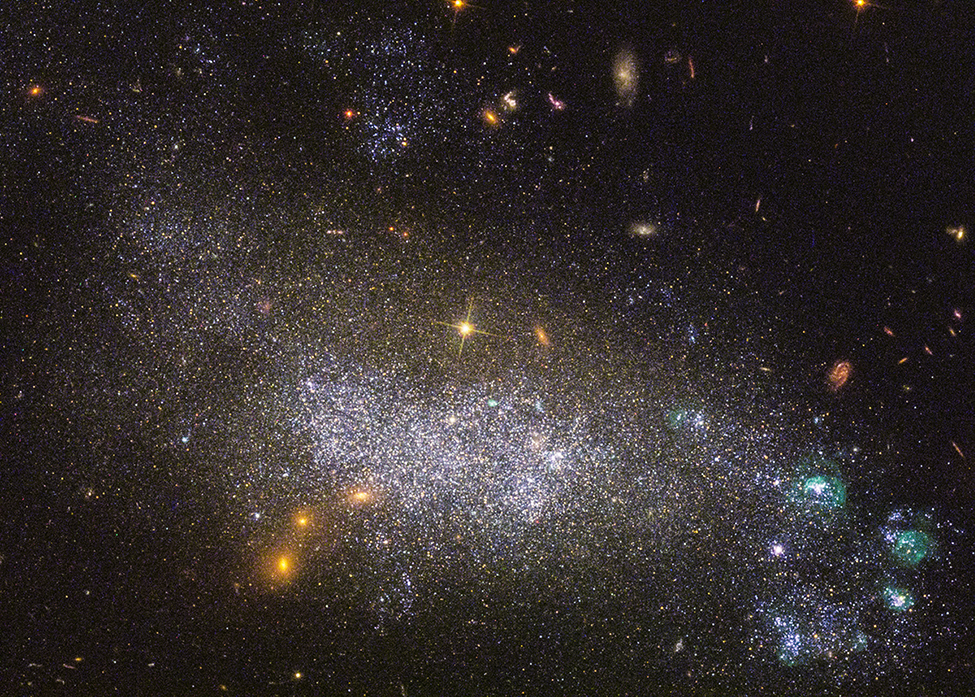
This image captures the dwarf galaxy UGC 5340. A pocket of rapid star birth appears in the lower right corner. This region of star formation was probably triggered by a gravitational interaction with an unseen companion galaxy.
Scientific Significance
UGC 5340 provides a nearby example of bursty star formation in low-mass galaxies. Because dwarf systems are sensitive to feedback, a single starburst can strongly reshape their gas distribution and future star-formation activity. Studying its young stellar populations and disturbed morphology helps test models of interaction-triggered star formation and chemical evolution at low metallicity. These measurements are relevant beyond the local universe because early galaxies were often small and metal-poor, making UGC 5340 a practical analog for common conditions in earlier cosmic epochs.
Observation Details
Hubble imaging of UGC 5340 resolves compact young clusters and blue stellar associations in the active star-forming region. Multi-band photometry distinguishes very young massive stars from older background populations and traces dust and gas structure around the burst. Morphological analysis of the galaxy's outer isophotes and asymmetric light distribution supports a history of dynamical disturbance. The high spatial resolution allows astronomers to connect local star-forming knots to the global gravitational context of the host dwarf galaxy, which is difficult in unresolved surveys.
Location in the Universe
Constellation
Lynx
Distance from Earth
About 39 million light-years
Fun Facts
- 1
UGC 5340 is metal-poor, meaning its gas has relatively few heavy elements compared with galaxies like the Milky Way.
- 2
Its bright star-forming knot likely formed after gravitational disturbance from a nearby companion or past interaction.
- 3
Dwarf galaxies like this are important building blocks in hierarchical models of galaxy formation.
Image credit: NASA, ESA, Hubble Space Telescope