About This Image
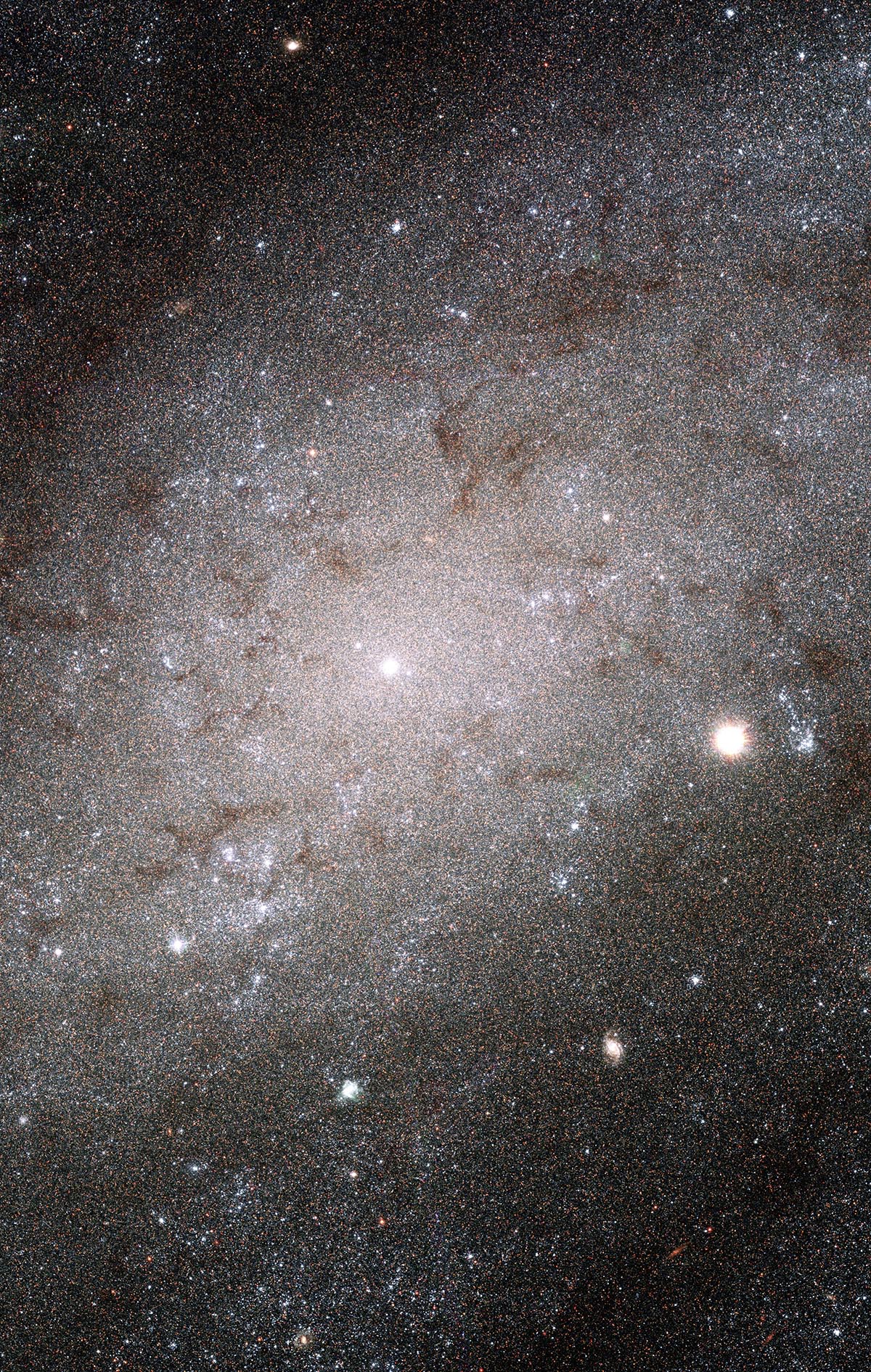
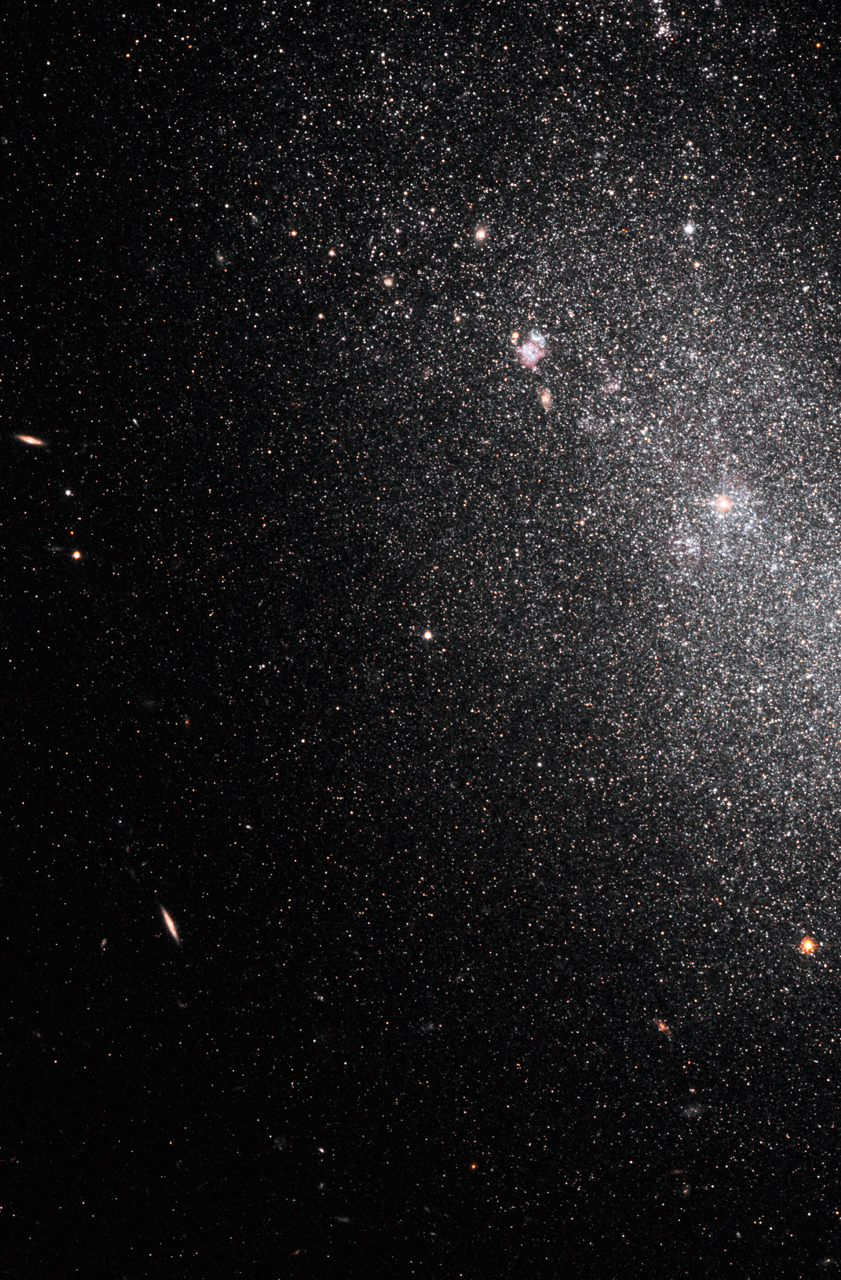
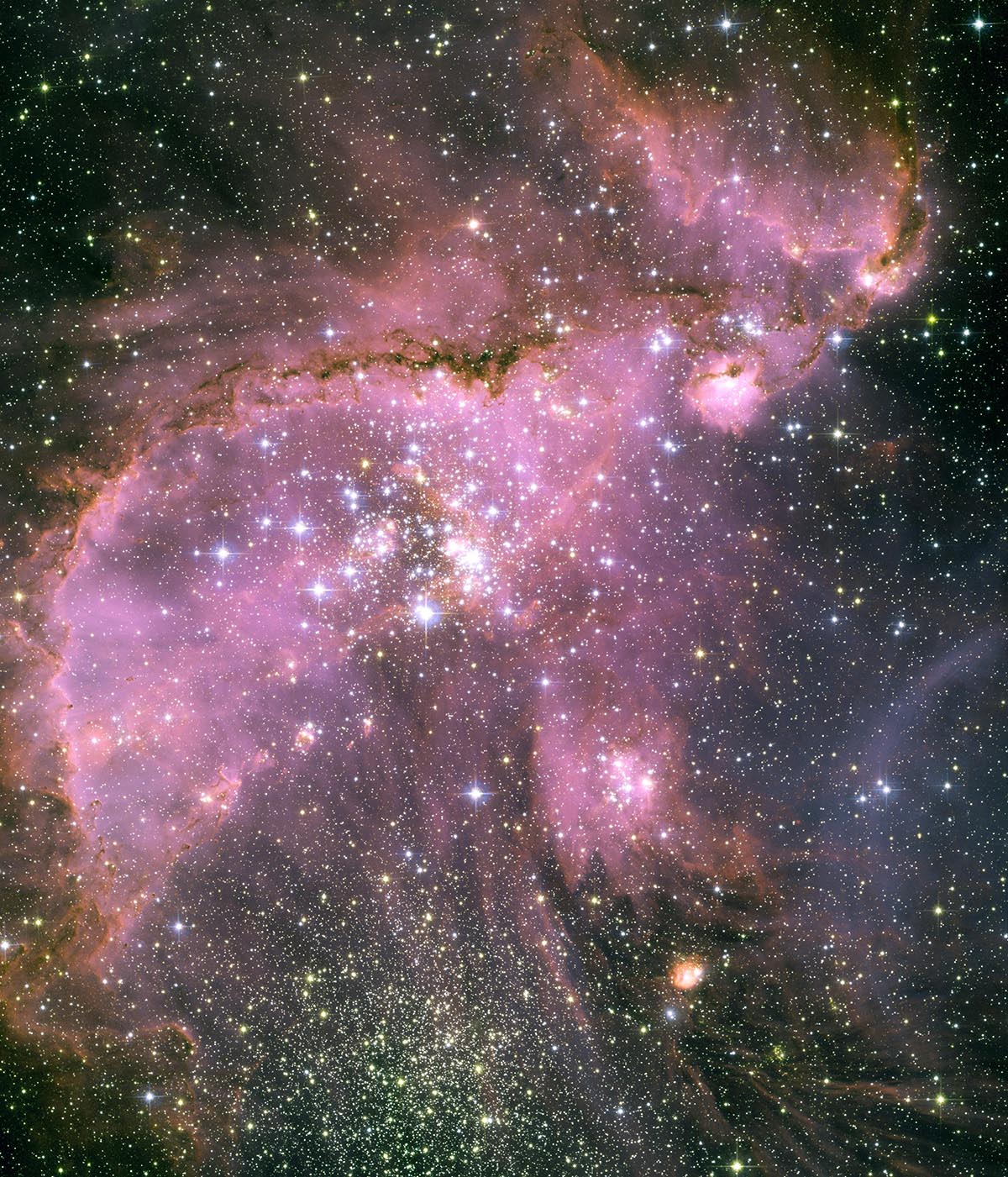
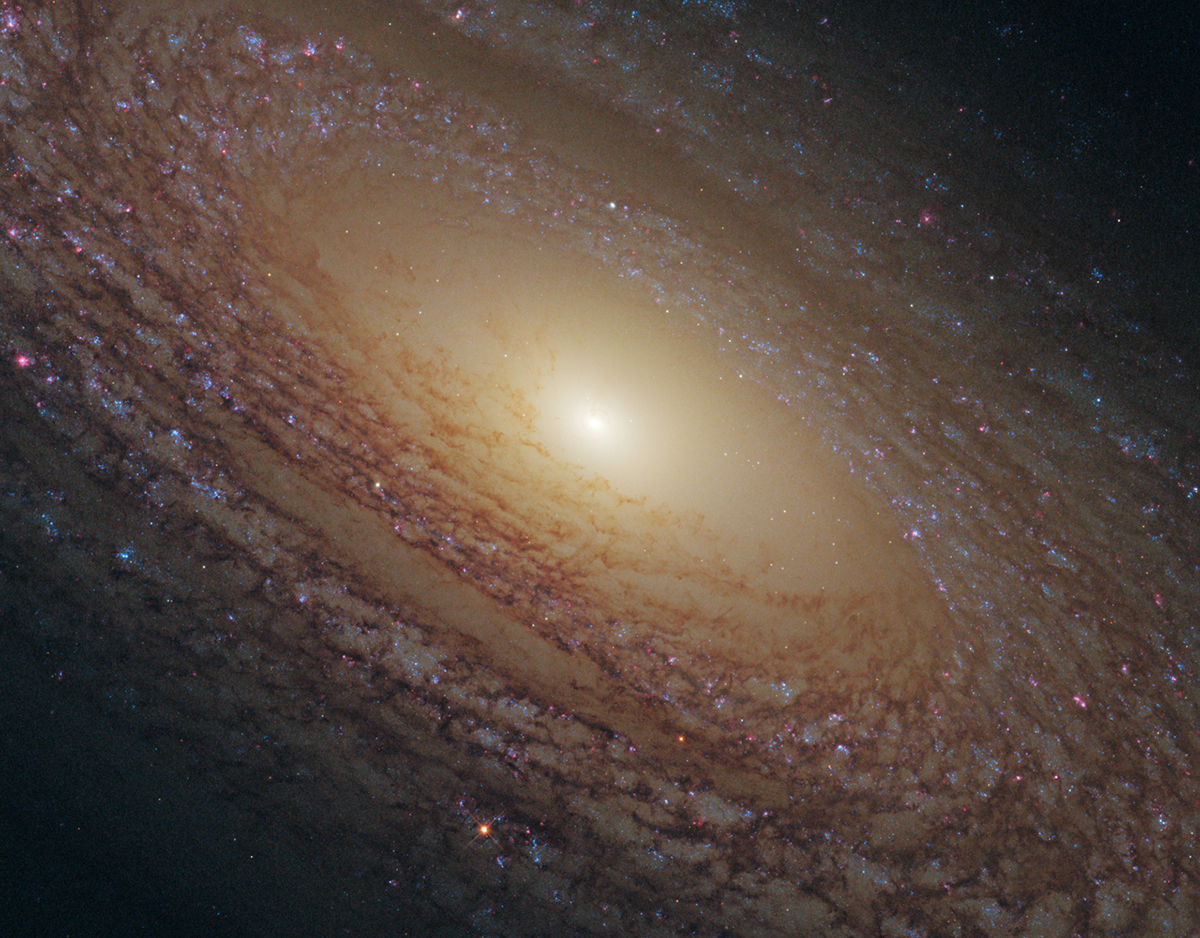
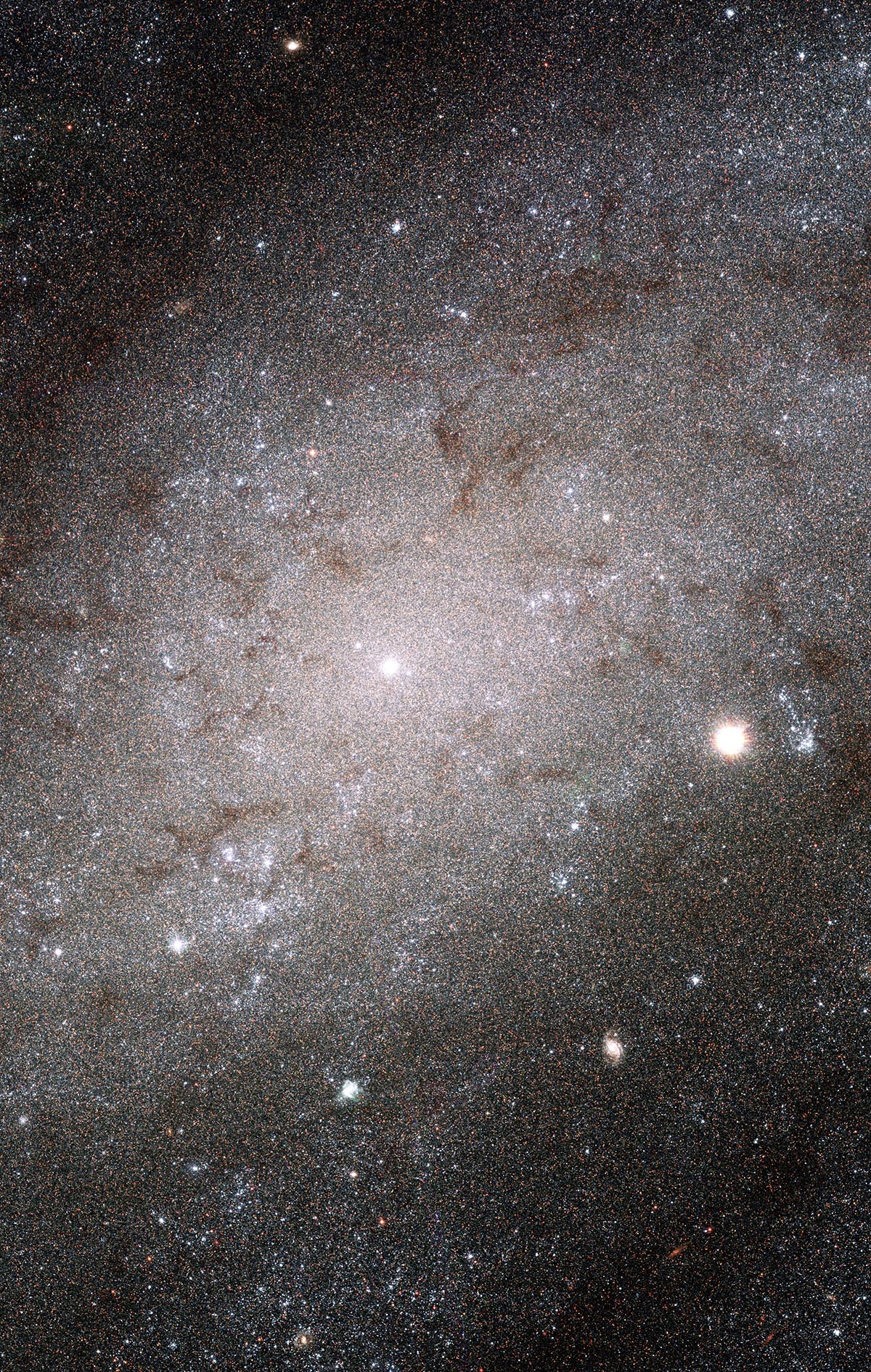
NGC 300 is a spiral galaxy similar to our own Milky Way galaxy. Some of the bright blue specks in this image are young, massive stars called blue supergiants, and they are among the brightest stars seen in spiral galaxies.
Scientific Significance
NGC 300 is a key nearby spiral for stellar-population studies and distance-scale calibration. Because individual stars are resolved, astronomers can measure recent star-formation history and compare stellar evolution tracks in different environments. The galaxy also supports tests of spiral structure, metallicity gradients, and supergiant-based distance methods.
Observation Details
Hubble observed NGC 300 in multiple optical bands to separate young blue populations, evolved red stars, and ionized nebulae. Resolved-star photometry enables detailed color-magnitude analysis across the disk. These maps are often paired with ground-based spectroscopy to study gradients and star-forming regions.
Location in the Universe
Constellation
Sculptor
Distance from Earth
Approximately 6 million light-years
Fun Facts
- 1
NGC 300 is a nearby face-on spiral in the Sculptor Group and is often compared with M33.
- 2
Its bright blue supergiants are among the most luminous stars visible in external spirals.
- 3
The galaxy's proximity allows Hubble to resolve individual stars over large areas of its disk.
Image credit: NASA, ESA, Hubble Space Telescope