About This Image
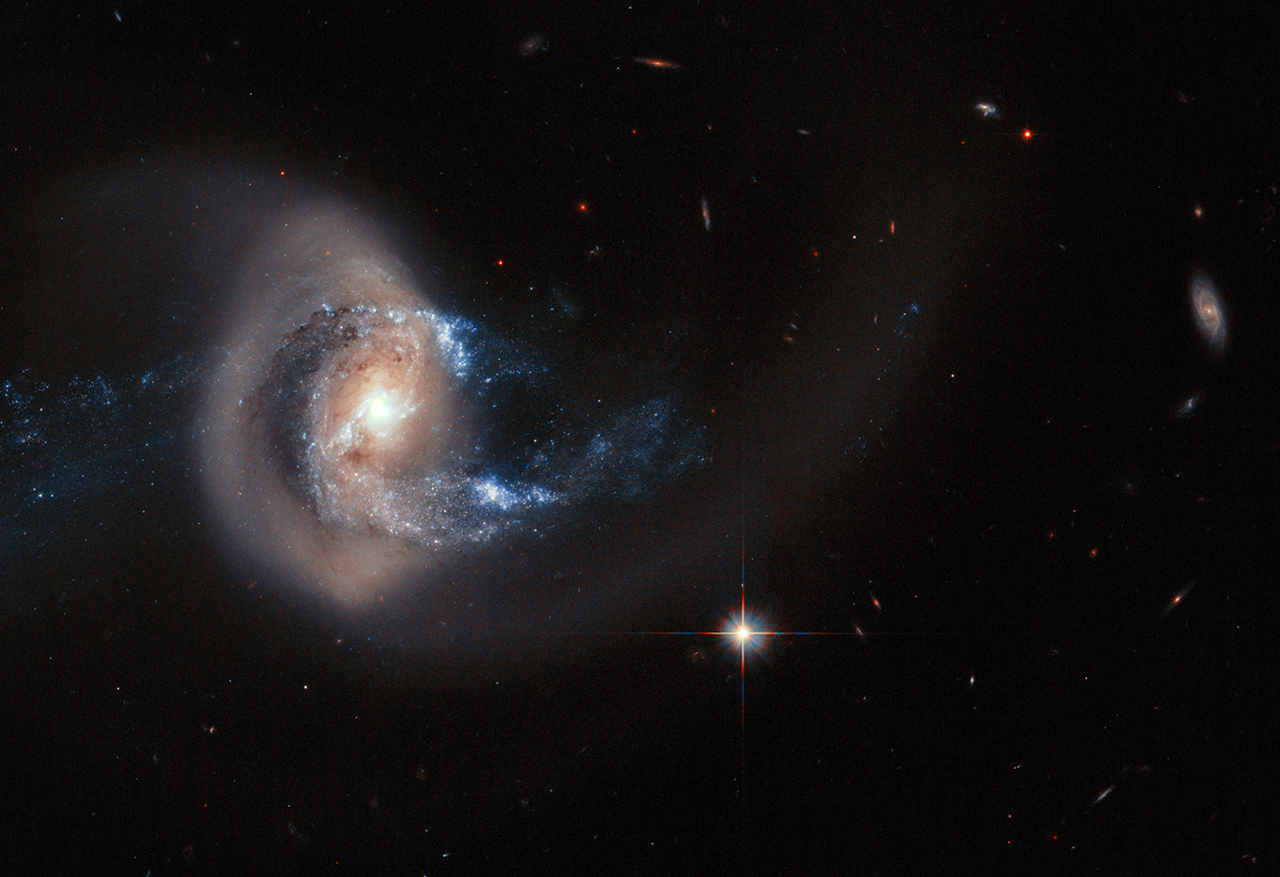
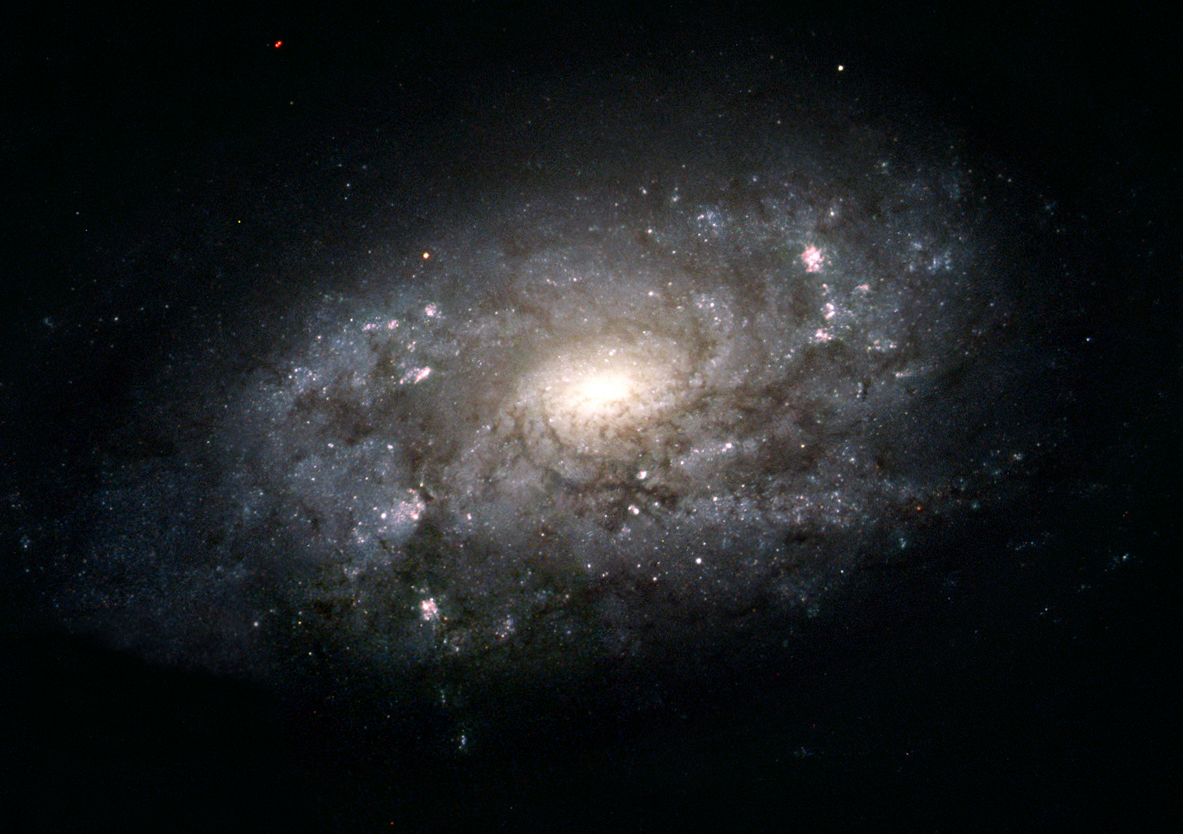
Like our Milky Way, the galaxy NGC 3949 has a disk full of young, blue stars peppered with pink star-birth regions. In contrast to the blue disk, the galaxy's bright center is made up of mostly older stars and appears more yellow. This spiral galaxy provides astronomers with a valuable external perspective on what our own Milky Way might look like when viewed from millions of light-years away. The distinct color gradient from the yellowish core to the bluish disk tells the story of stellar evolution across different regions of the galaxy.
Scientific Significance
NGC 3949 serves as an invaluable cosmic mirror for understanding our own Milky Way galaxy. Because we are embedded within the Milky Way, we cannot observe it from an external vantage point, making galaxies like NGC 3949 essential for comparative studies. The clear separation between the older, redder stellar population in the central bulge and the younger, bluer stars in the spiral arms demonstrates the different star formation histories across galactic regions. The central bulge formed early in the galaxy's history and has since evolved into predominantly older stars, while the disk continues to form new stars from gas and dust. By studying NGC 3949's structure, rotation curve, and stellar populations, astronomers can refine models of how spiral galaxies like ours formed and evolved over billions of years.
Observation Details
This image was captured using Hubble's Wide Field Planetary Camera 2 (WFPC2) in multiple optical filters. The observations combined blue, green, and red filters to create a natural-color composite that reveals the galaxy's stellar populations. The sharp resolution of Hubble allowed astronomers to distinguish individual star-forming regions and resolve fine structural details in the spiral arms. The observation was part of a survey to study the properties of nearby spiral galaxies that resemble the Milky Way.
Location in the Universe
Constellation
Ursa Major
Distance from Earth
50 million light-years
Fun Facts
- 1
NGC 3949 is considered a 'Milky Way analog' because it shares remarkably similar properties with our home galaxy, including its size, mass, and structure.
- 2
The pink regions scattered throughout the disk are giant clouds of hydrogen gas being ionized by newborn stars, each potentially containing thousands of young stellar systems.
- 3
If you could travel at the speed of light, it would still take you 50 million years to reach NGC 3949 from Earth.
Image credit: NASA, ESA, Hubble Space Telescope