About This Image
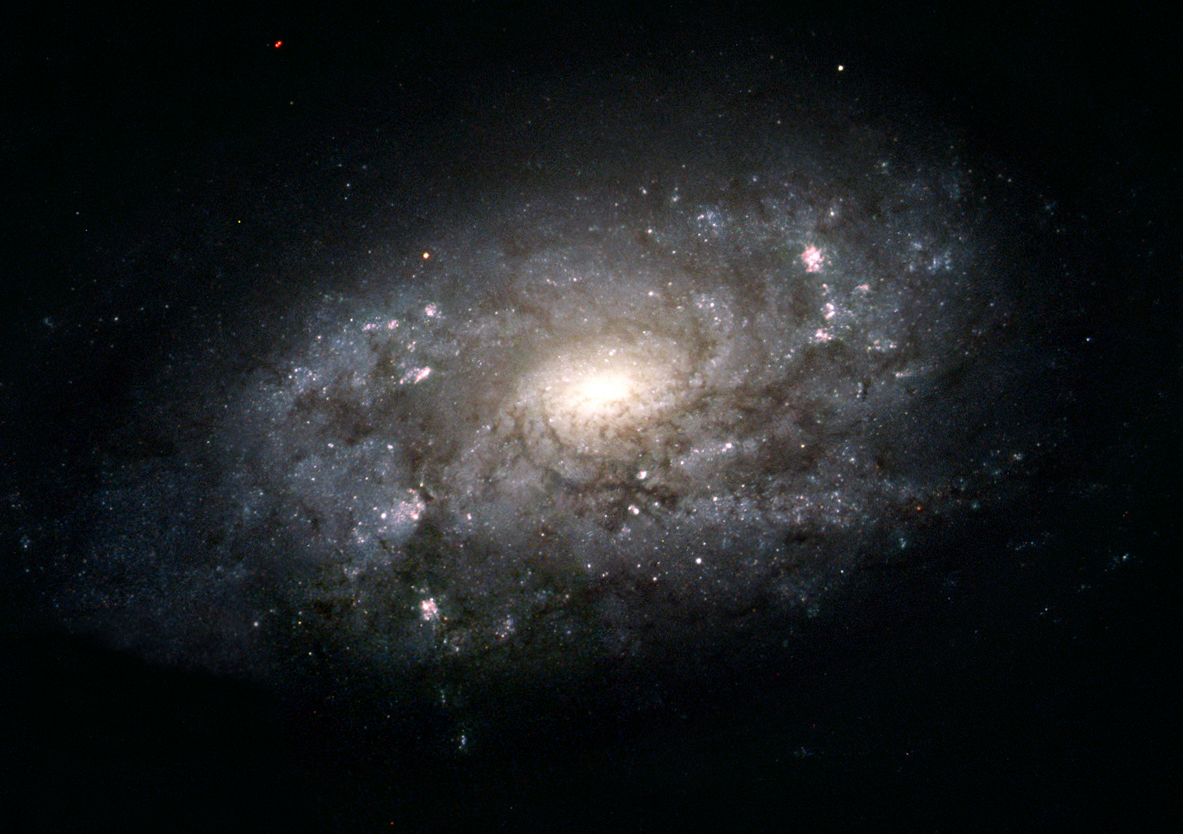
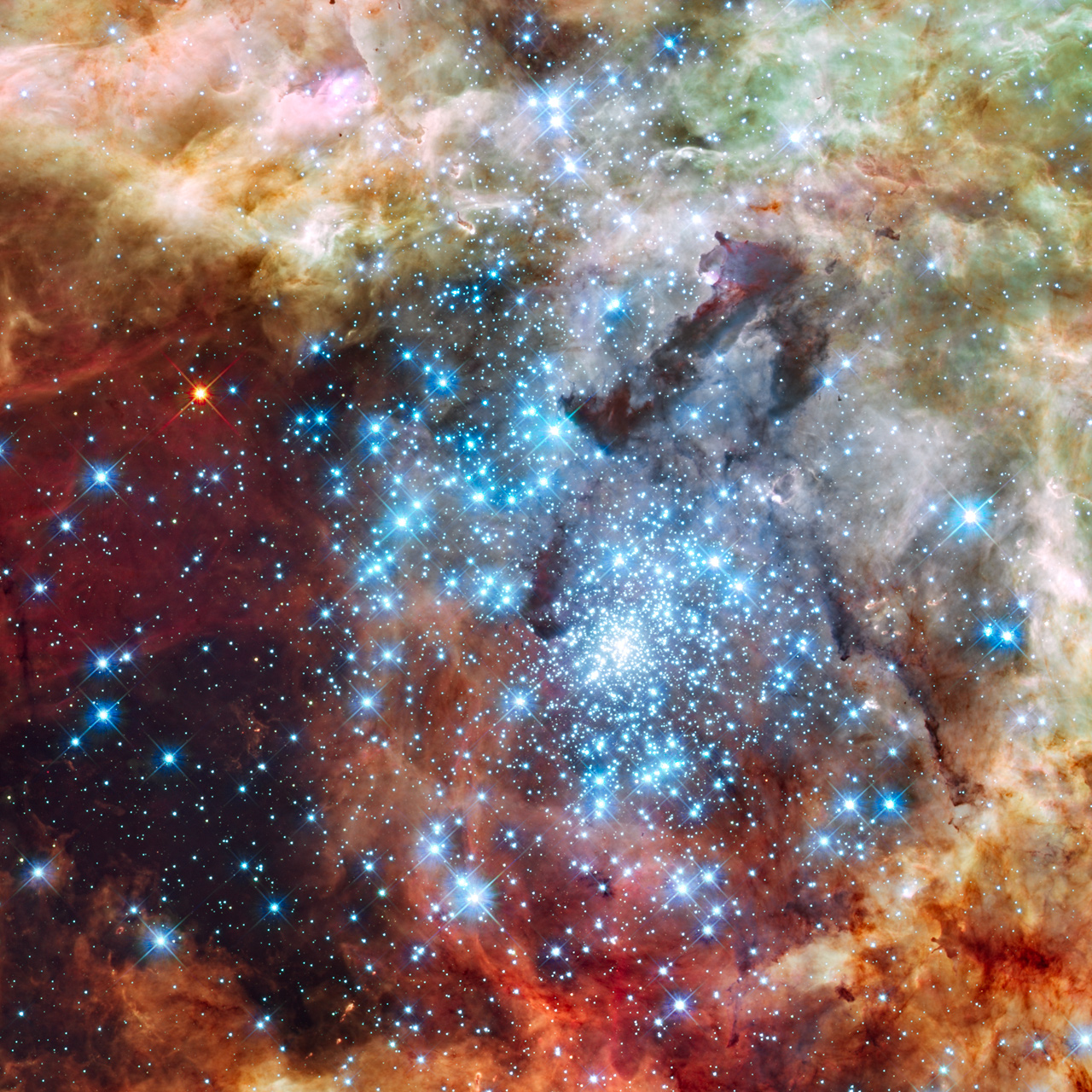
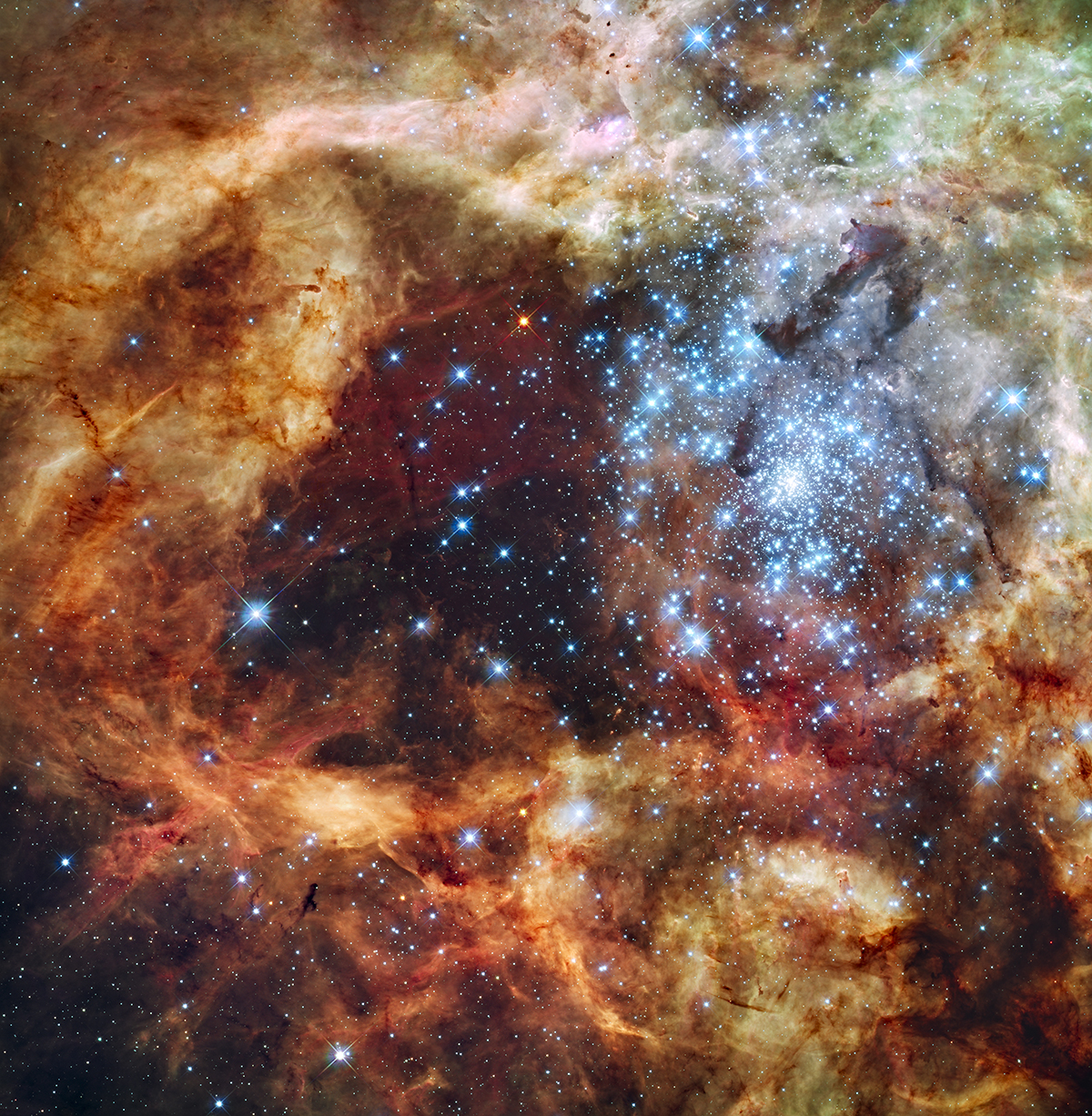
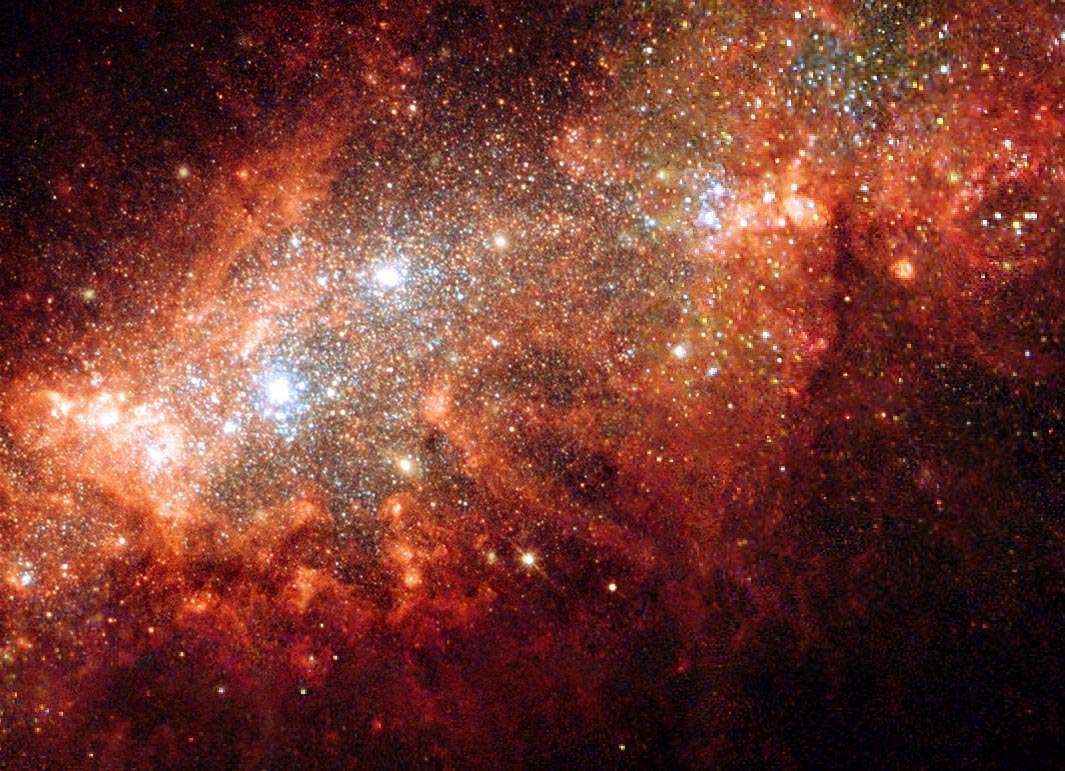
The nearby dwarf galaxy NGC 1569 is a hotbed of vigorous star birth and is one of the closest "starburst" galaxies to us. The galaxy's "star factories" are manufacturing brilliant blue star clusters. These clusters, known as super star clusters, contain some of the most massive and luminous young stars found anywhere in the universe. The intense star formation activity in NGC 1569 has been ongoing for at least 100 million years, transforming this small galaxy into a cosmic fireworks display.
Scientific Significance
NGC 1569 is one of the most important nearby laboratories for studying starburst galaxies—systems undergoing episodes of star formation far more intense than normal. The galaxy's proximity allows Hubble to resolve individual stars and star clusters, providing detailed information about the stellar populations produced during starbursts. The two prominent super star clusters in NGC 1569 have been studied extensively to understand how such massive clusters form and whether they might evolve into globular clusters like those orbiting our own galaxy. The starburst activity has also created powerful galactic winds that are expelling gas enriched with heavy elements into the intergalactic medium. This feedback process is thought to be important for regulating star formation in dwarf galaxies and enriching the universe with metals. NGC 1569 demonstrates that even small galaxies can experience dramatic episodes of star formation that fundamentally alter their structure and chemical composition.
Observation Details
This image was obtained using Hubble's Wide Field Planetary Camera 2 (WFPC2) in multiple optical filters designed to highlight both stellar continuum emission and nebular line emission. The observations reveal the distribution of young blue stars throughout the galaxy, the complex structure of the ionized gas, and the locations of the two prominent super star clusters. The red filaments visible in the image trace gas that has been shock-heated by the combined effects of stellar winds and supernova explosions, creating the galactic-scale outflows characteristic of starburst galaxies.
Location in the Universe
Constellation
Camelopardalis
Distance from Earth
11 million light-years
Fun Facts
- 1
NGC 1569 is forming stars at a rate about 100 times higher per unit mass than the Milky Way, despite being only about 1% of our galaxy's mass.
- 2
The two most prominent super star clusters in NGC 1569 contain the equivalent of millions of suns worth of stars crammed into regions only a few dozen light-years across.
- 3
The intense star formation has blown giant bubbles of hot gas out of the galaxy, visible as red filaments streaming away from the disk.
Image credit: NASA, ESA, Hubble Space Telescope