About This Image
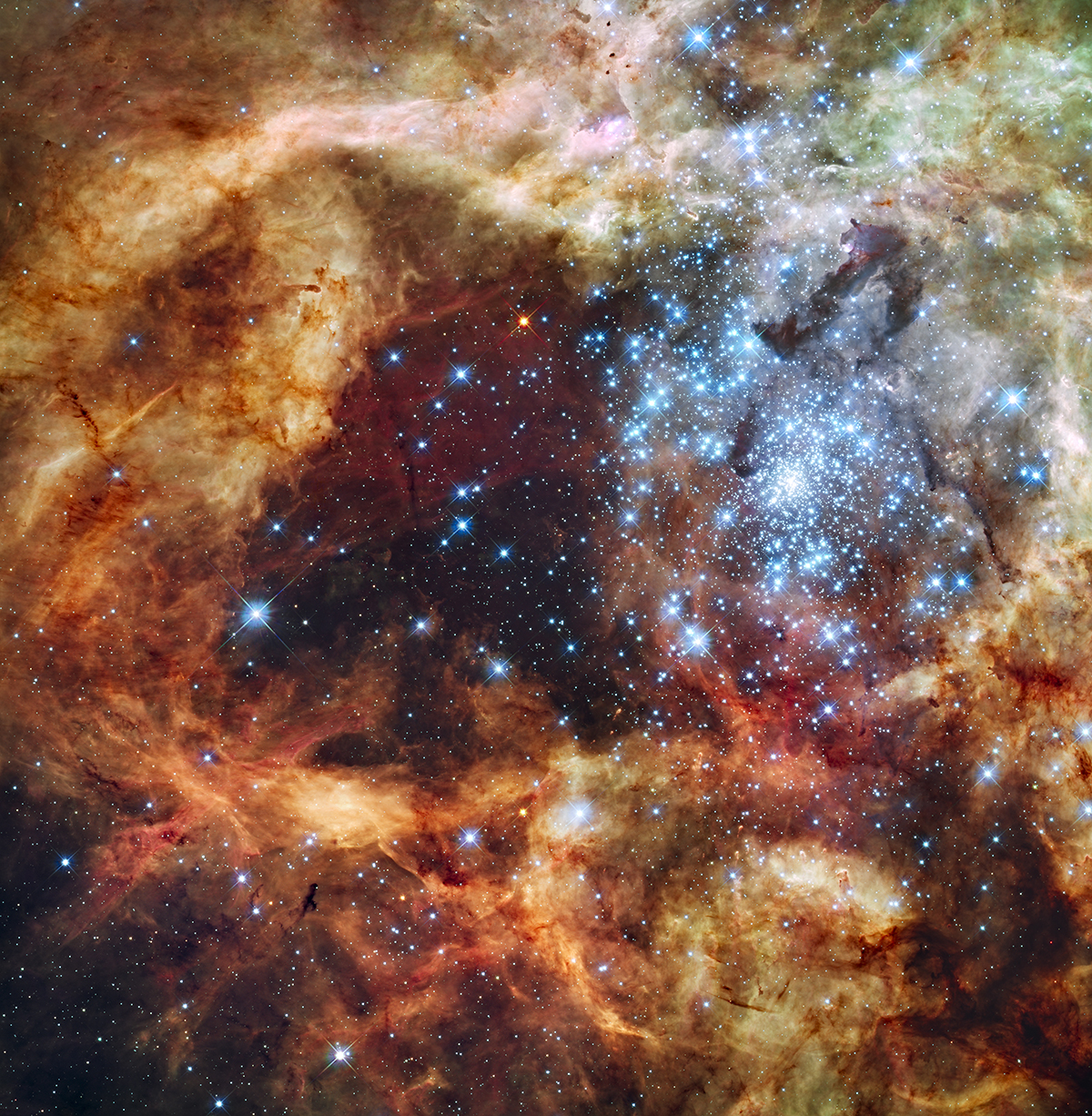
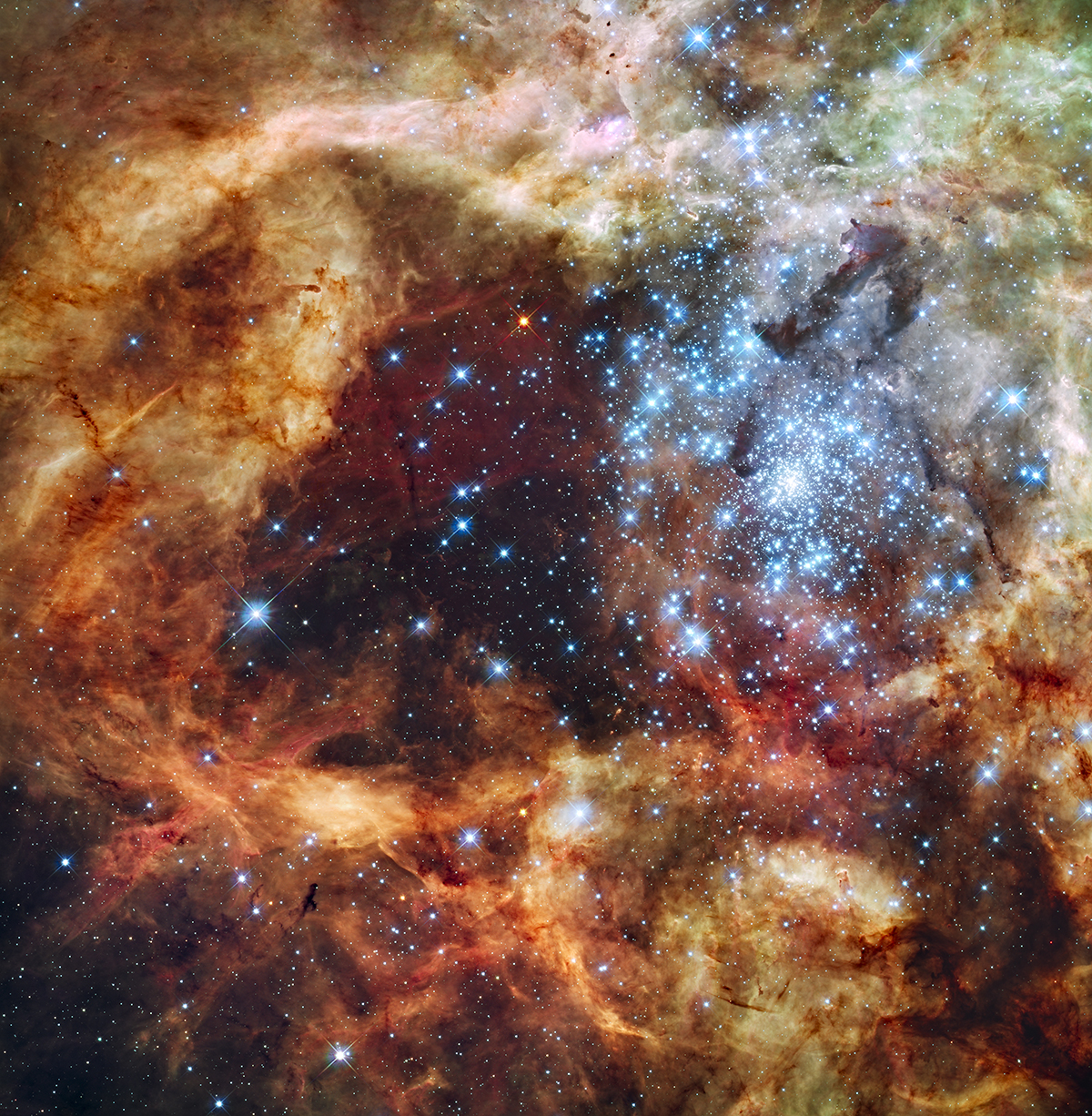
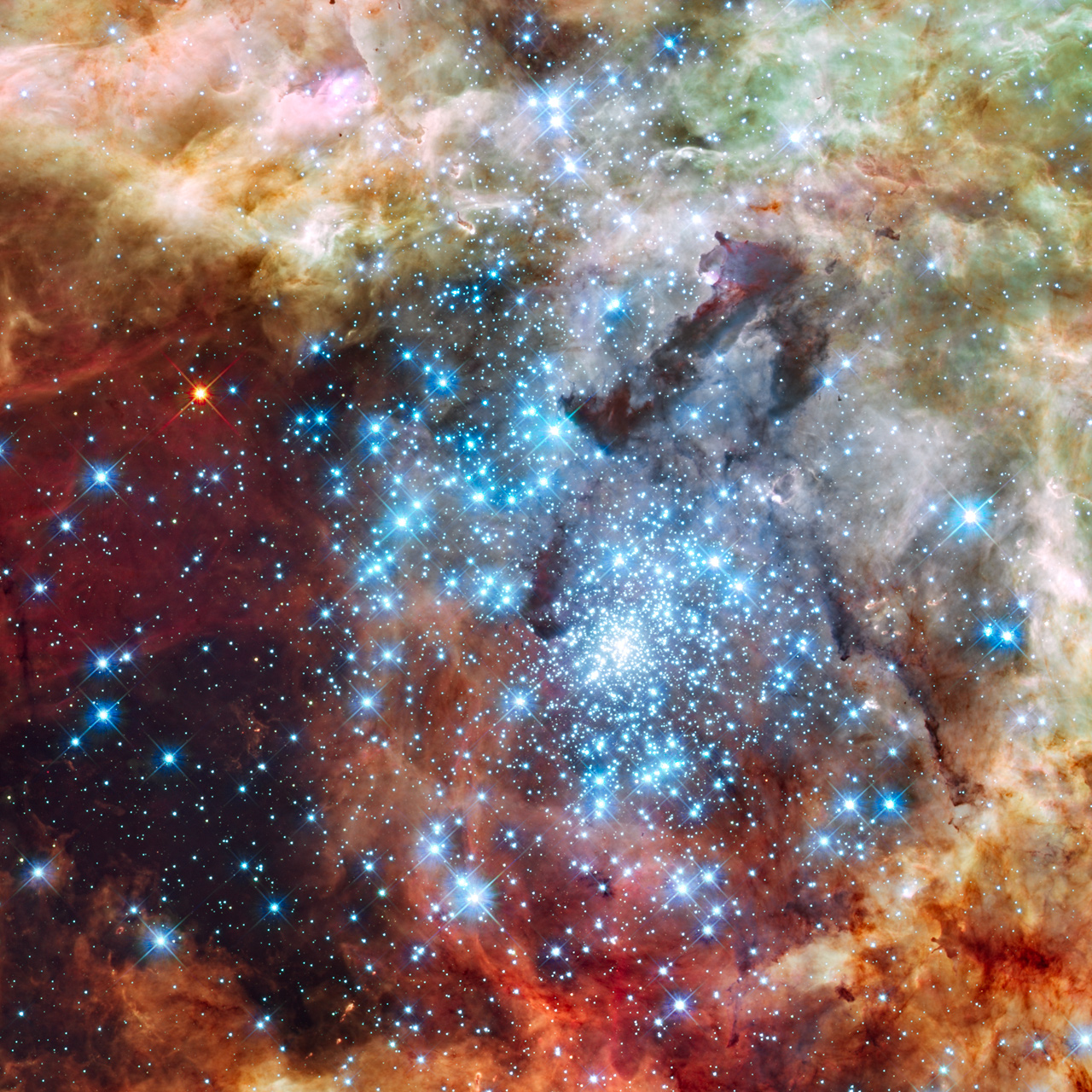
The Tarantula Nebula is an enormous star-forming region located 170,000 light-years from Earth. The collection of stars in the core of the nebula, shown here, is made up of two individual star clusters that differ in age by about a million years. This age difference, small by cosmic standards, provides a unique opportunity to study how star cluster properties evolve over time in identical environmental conditions.
Scientific Significance
The identification of two distinct star clusters with a measurable age difference within the Tarantula Nebula core has important implications for understanding cluster formation. The presence of clusters with different ages in close proximity suggests that star formation in this region has occurred in multiple episodes rather than a single burst. This challenges simple models of triggered star formation and indicates that the star formation process in giant molecular clouds is more complex and extended than previously thought. By comparing the properties of the older and younger clusters—including their mass distributions, stellar content, and structural parameters—astronomers can directly trace how star clusters evolve over their first few million years. These observations also provide constraints on the timescales for cluster infant mortality, the process by which many young clusters dissolve before reaching maturity.
Observation Details
This image was obtained with Hubble's Wide Field Camera 3 (WFC3) as part of the comprehensive imaging survey of the 30 Doradus region. The observations combine multiple filters spanning optical and near-infrared wavelengths to characterize the stellar populations of both clusters. The sharp resolution of Hubble is essential for separating individual stars in these densely packed clusters and measuring their colors and brightnesses. Proper motion measurements from multi-epoch Hubble observations are being used to determine cluster membership and distinguish cluster stars from field stars that happen to lie along the same line of sight.
Location in the Universe
Constellation
Dorado
Distance from Earth
160,000 light-years
Fun Facts
- 1
The Tarantula Nebula contains several hundred thousand young stars, making it the most prolific stellar nursery in the entire Local Group of galaxies.
- 2
The two clusters visible here will likely merge over the next few million years, combining to form an even larger stellar grouping.
- 3
Massive stars in these clusters will explode as supernovae over the next few million years, triggering new waves of star formation.
Image credit: NASA, ESA, Hubble Space Telescope