About This Image
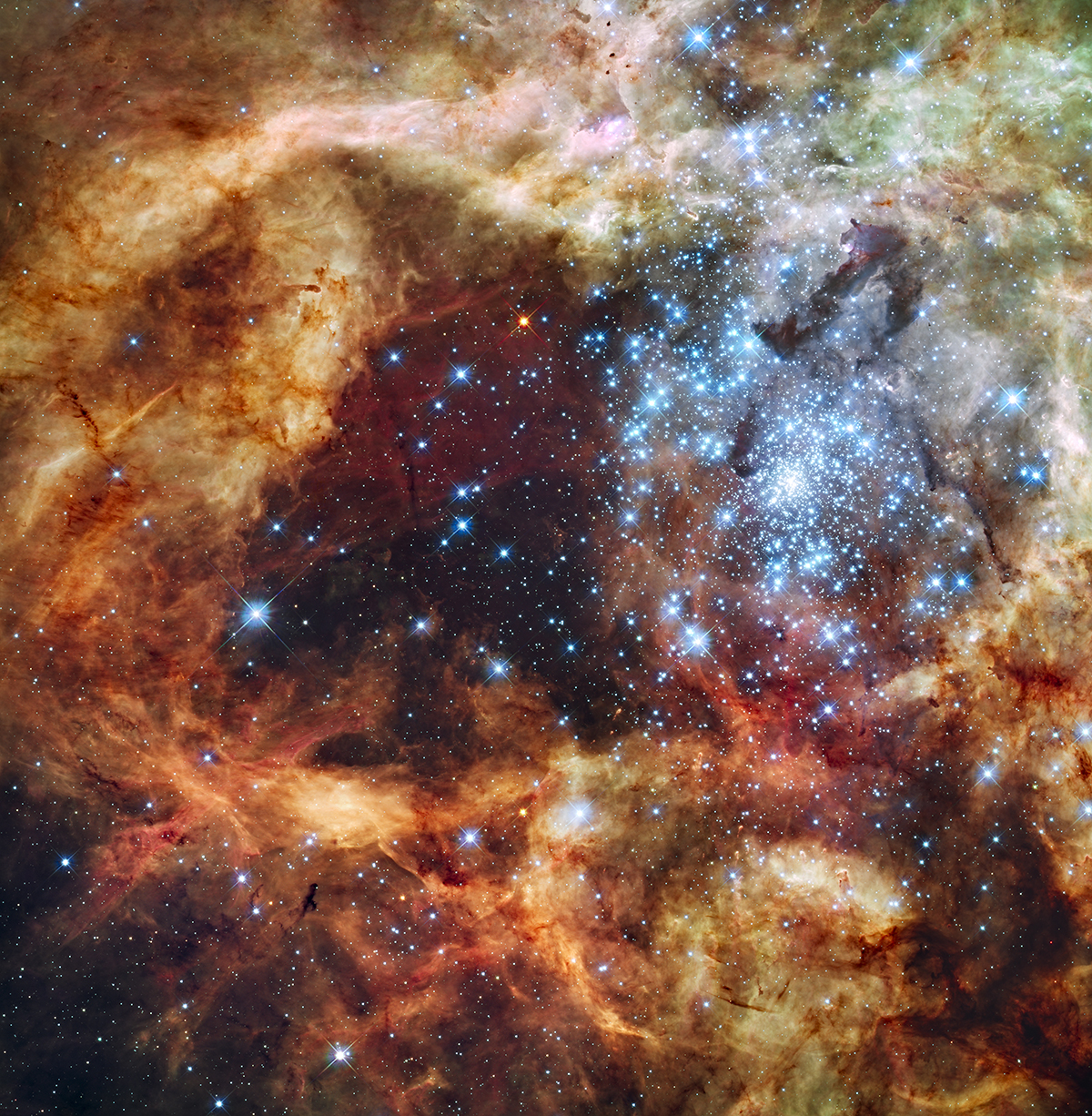
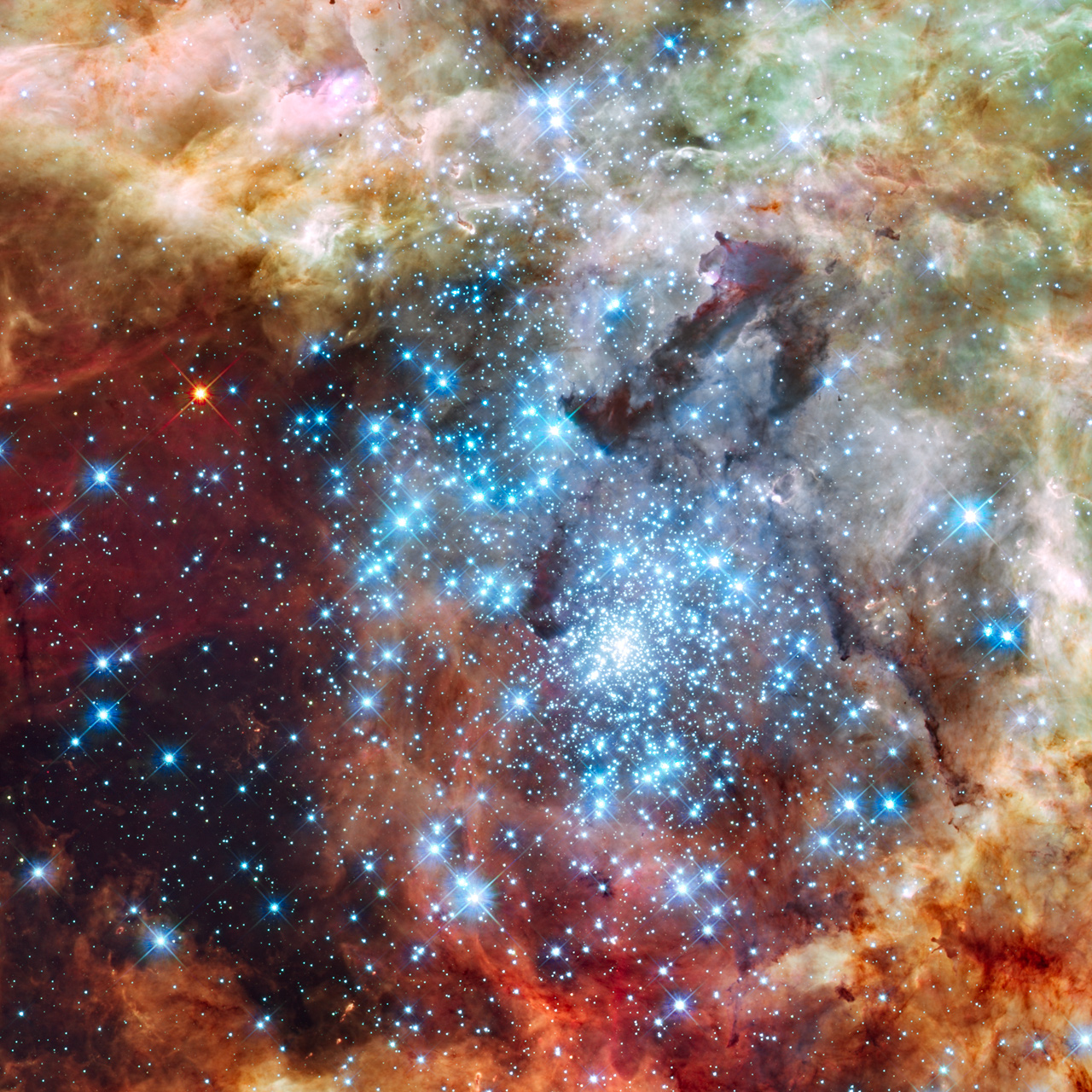
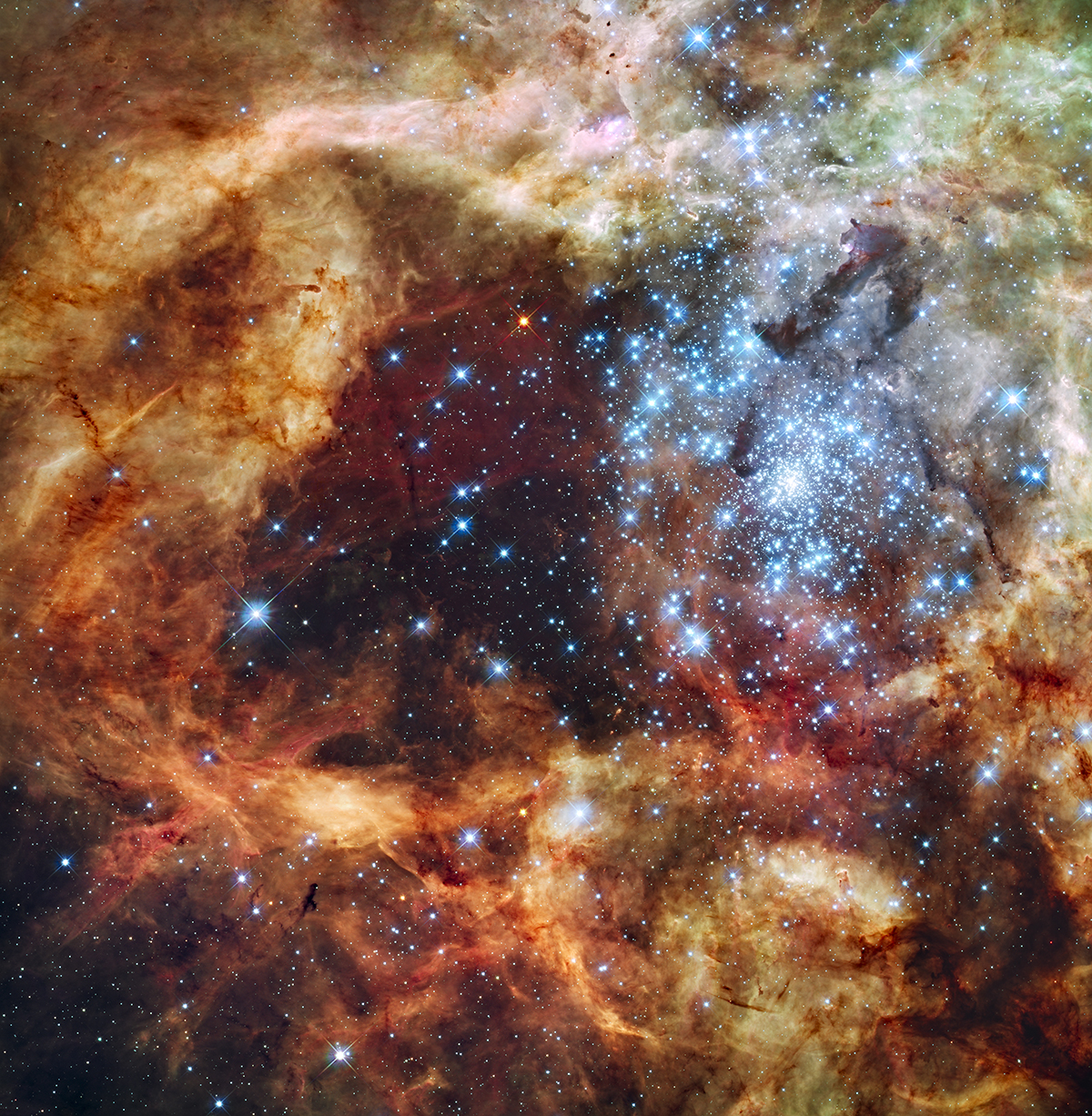
This massive, young stellar grouping, called R136, is only a few million years old and resides in the 30 Doradus Nebula, a turbulent star-birth region in the Large Magellanic Cloud, a satellite galaxy of our Milky Way. Also known as the Tarantula Nebula, this is the most vigorous star-forming region in the Local Group of galaxies. R136 contains hundreds of massive stars, including some of the most luminous and massive stars known anywhere in the universe.
Scientific Significance
The 30 Doradus Nebula and its central cluster R136 represent an extreme environment of star formation that has no equal in our own galaxy. The study of this region provides crucial insights into the physics of massive star formation and the upper limits of stellar mass. The cluster contains numerous O-type and Wolf-Rayet stars—the most massive and luminous types of stars—whose intense radiation and stellar winds are reshaping the surrounding nebula. The combined energy output from these massive stars creates a giant bubble of hot gas and drives powerful outflows that can be traced for hundreds of light-years. Understanding star formation in such extreme environments is important because similar conditions were likely more common in the early universe when galaxies were forming more actively. The 30 Doradus region serves as a nearby analog for the star-forming complexes that built the stellar mass of galaxies during the peak of cosmic star formation.
Observation Details
This image was taken with Hubble's Wide Field Camera 3 (WFC3) after its installation during Servicing Mission 4 in 2009. The observations combine optical and near-infrared filters to penetrate the dusty regions of the nebula and reveal embedded young stars. The exceptional resolution of Hubble is essential for resolving the crowded core of R136, where stars are packed so closely that they cannot be separated in ground-based images. The image reveals the complex interplay of stellar radiation, winds, and the surrounding molecular cloud.
Location in the Universe
Constellation
Dorado
Distance from Earth
160,000 light-years
Fun Facts
- 1
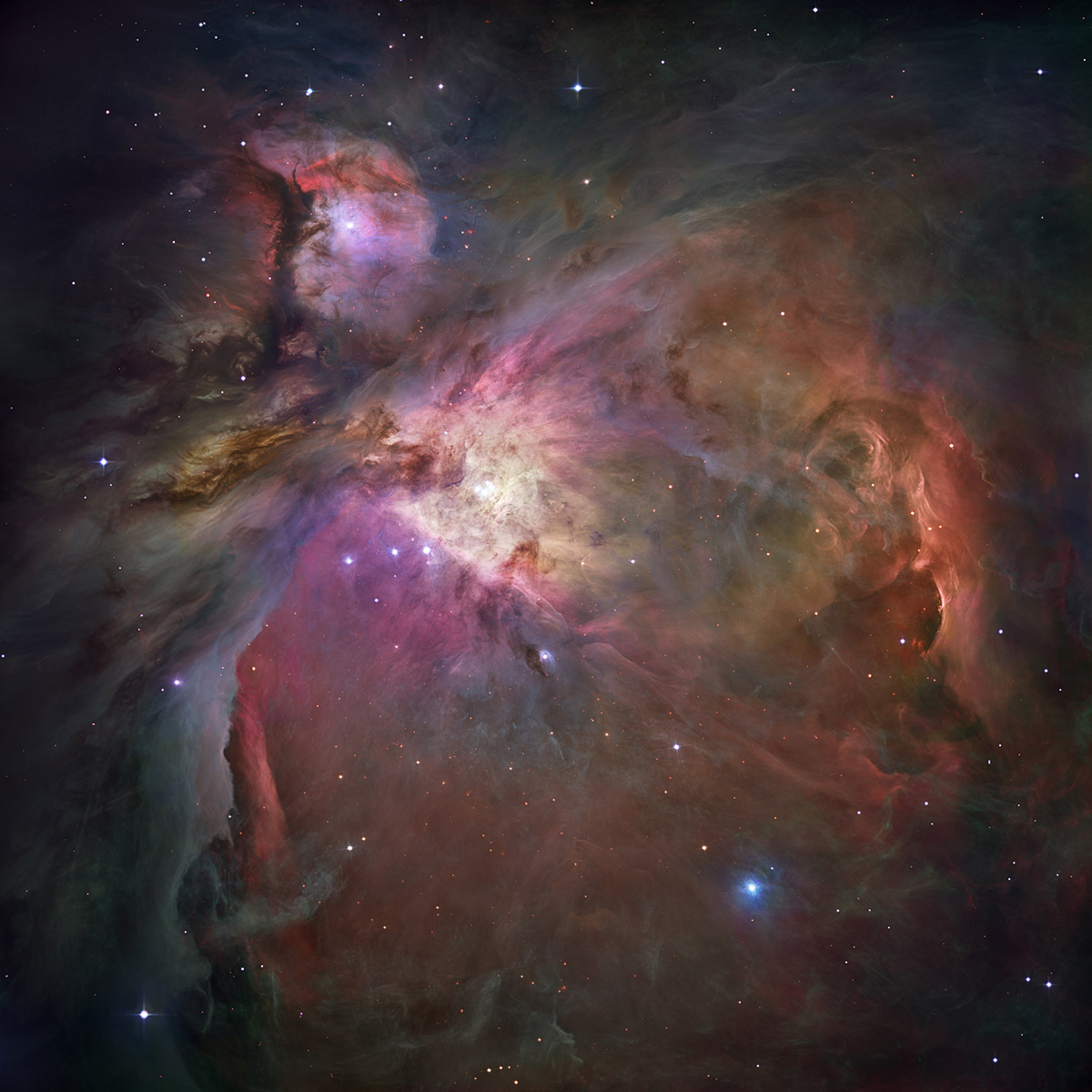
If the Tarantula Nebula were at the same distance as the Orion Nebula, it would span 60 degrees in the sky and cast shadows on Earth.
- 2
R136a1, one of the stars in this cluster, is the most massive star currently known, with a mass of about 250 times that of our Sun.
- 3
The Tarantula Nebula produces new stars at a rate 100 times higher than any star-forming region in the Milky Way.
Image credit: NASA, ESA, Hubble Space Telescope