About This Image
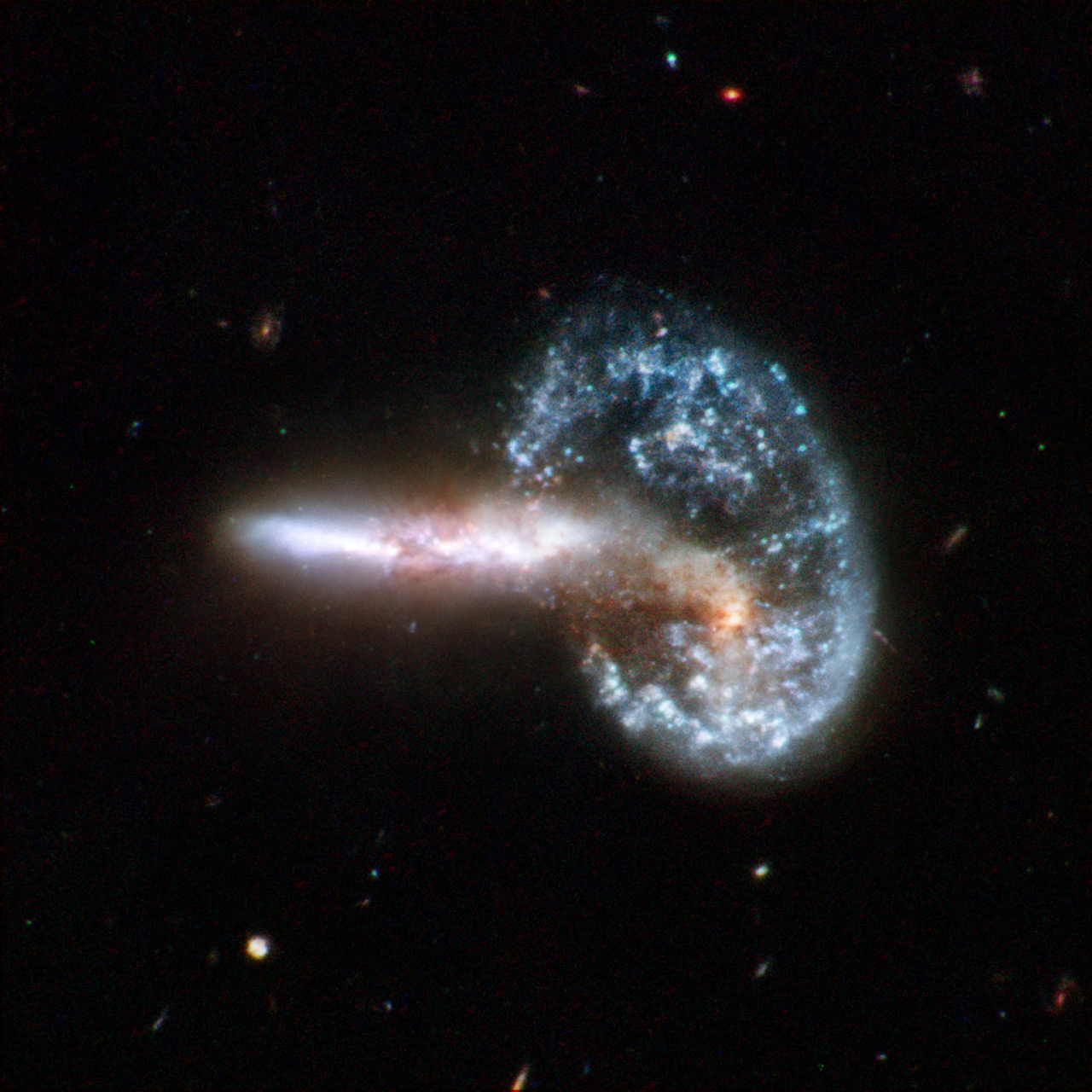
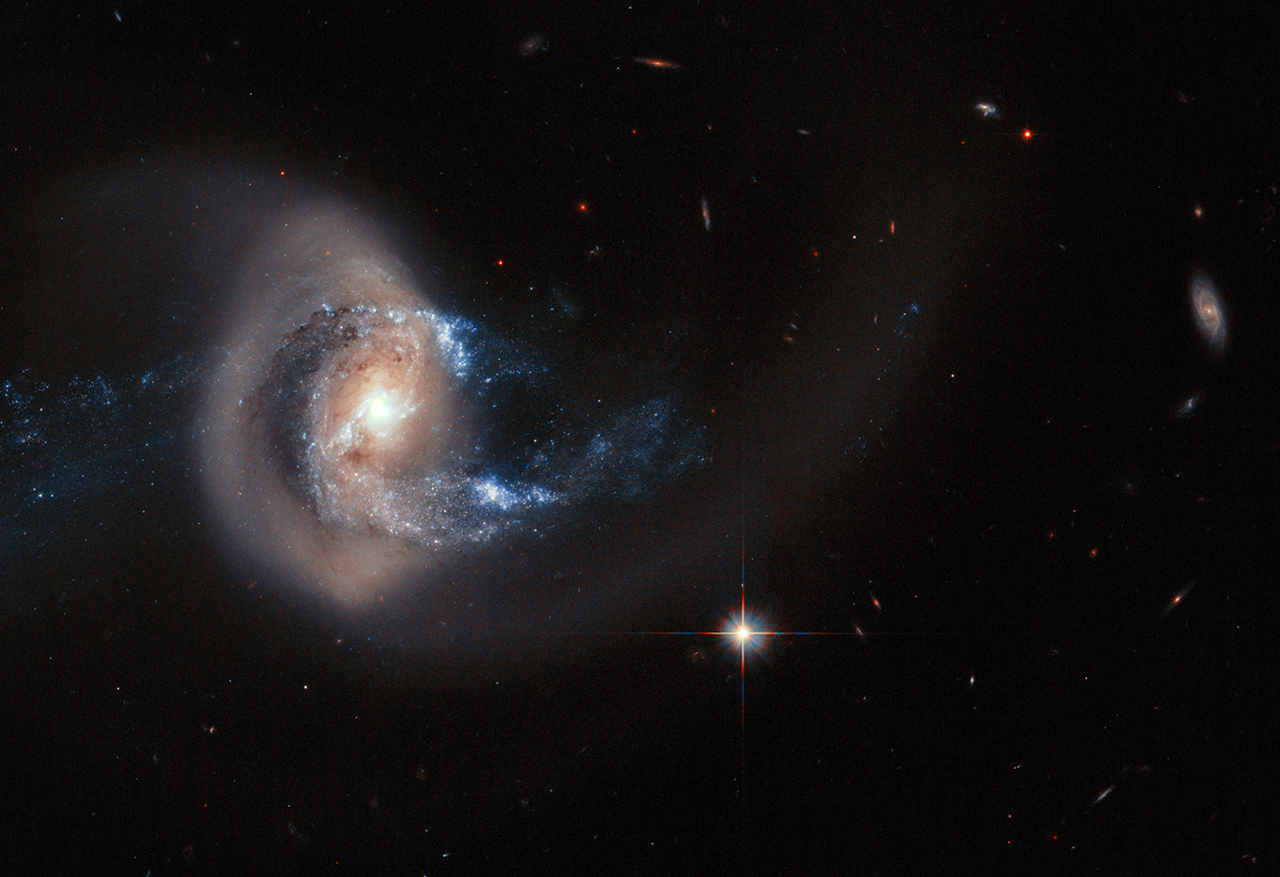
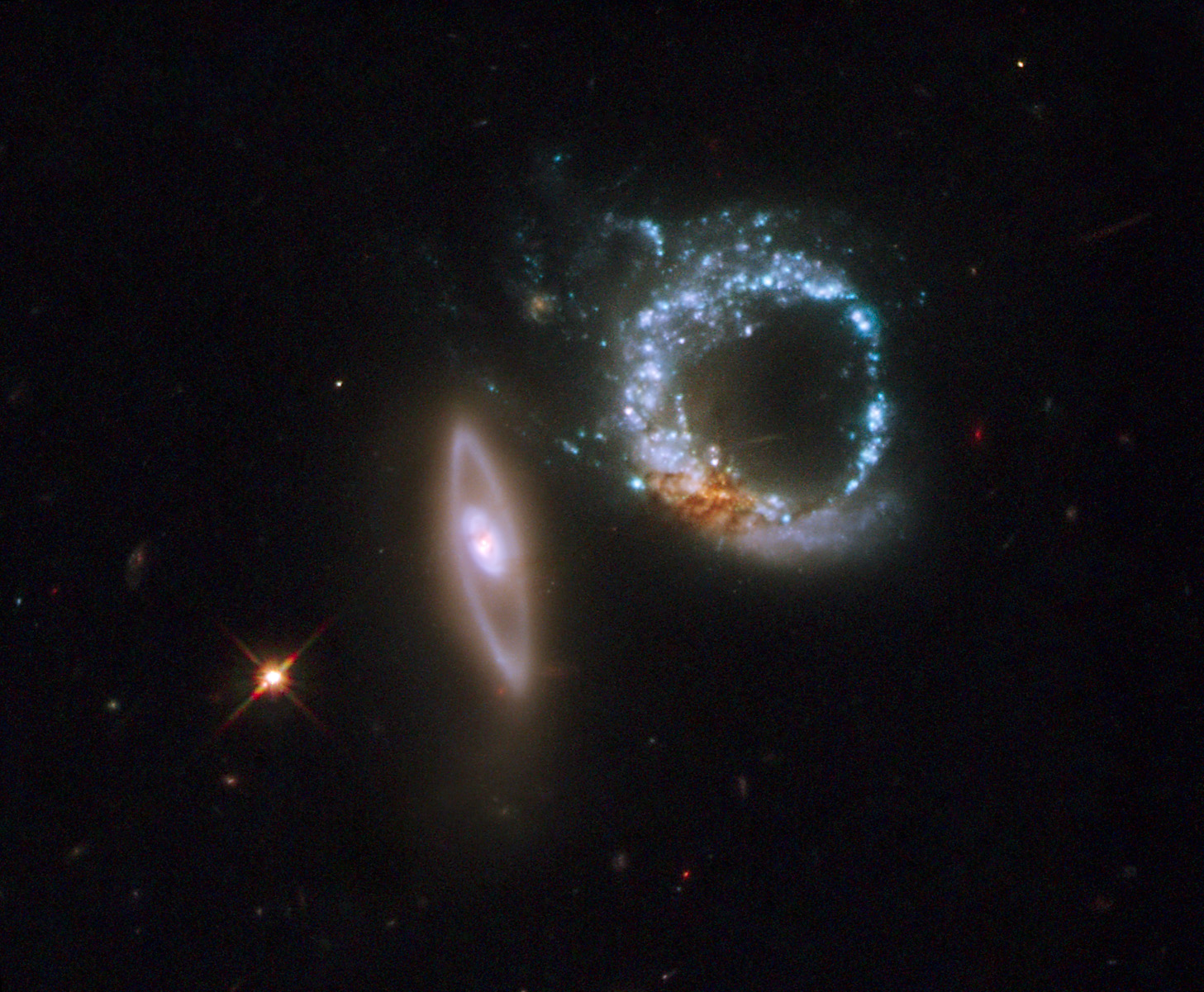
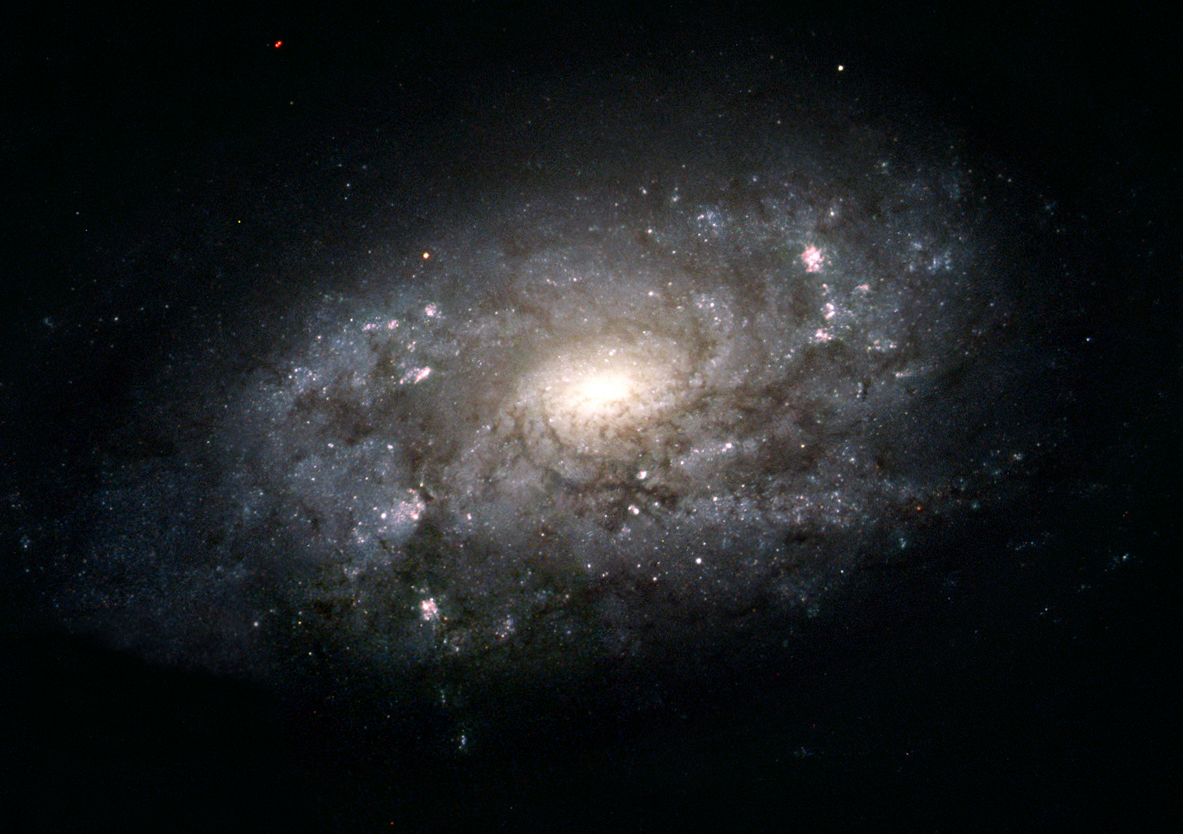
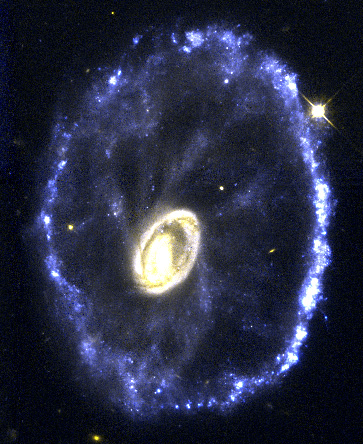
The Cartwheel galaxy's unusual appearance was created by a nearly head-on collision with a smaller galaxy. Its spoke-like structures are wisps of material connecting the galaxy's nucleus to an outer ring of young stars. This cosmic collision triggered a circular wave of star formation that has propagated outward from the point of impact, creating the distinctive cartwheel appearance. The outer ring, approximately 150,000 light-years in diameter, is ablaze with new stars formed from gas compressed by the expanding density wave.
Scientific Significance
The Cartwheel Galaxy is the archetypal ring galaxy and provides the clearest example of how galaxy collisions can trigger ring-shaped waves of star formation. When the smaller intruder galaxy passed through the center of the Cartwheel's progenitor disk, it created a gravitational disturbance that propagated outward like a ripple in a pond. As this density wave moved through the disk, it compressed gas clouds and triggered them to collapse and form stars. The spoke-like structures connecting the center to the ring trace the paths of material that was displaced by the collision and is now falling back toward the center. Studies of the Cartwheel have been crucial for understanding the physics of triggered star formation and the propagation of waves through galactic disks. The comparison of observations with numerical simulations has confirmed that the ring formed from an approximately head-on collision and allowed astronomers to reconstruct the dynamics of the encounter.
Observation Details
This image was obtained using Hubble's Wide Field Planetary Camera 2 (WFPC2) in multiple optical filters. The observations reveal the complex structure of the outer ring, including individual star-forming knots and the characteristic blue color indicating massive young stars. The inner regions show the chaotic structure of the nucleus and the spoke features that connect it to the outer ring. The image also captures the two smaller companion galaxies to the right, one of which is the intruder responsible for the collision.
Location in the Universe
Constellation
Sculptor
Distance from Earth
500 million light-years
Fun Facts
- 1
The Cartwheel Galaxy's outer ring is forming stars at a rate nearly 10 times faster than the Milky Way.
- 2
The collision that created the ring structure occurred approximately 200-300 million years ago, roughly when dinosaurs were beginning to diversify on Earth.
- 3
The smaller galaxy that caused the collision has now passed through and is one of the two galaxies visible to the right of the Cartwheel.
Image credit: NASA, ESA, Hubble Space Telescope