About This Image
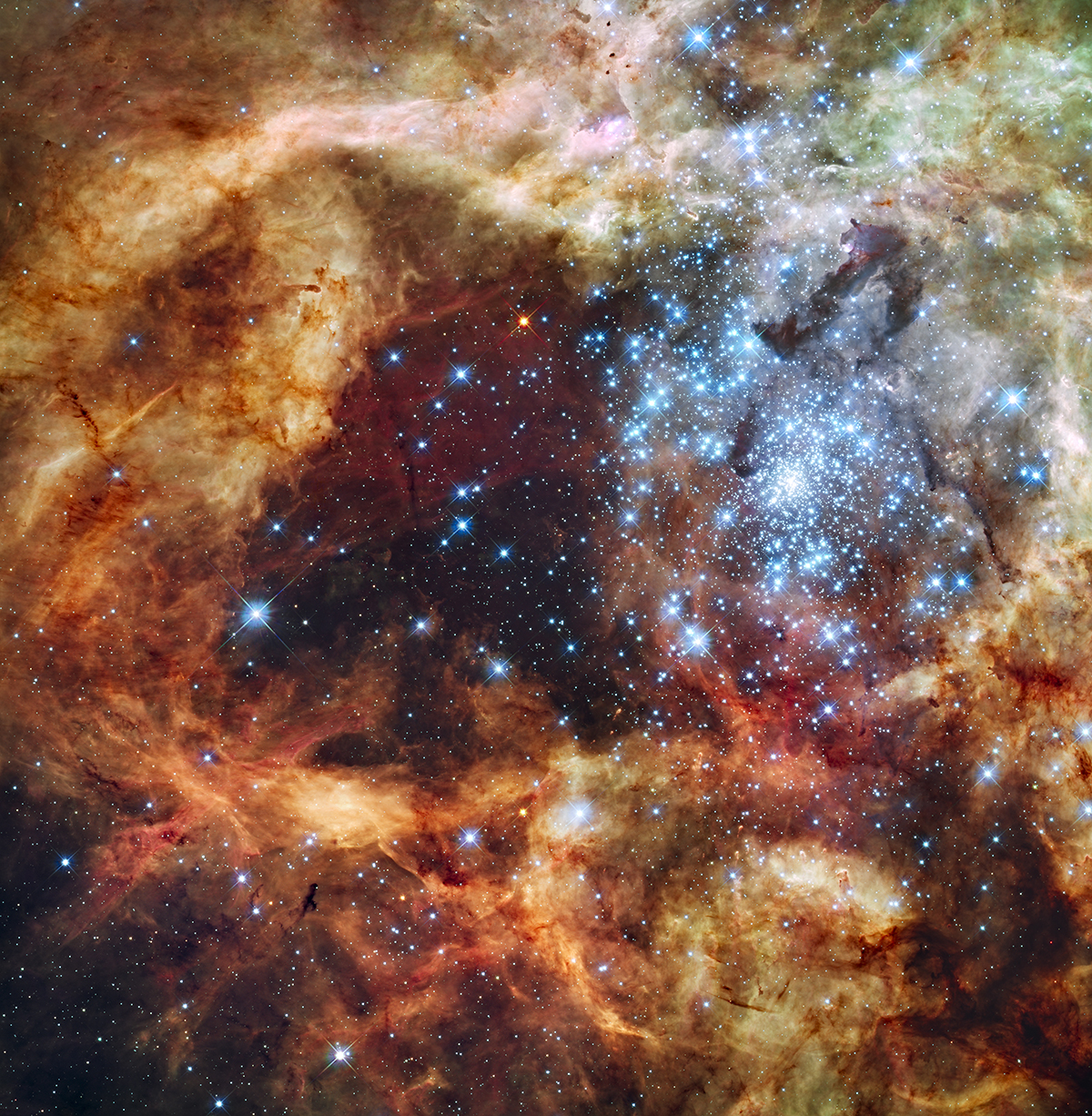
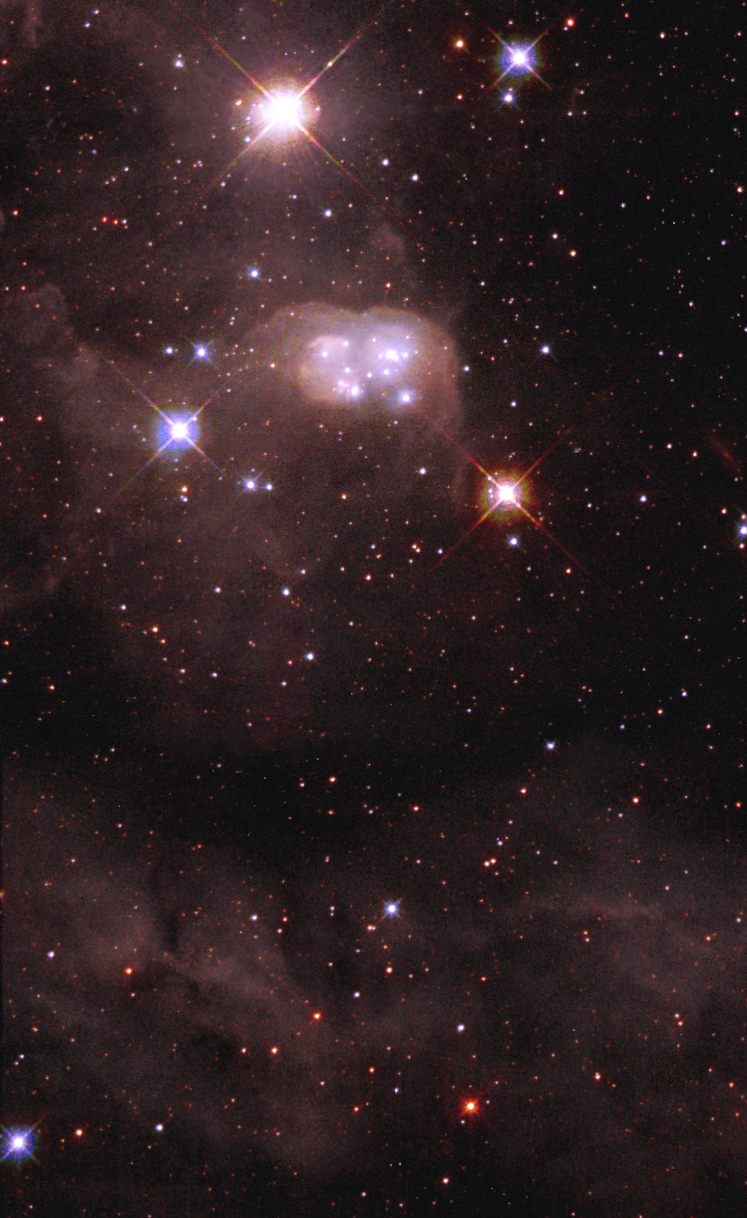
A unique, peanut-shaped cocoon of dust surrounds a cluster of young, hot stars in this image. This reflection nebula, named N30B, is embedded in a much larger nebula called DEM L 106. The wispy filaments of DEM L 106 fill much of the image. Located in the Large Magellanic Cloud, this stellar nursery showcases the intimate relationship between newly formed stars and the dusty material from which they were born.
Scientific Significance
N30B provides a window into the early stages of stellar cluster formation and the interactions between young stars and their natal environments. Reflection nebulae like N30B shine by scattering light from nearby stars rather than emitting their own radiation, making them excellent tracers of the dust distribution around stellar nurseries. The detailed structure of N30B, including its unusual peanut shape, provides clues about the geometry of the stellar winds and outflows from the embedded cluster. By studying reflection nebulae in the Large Magellanic Cloud, astronomers can compare star formation processes in different galactic environments, as the LMC has a lower metallicity (fewer heavy elements) than the Milky Way. This comparison helps determine how metallicity affects dust properties, star formation efficiency, and the structure of protostellar nebulae.
Observation Details
This image was captured using Hubble's Wide Field Planetary Camera 2 (WFPC2) in multiple optical filters. The observations reveal the intricate filamentary structure of the surrounding DEM L 106 nebula and the compact, sculpted morphology of the N30B reflection nebula. The color composite highlights the contrast between the blue scattered light of the reflection nebula and the pink emission from ionized hydrogen in the surrounding HII region. The sharp resolution of Hubble resolves individual features within the nebula that would be blurred together in ground-based observations.
Location in the Universe
Constellation
Dorado
Distance from Earth
160,000 light-years
Fun Facts
- 1
N30B is located in the Large Magellanic Cloud, one of the Milky Way's companion galaxies, making it one of the closest extragalactic star-forming regions.
- 2
The blue color of the reflection nebula indicates that the dust is scattering blue light from the central stars more efficiently than red light—the same effect that makes Earth's sky blue.
- 3
The peanut shape may result from a bipolar outflow from one of the young stars, sculpting the surrounding dust into two lobes.
Image credit: NASA, ESA, Hubble Space Telescope