About This Image
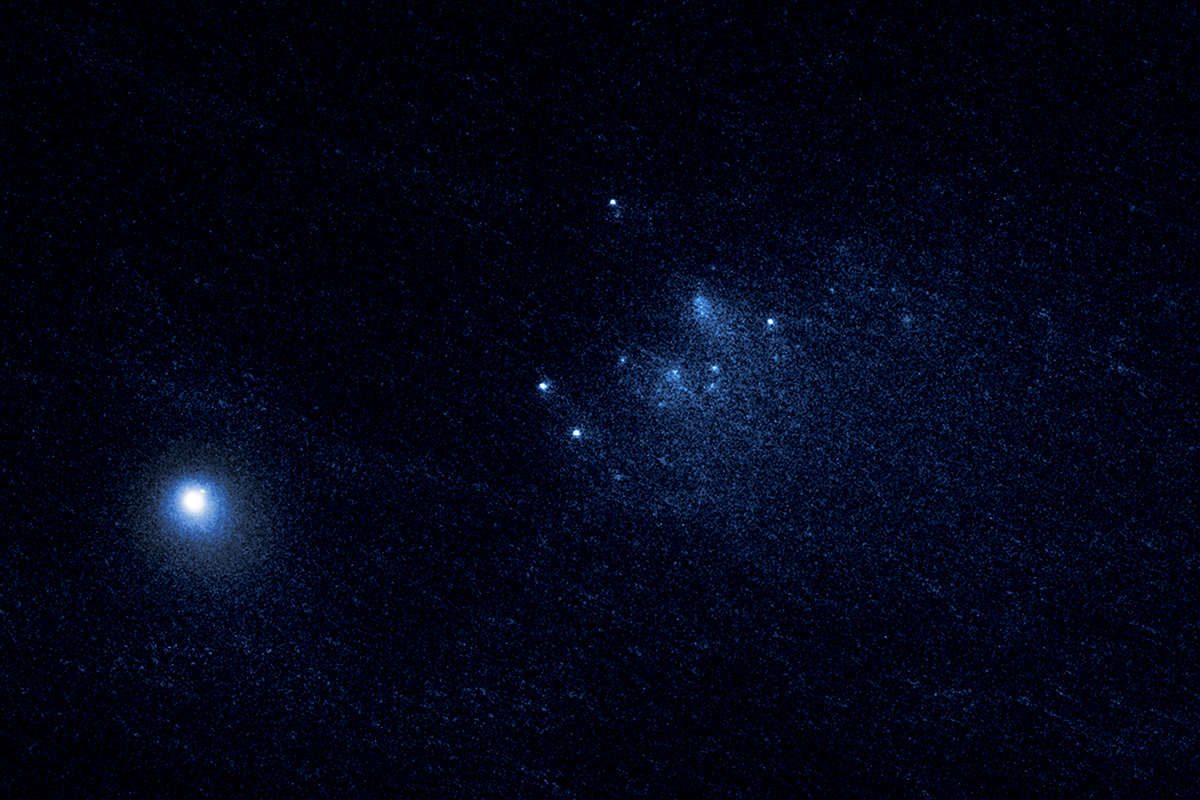
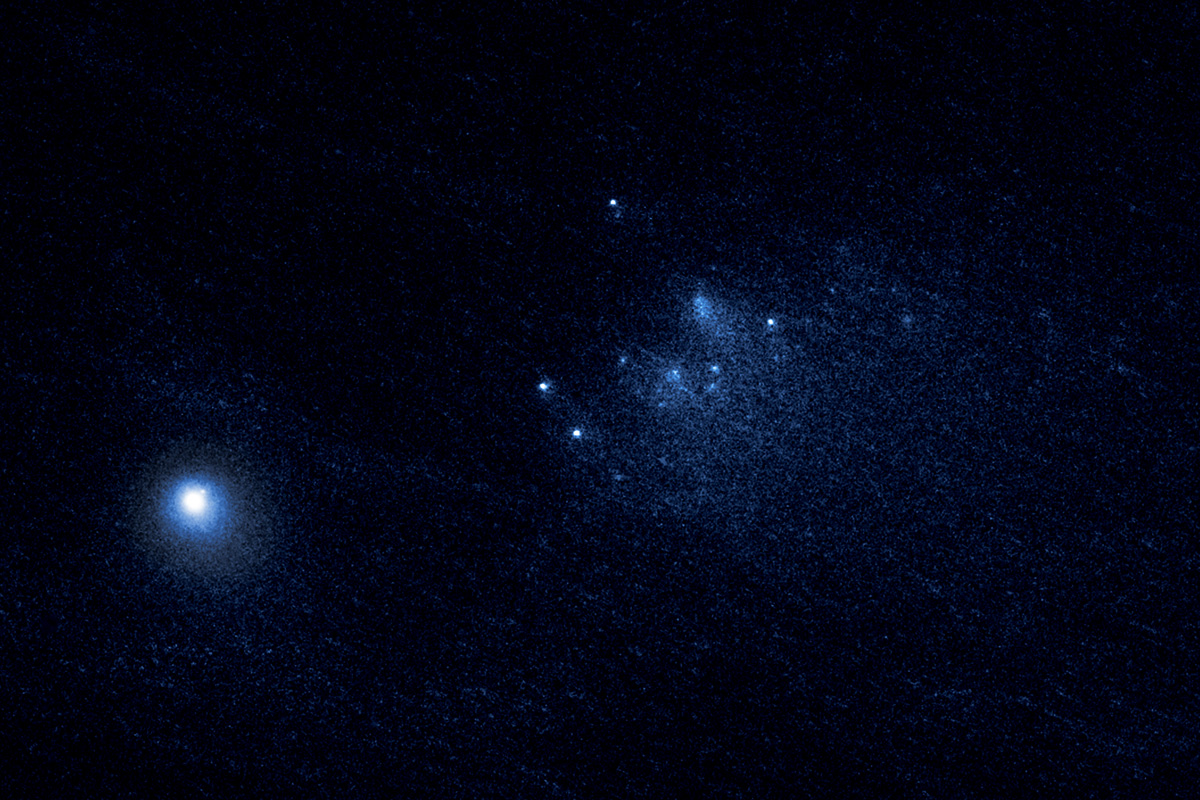
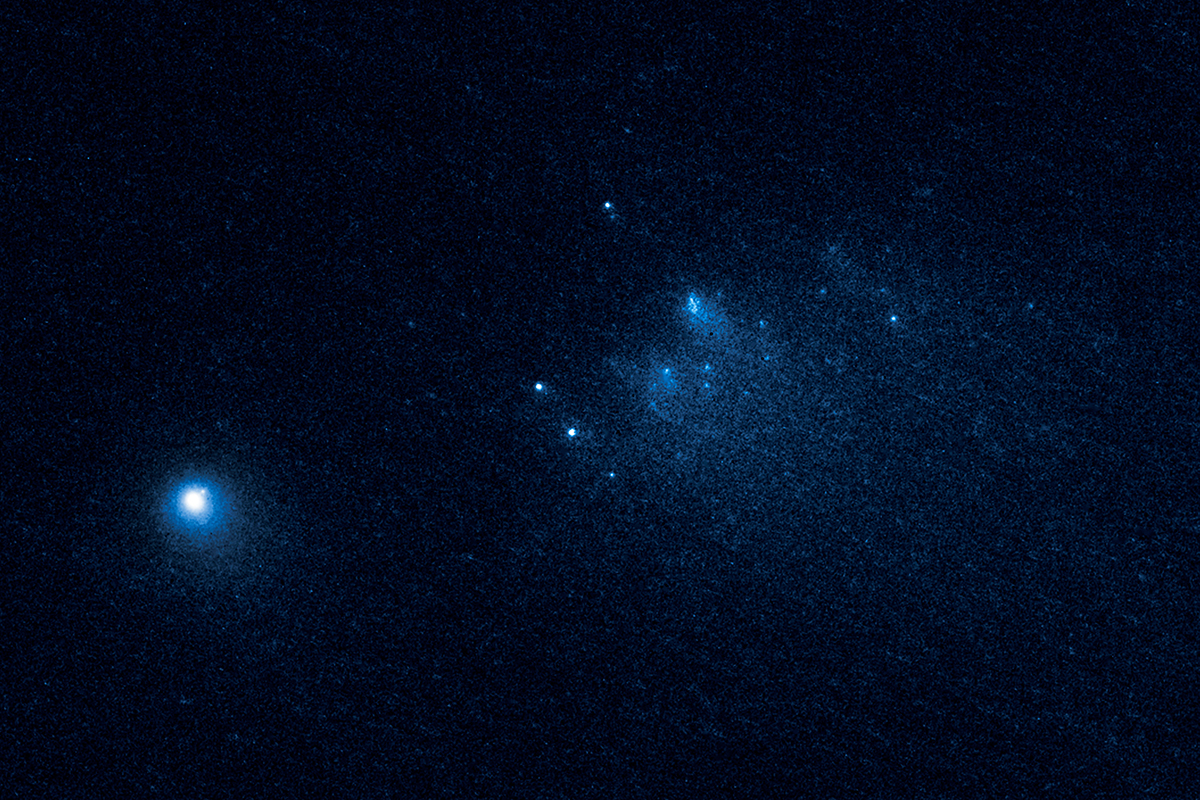
This remarkable image reveals the ancient comet 332P/Ikeya-Murakami in the dramatic process of disintegrating as it approaches the Sun, providing one of the sharpest views ever captured of an icy comet breaking apart. Comets are fragile objects composed of ice, dust, and rocky material left over from the solar system's formation over 4.5 billion years ago. As they venture close to the Sun, solar heating causes their ices to vaporize and internal stresses can tear them apart, especially if they have been weakened by previous passages or structural flaws. The disintegration of 332P offers astronomers a rare opportunity to study the internal structure and composition of these primordial frozen bodies. The fragments visible in this image will continue to drift apart along the comet's orbit, gradually dispersing into space and potentially creating meteor showers if Earth's orbit intersects their debris stream in the future.
Scientific Significance
The disintegration of Comet 332P/Ikeya-Murakami provided one of the most detailed case studies of cometary breakup ever observed. Comets are among the most primitive objects in the solar system, preserving ices and organic compounds from the primordial solar nebula that have remained largely unaltered for 4.5 billion years. When a comet disintegrates, it exposes its interior composition, offering astronomers a rare glimpse into the building blocks of the early solar system. Hubble's observations of 332P revealed that the comet shed material in discrete episodes rather than continuously, suggesting its interior consists of weakly bound layers or blocks of varying composition and strength. The size distribution of the fragments provides constraints on the internal structure of cometary nuclei — whether they are monolithic bodies or loosely aggregated rubble piles. Understanding cometary disintegration is also important for assessing the potential hazards posed by near-Earth objects and for interpreting the origin of meteor showers associated with defunct comets.
Observation Details
Hubble observed Comet 332P using the Wide Field Camera 3 (WFC3) in visible light, tracking the comet over multiple orbits to document the progressive fragmentation of its nucleus. The telescope's sharp resolution was essential for resolving individual fragments, some as small as building-sized chunks of ice and rock, against the dark background of space. By comparing images taken weeks and months apart, astronomers measured the velocities of individual fragments and determined that they were ejected from the nucleus at very low speeds. Spectroscopic observations provided information about the chemical composition of the ejected material, including the presence of water ice, carbon dioxide, and dust particles.
Location in the Universe
Constellation
N/A (Solar System)
Distance from Earth
150 million miles (at time of observation)
Fun Facts
- 1
Comet 332P's nucleus is only about 1,600 feet (490 meters) across — roughly the size of five football fields — making it one of the smallest comets ever observed in the act of breaking apart.
- 2
The fragments ejected from Comet 332P are traveling at just a few miles per hour relative to each other, roughly walking speed, yet over time they will spread across millions of miles of space along the comet's orbital path.
- 3
Comet 332P completes one orbit around the Sun every 5.4 years, and each close approach to the Sun strips away more material, meaning this comet is slowly destroying itself and may completely disintegrate within the next century.
Image credit: NASA, ESA, Hubble Space Telescope