About This Image
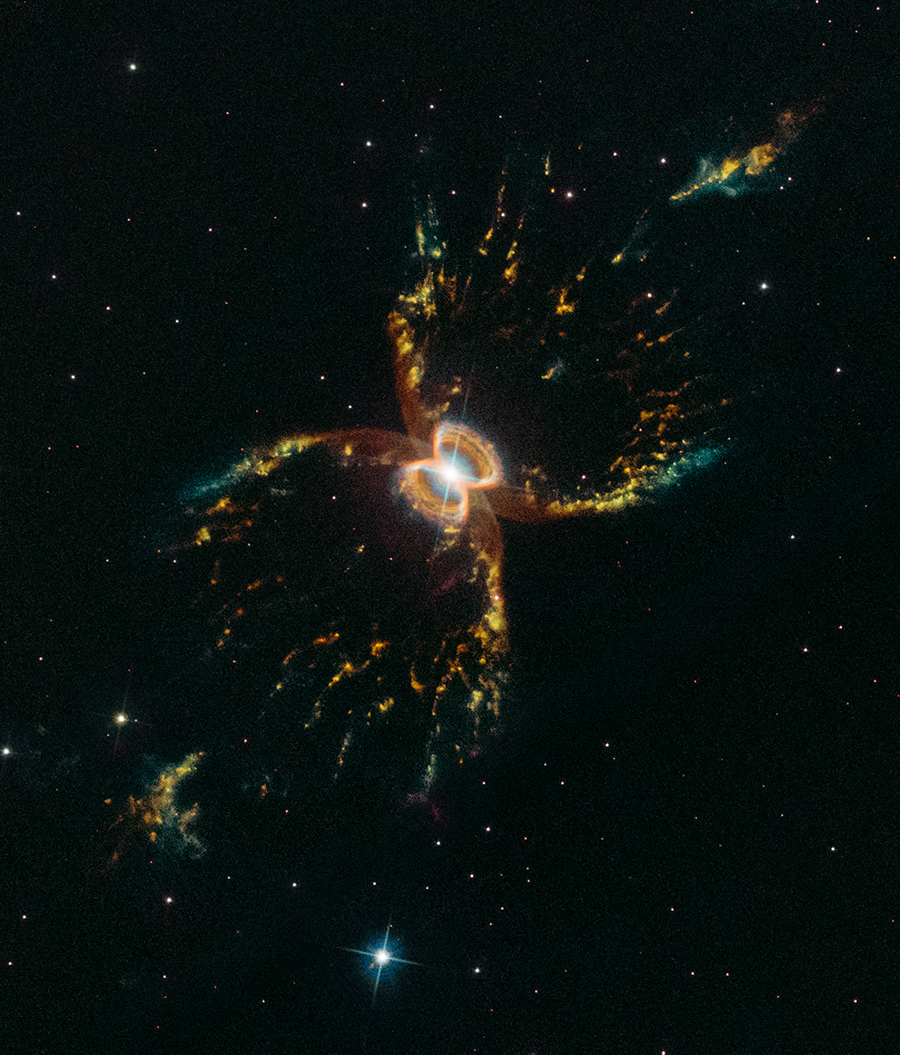
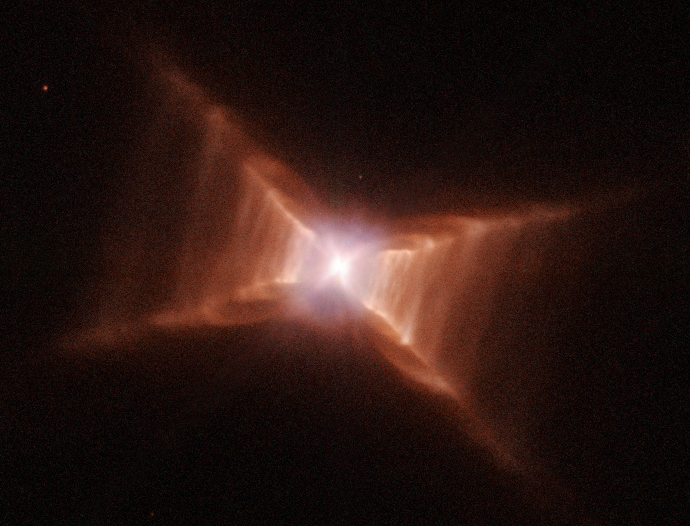
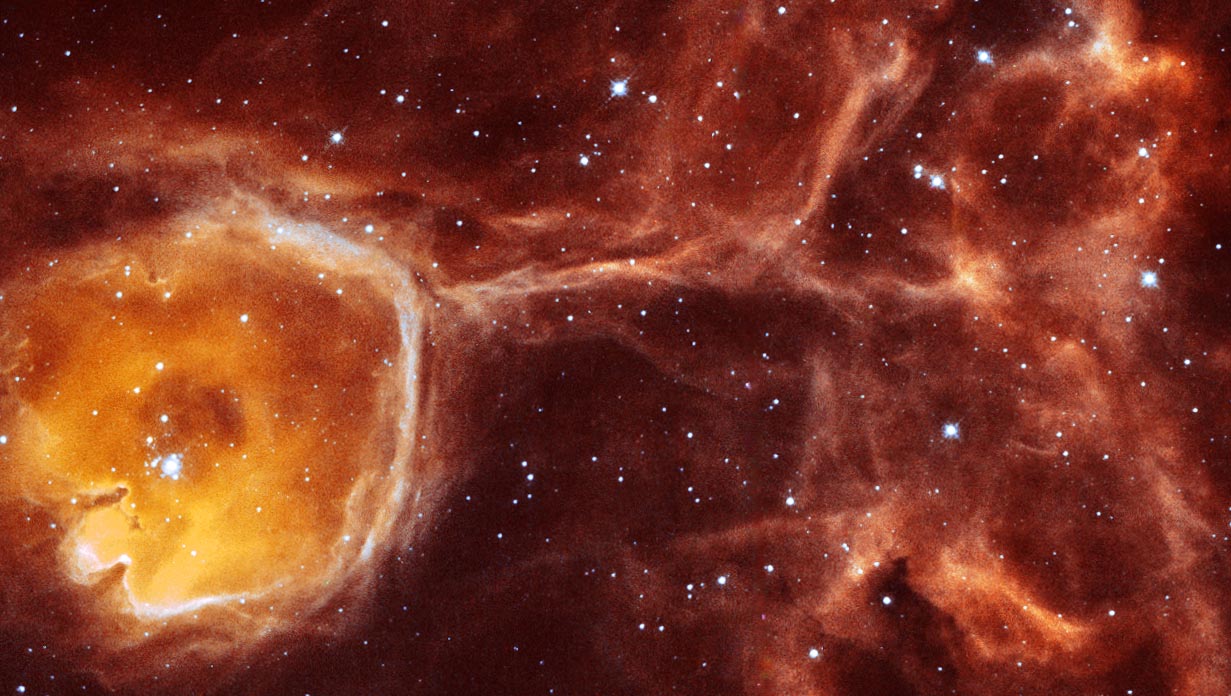
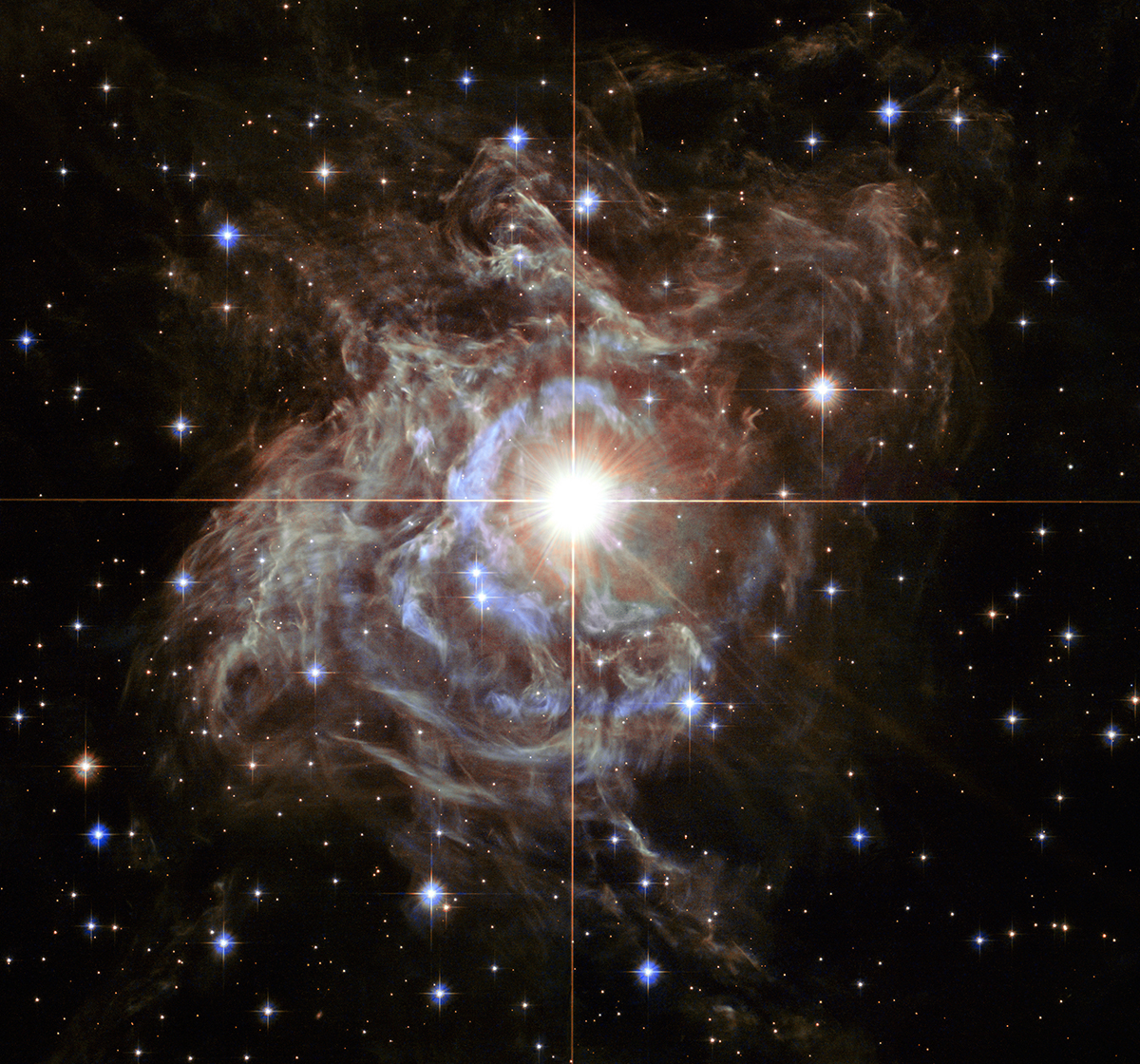
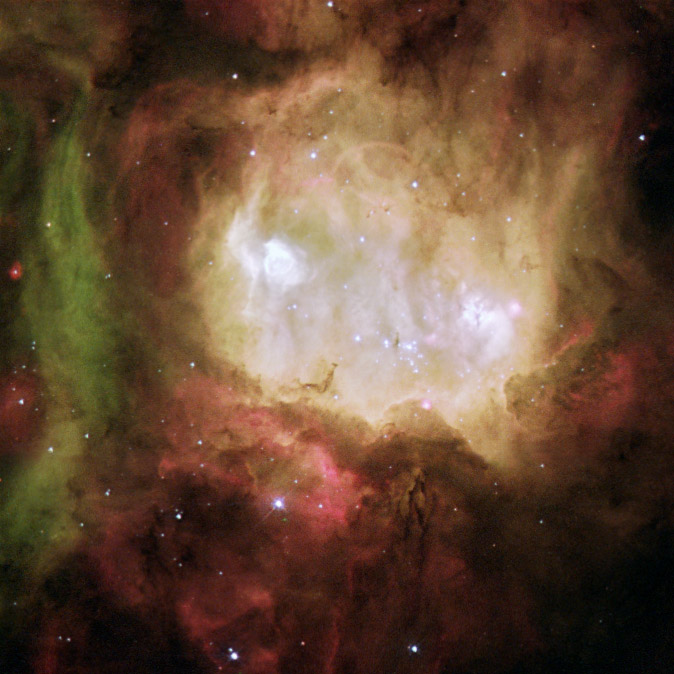
The Ghost Head Nebula (NGC 2080) is a star-forming region in a nearby galaxy called the Large Magellanic Cloud, located approximately 160,000 light-years from Earth. The two bright areas that form the "eyes of the ghost" are very hot, glowing blobs of hydrogen and oxygen that have been energized by the intense radiation from recently born massive stars embedded within them. These twin luminous knots, designated A1 (western eye) and A2 (eastern eye), represent two distinct pockets of active star formation where clusters of young, hot stars are ionizing and heating the surrounding gas to temperatures of tens of thousands of degrees. The surrounding nebular material glows with an eerie green and red light as different chemical elements respond to the stellar radiation, creating one of the most visually dramatic stellar nurseries in the Large Magellanic Cloud and earning this nebula its ghostly nickname.
Scientific Significance
The Ghost Head Nebula provides a valuable window into the physics of massive star formation in an environment with lower metallicity (heavy-element abundance) than the Milky Way. The Large Magellanic Cloud's metallicity is roughly half that of our galaxy, approximating conditions that were more common in the early universe when galaxies had not yet been enriched by multiple generations of stellar nucleosynthesis. Studying star formation under these conditions helps astronomers understand how the first generations of stars formed and how the efficiency and characteristics of the star formation process depend on chemical composition. The contrasting evolutionary stages of the two bright knots in the Ghost Head — one dominated by a single evolved Wolf-Rayet star and the other by a young embedded cluster — provide a snapshot of sequential star formation within a single nebula. The Wolf-Rayet star in knot A1 has already begun clearing its surroundings through its powerful stellar wind, while the cluster in A2 is still in an earlier phase of development. This juxtaposition enables direct comparison of different evolutionary stages in a controlled environment where distance, metallicity, and ambient conditions are identical.
Observation Details
This image was captured using Hubble's Wide Field and Planetary Camera 2 (WFPC2) in narrowband filters targeting hydrogen-alpha, doubly ionized oxygen [O III], and ionized nitrogen [N II] emission lines. These narrowband observations isolate the light from specific ionic species, revealing temperature and ionization gradients across the nebula. The [O III] emission, which requires high-energy photons for excitation, highlights the hottest and most energetic regions closest to the ionizing stars, while the hydrogen-alpha emission maps the broader distribution of ionized gas. The WFPC2's resolution resolved fine structural details within the two bright knots, revealing the cavity carved by the Wolf-Rayet star's wind in A1 and the compact morphology of the embedded cluster in A2.
Location in the Universe
Constellation
Dorado (in LMC)
Distance from Earth
160,000 light-years
Fun Facts
- 1
The two 'eyes' of the Ghost Head represent different stages of star formation — the western eye (A1) contains a single massive Wolf-Rayet star whose powerful wind has cleared a cavity in the gas, while the eastern eye (A2) harbors a compact cluster of hot, young stars still deeply embedded in their natal cocoon.
- 2
The Ghost Head Nebula was one of the targets chosen for Hubble's 10th anniversary observations in 2000, selected because it demonstrates the telescope's ability to reveal the fine details of star formation processes in galaxies beyond the Milky Way.
- 3
The Large Magellanic Cloud, where this nebula resides, is visible to the naked eye from the Southern Hemisphere as a hazy patch of light, and it contains some of the most extreme star-forming regions in our galactic neighborhood.
Image credit: NASA, ESA, Hubble Space Telescope