About This Image
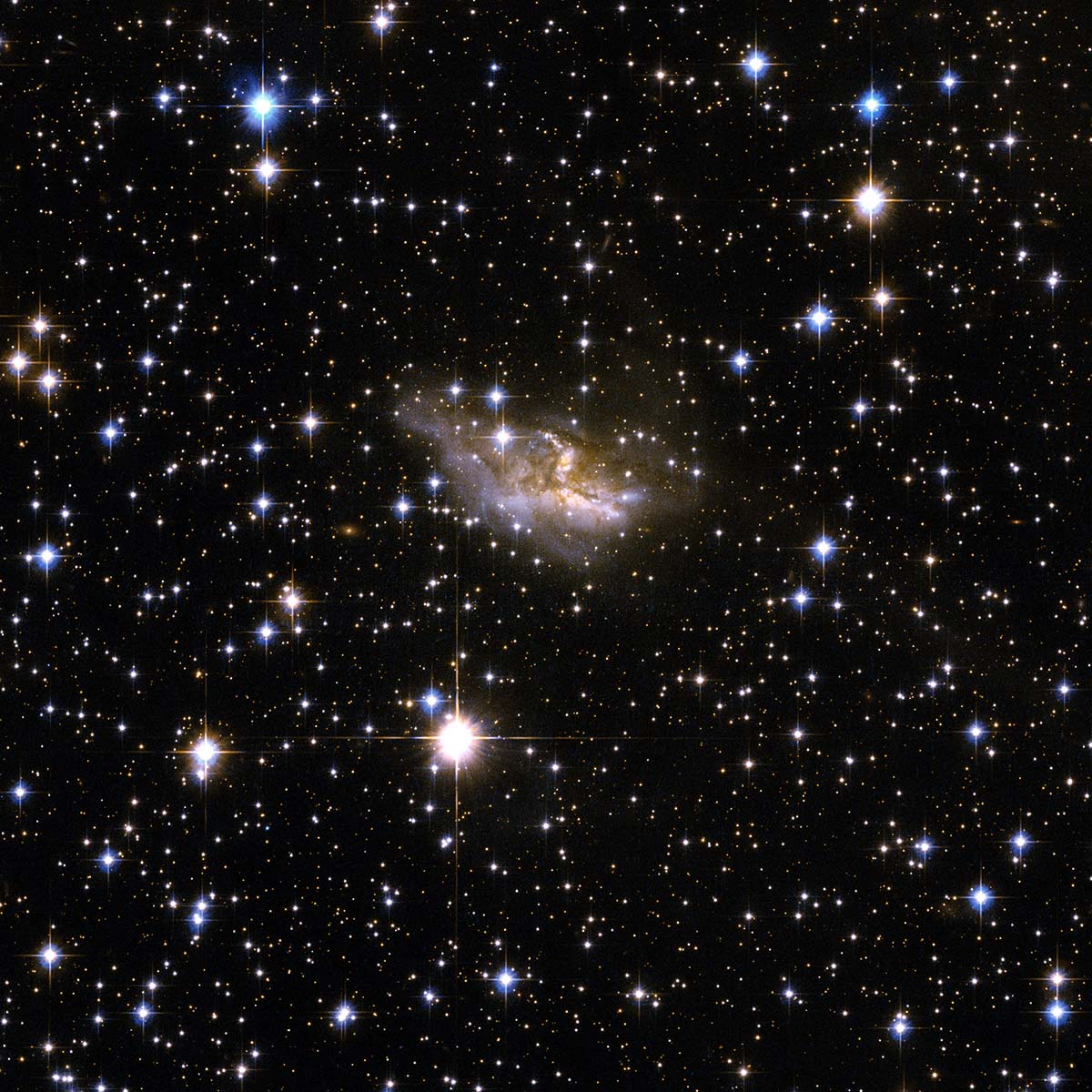
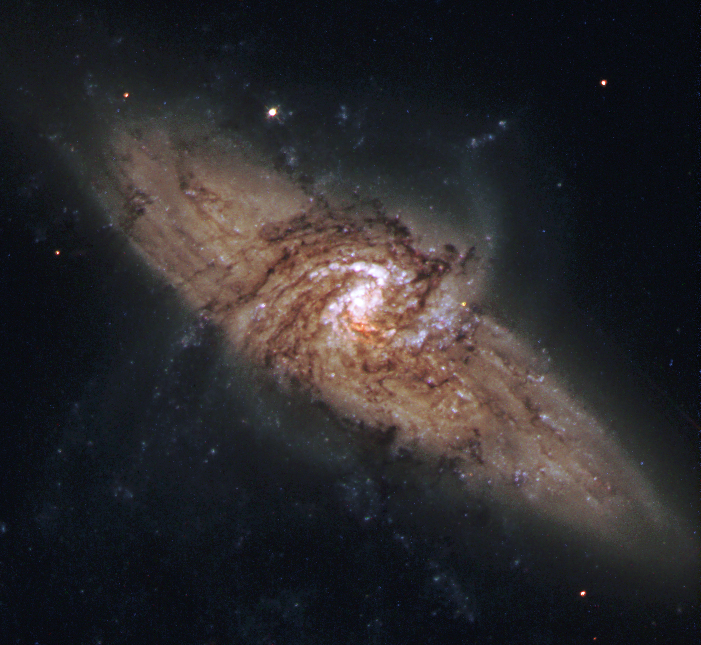
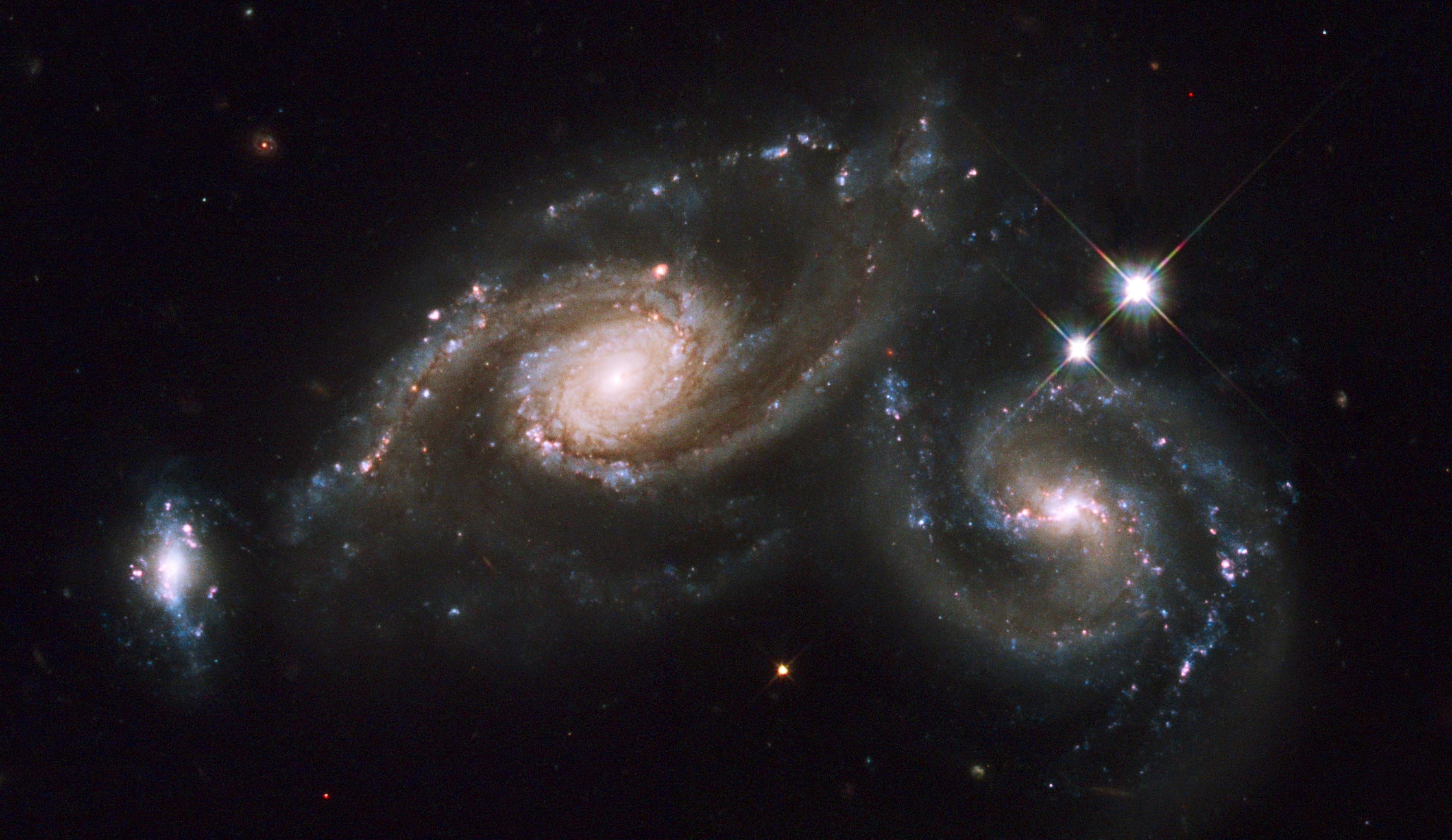
Arp 274, also cataloged as NGC 5679, is a striking system of three galaxies that appear to be partially overlapping in this Hubble image. Located approximately 400 million light-years away in the constellation Virgo, the trio showcases different stages of galactic interaction. Two of the three galaxies are experiencing vigorous bursts of star formation, evident in the brilliant blue knots of young, massive stars strung along their spiral arms like jewels on a necklace. These starburst regions were likely triggered by gravitational tidal forces as the galaxies influence each other during their cosmic dance. The third galaxy, smaller and more compact, appears caught between its larger companions. Despite their apparent overlap in this image, the galaxies may be at slightly different distances and not yet in direct physical contact, though their mutual gravitational attraction is already reshaping their structures.
Scientific Significance
Arp 274 provides valuable insights into the early stages of galaxy interaction and the triggering mechanisms of star formation. Galaxy interactions and mergers are one of the primary drivers of galaxy evolution across cosmic time, and systems like Arp 274 allow astronomers to study how gravitational tidal forces compress interstellar gas to trigger bursts of new star formation. The system is particularly useful because it captures three galaxies at different stages of interaction, offering a comparative view within a single system. Studies of the star-forming regions in Arp 274 reveal that tidally triggered star formation tends to occur preferentially along the spiral arms facing the companion galaxies, confirming theoretical predictions about how tidal forces concentrate gas. The system's eventual fate — likely a merger into a single, larger galaxy — mirrors the process that built most of the large galaxies we see in the universe today.
Observation Details
This image was captured using Hubble's Wide Field Camera 3 (WFC3) in visible light through blue, green, and infrared broadband filters. The multi-color imaging highlights the contrast between the older, yellow-red stellar populations in the galaxies' cores and the young, blue star-forming regions in the spiral arms. Hubble's angular resolution was essential for resolving individual star-forming complexes within the galaxies' arms and for separating the overlapping structures of the three galaxies in this crowded field.
Location in the Universe
Constellation
Virgo
Distance from Earth
400 million light-years
Fun Facts
- 1
Arp 274 was selected as the target for Hubble's 2009 public voting contest, where over 140,000 people voted to choose which object Hubble would photograph — making it one of the first crowd-sourced astronomical observations.
- 2
Despite appearing to overlap, the three galaxies in Arp 274 may not be physically touching yet — gravitational tidal forces can trigger star formation even when galaxies are separated by hundreds of thousands of light-years.
- 3
The blue knots of star formation visible in Arp 274's spiral arms each contain thousands of hot, young stars that will burn through their fuel in just a few million years, a cosmic blink of an eye compared to our Sun's 10-billion-year lifespan.
Image credit: NASA, ESA, Hubble Space Telescope