About This Image
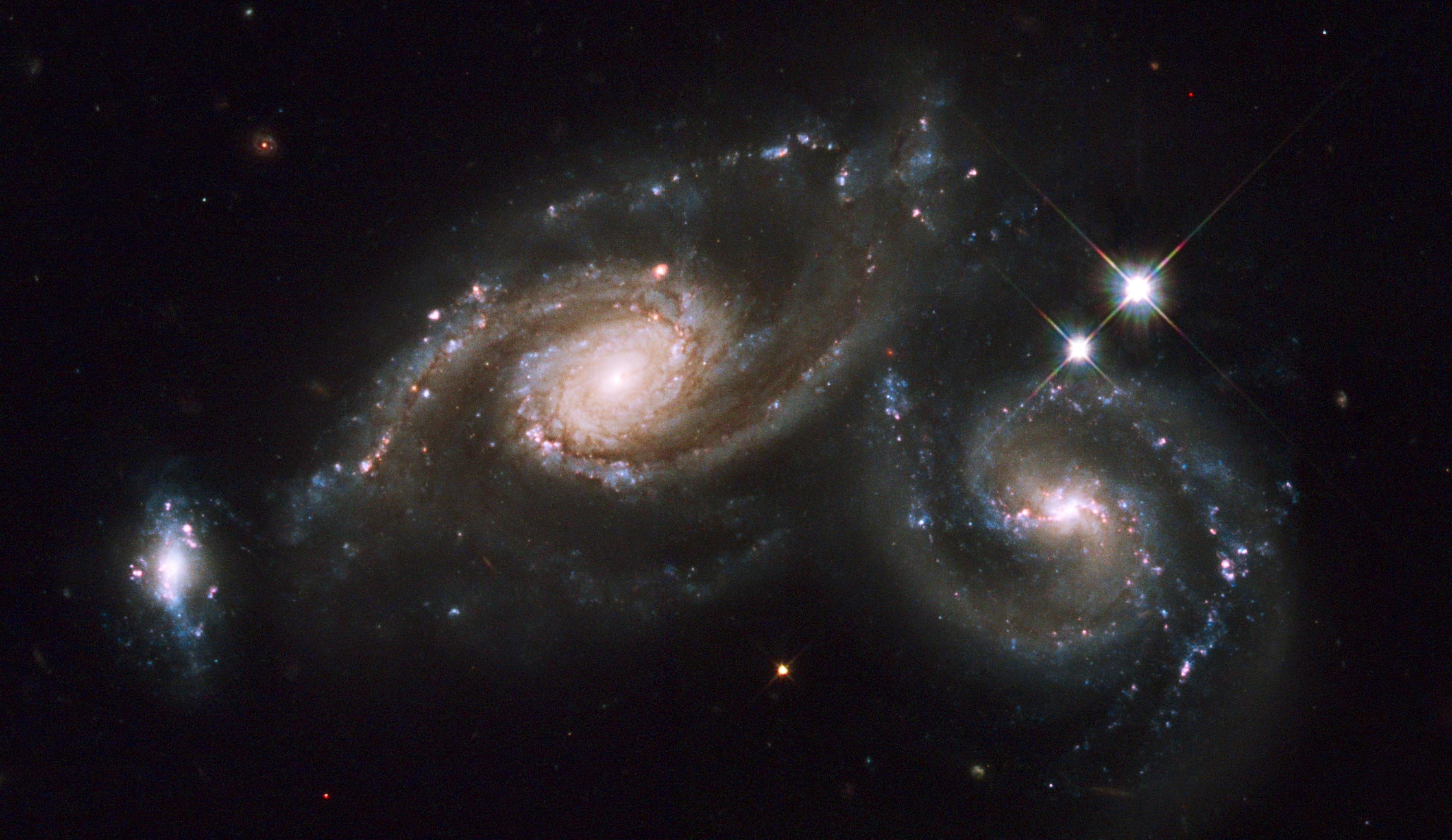
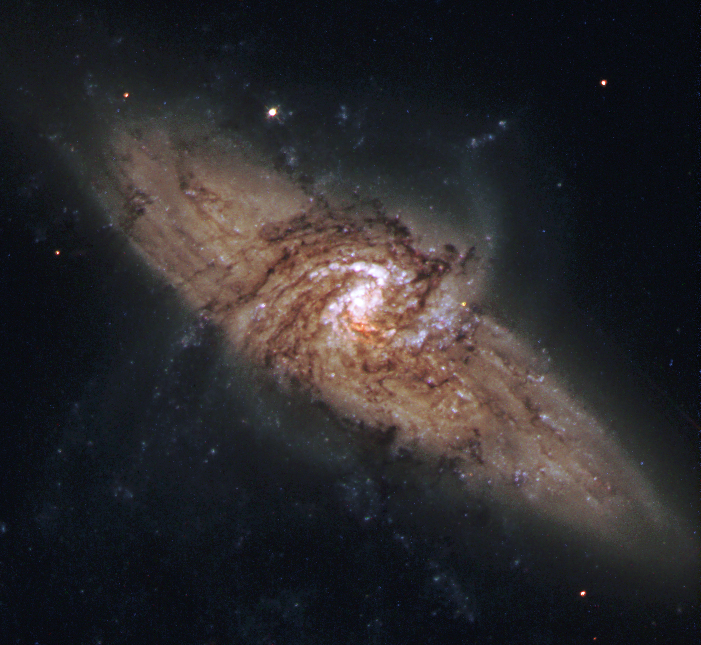
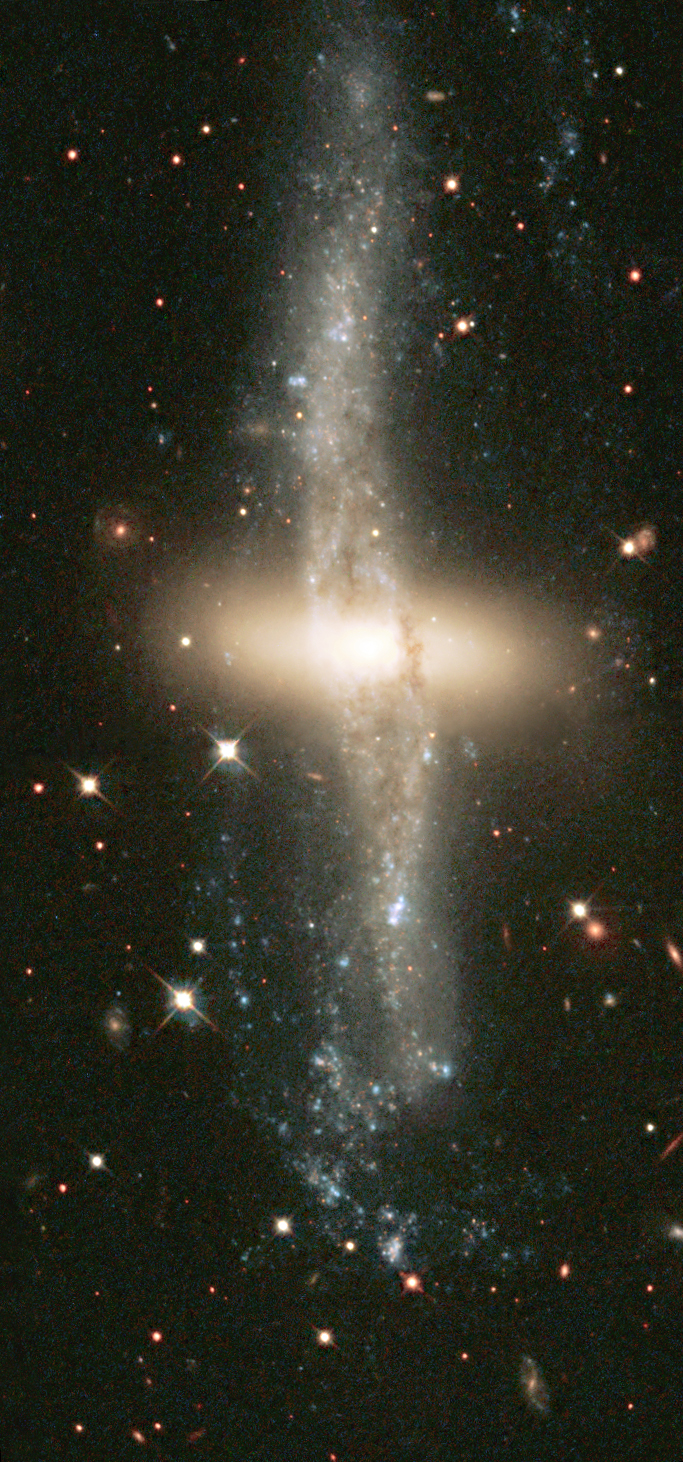
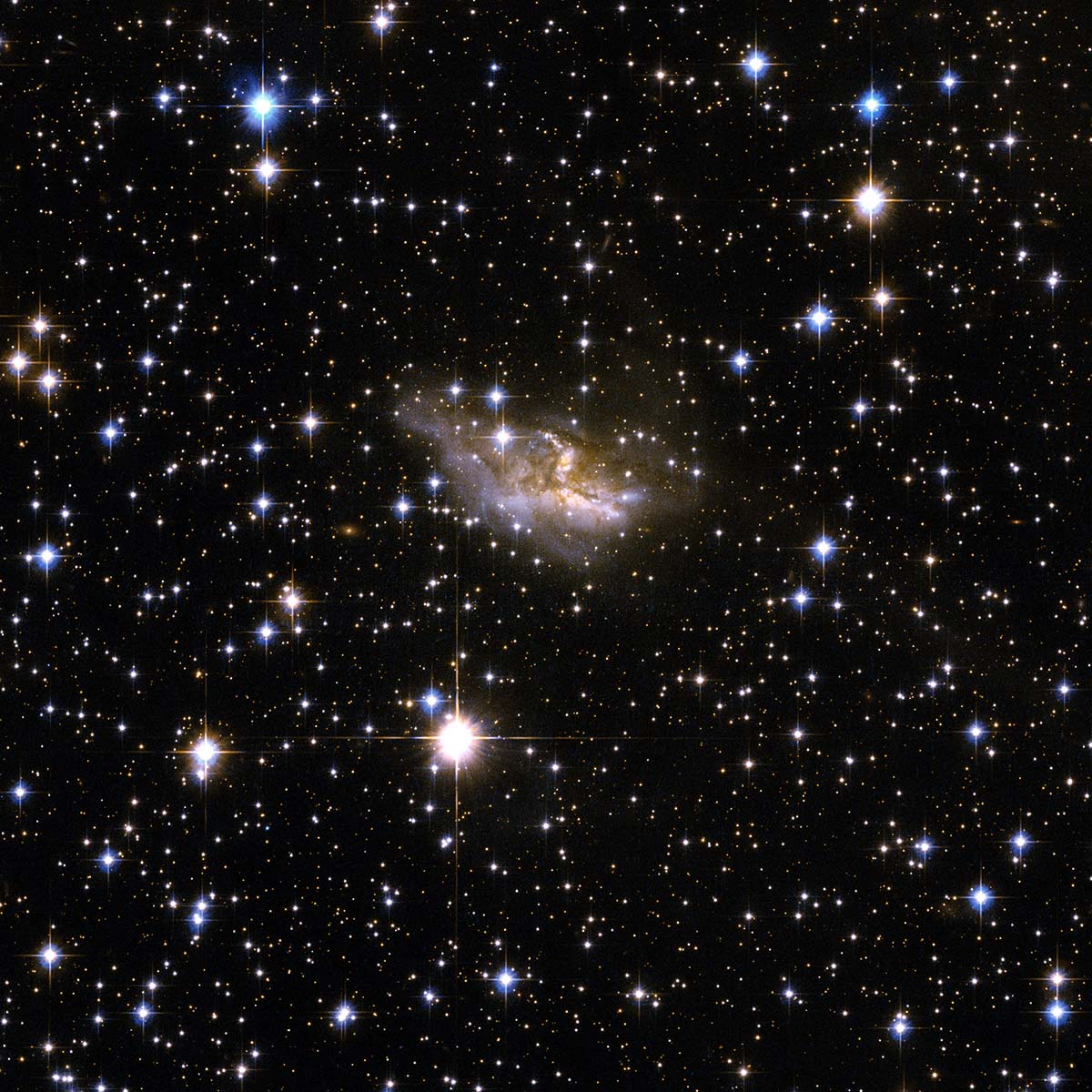
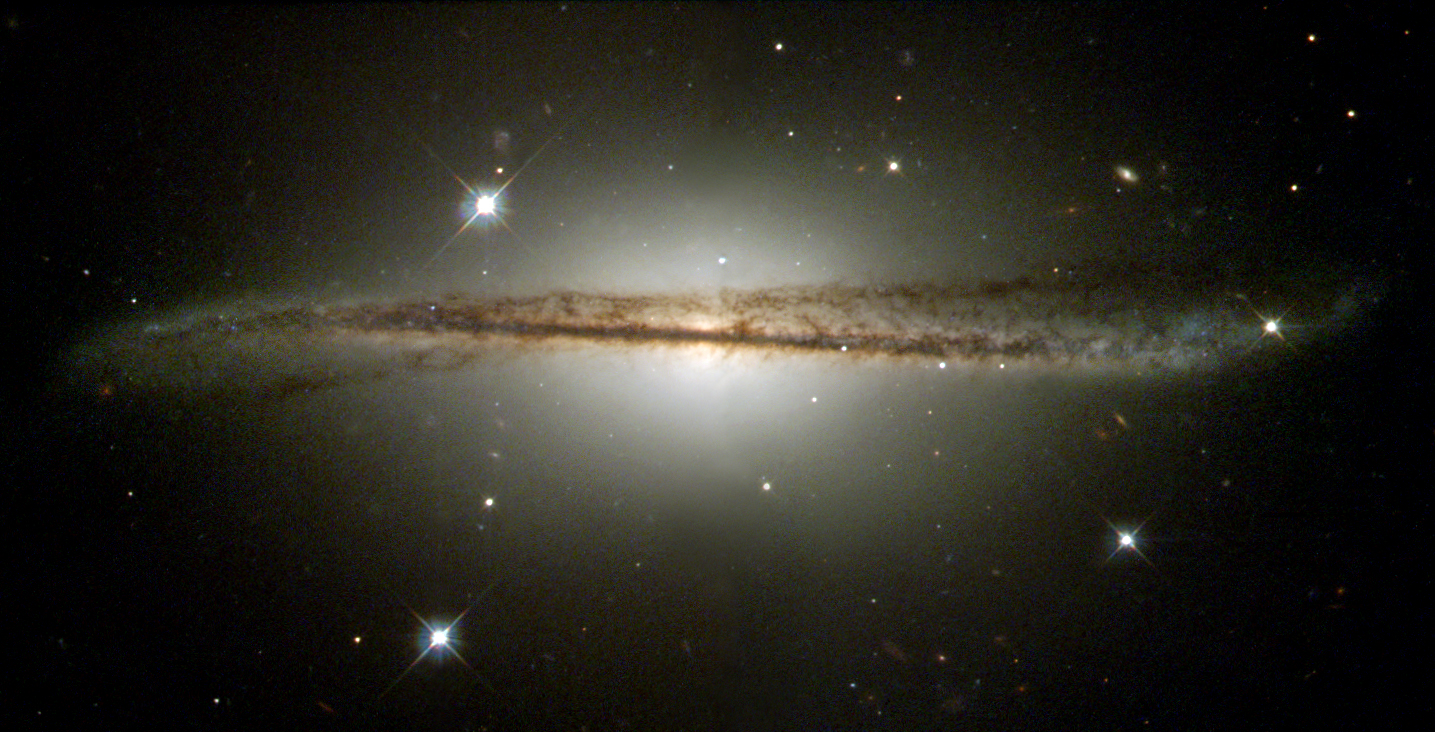
Galaxy ESO 510-G13 presents a dramatic example of a warped spiral galaxy seen nearly edge-on, located approximately 150 million light-years away in the constellation Hydra. While most edge-on spiral galaxies display a thin, flat dust lane bisecting their disk, ESO 510-G13's disk is conspicuously bent and twisted, curving noticeably away from the expected plane. This pronounced warping is compelling evidence that the galaxy has relatively recently undergone a gravitational interaction or merger with a smaller neighboring galaxy and is still in the process of digesting it. As the captured galaxy's material is absorbed, the gravitational perturbation distorts the disk of the larger galaxy. Over hundreds of millions of years, dynamical friction and gravitational relaxation will eventually cause the warped disk to settle back into a flat configuration, erasing the visible evidence of the encounter.
Scientific Significance
ESO 510-G13 is a textbook example of how galaxy mergers reshape galactic structure, making it a key object for testing theoretical models of gravitational dynamics. The pronounced warp provides direct observational evidence for the hierarchical model of galaxy growth, in which galaxies build up their mass over time by accreting smaller satellite galaxies. Computer simulations predict that the accretion of a companion galaxy can produce exactly this type of warped disk morphology, and observations of ESO 510-G13 have been used to calibrate and refine these models. The dust lane visible in the warped disk also allows astronomers to study how interstellar material responds to large-scale gravitational perturbations. Understanding such warp dynamics is crucial for interpreting the structure of distant galaxies observed at earlier cosmic epochs, when merger rates were significantly higher.
Observation Details
This image was captured using Hubble's Wide Field and Planetary Camera 2 (WFPC2) through broadband filters in blue, green, and infrared light to construct a true-color composite. The edge-on orientation of the galaxy was particularly advantageous for revealing the warped dust lane against the bright stellar bulge and disk. Long exposure times were needed to capture the faint outer regions of the warped disk, where the surface brightness drops off steeply. Hubble's resolution allowed detailed mapping of the dust lane's three-dimensional geometry by tracing how it deviates from the galaxy's midplane.
Location in the Universe
Constellation
Hydra
Distance from Earth
150 million light-years
Fun Facts
- 1
Disk warping is actually surprisingly common among spiral galaxies — studies suggest that roughly half of all spiral galaxies show some degree of warping, though few are as dramatic as ESO 510-G13.
- 2
Our own Milky Way galaxy has a warped disk, though much more subtle than ESO 510-G13, likely caused by gravitational interactions with the Large and Small Magellanic Clouds.
- 3
The warping in ESO 510-G13 is estimated to have been caused by a merger event within the last few hundred million years — a relatively recent event in the galaxy's multi-billion-year lifetime.
Image credit: NASA, ESA, Hubble Space Telescope