About This Image
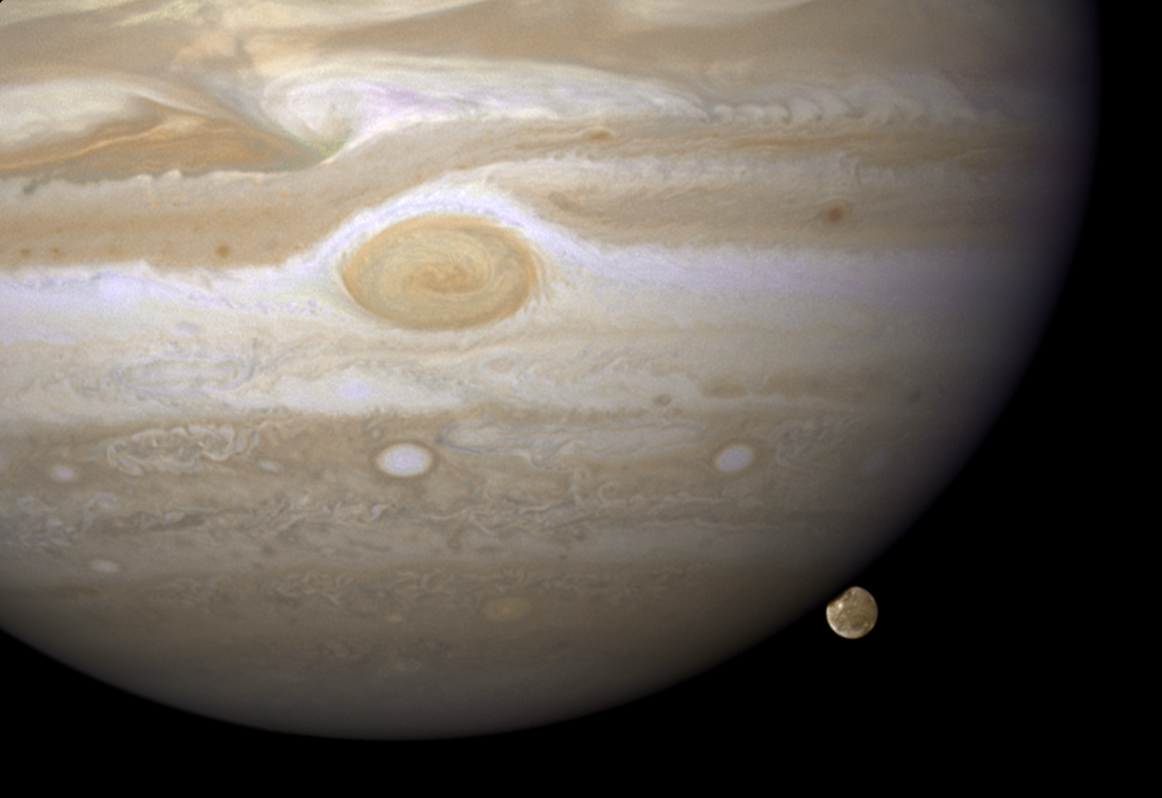
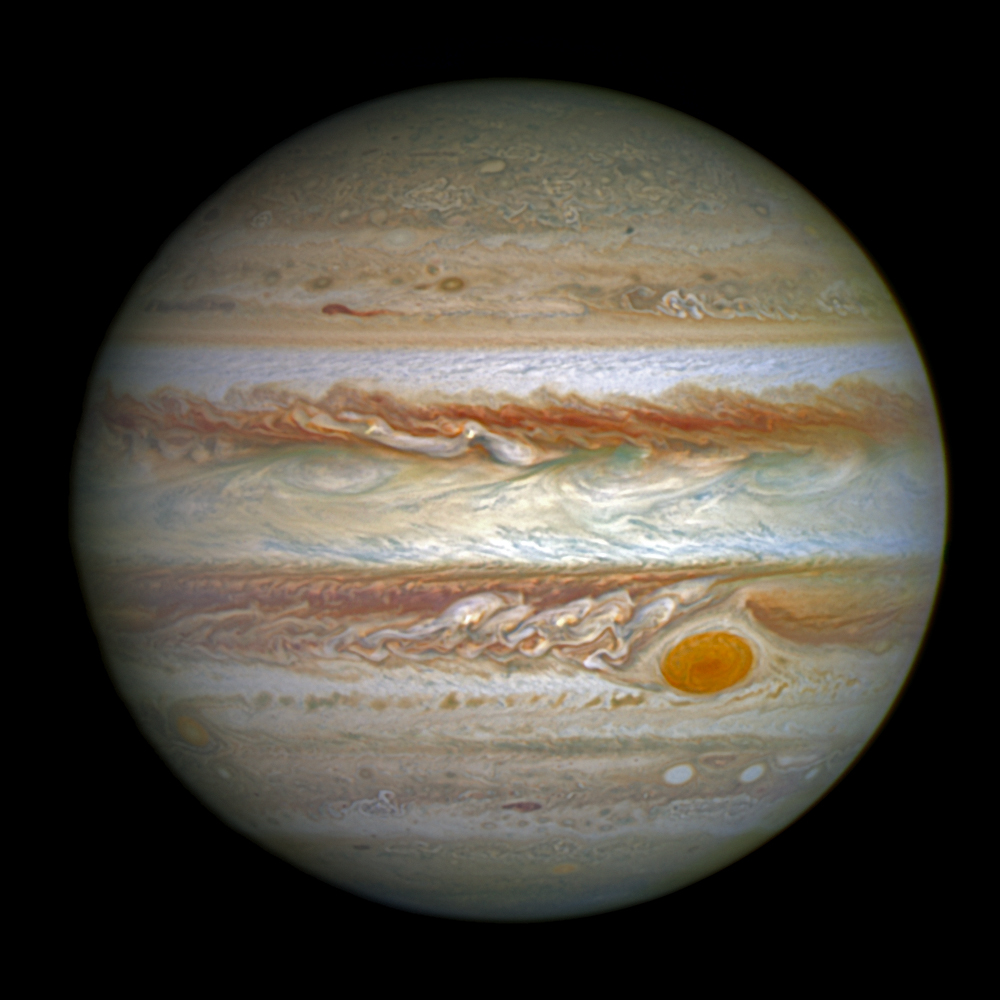
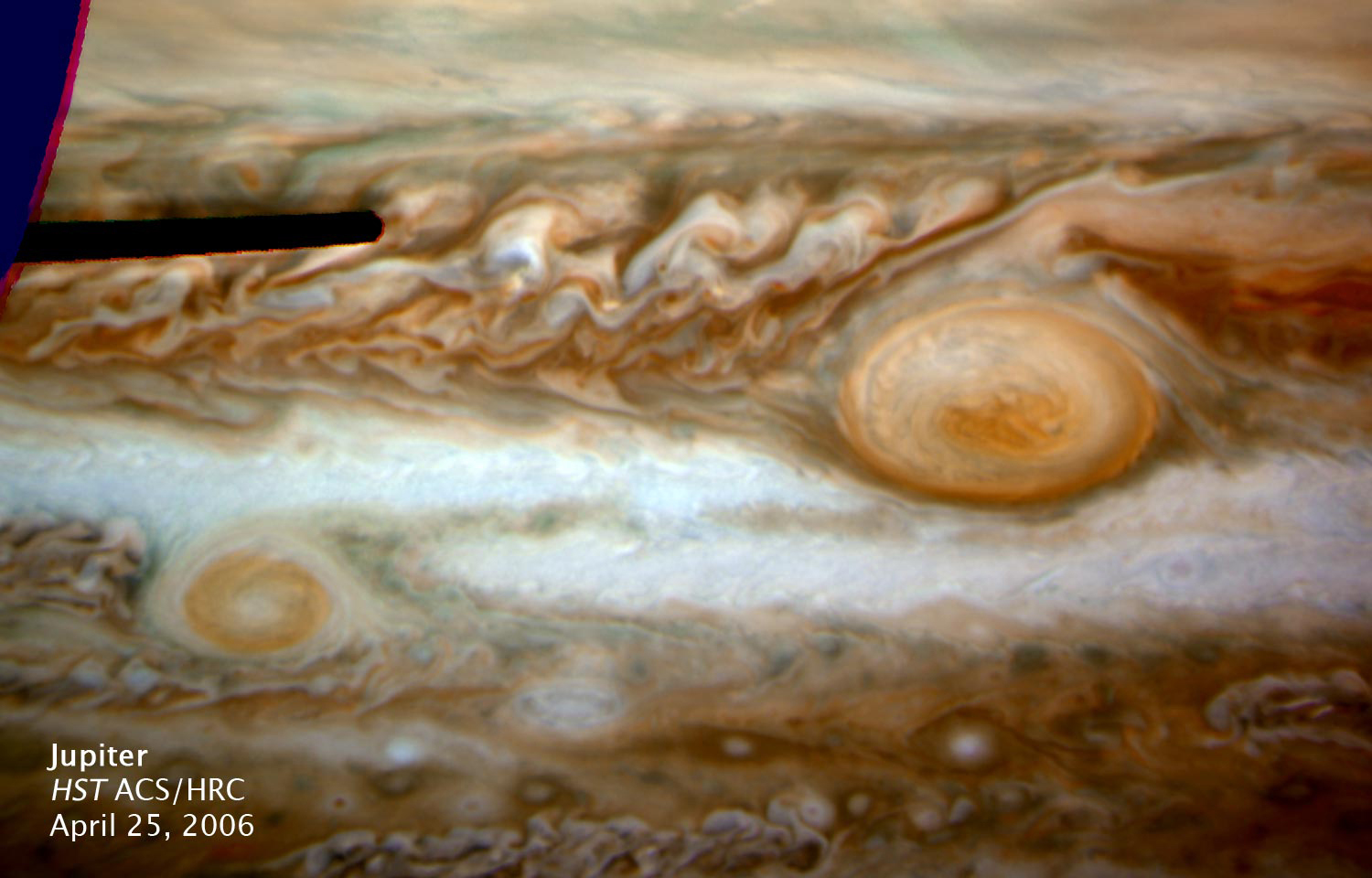
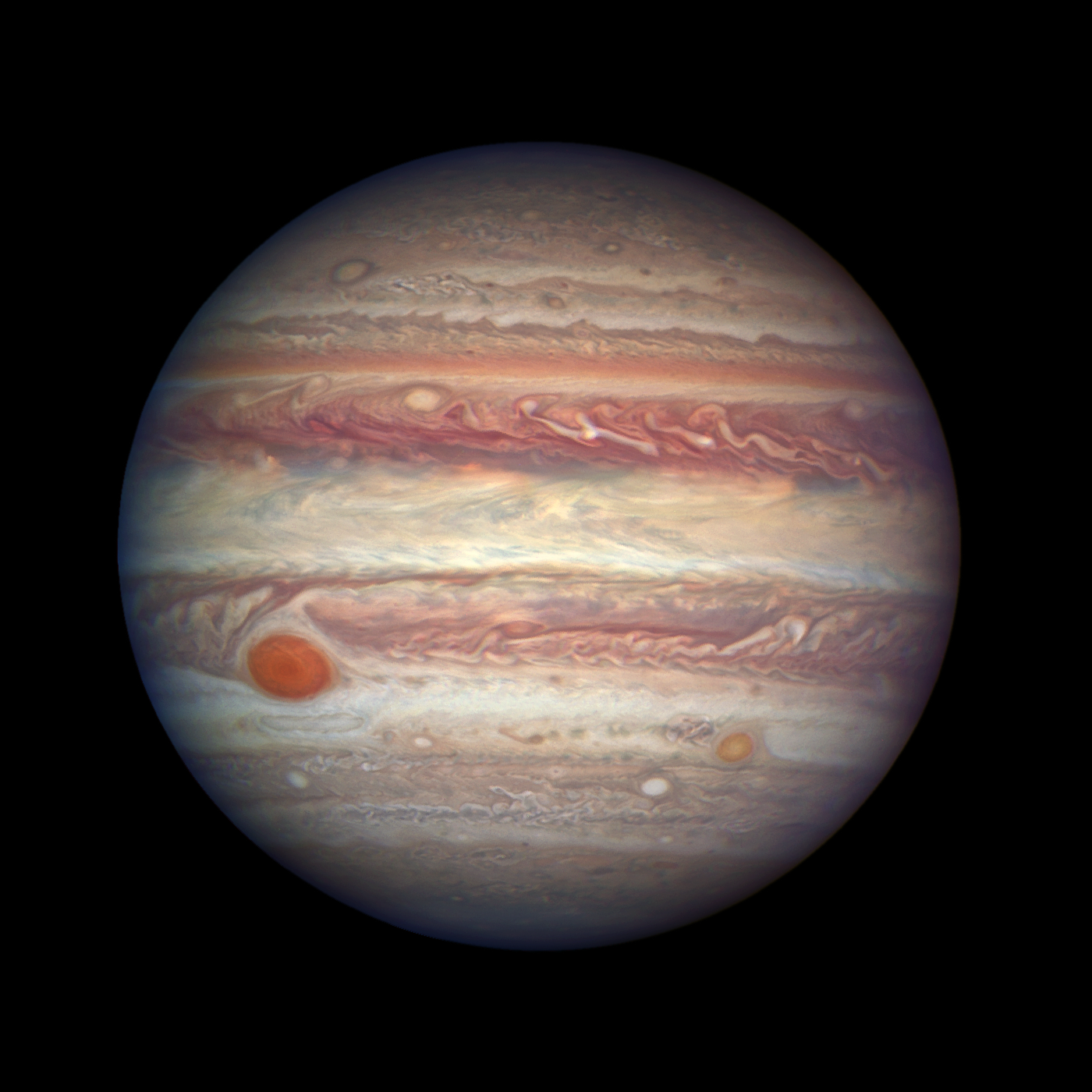
This stunning image of Jupiter was captured when the gas giant was at opposition — its closest approach to Earth in 2017 — allowing Hubble to photograph the planet in extraordinary detail. The Great Red Spot, a colossal anticyclonic storm larger than Earth that has been raging for at least 350 years, dominates the left side of the disk with its distinctive salmon-pink hue. A smaller but equally fascinating reddish storm, dubbed "Red Spot Jr." (officially Oval BA), appears in the lower right. Jupiter's atmosphere displays its signature bands of ammonia ice clouds, colored in shades of cream, orange, and brown by complex organic molecules and sulfur compounds lofted by powerful convective storms. The planet's rapid 10-hour rotation drives winds exceeding 400 miles per hour, creating the shearing forces that maintain these intricate cloud patterns.
Scientific Significance
Hubble's ongoing monitoring of Jupiter has been essential for understanding the long-term evolution of the planet's atmospheric features. The Great Red Spot has been observed to shrink at an accelerating rate, from approximately 25,000 miles across in the late 1800s to about 10,000 miles today, raising questions about whether this iconic storm might eventually dissipate entirely. Tracking the formation and color change of Oval BA (Red Spot Jr.) has provided new insights into how large atmospheric vortices form through mergers of smaller storms, a process that may explain the origin of the Great Red Spot itself. Hubble's annual global maps of Jupiter, taken as part of the Outer Planet Atmospheres Legacy (OPAL) program, provide a continuous record of atmospheric changes that cannot be matched by any single spacecraft mission, enabling the study of seasonal variations, new storm outbreaks, and the complex dynamics of the planet's zonal wind patterns.
Observation Details
This image was captured using Hubble's Wide Field Camera 3 (WFC3) in visible light during Jupiter's 2017 opposition. Multiple exposures through red, green, and blue broadband filters were combined to create a natural-color composite that accurately represents Jupiter's appearance to the human eye. The image was taken as part of the Outer Planet Atmospheres Legacy (OPAL) program, which uses Hubble to capture annual global maps of the outer planets. Jupiter's rapid rotation required short exposure times to avoid motion blur, and the individual frames were carefully aligned to produce the final sharp image.
Location in the Universe
Constellation
N/A (Solar System)
Distance from Earth
365 million to 601 million miles (varies)
Fun Facts
- 1
Jupiter's Great Red Spot has been shrinking for over a century — historical observations from the 1800s show it was once large enough to fit three Earths across, but today it has contracted to about 1.3 Earth diameters wide.
- 2
Red Spot Jr. (Oval BA) formed in 2000 when three smaller white storms merged, and it turned red in 2006, surprising astronomers who are still debating what causes the color change in Jovian storms.
- 3
Jupiter rotates so fast that it completes a full day in just under 10 hours, making it the fastest-spinning planet in our solar system — this rapid rotation causes the planet to visibly bulge at its equator.
Image credit: NASA, ESA, Hubble Space Telescope