About This Image
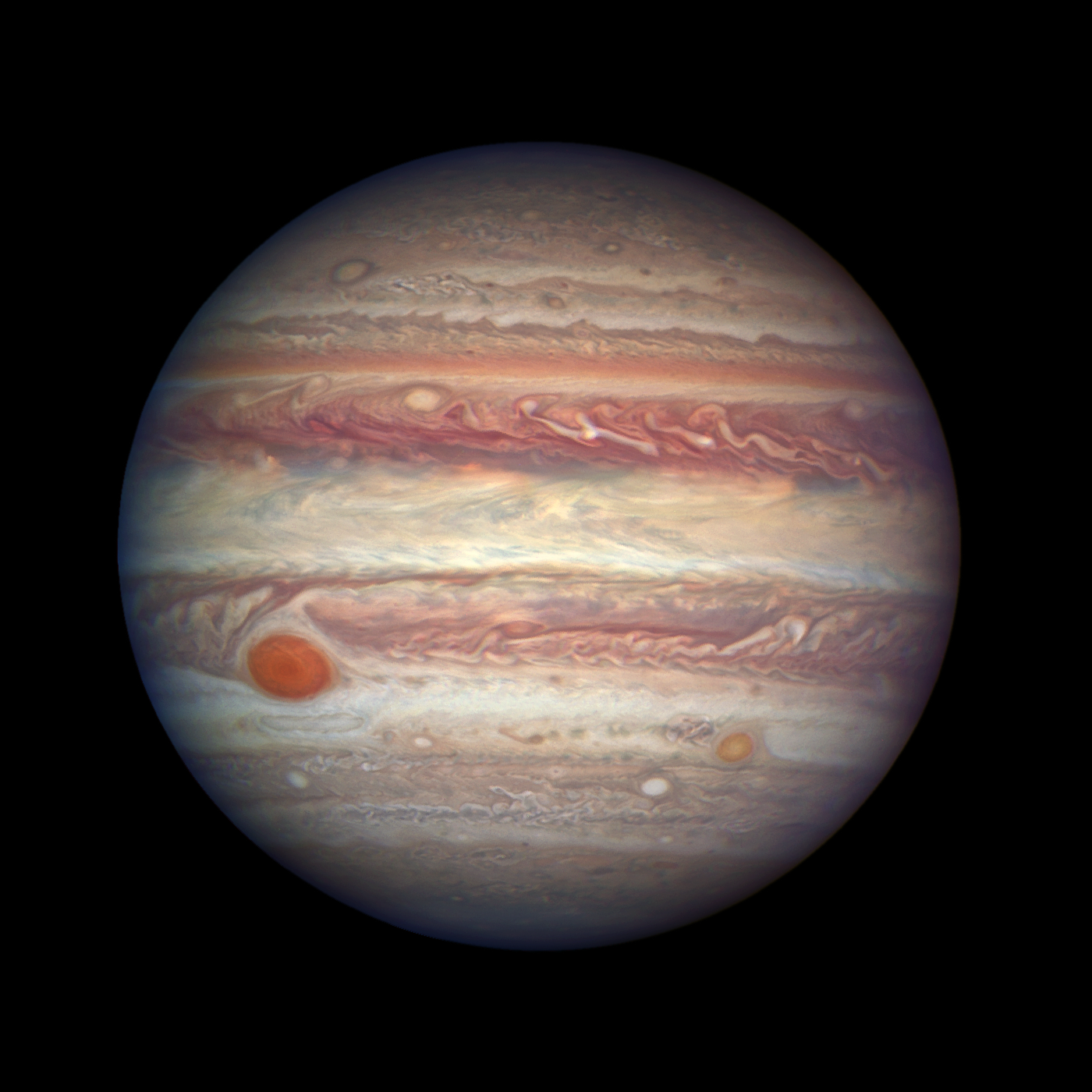
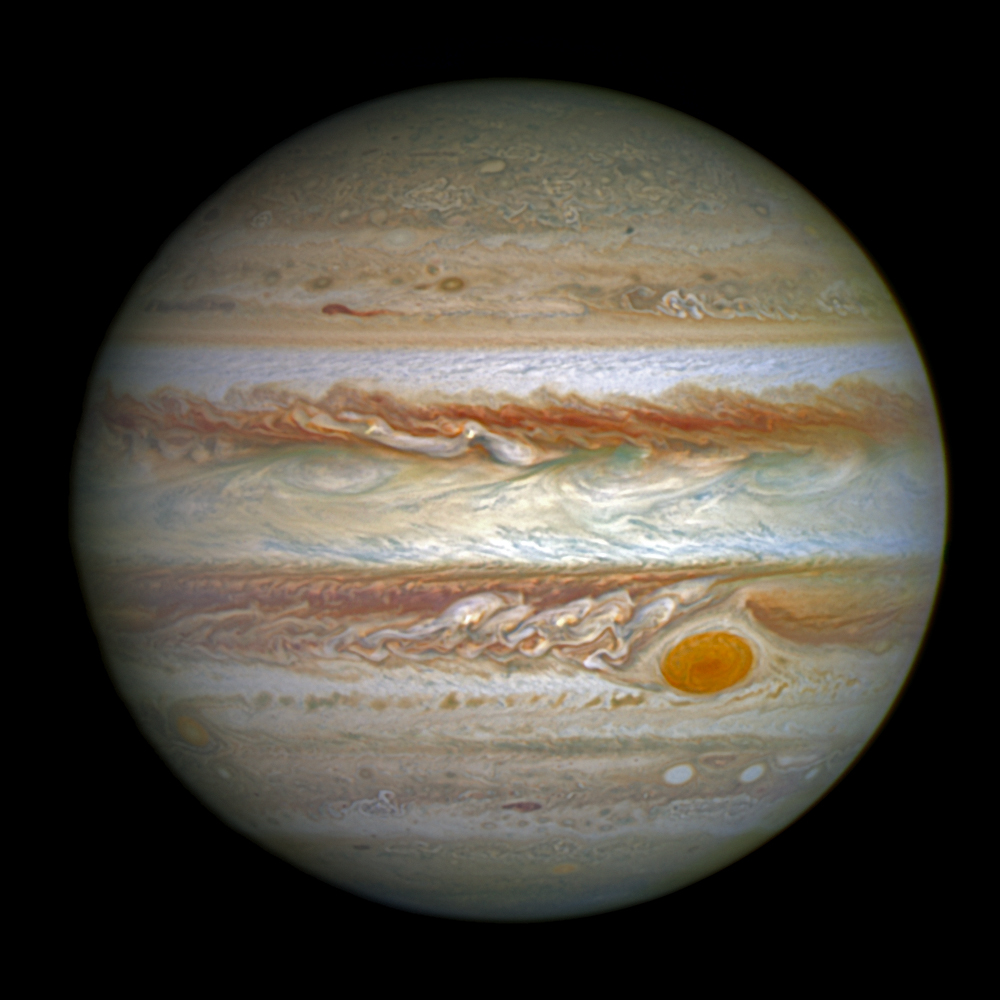
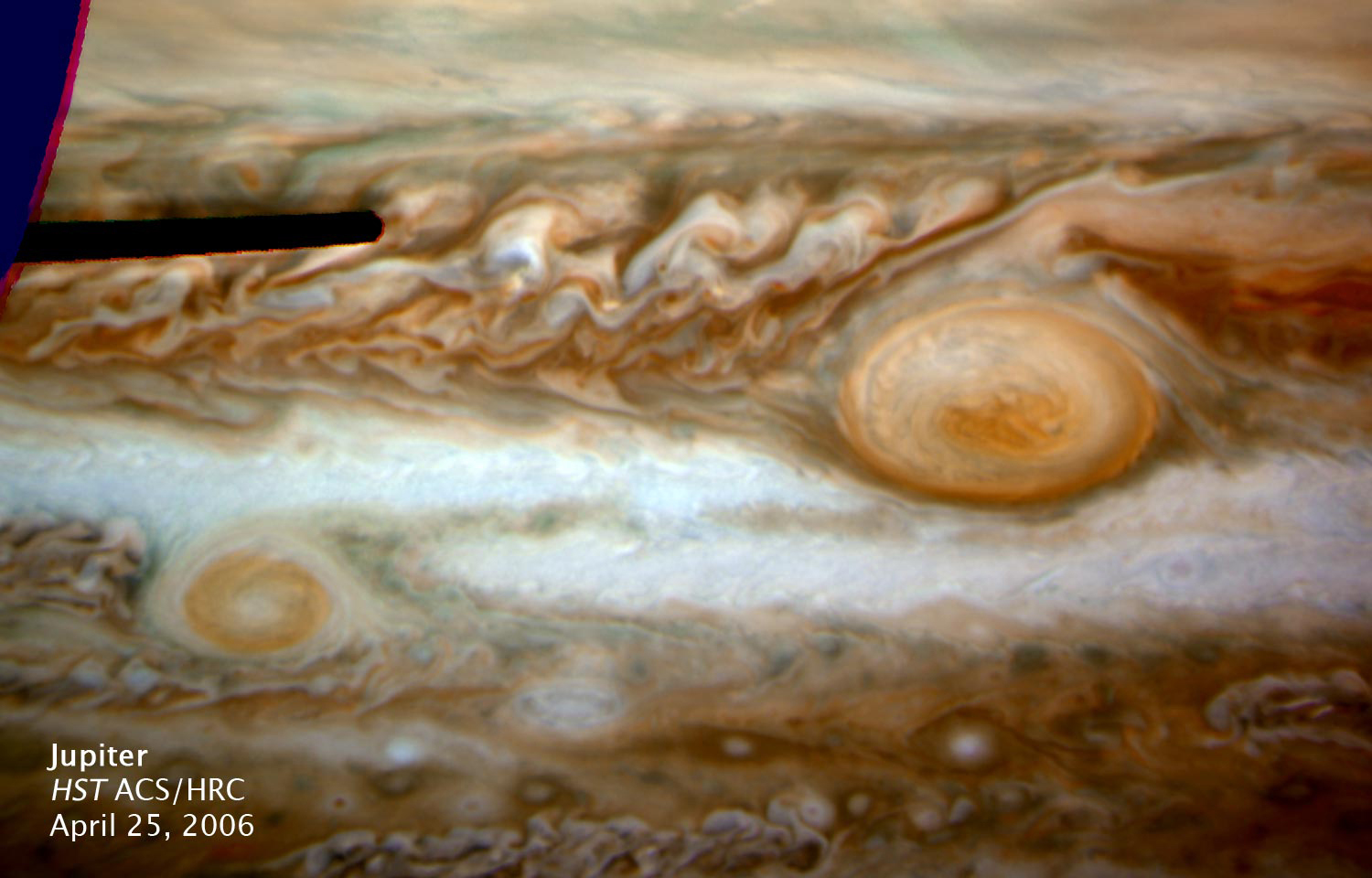
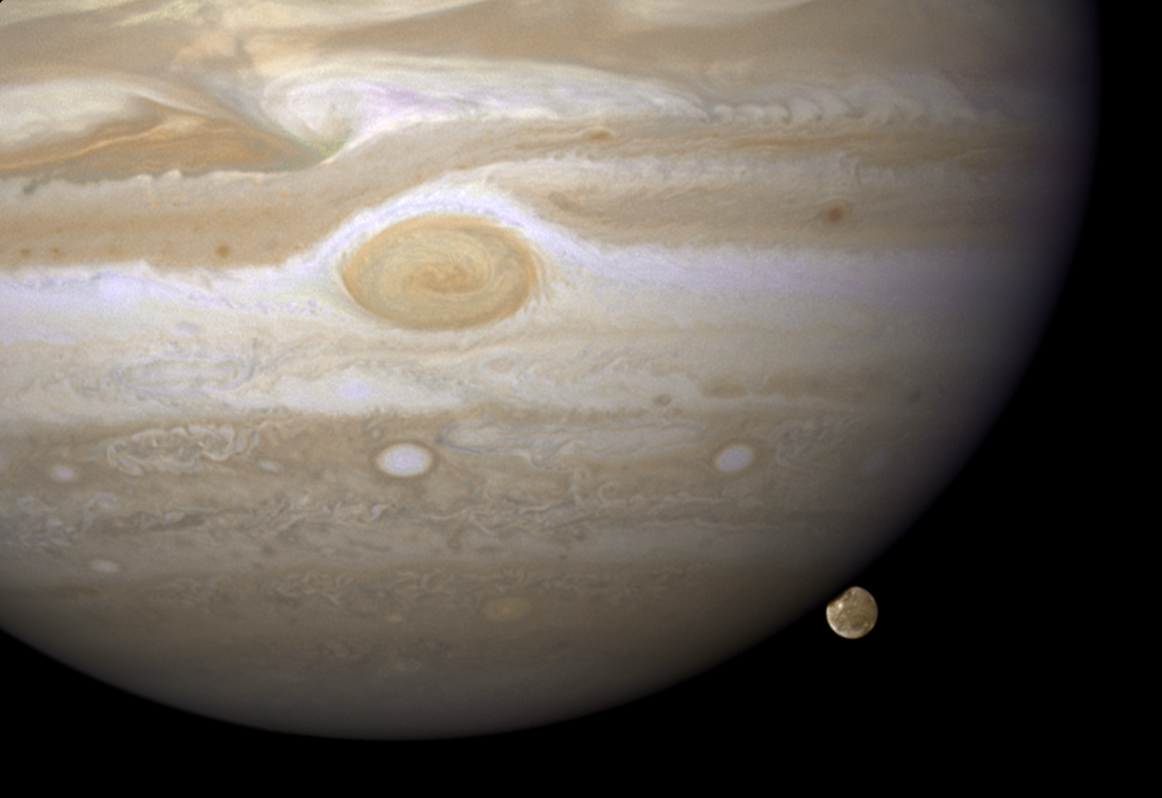
This captivating image captures the moment when Ganymede, the largest moon in our solar system, begins to emerge from behind the giant planet Jupiter. Composed of roughly equal parts rock and water ice, Ganymede is a world of extraordinary distinction: it is larger than the planet Mercury, possesses its own internally generated magnetic field (the only moon known to do so), and harbors a subsurface ocean of liquid water beneath its icy crust. In this Hubble view, Ganymede appears as a small bright disk against Jupiter's banded atmosphere, its icy surface reflecting sunlight as it peeks out from behind the planet's limb. Jupiter's familiar cloud bands, storm systems, and subtle atmospheric textures are displayed in sharp detail, providing a striking contrast between the gas giant's turbulent atmosphere and its serene, frozen satellite.
Scientific Significance
Hubble observations of the Jupiter-Ganymede system have been pivotal in advancing our understanding of both Jovian atmospheric dynamics and the geophysics of icy moons. Hubble's ultraviolet observations of Ganymede in 1998 provided the first evidence of a thin oxygen atmosphere around the moon, and subsequent UV spectroscopic studies in 2015 revealed subtle shifts in Ganymede's auroral belts that confirmed the presence of a subsurface saltwater ocean — a discovery with profound implications for astrobiology. Monitoring occultation events, where Ganymede passes behind or in front of Jupiter, allows precise measurement of the moon's orbital parameters and provides constraints on the tidal interactions that heat Ganymede's interior. These Hubble observations complement data from spacecraft missions such as Galileo and the European Space Agency's JUICE mission, which launched in 2023 to conduct a detailed exploration of Jupiter's icy moons.
Observation Details
This image was obtained using Hubble's Wide Field and Planetary Camera 2 (WFPC2) in visible light wavelengths during a Ganymede occultation event in April 2007. The precise timing was calculated to capture the moon emerging from behind Jupiter's disk. Multiple short exposures were taken to avoid motion blur from Jupiter's rotation and Ganymede's orbital motion. Hubble's resolution allowed clear separation of Ganymede's disk from Jupiter's limb, and color information was derived from exposures through blue, green, and red broadband filters.
Location in the Universe
Constellation
N/A (Solar System)
Distance from Earth
540 million miles (at time of observation)
Fun Facts
- 1
Ganymede is the only moon in the solar system known to generate its own magnetic field, which creates a miniature magnetosphere embedded within Jupiter's enormous magnetic environment.
- 2
With a diameter of 3,270 miles, Ganymede is larger than the planet Mercury and nearly as large as Mars — if it orbited the Sun instead of Jupiter, it would easily be classified as a planet.
- 3
Scientists believe Ganymede harbors a vast subsurface ocean containing more water than all of Earth's oceans combined, sandwiched between layers of ice roughly 100 miles beneath the surface.
Image credit: NASA, ESA, Hubble Space Telescope